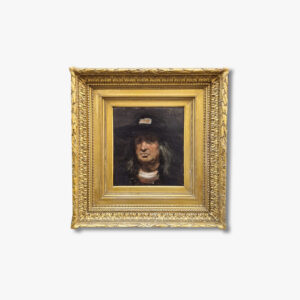
Oil on canvas, Portrait of a Soldier – Eastern Europe – 19th century
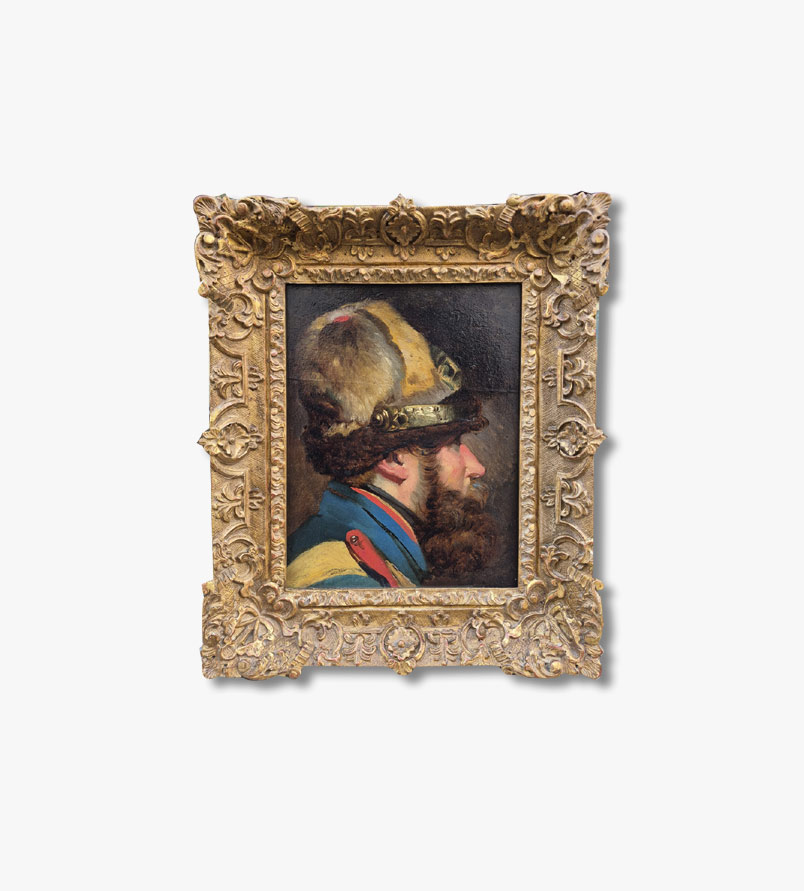
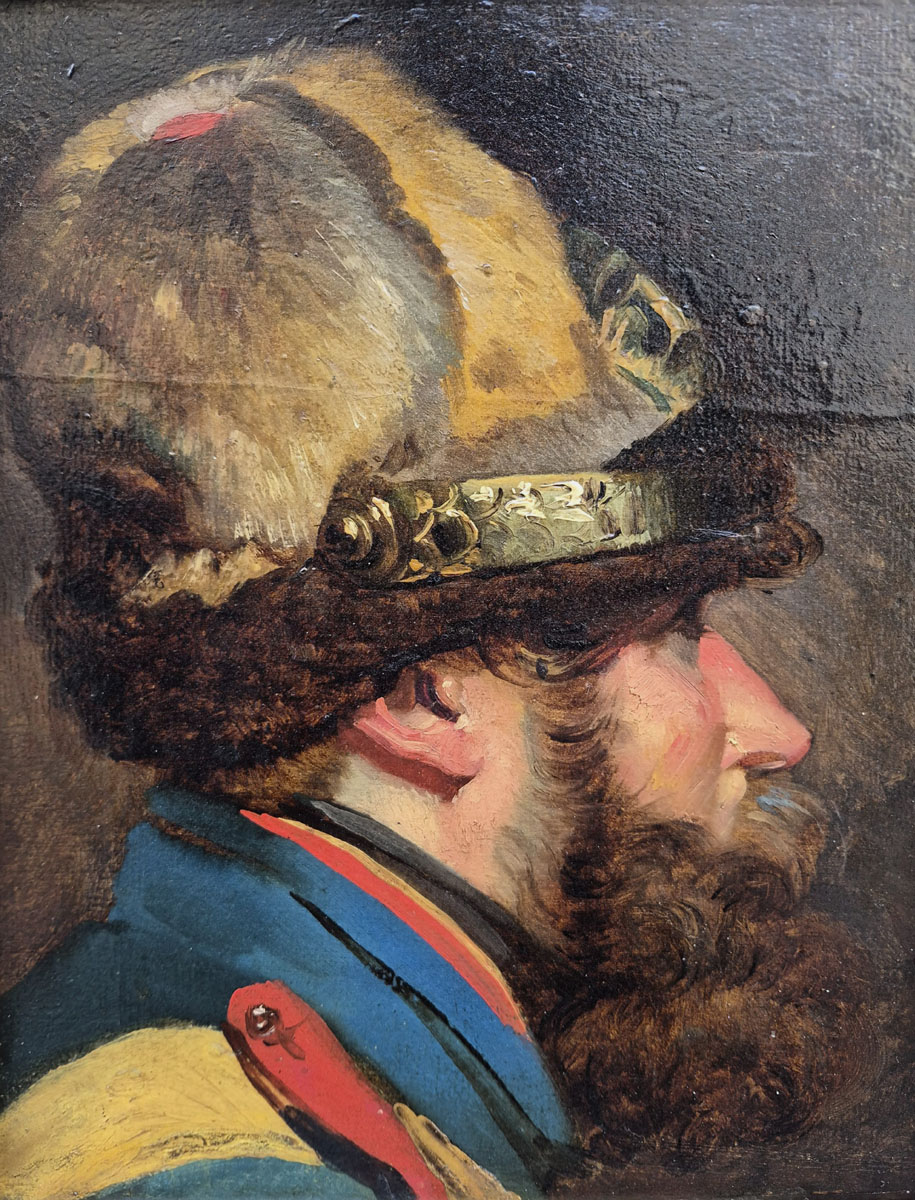
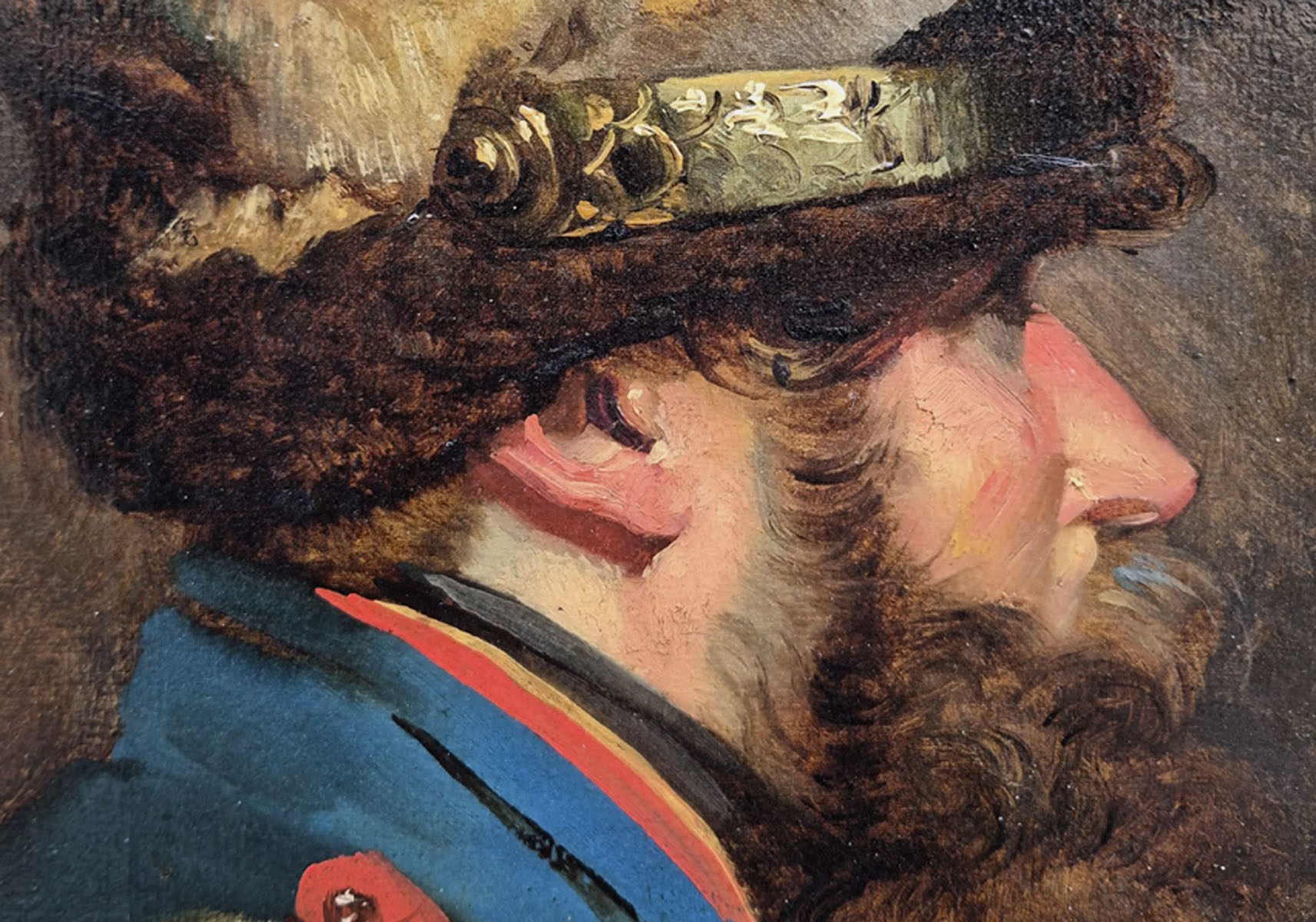
Oil on canvas, Portrait of a Soldier – Eastern Europe – 19th century
Prix sur demande / prices on request
Portrait of a Soldier – Balkans, Eastern Europe
Unsigned
Circa 1850–1875
Just a handwritten note on a period label on the back: “room, no. 2, 1st floor”
Our soldier stands out against a dark background, which draws the viewer's attention to his facial features and uniform.
Probably a well-conducted study.
Is that a hussar? Hussars, units of light cavalry, were distinguished by their richly decorated uniforms, their regimental colors, and their characteristic headgear. The fur cap—called a *Pelzmütze* in the Prussian army—is similar to this.
But it is difficult to determine exactly which country.
The painter pays close attention to the rendering of textures: the softness of the fur, the gleam of the metal embellishments, the thickness of the beard, and the vivid colors of the uniform.
Further information
| Dimensions | 33 × 39 cm |
|---|
From 1873 to 1876, the artist traveled to the East on numerous occasions.
In 1877, monumental and religious painting began to play a major role in his work. *The Beheading of Saint John the Baptist*, completed in 1881, earned him an honorable mention at the Paris Salon and an award in the United States from the Pennsylvania Academy of the Fine Arts.
His paintings draw on several styles, ranging from the influence of Jean-Léon Gérôme to the Pre-Raphaelites, the Symbolists, and naturalists such as Jean-François Millet.
The artist knows how to make the most of each movement while adding his own touch.
At the same time, part of his body of work is devoted to rural life and genre scenes.
In 1885, he moved to Auvers-sur-Oise, and his paintings became brighter and softer.
Within the institutional framework, he played a key role in relations between the United States and Paris.
He served on the jury for the 1889 Paris World’s Fair, helped organize the American artistic presentation at the 1893 Chicago World’s Fair, and contributed to the one in Antwerp in 1894.
Our painting, depicting Judas, with the inscription “
” in the lower right corner,
reflects this interest in biblical figures and their psychological dimensions.
The figure appears alone, wrapped in a light-colored cloth, his face emerging from a dark background.
His intense, almost tranced gaze forms the true center of the composition.
This is likely a preparatory work for one of the artist's major works from the early part of his career.