Oil on canvas, *The Quai de Conti at Night* by Edmond Paul VILLERS
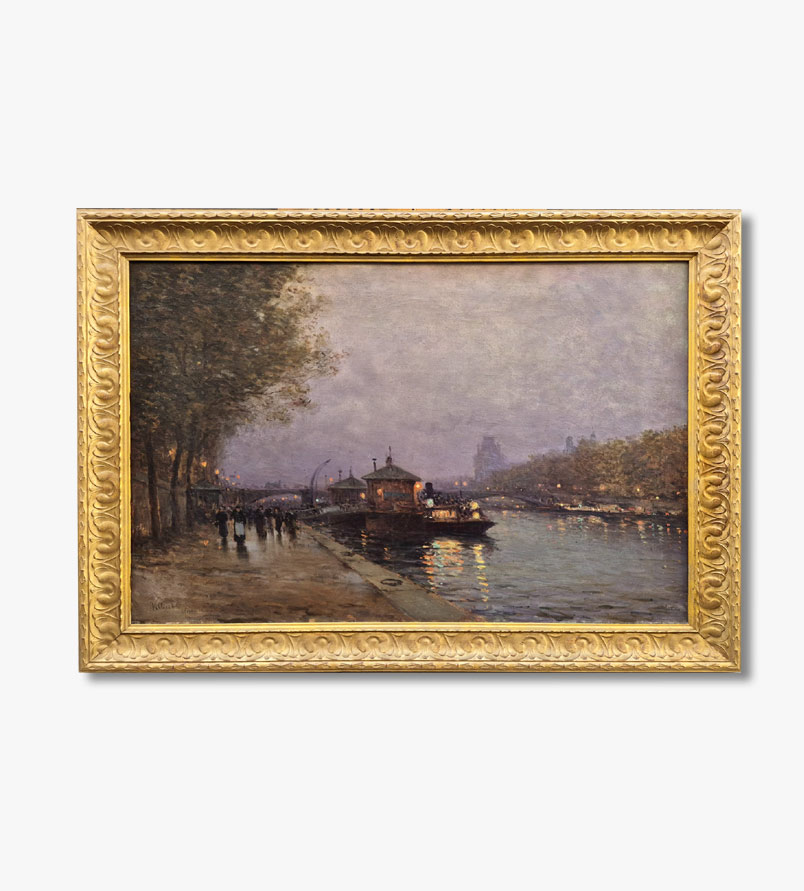
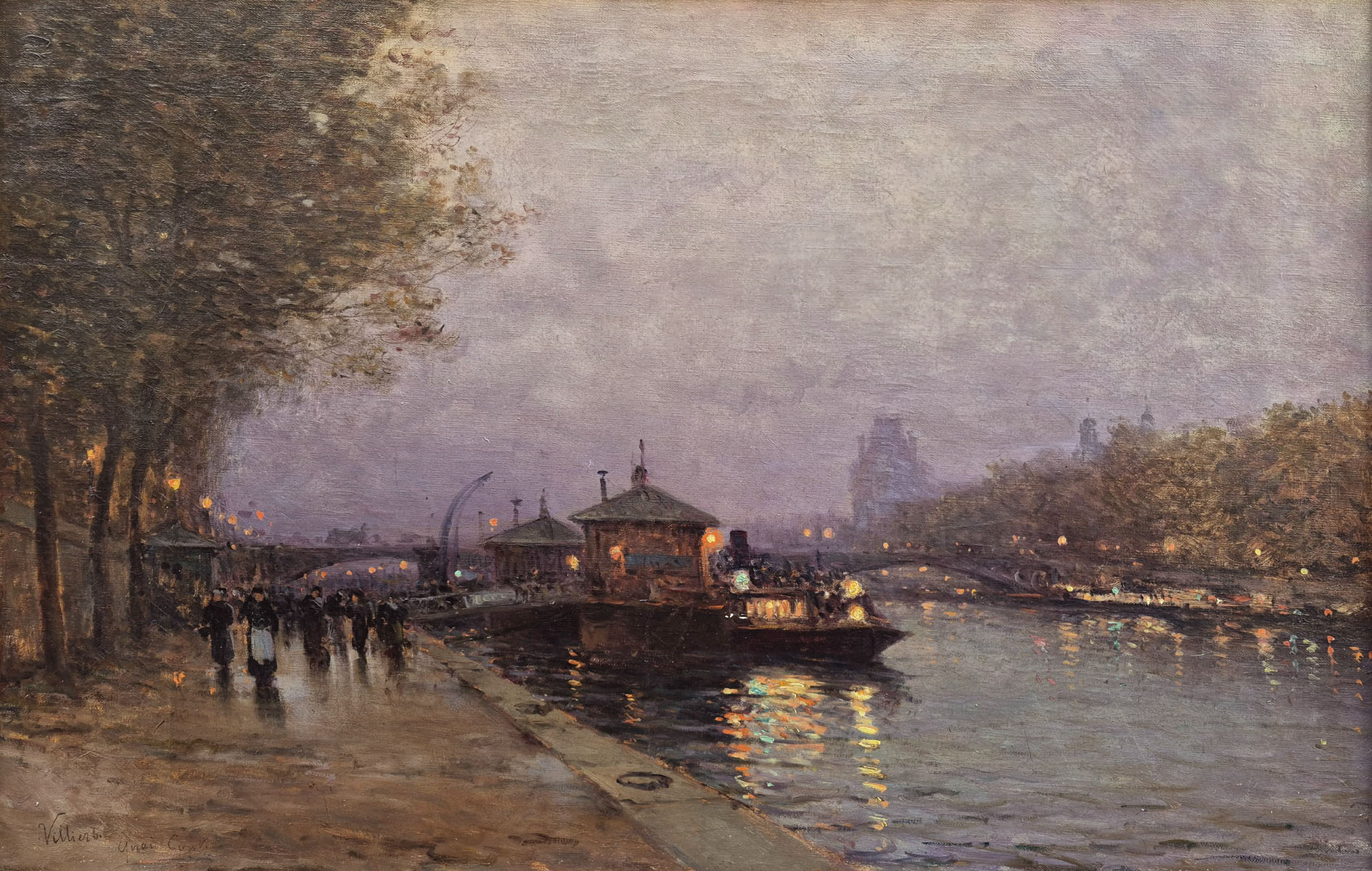
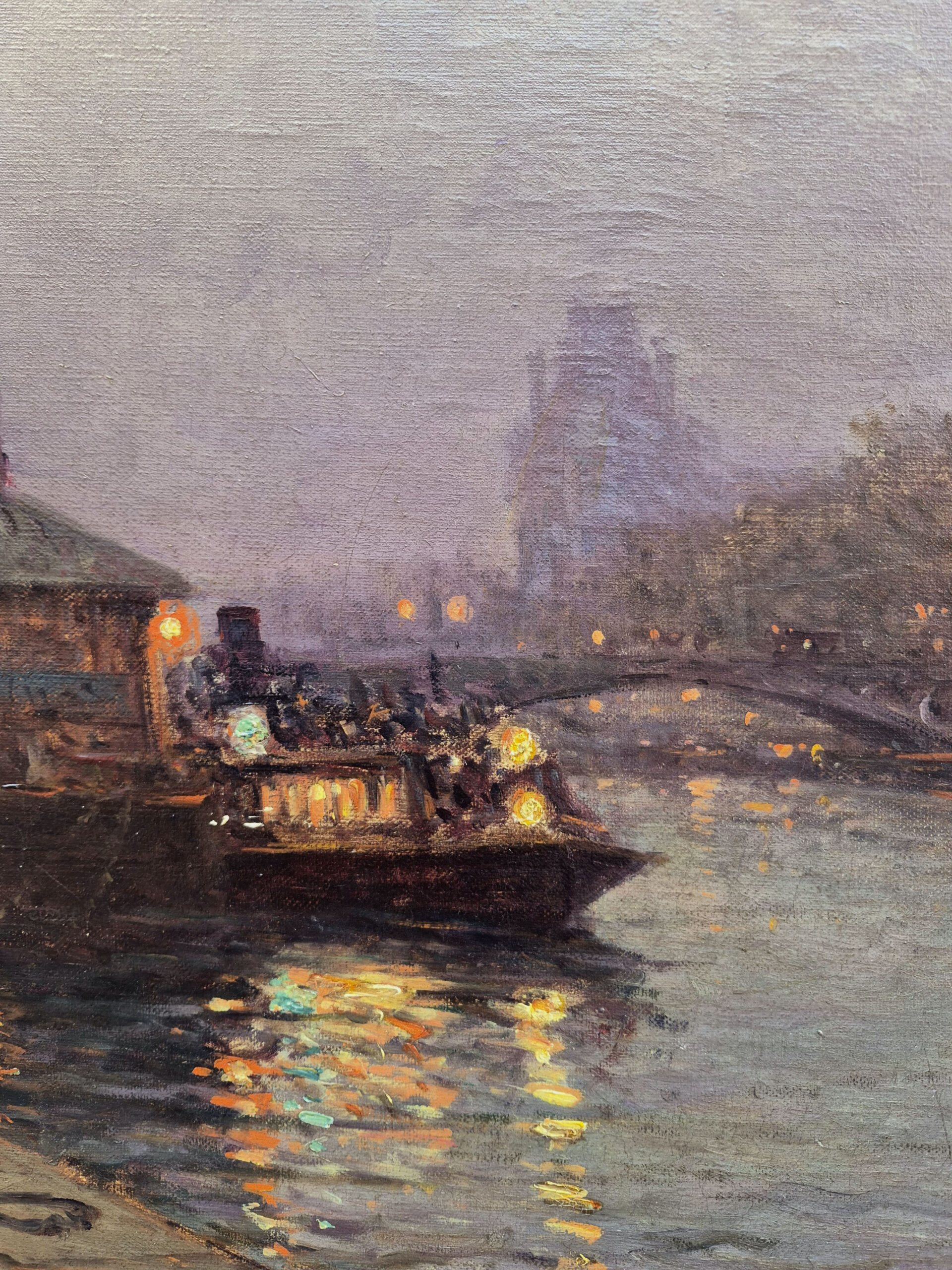
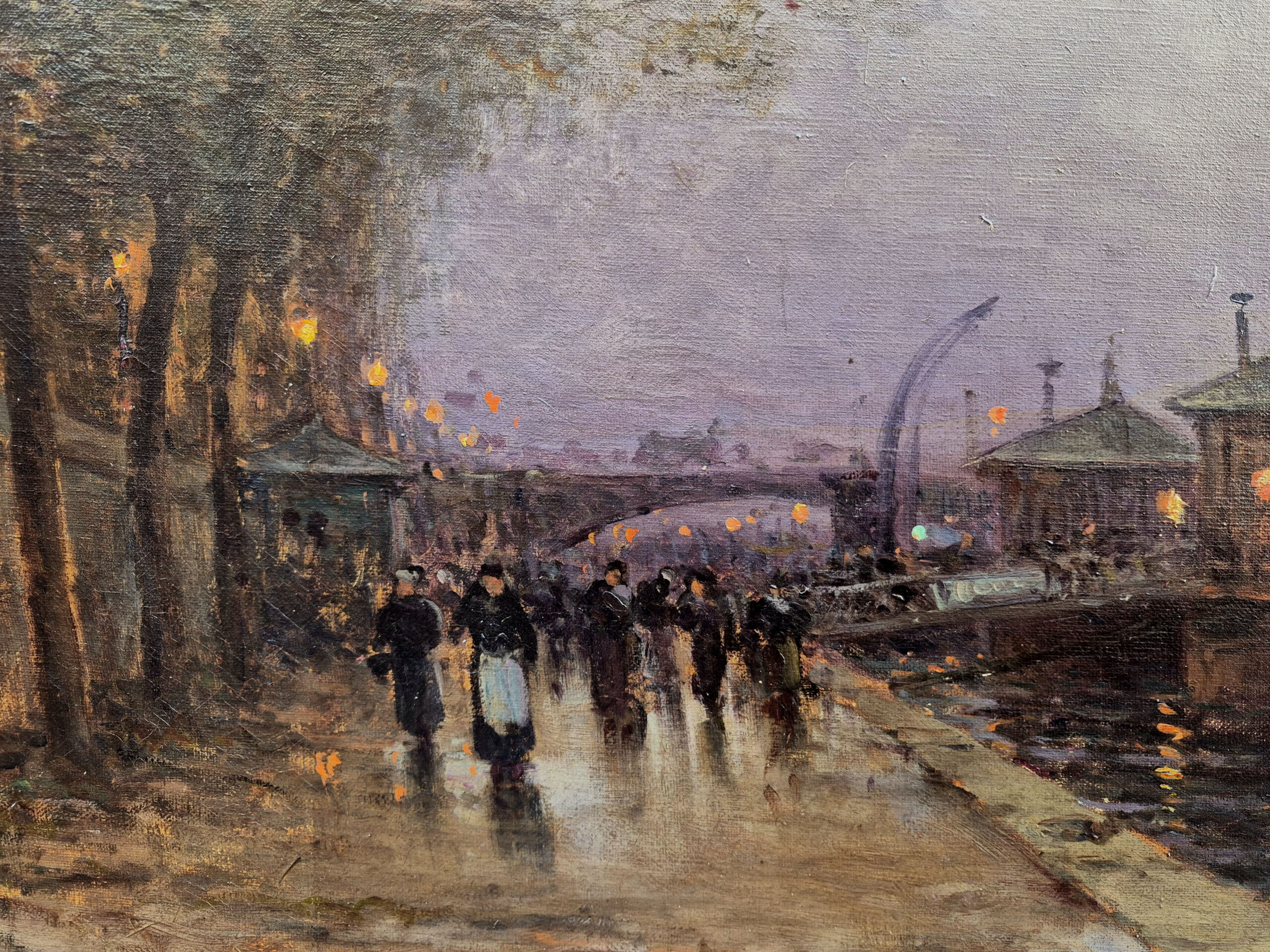
Oil on canvas, *The Quai de Conti at Night* by Edmond Paul VILLERS
Prix sur demande / prices on request
Paul Edmond Villiers (1883–1914)
A French painter, he developed a passion for the visual arts at a very young age and studied at the École des Arts Décoratifs in Paris
There, he received several prestigious awards, including
the Biais Prize: awarded for work in ornamental composition
the Adrien Leroy Prize: awarded to the student who has received the most awards during his first four years of study
and an Honorary Prize: awarded to the student who has received the most nominations for his work during the year.
He then enrolled at the École des Beaux-Arts in Fernand Cormon’s studio.
Further information
| Dimensions | 93 × 68 cm |
|---|
He became a member of the Cercle international des Arts in Paris and began exhibiting there in 1909.
Villiers exhibited successfully at the Salon des Artistes Français between 1909 and 1913 and received the Prix de la Savoie at the 1912 Salon, as well as a third-class medal
In 1911, he won a competition organized by Les Grands Magasins du Printemps in collaboration with the Society for the Promotion of Industry.
In it, he reimagined a glassware set that was praised by critics for the simplicity, modernity, and fluidity of its lines.
In 1912, during an exhibition at the Charles Brunner Gallery on Rue Royale in Paris, Guillaume Apollinaire compared his skies to those of the Norwegian painter Edvard Diriks
Villiers’s treatment of light and reflections brings him closer to Galien Laloue, whose urban views of Paris—often set in the rain or mist—capture the twinkling of streetlights and the bustle of the streets with a light, Impressionist touch.
Like Luigi Loir, another great Parisian painter, Villiers also accurately captures architectural details and urban perspective, combining a realistic style with a poetic sensibility,
The end of the day seems to be a special time for him, allowing him to capture on canvas the changes in the atmosphere and the reflections of light brought about by the growing use of electricity.
He died in battle on May 27, 1914, during World War I, at the age of just 30.
In 1921, a posthumous exhibition was held at Bagatelle in Paris?