Oil on panel, *The Washerwomen on the Banks of the Seine* by Hyppolite Camille DELPY
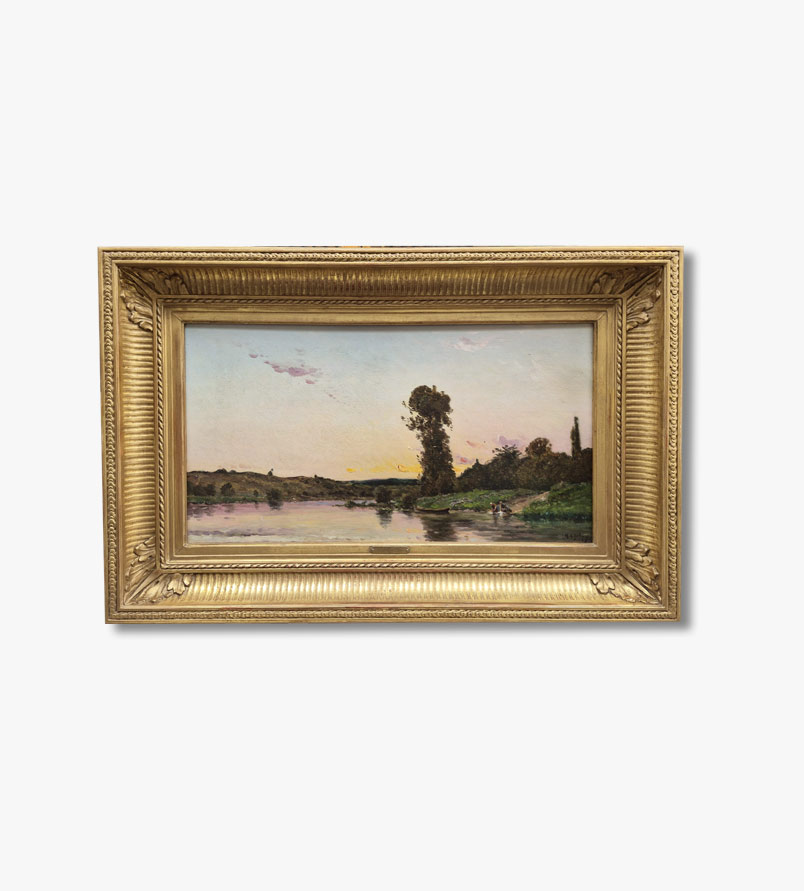
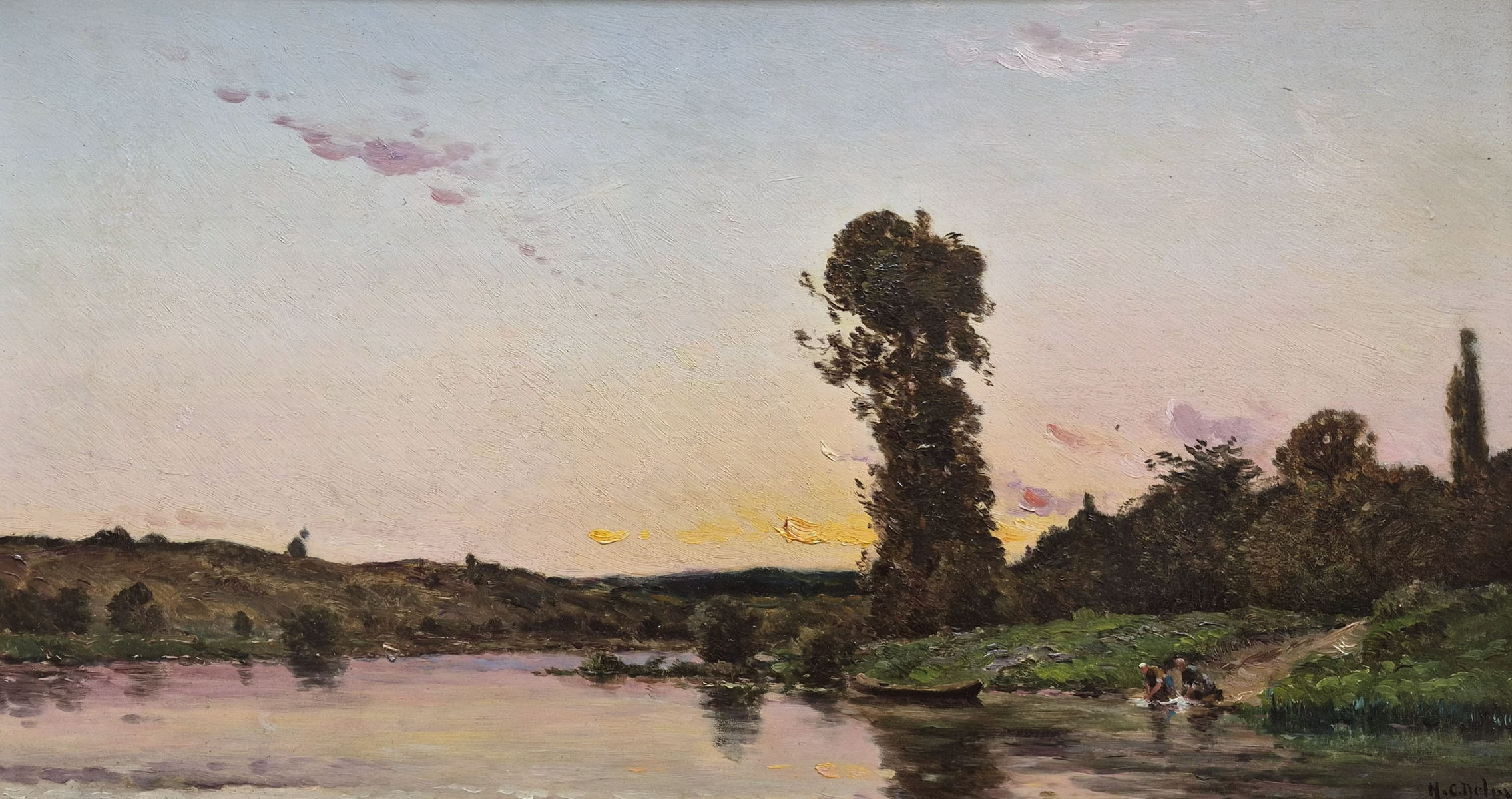
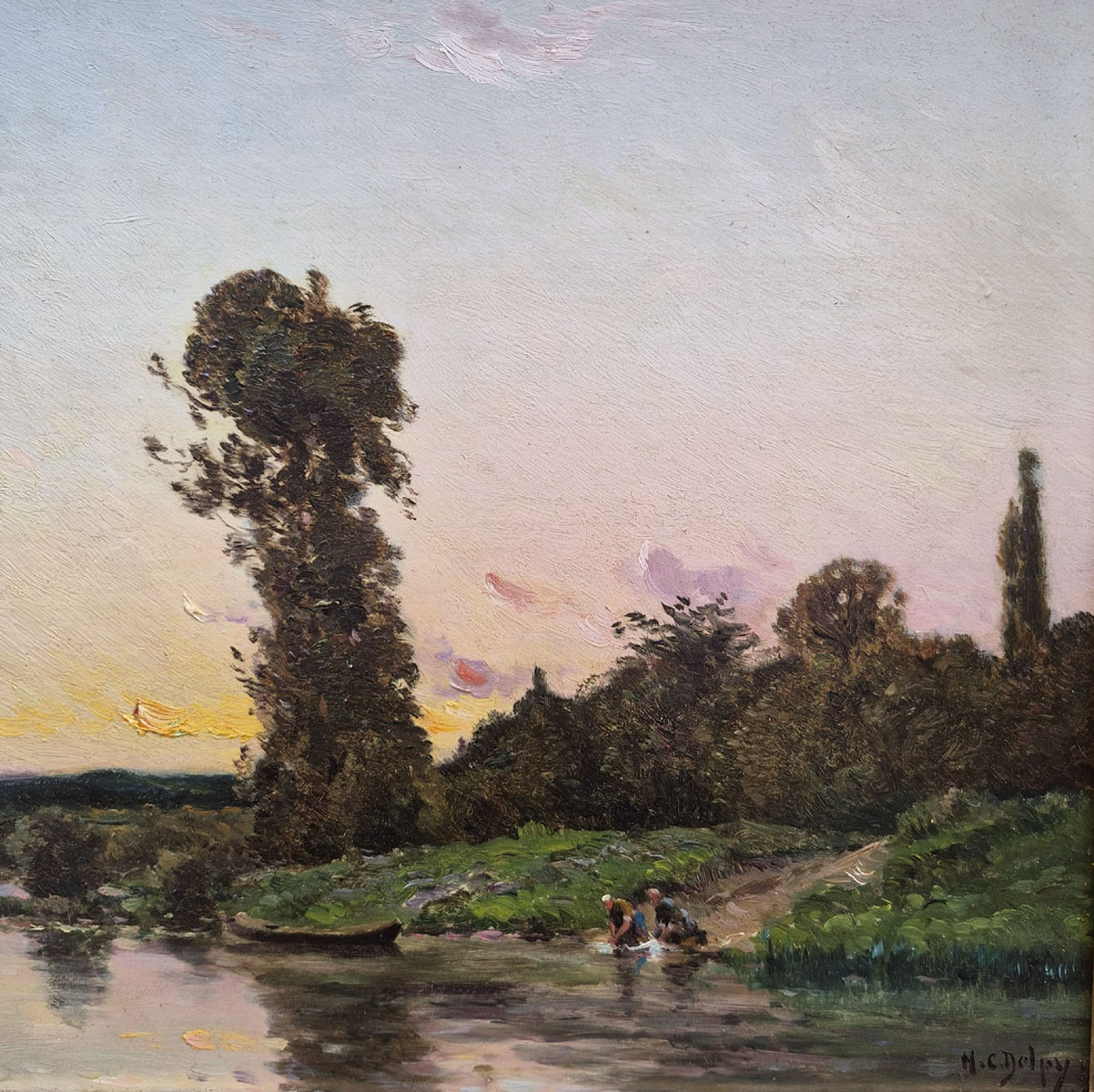
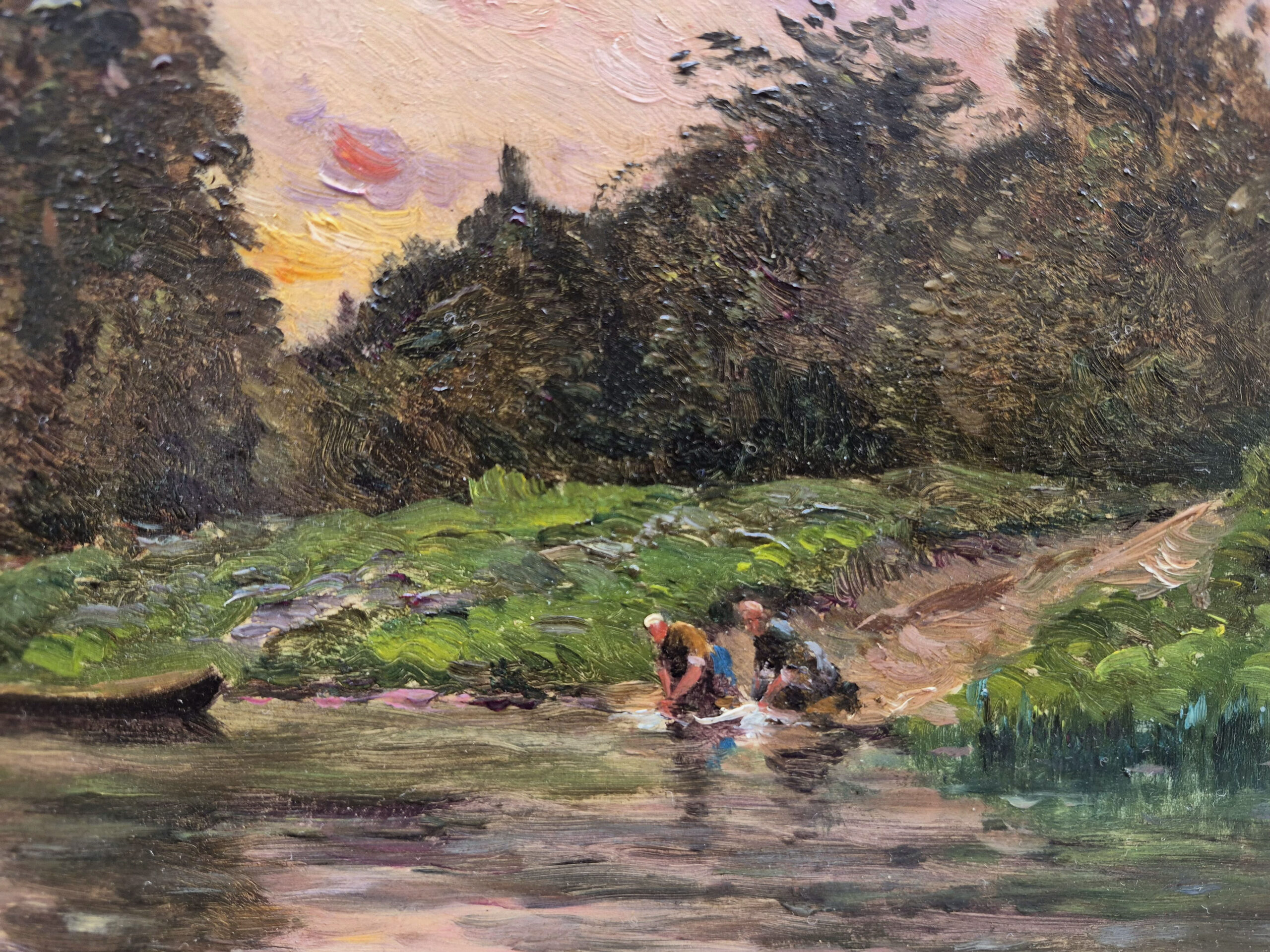
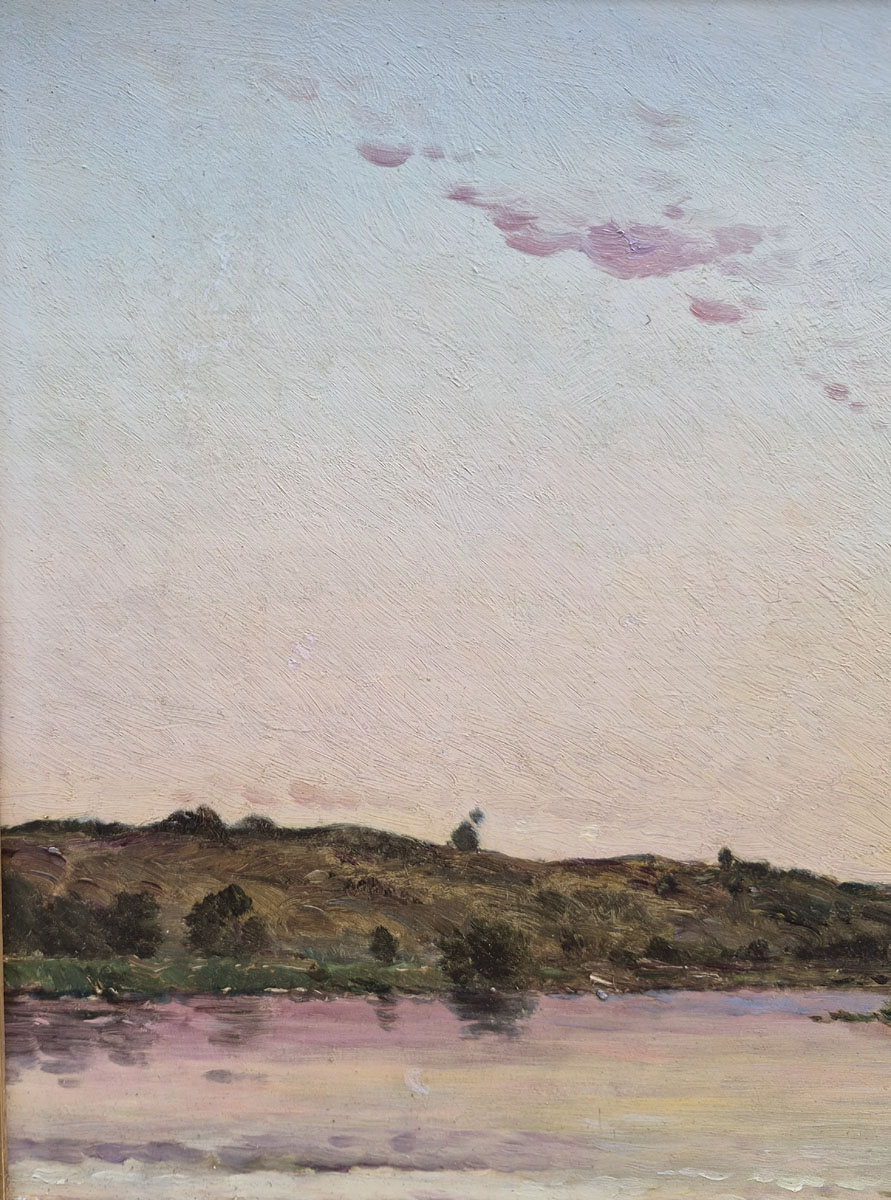
Oil on panel, *The Washerwomen on the Banks of the Seine* by Hyppolite Camille DELPY
Prix sur demande / prices on request
Hippolyte Camille Delpy 1842–1910
Hippolyte Camille Delpy belongs to the generation of painters that bridges the gap between the Barbizon School and early Impressionism.
Trained under the great landscape painters of his time, he was deeply influenced by the work of Jean-Baptiste-Camille Corot and Charles-François Daubigny, from whom he adopted a preference for painting from life, careful observation of nature, and the exploration of light effects
.
Further information
| Dimensions | 70 × 40 cm |
|---|
In the mid-1870s, Camille Delpy became close friends with Camille Pissarro and Paul Cézanne, with whom he shared a deep admiration for the work of Charles-François Daubigny.
This friendship fueled his reflections on landscape painting and strengthened his interest in the direct observation of nature.
The works he exhibited at the Salons of 1873 and 1874 were well received, confirming his place among the promising young landscape painters of his time.
During the 1880s, Camille Delpy divided his time between the Normandy coast, the Forest of Fontainebleau, and Paris, exploring different landscapes and refining his technique. His career reached its peak with his first Salon medal in 1884, a recognition of his mastery of landscape and light.
At the 1889 World’s Fair, he received an honorable mention, cementing his reputation. The Parisian gallery owner Georges Petit, a leading figure in the promotion of contemporary French painting, then took Delpy under his wing.
In this delicate view of the banks of the Seine, Hippolyte Camille Delpy captures the last rays of daylight with great sensitivity.
Here, the artist displays the full subtlety of his talent. A fine, meticulous touch gently renders the vast expanses of the sky and the silvery reflections on the water, creating a light and enveloping atmosphere.
This delicate style is contrasted in places by broader, more assertive brushstrokes, particularly in the masses of trees and the riverbanks.
These more vigorous accents enliven the composition and bring the area around the river to life
This balance between precision and spontaneity gives the painting a remarkable presence