
An oil on canvas, *Parisian Elegance* by Tancrède SYNAVE
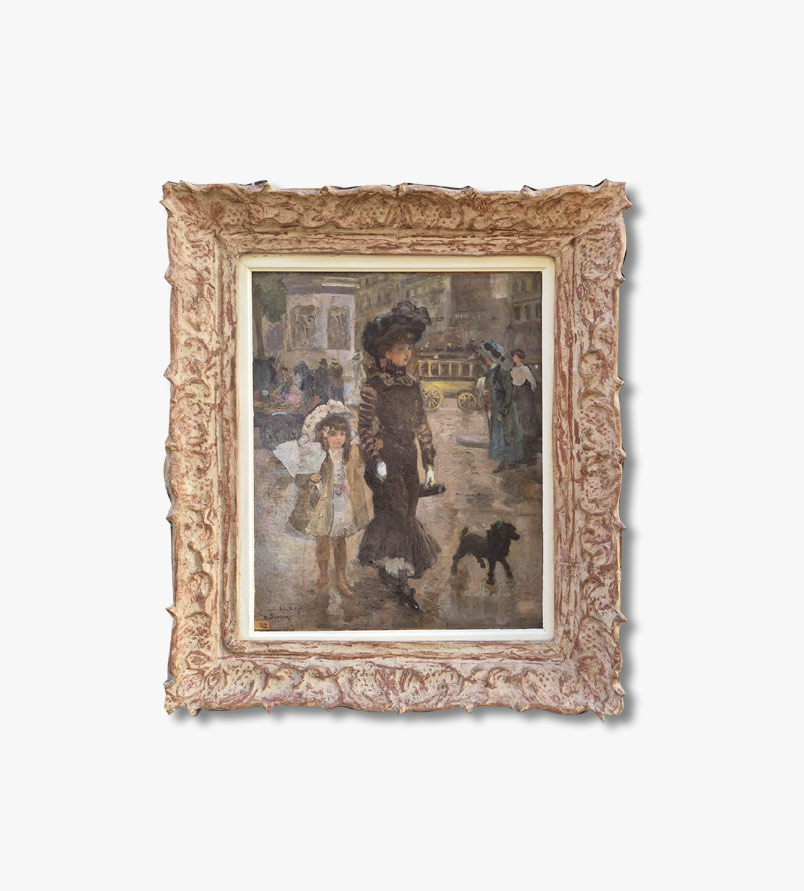
An oil on canvas, *Parisian Elegance* by Tancrède SYNAVE
Prix sur demande / prices on request
Tancrède Synave 1870–1936
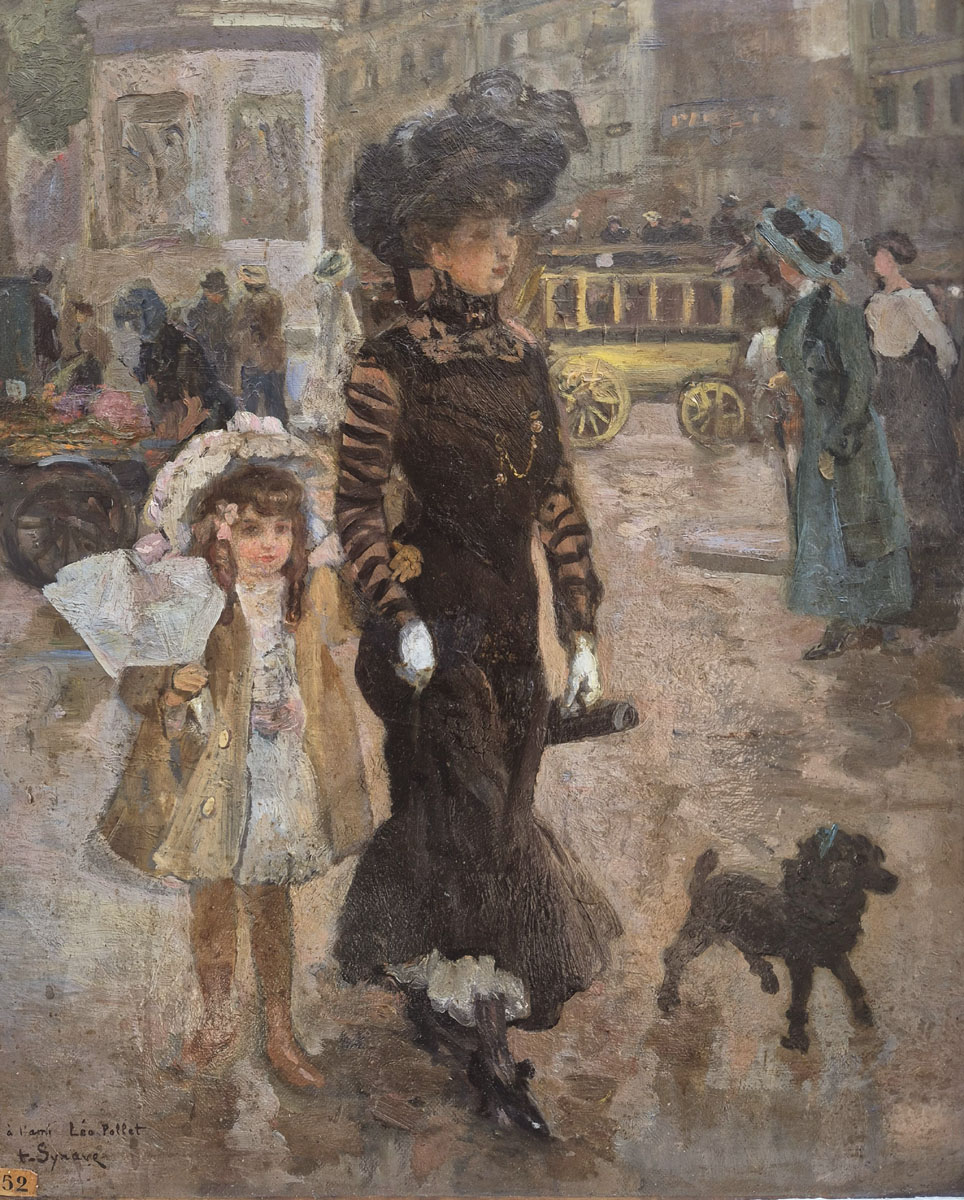
Our painting is signed: “
”
“To my friend Pollet”
and retains its Salon exhibition number below it.
Tancrède began his training at the Académie Julian, a more liberal art school where women and foreigners could enroll and take classes from renowned professors such as Bouguereau. Between 1880 and 1936, 28 Prix de Rome winners studied there.
He took classes with Benjamin-Constant, Jules Lefebvre, and Gabriel Ferrier.
He exhibited for the first time at the Salon in 1893, when he was only 23 years old.
In 1894, he received an honorable mention, and in 1901, a third-class medal.
In addition to painting, the artist developed a talent for illustration and lithography, with a drawing style that falls somewhere between Jules Chéret’s *Chérettes* and Toulouse-Lautrec’s *Parisiennes*.
In 1901, a major French pasta brand named Lustucru held a contest to redefine its advertising image. The jury included the renowned society painter Jean-Louis Forain and the caricaturist Francisque Poulbot.
Tancred won the competition with a geometric design that is still recognizable today.
In 1924, he achieved recognition by winning the gold medal at the Salon, and in 1929, he received the Jean-Jacques-Henner Prize.
Further information
| Dimensions | 126 × 88 cm |
|---|
In painting, the central theme of Synave’s work is the depiction of women during the Belle Époque.
Whether she is sitting at a table in a bar, walking down the street, or nude, the painter focuses as much on the model’s personality as on the way she occupies the space. The brushstrokes are lively and broad, and the contours of the lines are clearly visible, giving his scenes a genuine inner life.
In 1920, the artist became involved with a circle of painters called “Tradition-Évolution,” whose aim was to reconcile the figurative tradition with contemporary artistic experimentation. Among its members was Gabriel Domergue, the creator of the modern “pin-up.”
Parisian Elegance
Tancrède Synave loves women just as much as the era in which they live.
Our chart provides a perfect summary of this.
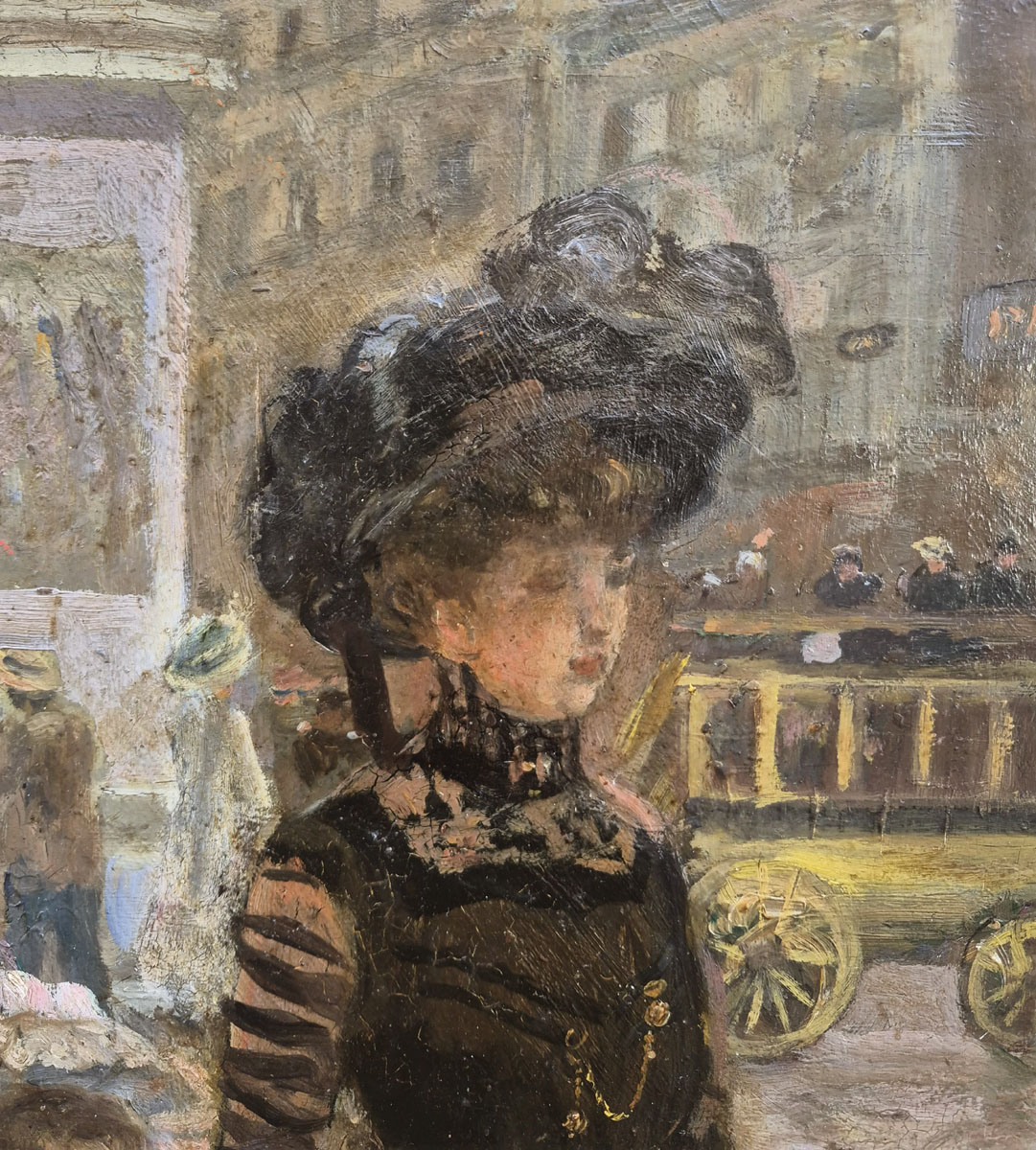
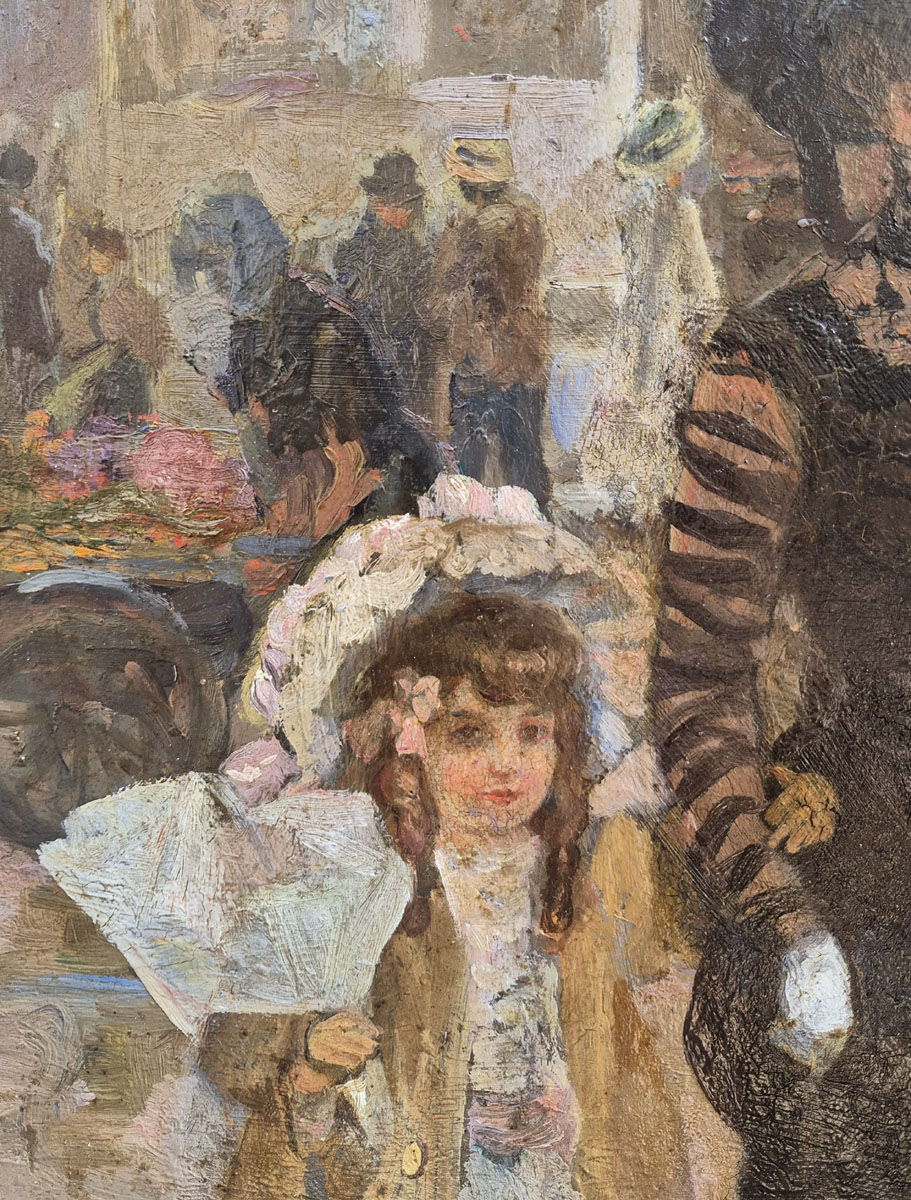
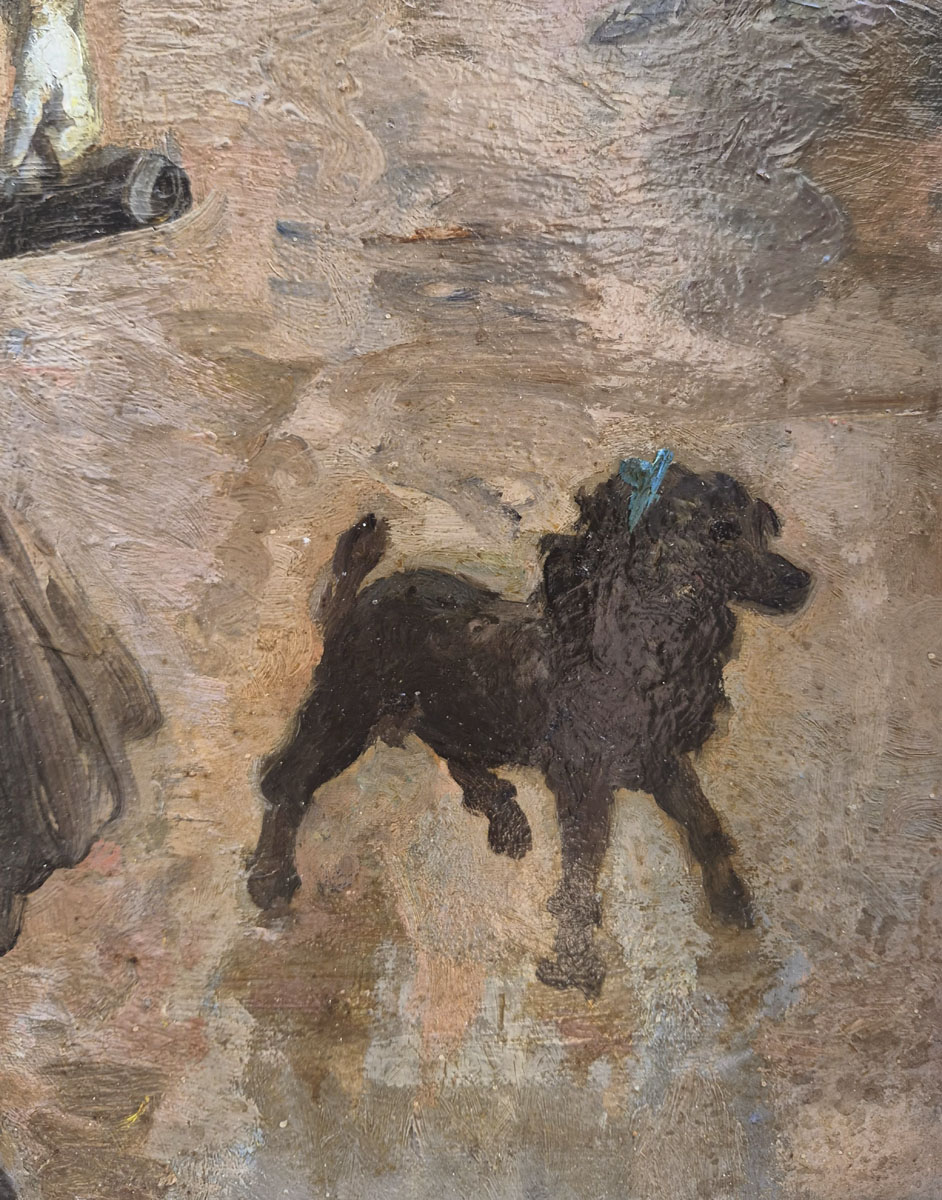
In the foreground, an elegant Parisian woman, dressed in a long black dress and wearing a striking feathered hat, is accompanied by a little girl and a dog with a brisk stride.
Her elegant appearance, her white gloves, and the details of her outfit reflect the era's taste for sophisticated fashion.
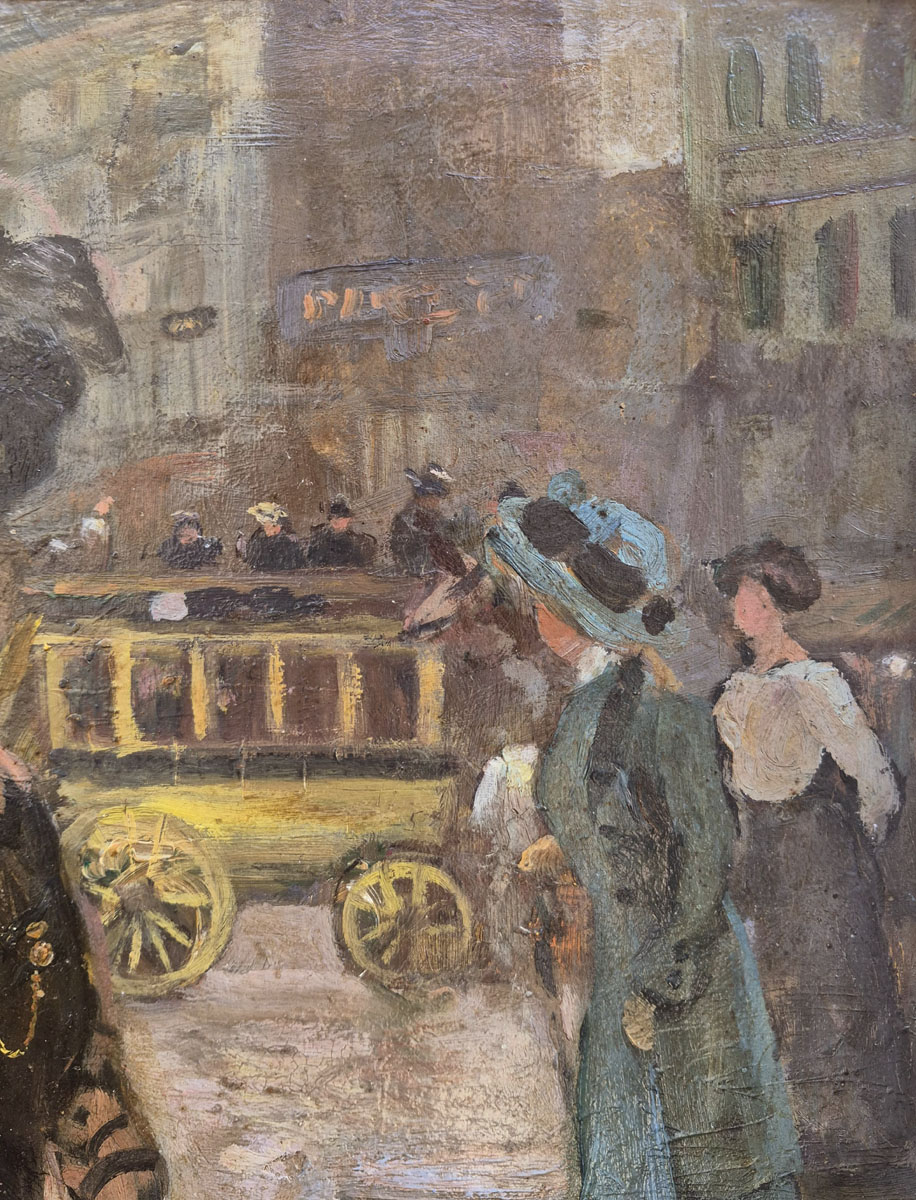
In the background, a bustling street. From right to left, pedestrians cross the street, along with a flower vendor. In the background, a yellow bus catches the viewer’s eye.
The brushwork then becomes freer, almost impressionistic. The shapes dissolve, the outlines blur, and the colors blend together.
The framing—which cuts off some of the figures at the edges and leaves plenty of room for the street scene—reinforces the impression of a moment captured on the spot. The little black dog, captured in mid-motion, further accentuates this spontaneity.
The painting thus goes beyond a mere society portrait to become a true testament to the Belle Époque, its fashions, its vibrancy, and its way of life.