
An oil on canvas, *Toulouse and the Garonne* by Edouard FER
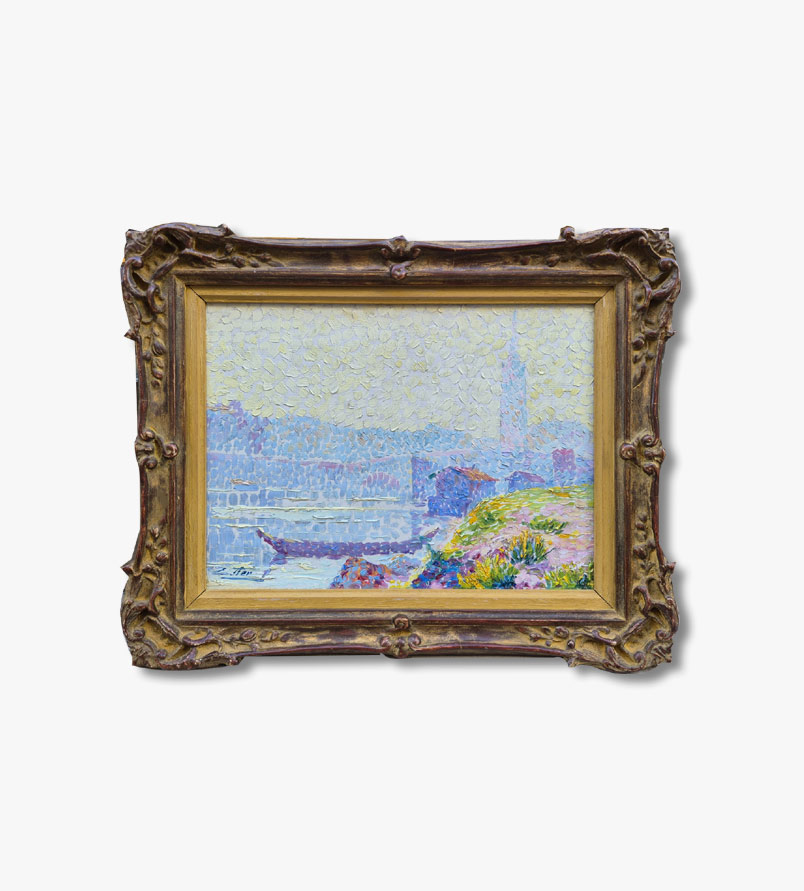
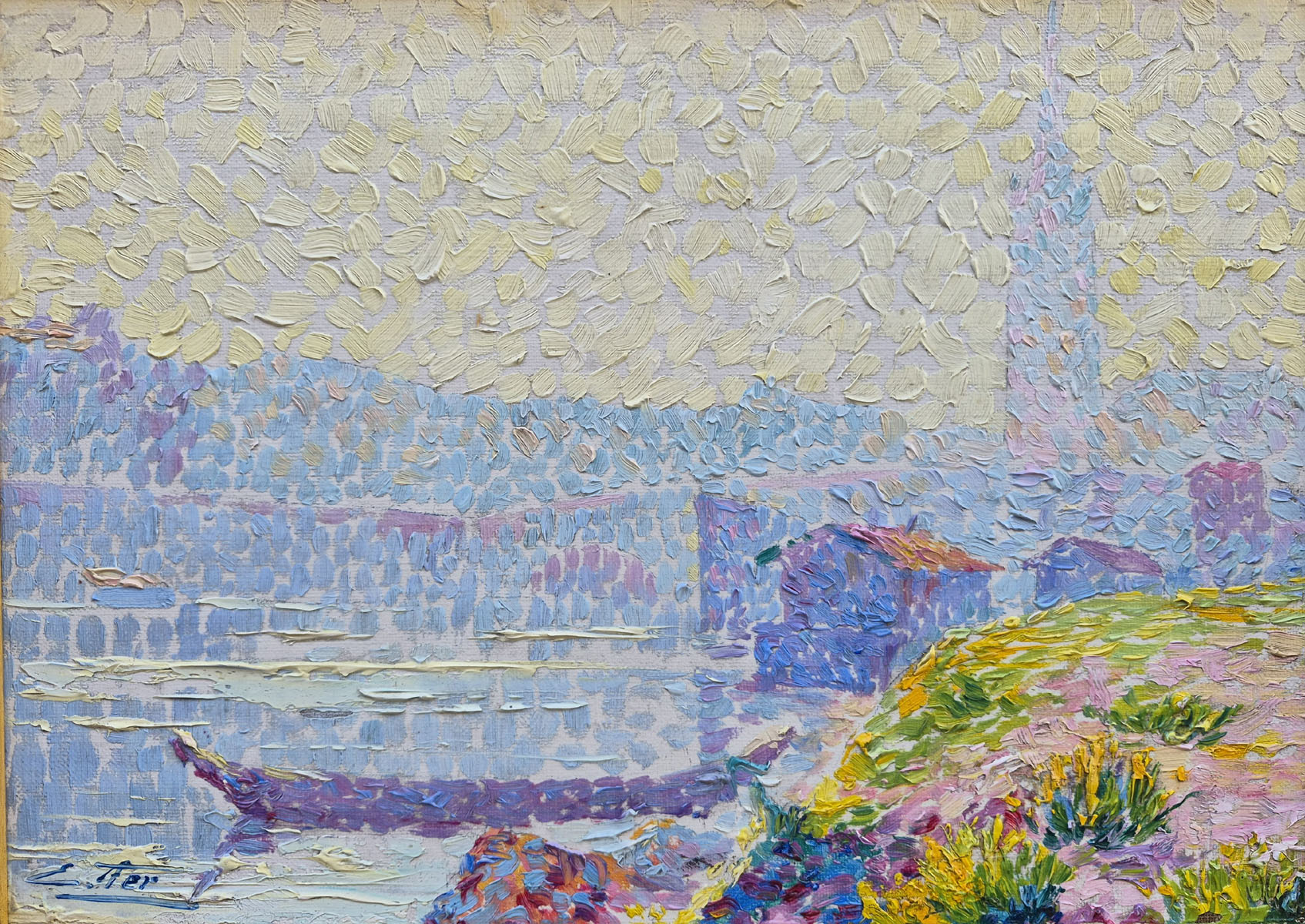
An oil on canvas, *Toulouse and the Garonne* by Edouard FER
Prix sur demande / prices on request
Édouard FER 1887–1959
An artist from Nice, a painter, watercolorist, and printmaker with a free-flowing style that bridges the gap between Pointillism and Divisionism (the latter being the term he preferred to use to describe his work).
A student at the School of Decorative Arts and later at the School of Fine Arts, Fer quickly caught the attention of his peers and the critics of his time. He is documented as early as the Salon des Artistes Français and the Salon des Indépendants.
One of his earliest admirers was Guillaume Apollinaire: “It turned out to be one of the most daring paintings at the Salon, since it was in the Neo-Impressionist style,” he said of a large, decorative Pointillist portrait for which the painter received a medal in 1912.
His studies at the School of Decorative Arts enabled him to take on major commissions: in 1923, for the Nice Municipal Library; in 1928, a decorative design for the ocean liner *France* and, for the Hall of Nations at the Palace of Peace in New Jersey, a monumental composition titled *L’Arbre de Minerve*.
Further information
| Dimensions | 36 × 27 cm |
|---|
But Fer is also a color theorist, just like other greats such as Seurat.
In 1953, he published *Solfège de la couleur*, in which he developed the scientific principles of color in Neo-Impressionism, while demonstrating a certain independence from the theories of his painter friends, including Maximilien Luce, Louis Valtat, and Paul Signac.
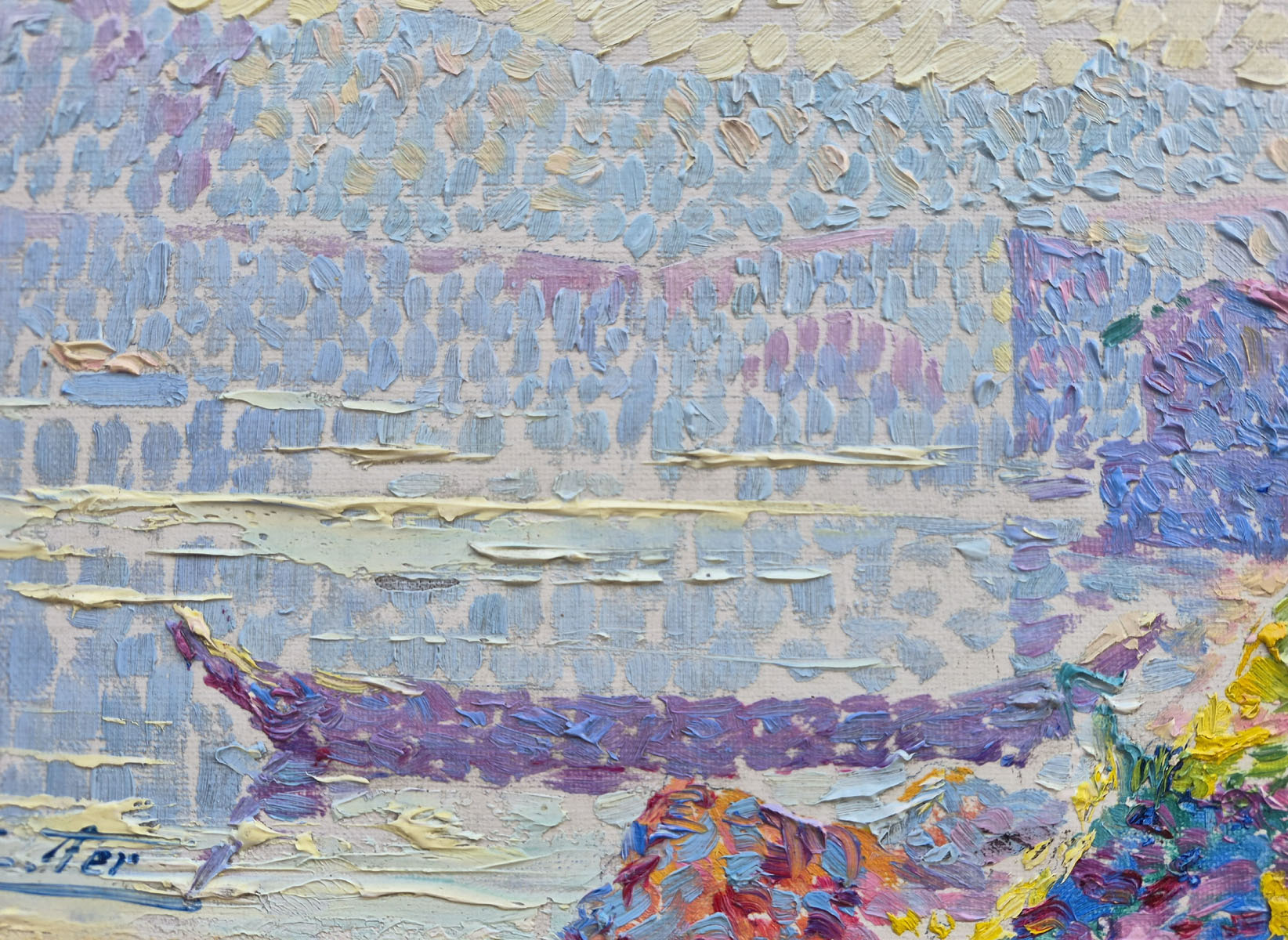
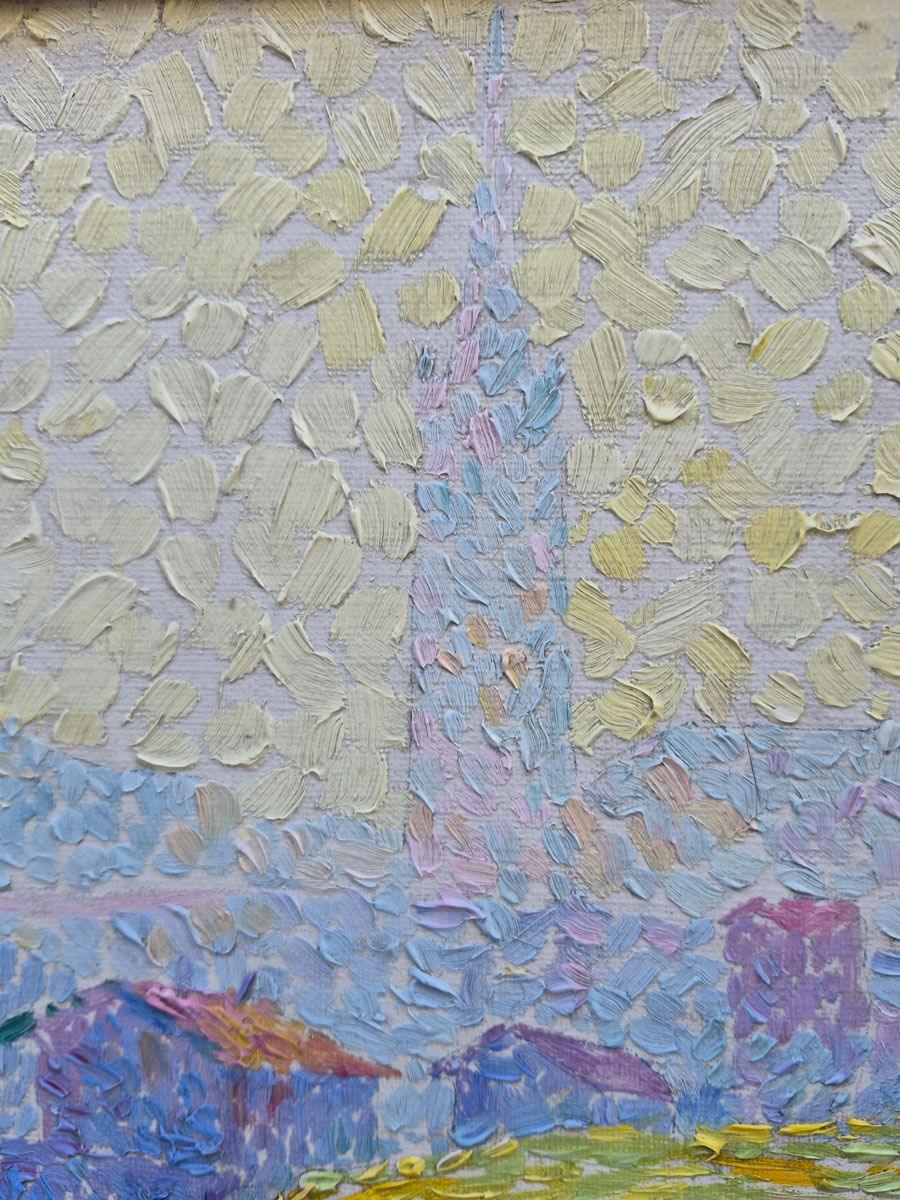
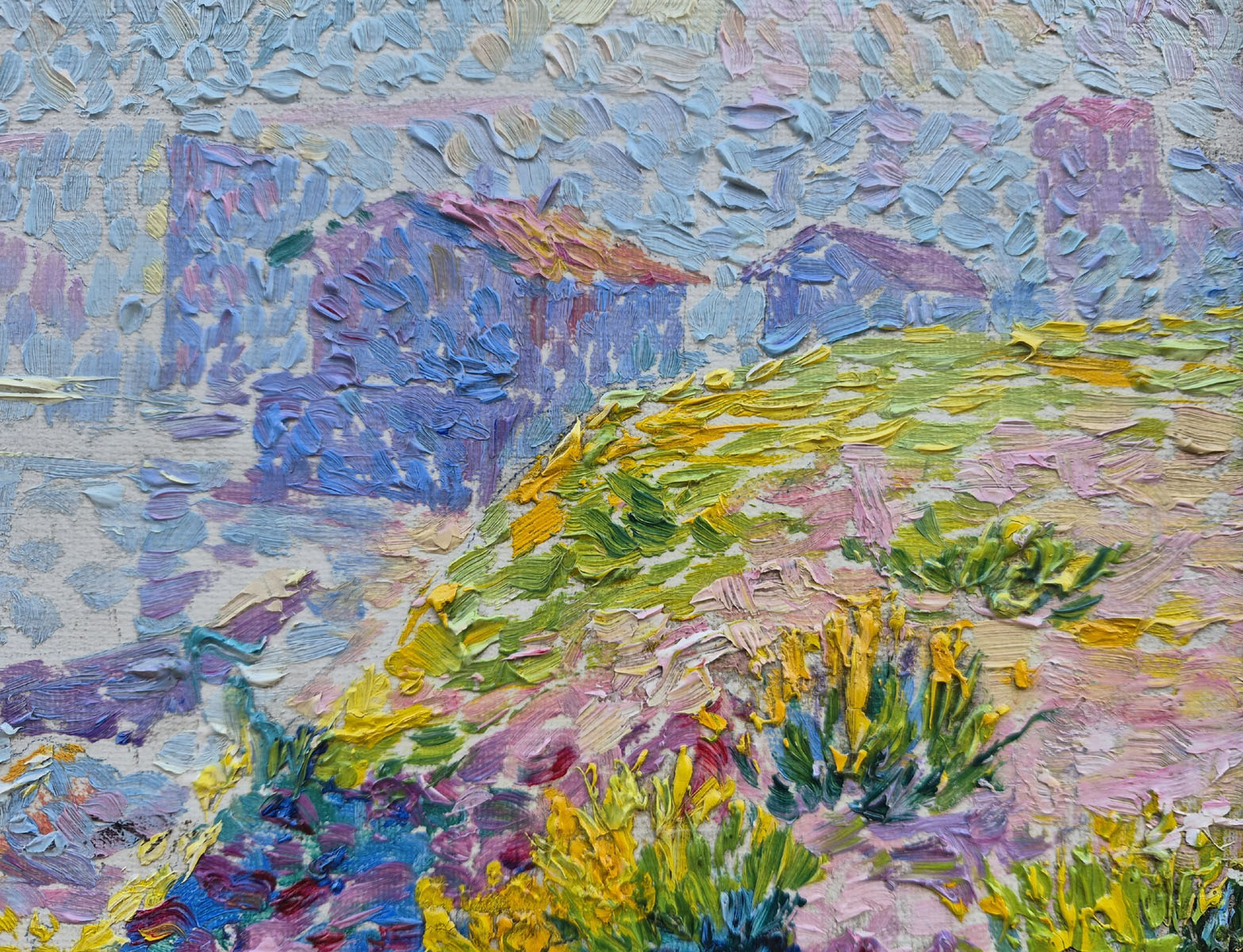
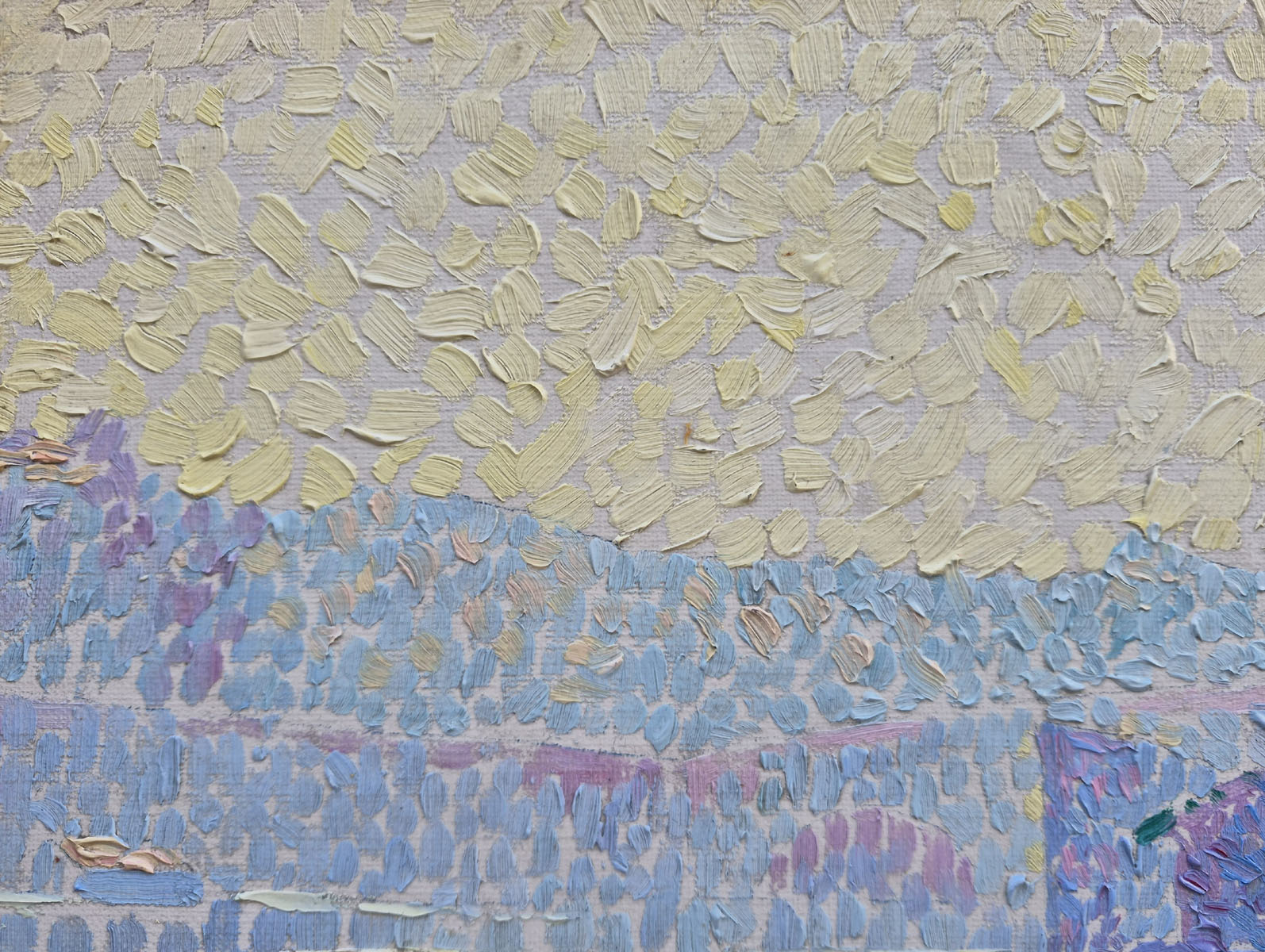
In our composition, the landscape exists only through texture and color.
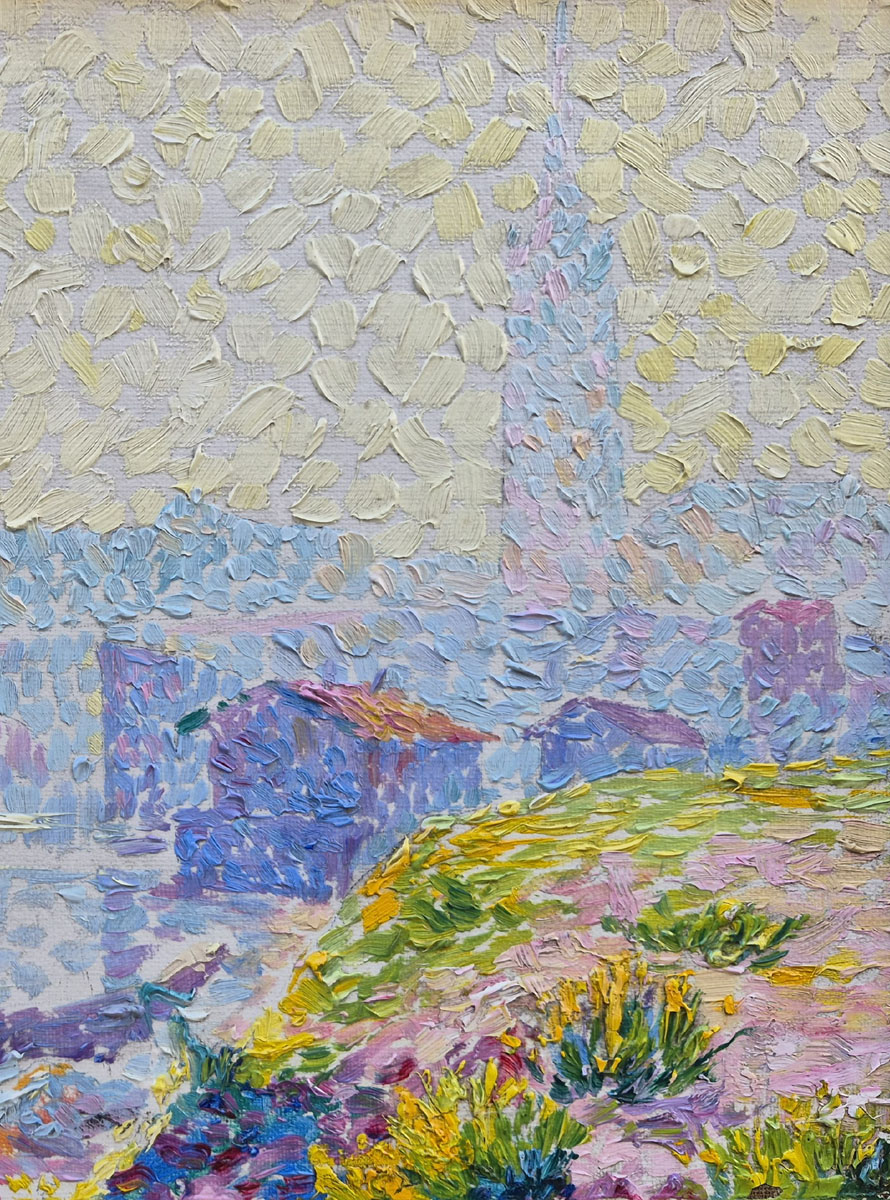
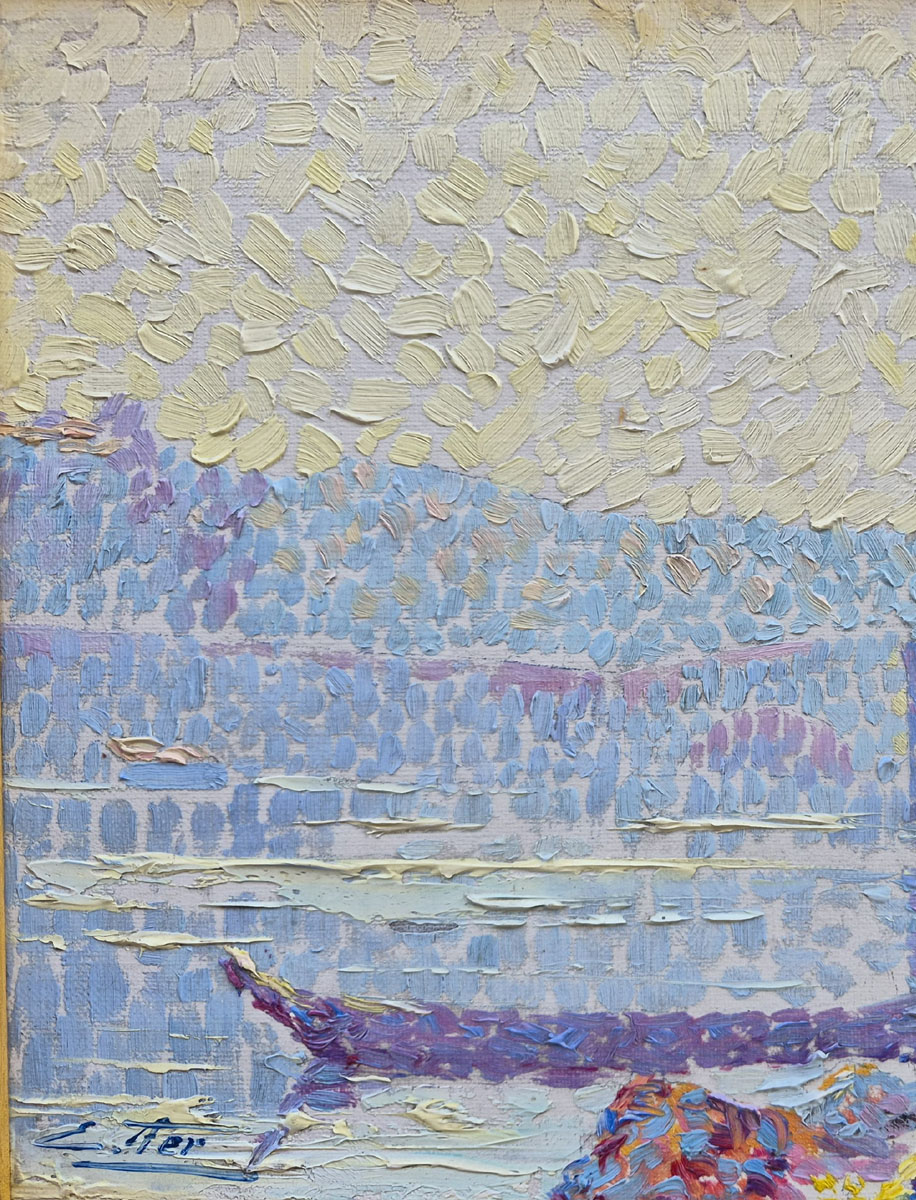
The sky, the water, and the church are rendered through a mosaic of brushstrokes that are freer than those of his Pointillist colleagues.
The background, built up of faint horizontal lines that bridge the river and the sky, guides the viewer’s gaze toward the church, which remains just out of sight. Rendered in subtle pastel shades of blue and pink, Fer allows the soft light of a spring morning to shine through.
The foreground, on the other hand, is executed in a freer style, with more “unrestrained” impasto and stronger, bolder colors, which give the painting depth.