An oil on canvas painting, *Farmer in the Fields* by Fernand MAILLAUD
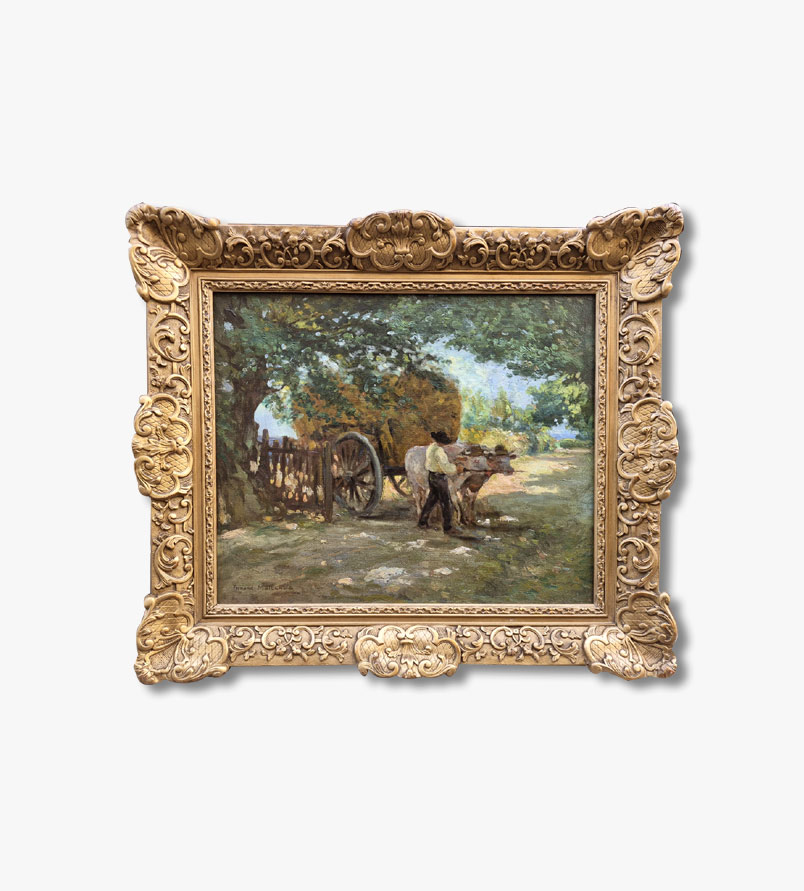
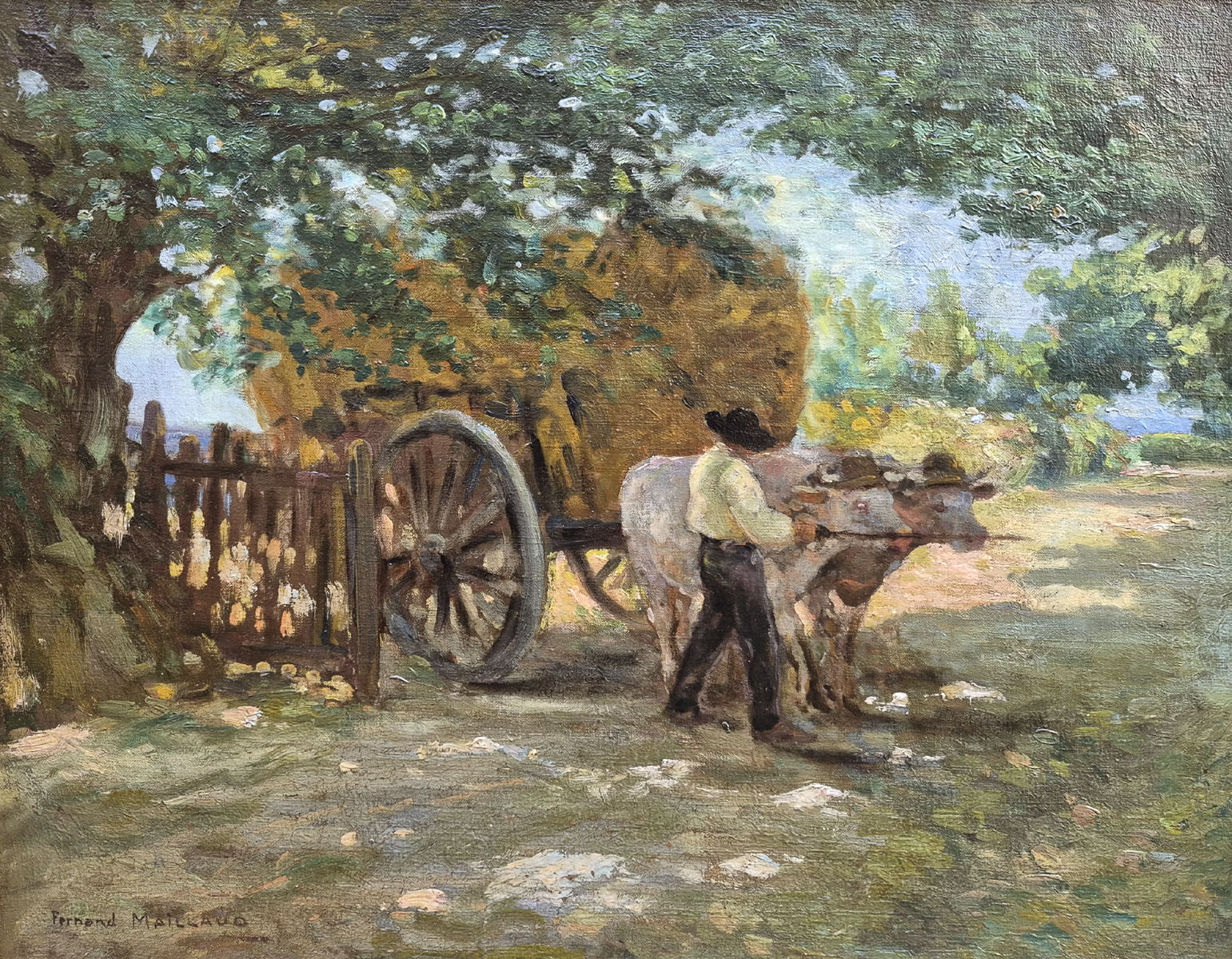
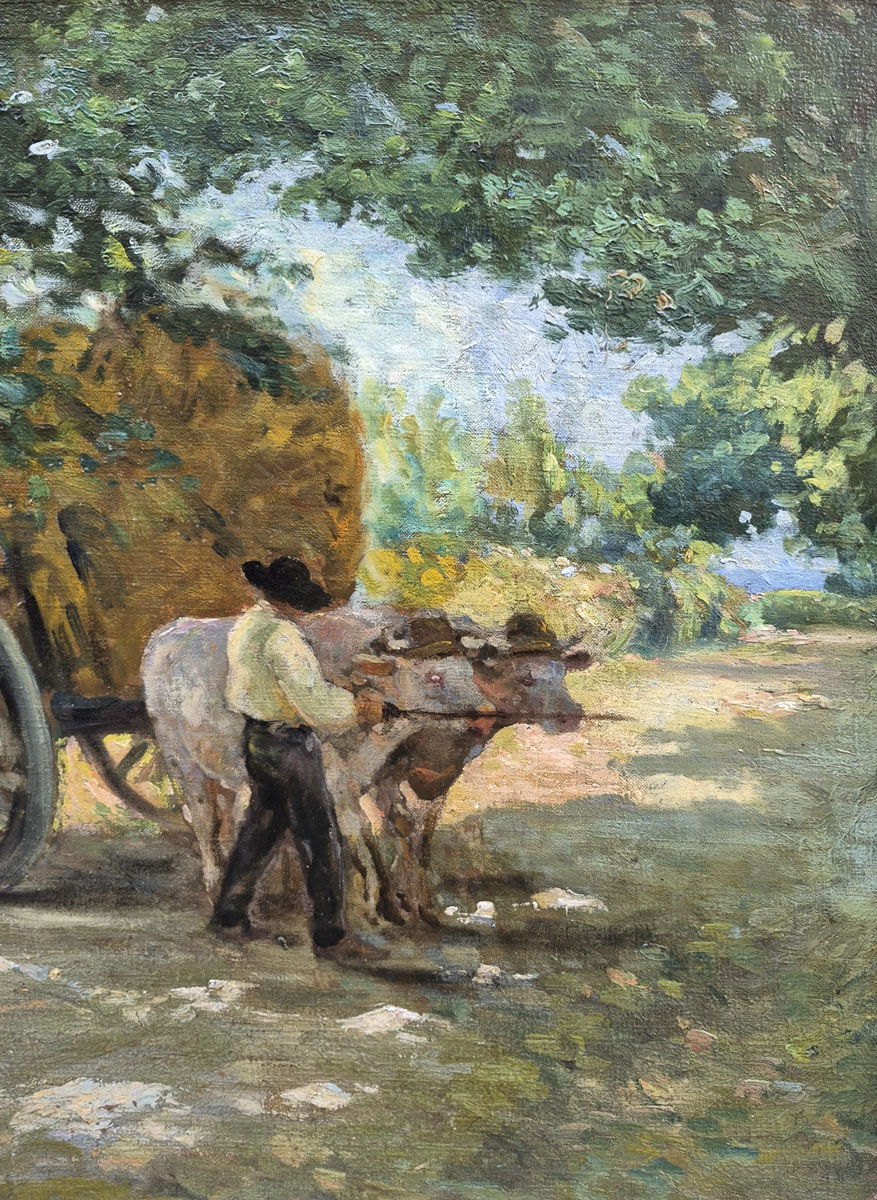
An oil on canvas painting, *Farmer in the Fields* by Fernand MAILLAUD
Prix sur demande / prices on request
Fernand Maillaud 1862–1948
He was the son of a carpenter and a schoolteacher. He grew up in the Bas-Berry region, surrounded by the landscapes, villages, and people that would become the main subjects of his work.
After completing his military service, he moved to Paris, where he worked in department stores. Despite financial difficulties, he continued to pursue his passion for drawing.
In 1886, he married Fernande Sevry, who would herself become a tapestry designer and collaborate closely on his decorative projects.
The couple settled in Montmartre.
Maillaud took drawing classes offered by the City of Paris and attended the École des Beaux-Arts. He was largely self-taught.
Further information
| Dimensions | 71 × 64 cm |
|---|
Beginning in the 1890s, he became associated with the Post-Impressionist and Symbolist circles centered around Paul Gauguin, Maurice Denis, and Paul Sérusie
However, Maillaud did not seek to make a radical break with the representation of nature.
He retained a strong preference for direct observation, while developing a brushstroke that was more Impressionist than that of the Naturalists.
In 1895, he settled in Fresselines, in the Creuse Valley
This period was pivotal.
In this valley, he discovered a landscape of hills, paths, rivers, and villages that deeply resonated with his sensibility.
“Fernand Maillaud is currently the painter of the Berry region, just as George Sand was its writer and Maurice Rollinat its poet,” wrote a critic in 1912
He exhibited at the Salon des Artistes Français from 1898 until his death
Starting in the 1920s, Maillaud spent more time in Guéret and in the south of France.
He also discovered the light of North Africa, particularly in Algeria and Morocco.
But the rural world forms the foundation of his artistic identity.
The critic Raoul Toscan writes of Maillaud that he is “the Jean-François Millet of the Berry region.”
The comparison with Jean-François Millet is particularly apt.
Like Millet, Maillaud depicts peasants going about their daily activities.
But their approaches differ.
In Millet’s work, the peasant figure can take on a monumental, almost sacred dimension.
In Maillaud’s work, the figure is more often integrated into a familiar, living landscape.
Maillaud thus favors a less solemn, more spontaneous—and at times almost joyful—vision of rural life.
“With sincerity and emotion, he goes straight to the point, which is to move the viewer,” wrote a critic in 1905.
All of this is very meaningful for our work.
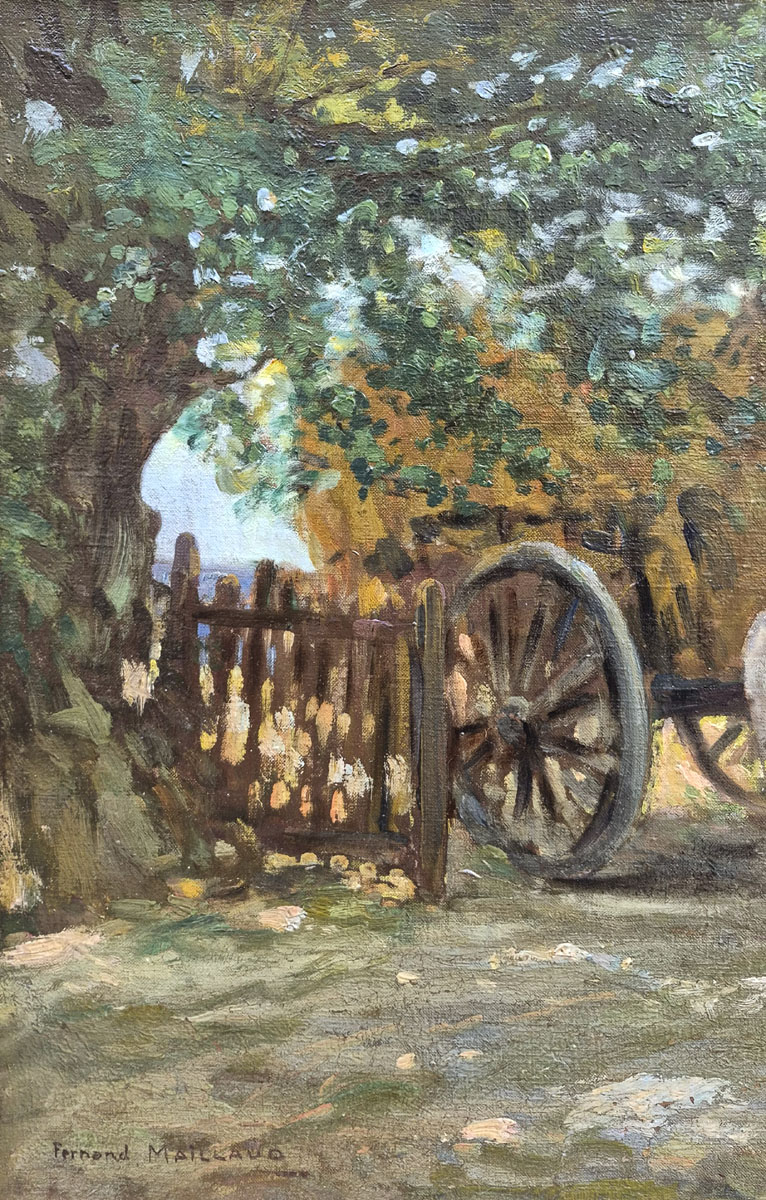
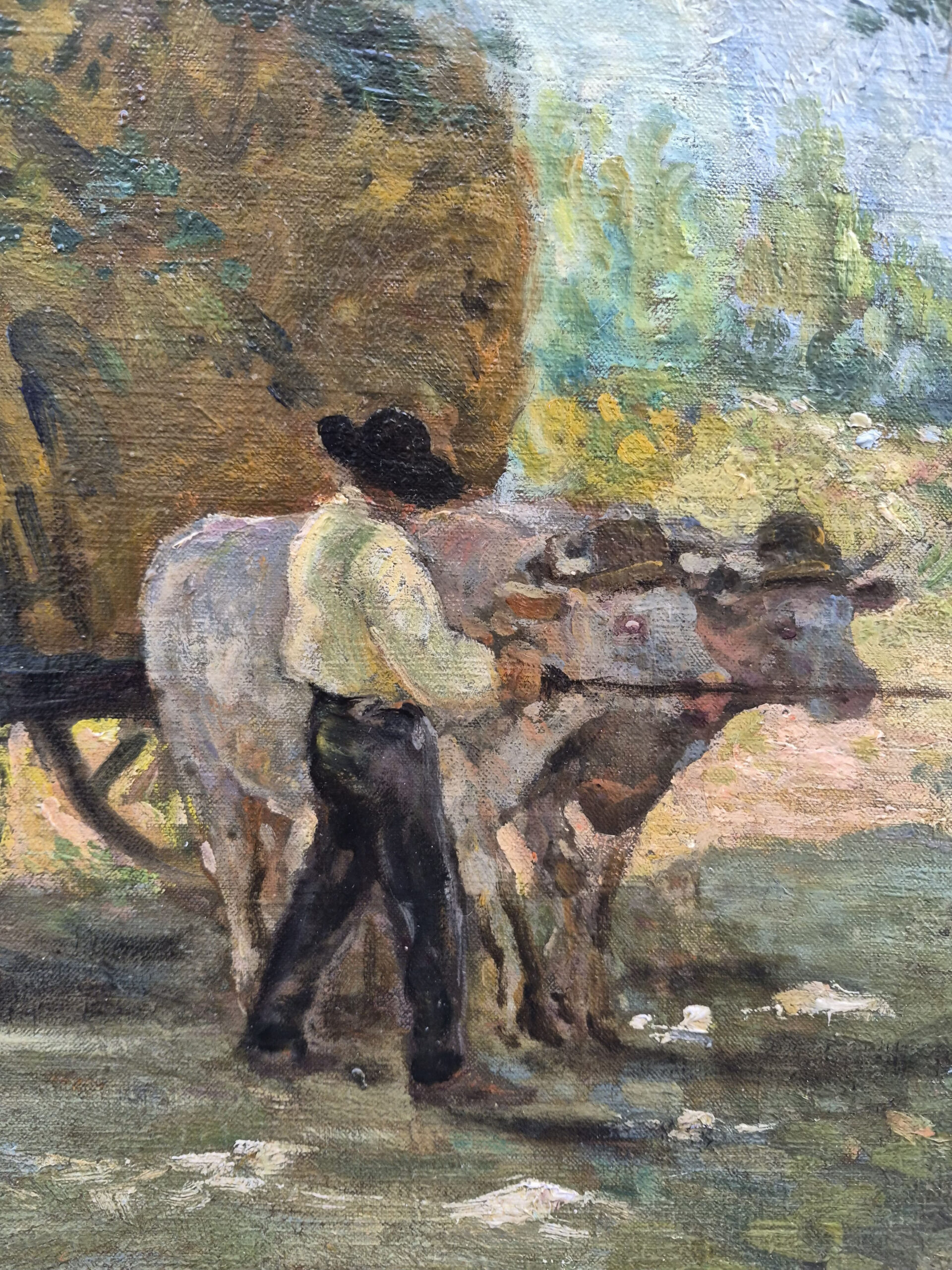
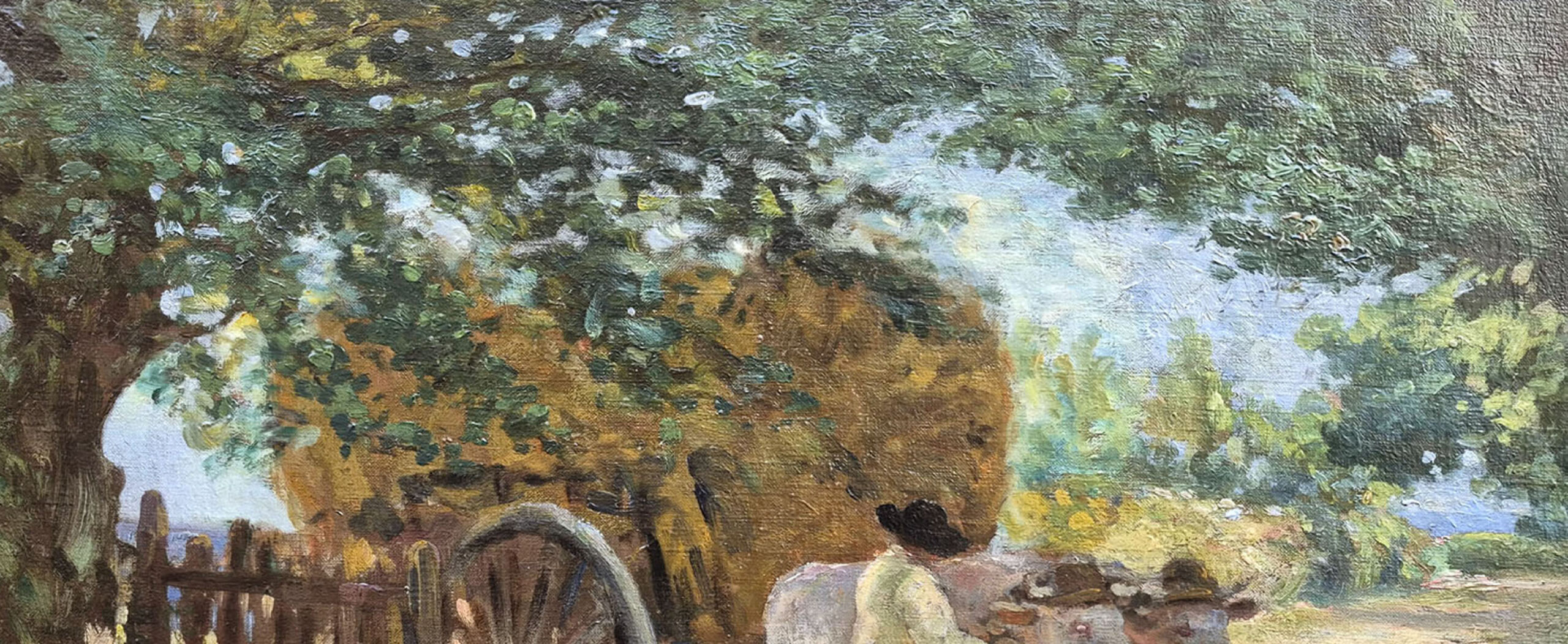
The scene takes place on a country path, near a rustic gate, beneath the lush canopy of a large tree.
The composition is based on a particularly interesting balance: on the left, the imposing mass of foliage and the cart; on the right, the luminous opening of the path that draws the eye toward the landscape.
The light filters through the foliage and illuminates the oxen and the farmer.
Maillaud depicts an ordinary moment in farm life.