
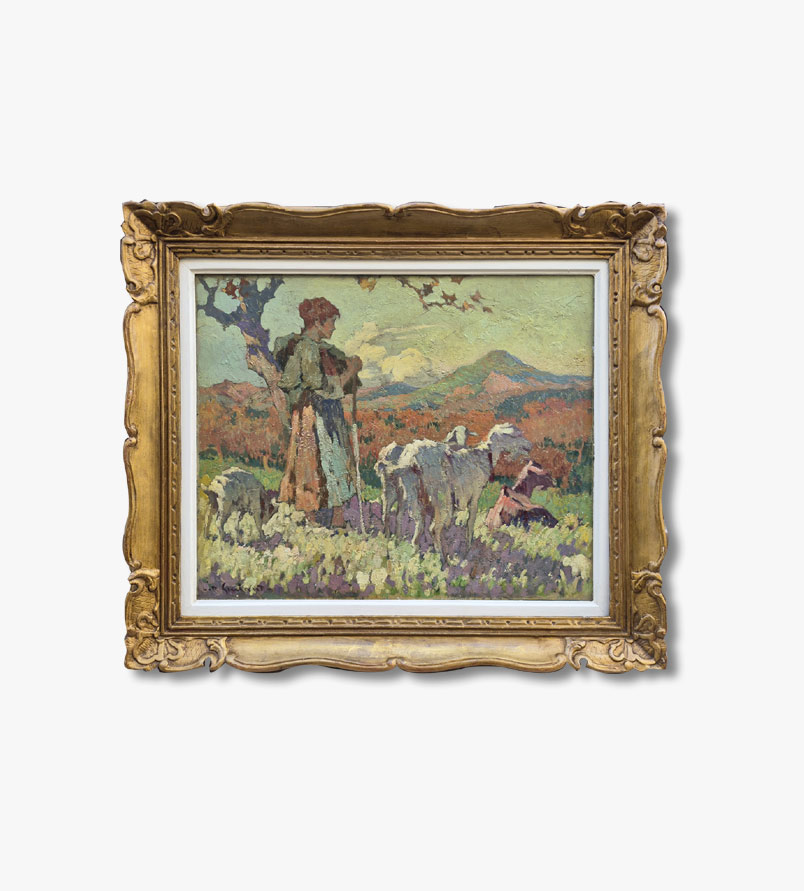
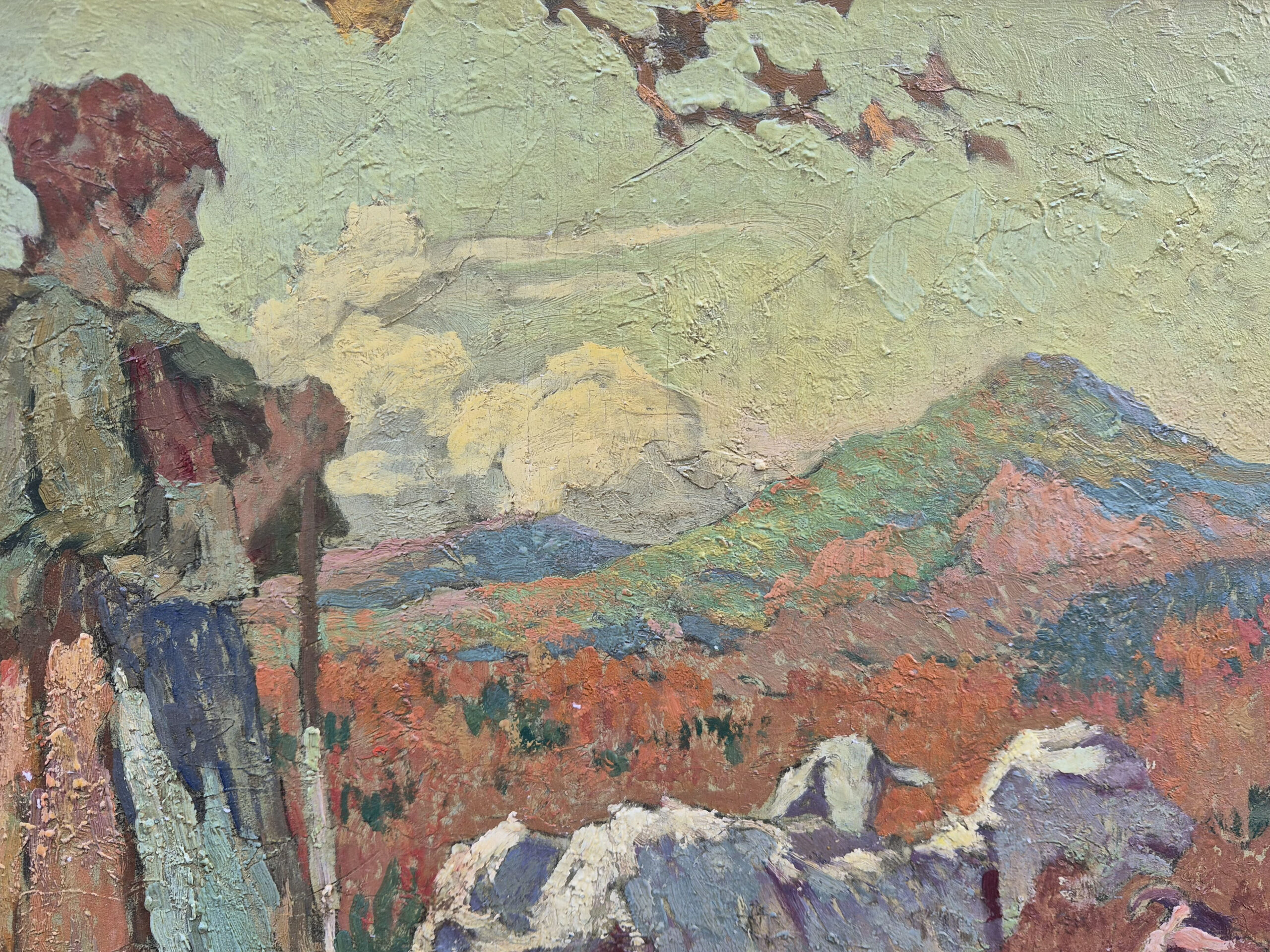
An oil painting on panel, *The Shepherdess and Her Goats* by Louis Raoul GUIRAUD
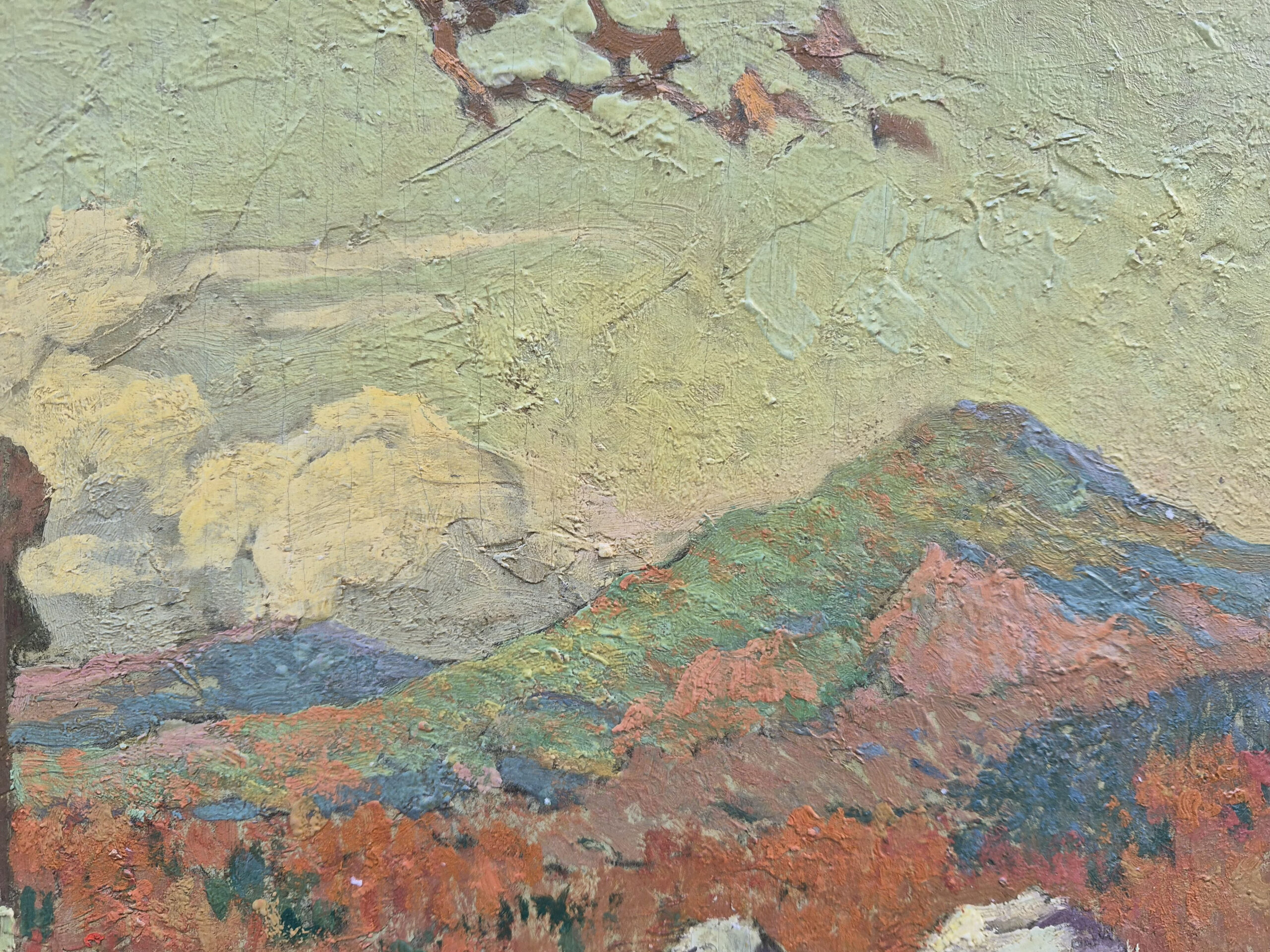
An oil painting on panel, *The Shepherdess and Her Goats* by Louis Raoul GUIRAUD
Prix sur demande / prices on request
Louis Raoul GUIRAUD (1888–1976)
In 1907, at the age of just 19, the young Guiraud enrolled at the Toulouse School of Fine Arts in the studio of Henri Bonis, a painter of landscapes and rural life.
The young student won no fewer than 18 awards between 1908 and 1911.
At the end of his studies in Toulouse, he received a scholarship that allowed him to spend several months at the Villa Medici; he then moved to Paris and enrolled as a non-matriculated student at the Académie Julian, first in Jean-Paul Laurens’s studio and later in Augustin Lermitte’s studio in Montmartre.
Despite the new modern movements developing around him in the Montmartre studios, Guiraud remained drawn to a more classical and naturalistic style of painting, with the vibrant colors of the South.
After the war, he decided to settle in his native South, in Marmande, with his wife, though he did not abandon the Parisian Salons.
The journalist Jean Soulairol considered him one of the “best painters of his generation.”
Further information
| Dimensions | 60 × 52 cm |
|---|
.
He went on to design sets for the Opéra-Comique and the Théâtre du Châtelet, and helped design the interior of one of the Orient Express train cars. Later, he also received numerous commissions from institutions in southwestern France.
In 1928, his talent was recognized with an honorable mention at the Salon des Artistes Français. A few years later, in 1935, he was promoted to the rank of Officer of the Order of Academic Palms.
In 1952, upon returning to his hometown of Béziers, he succeeded Félix Cambon as curator of the Museum of Fine Arts.
Deeply attached to his Languedoc roots, Raoul Guiraud draws his inspiration from the daily lives of farmers and laborers.
From small, intimate canvases to large-scale compositions, he immortalizes the gestures and labors of the fields.
Beyond simply depicting rural life, his painting reflects a constant search for light, much like that of his Post-Impressionist friends.
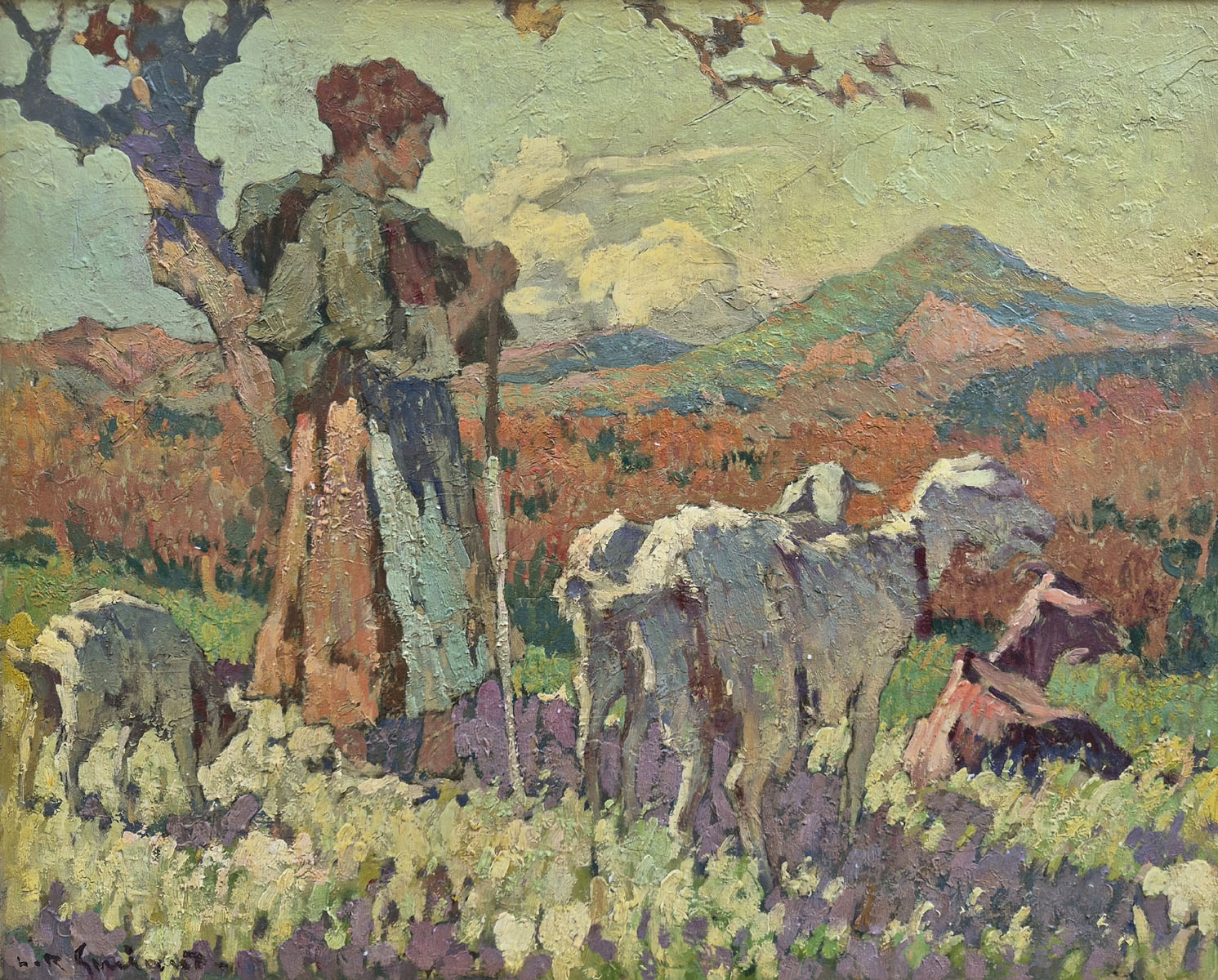
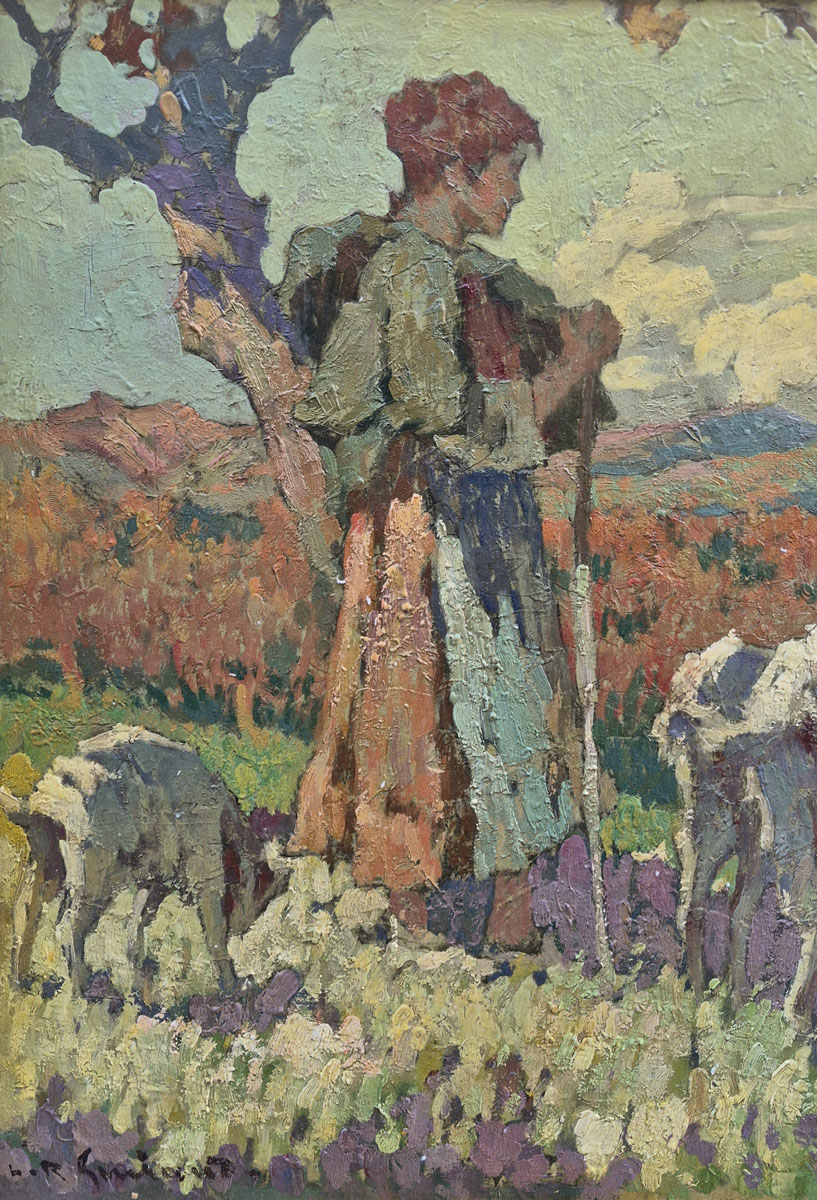
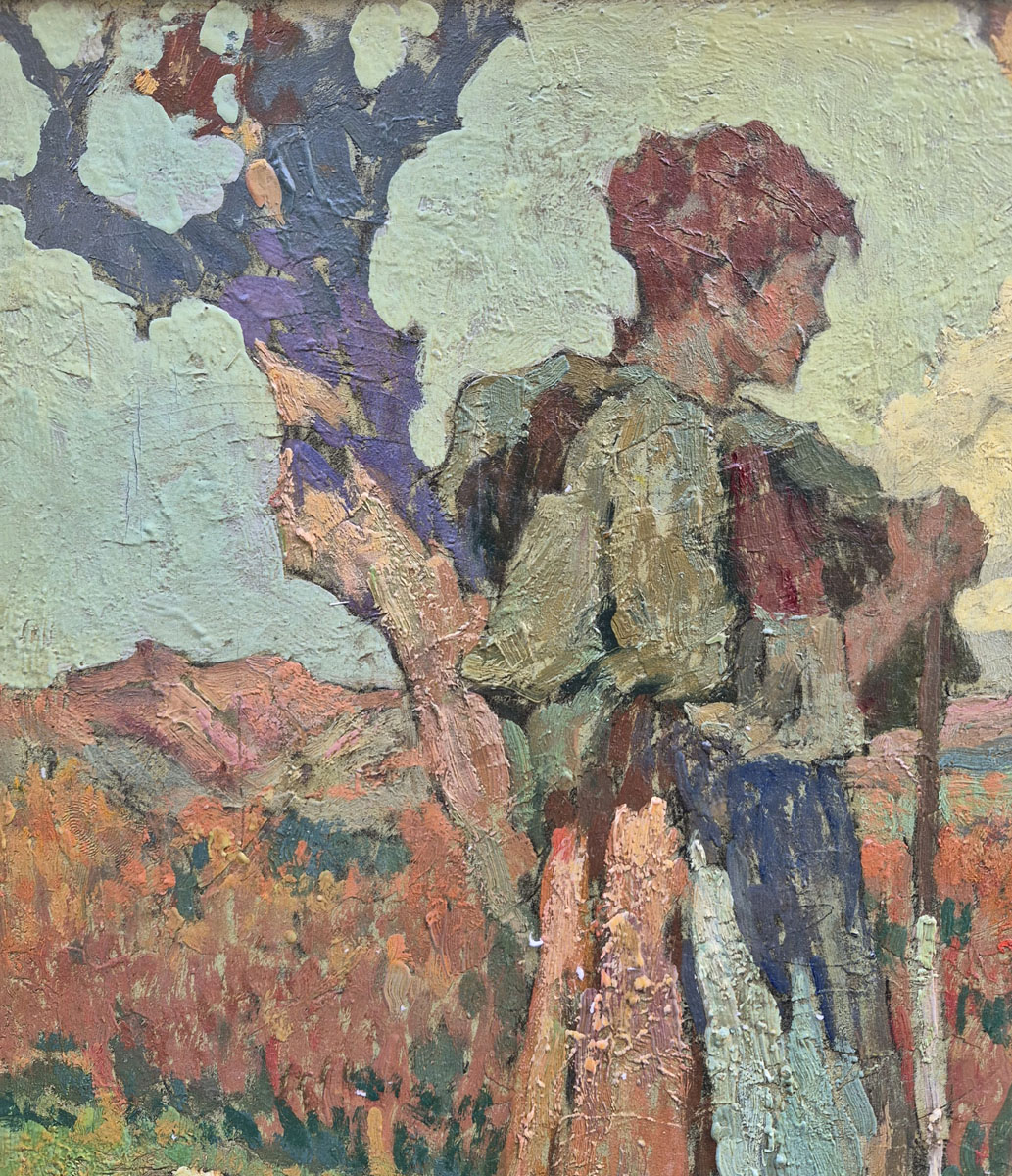
Our composition is centered around a majestic tree, against which the young shepherdess leans. Positioned on the left side of the painting, its trunk structures the scene with its verticality, while its branches and foliage, which spread out across the upper part of the canvas, naturally frame the landscape.
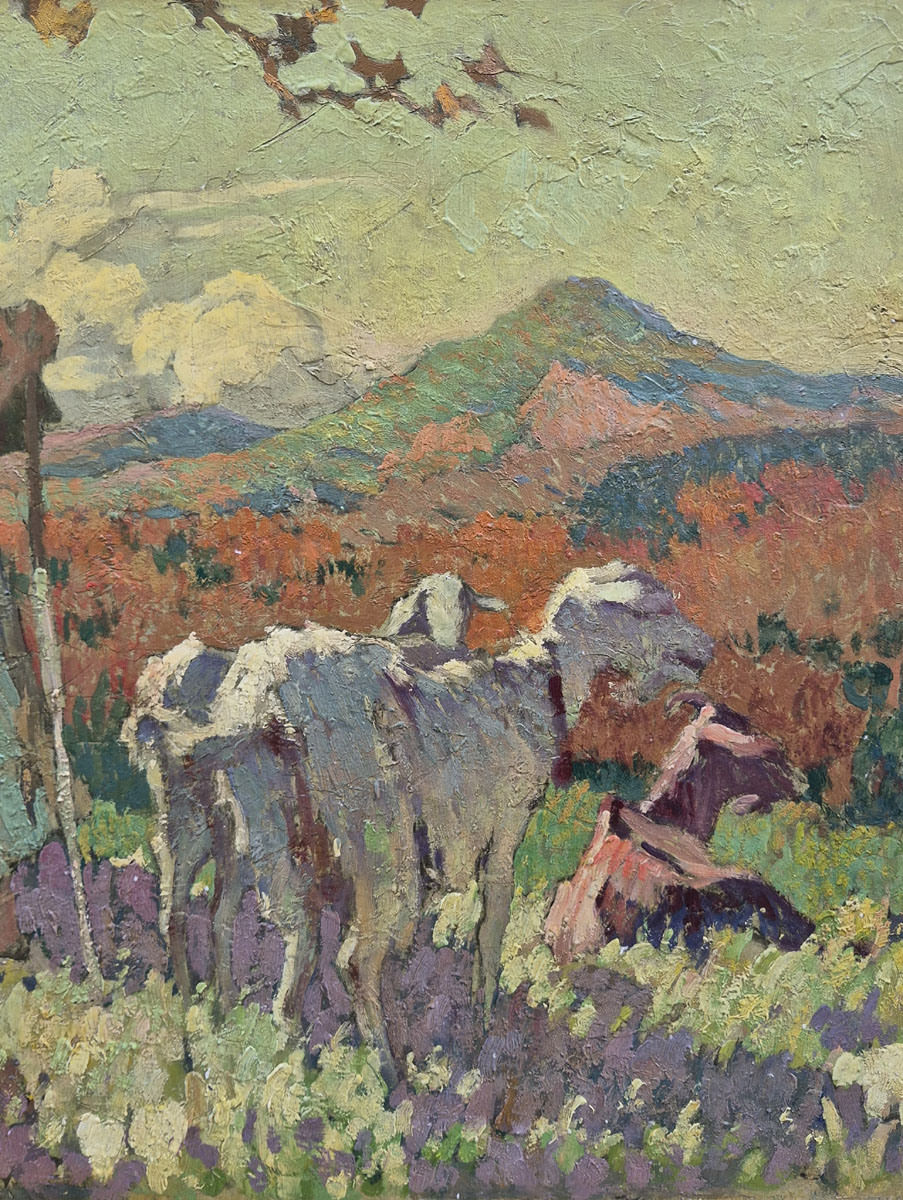
This interplay of foliage in the foreground, offering a glimpse of the mountains in the background, lends the composition a slightlyJapanese feel, reminiscent of Japanese woodblock prints and their use of successive planes.
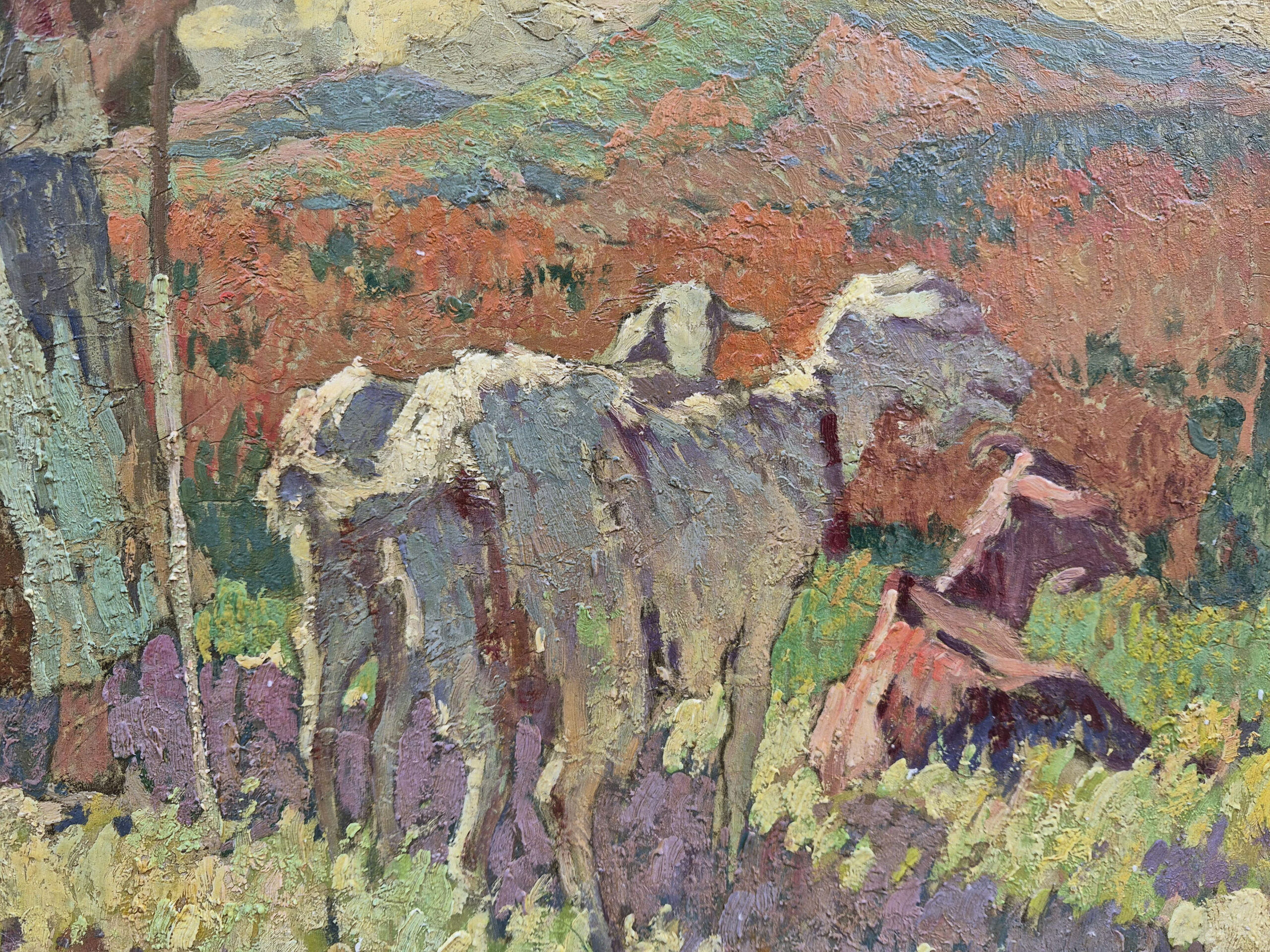
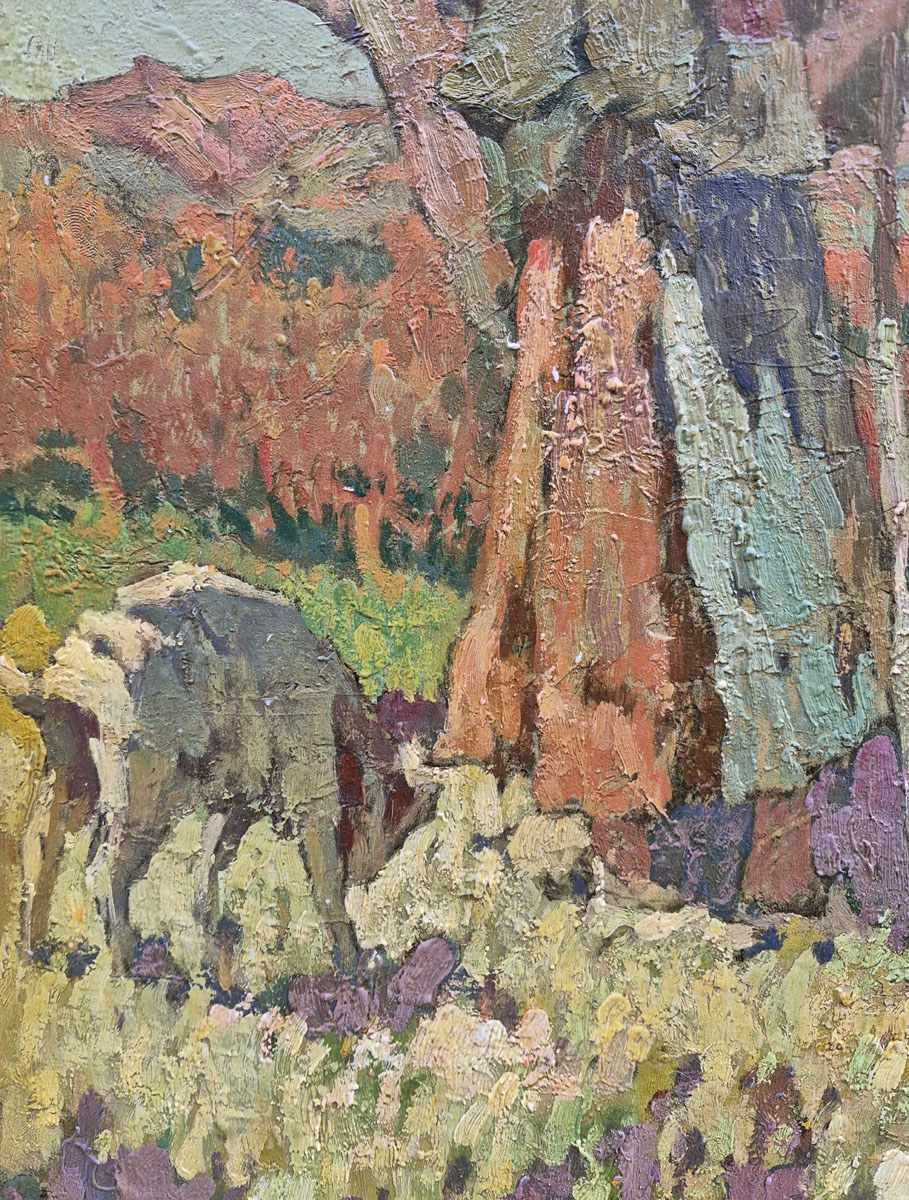
On either side of the shepherdess, the goats—arranged in small groups—balance the composition and guide the viewer’s gaze across the scene, lending the whole a sense of balance and serenity while retaining a great deal of spontaneity
Guiraud works with thick, fragmented, and generous brushstrokes, juxtaposing soft greens, purples, luminous yellows, and warm ochres. This technique, rooted in Post-Impressionist sensibilities, gives the canvas a distinctive vibrancy.