An oil on canvas, Landscape and Still Life by Pierre THEVENET
An oil on canvas, Landscape and Still Life by Pierre THEVENET
4.800,00 €
Pierre Thévenet 1870–1937
was a Belgian Post-Impressionist painter who came from a family of artists; his father was a baritone, his sister an opera singer, and his younger brother the painter Louis Thévenet.
He initially pursued music and considered a career as a flutist before turning to painting around the turn of the 20th century.
Unlike many artists of his generation, Pierre Thévenet is largely self-taught and did not follow a formal academic curriculum at the Beaux-Arts.
This lack of formal training undoubtedly contributes to the spontaneity of his brushwork and the freedom of his color palette
Further information
| Dimensions | 48 × 68 cm |
|---|
His early works reveal a sensibility reminiscent of Belgian Luminism and Post-Impressionism.
He then began associating with artists active in Brussels and developed a marked preference for atmospheric effects, vibrant colors, and landscapes bathed in light.
Around 1919, he moved to Paris, where he gained a more direct exposure to the Impressionist legacy. Montmartre, the banks of the Seine, and the Tuileries became his favorite subjects
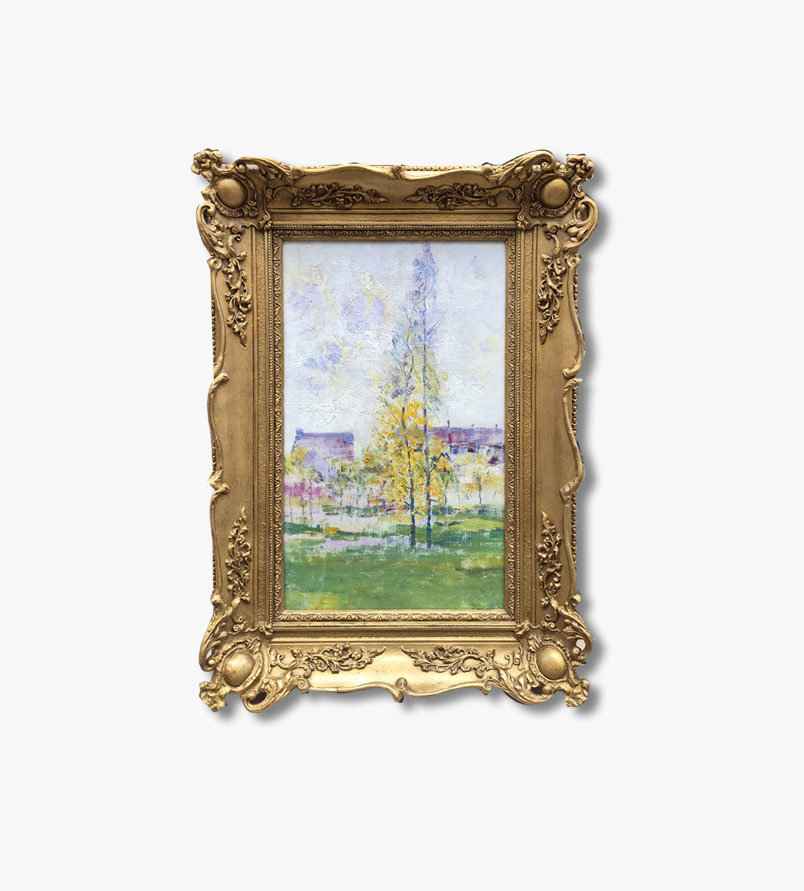
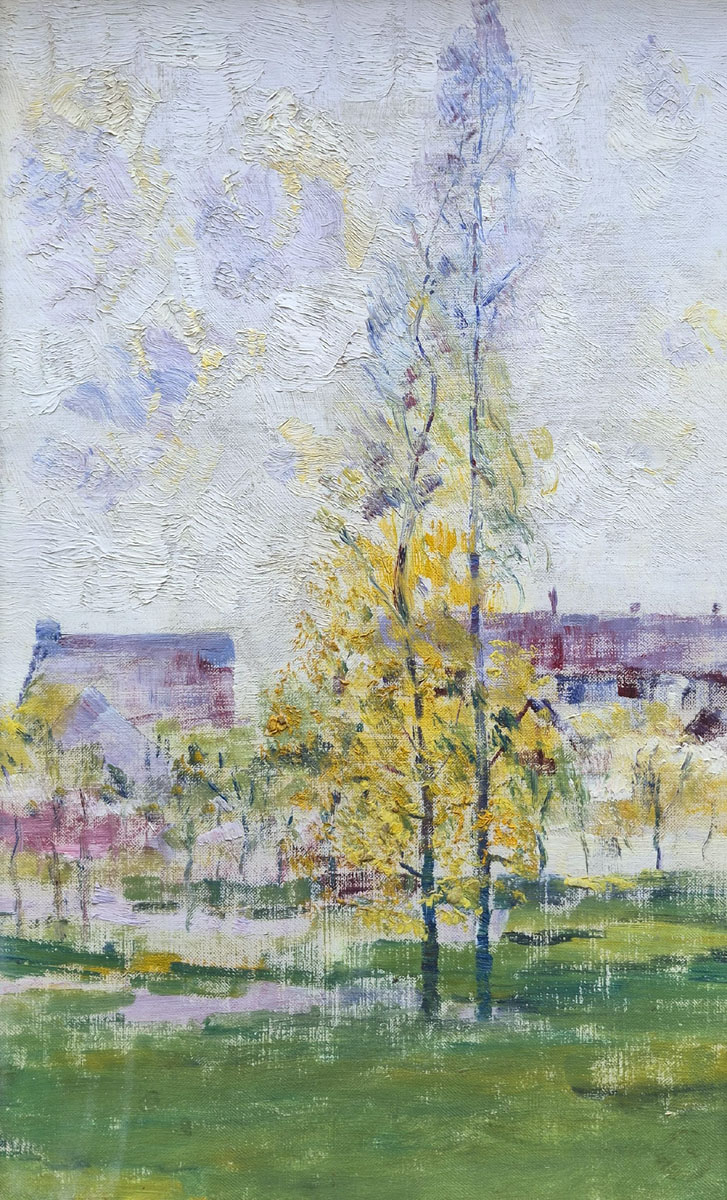
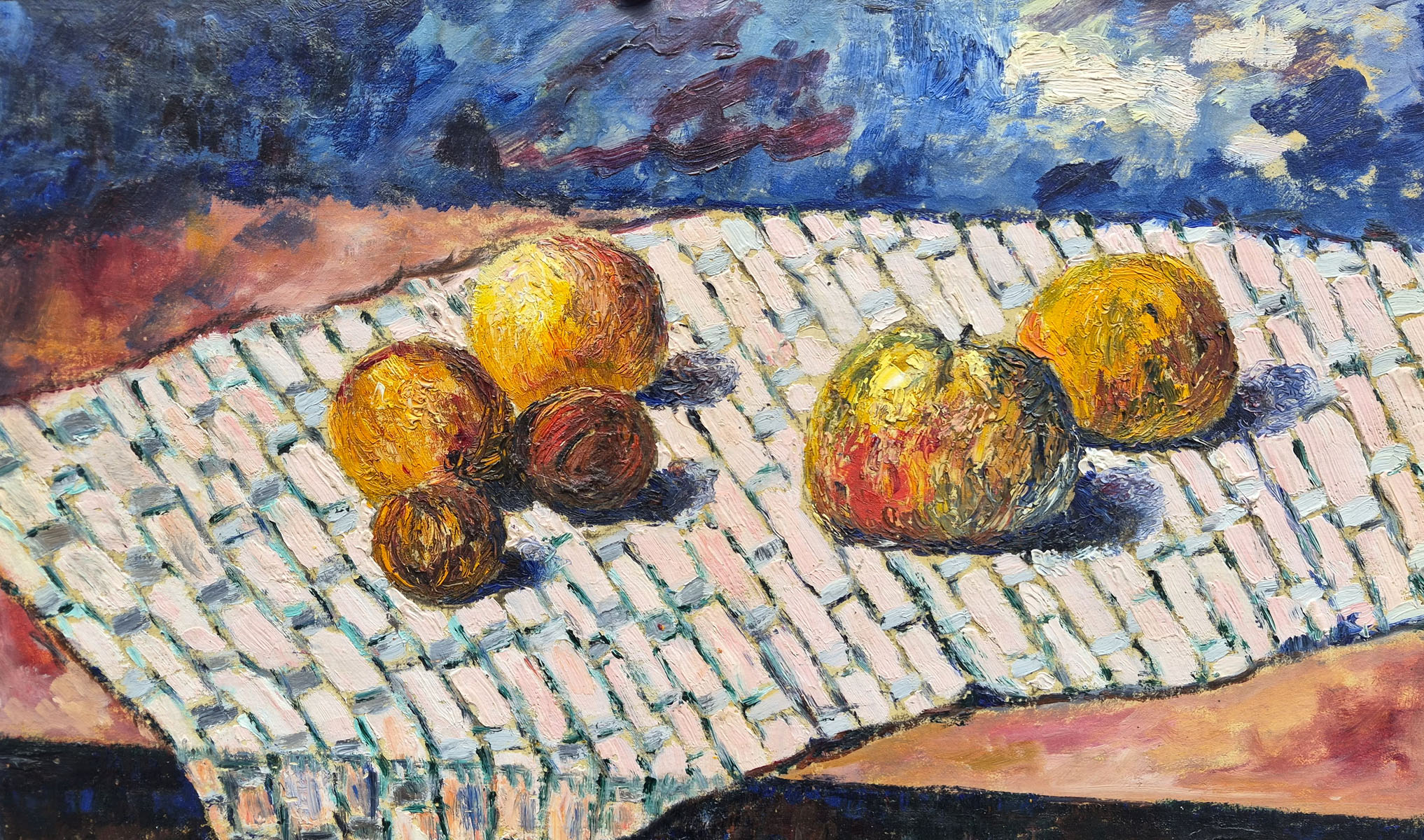
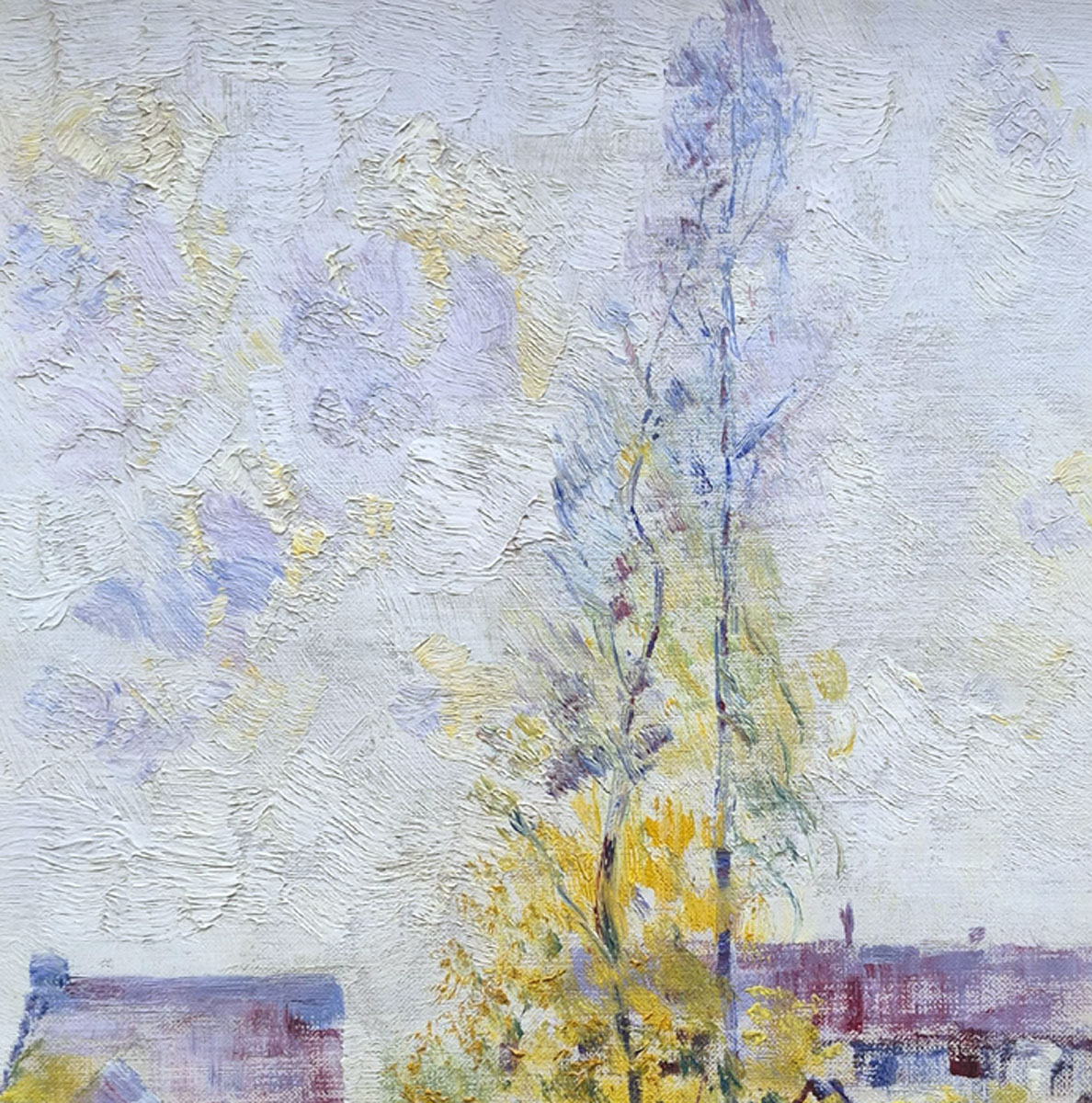
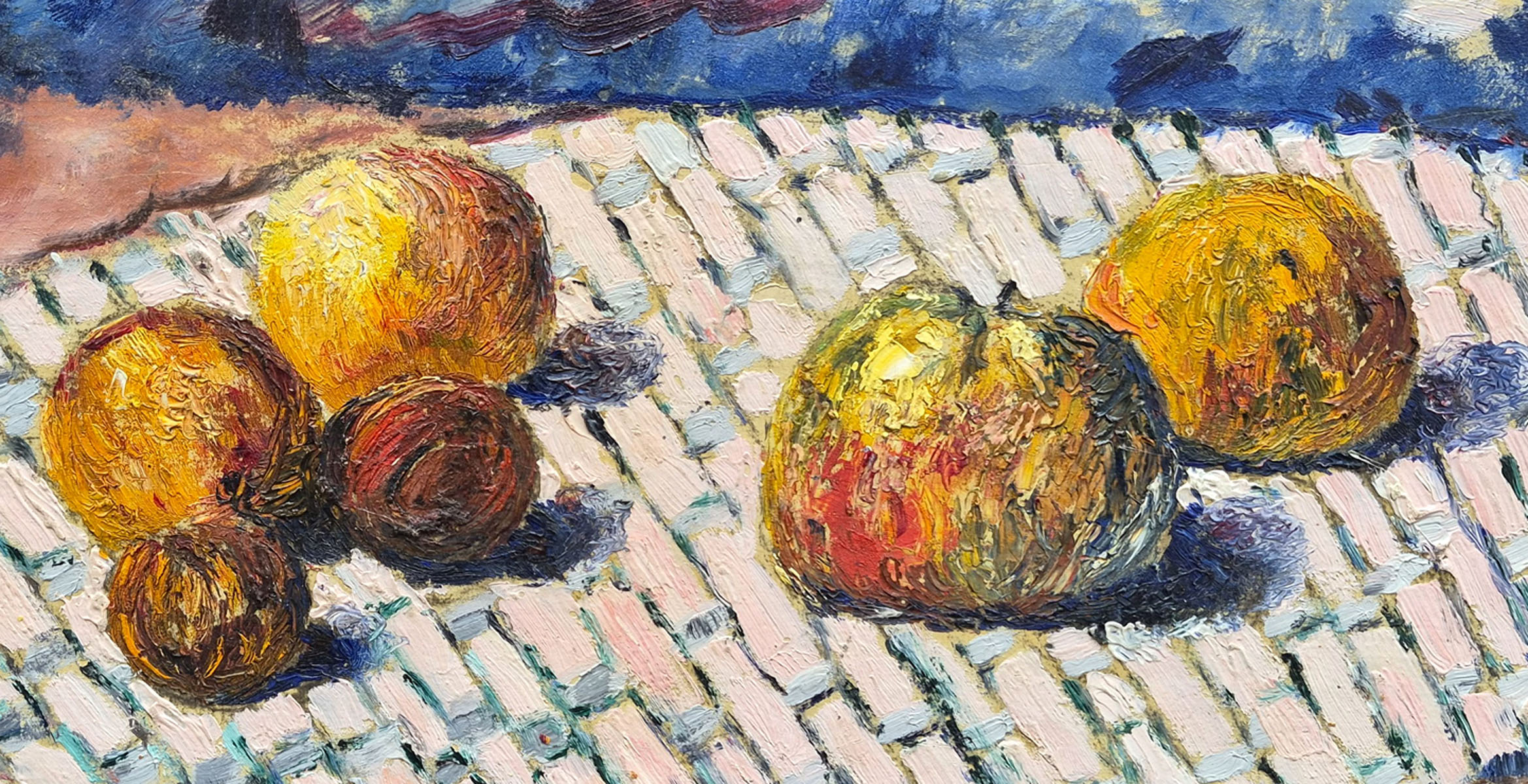
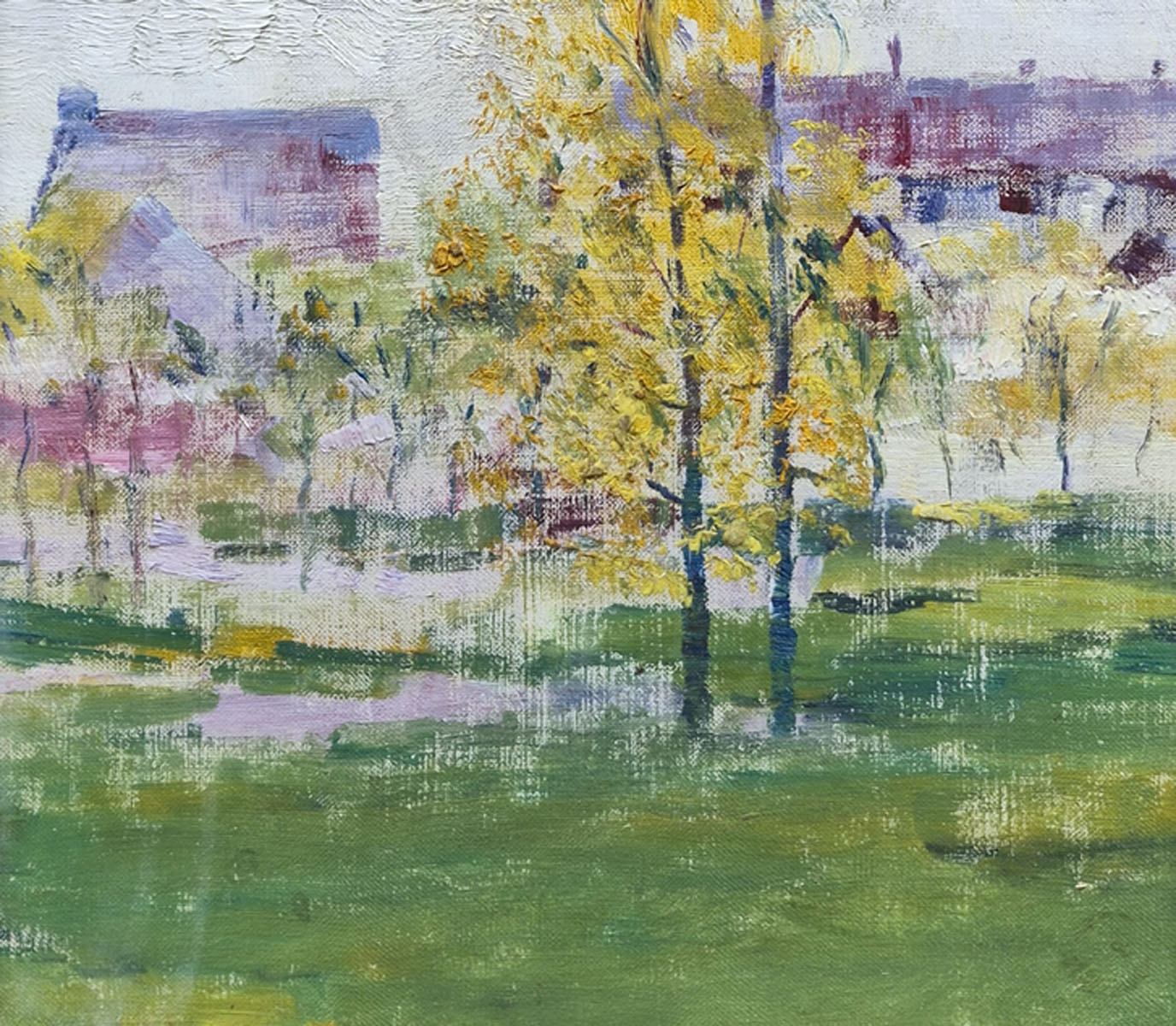
Our double-sided painting is particularly noteworthy because it brings together two central themes from his repertoire: landscape and still life.
One side depicts a spring landscape; the fresh greens in the foreground, the reflections on the water, and the touches of lilac create a calm yet vibrant atmosphere, characteristic of his landscapes influenced by late Impressionism.
The other side features a still life of great chromatic intensity. The fruits—oranges, an apple, and walnuts—are arranged on a woven tablecloth or a light-colored rug, viewed from a slight high angle.
The composition is deliberately asymmetrical, lending a lively balance to the whole.
Here the texture becomes much thicker: the paint is applied in generous, almost sculpted impasto, reminiscent of certain Post-Impressionist and Fauvist experiments.