
An oil on canvas, *Le Guéridon* by Louis THEVENET
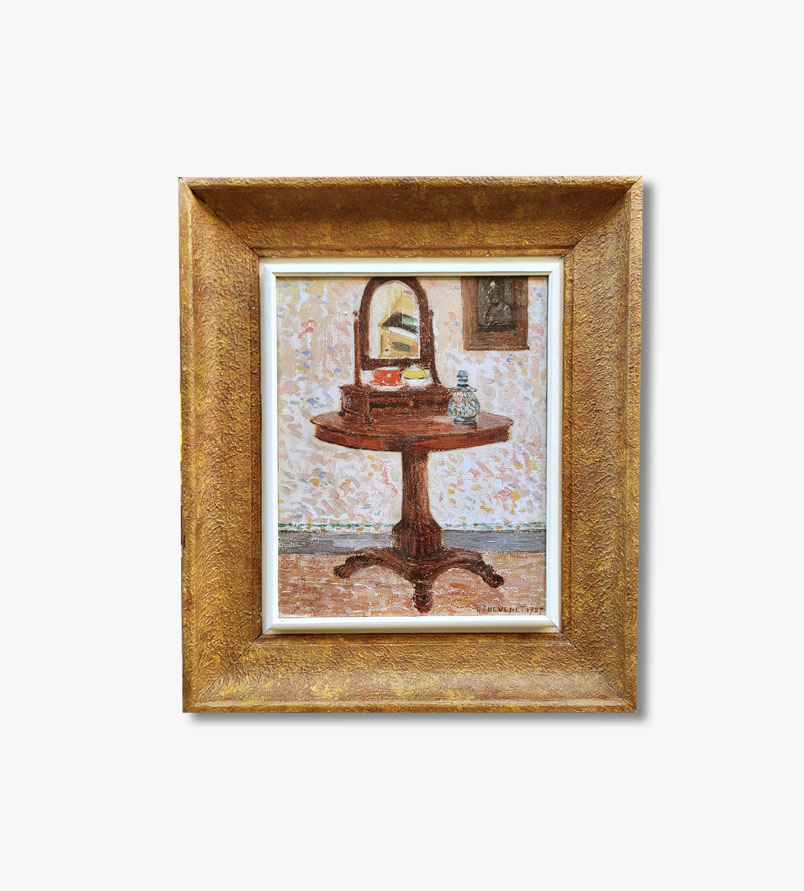
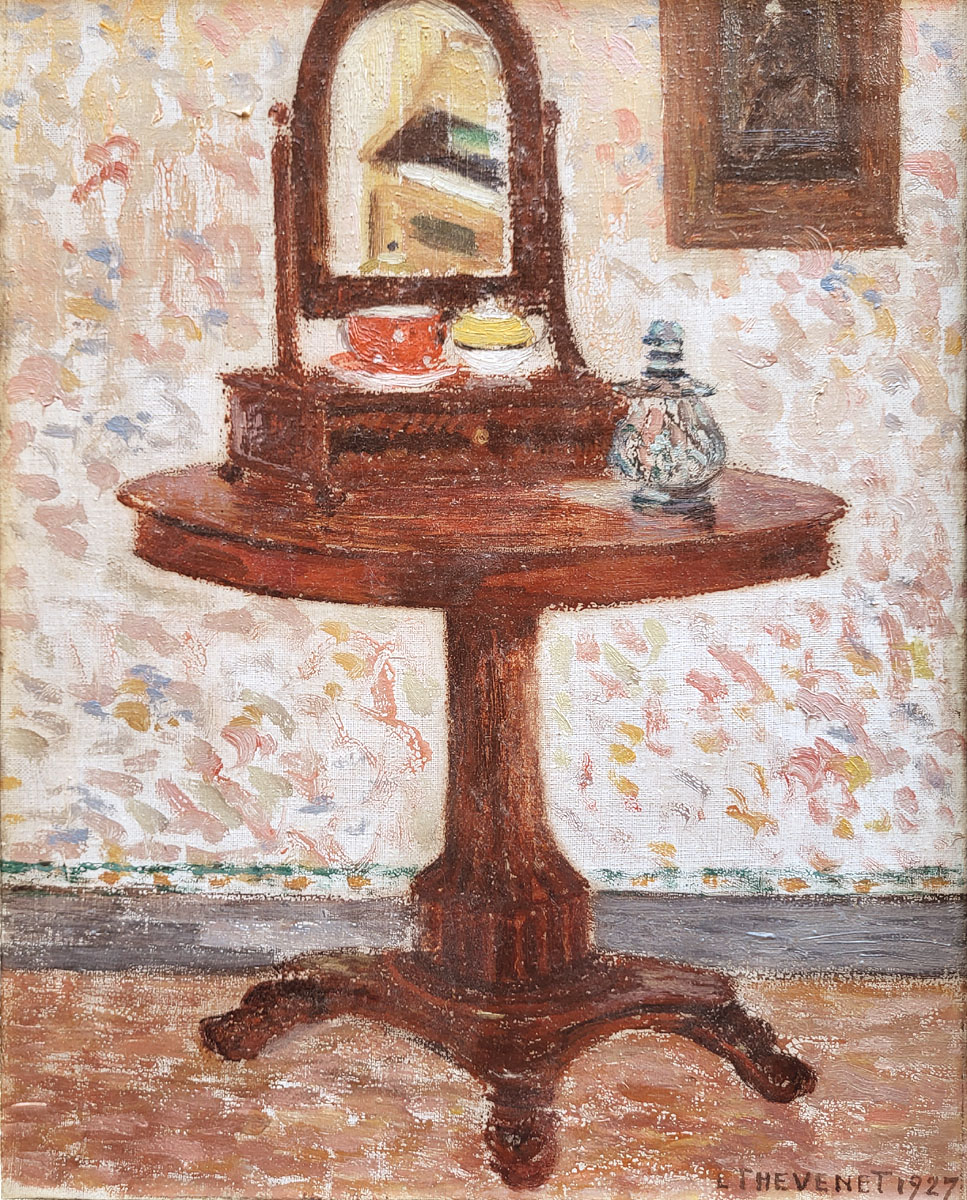
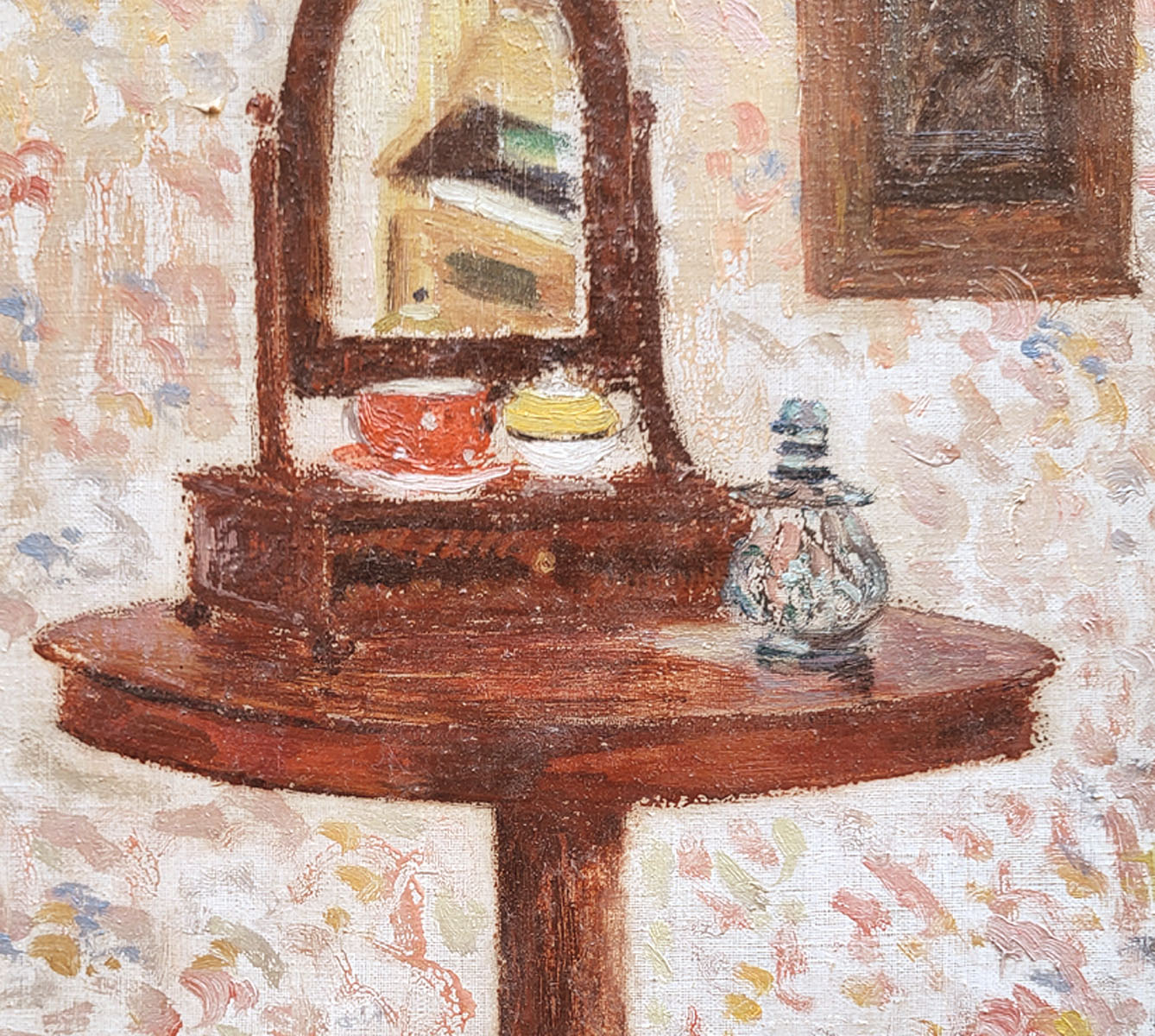
An oil on canvas, *Le Guéridon* by Louis THEVENET
4.500,00 €
Louis Thévenet 1874–1930
was born on February 12, 1874, in Bruges (West Flanders, Belgium). He moved to Brussels at a very young age, where his family settled in 1876 when his father became organist at the Church of St. James on the Coudenberg. He came from a family of artists: his brother Pierre was also a painter, and his sister Cécile was a singer at the Opéra-Comique in Paris
Hévenet did not attend a traditional art school; he was self-taught. In his youth, he held various odd jobs—as a baker’s apprentice, a pastry assistant, a shop assistant, and then a kitchen helper aboard an English ship—which allowed him to travel a bit, before he finally decided to pursue painting around 1896
Further information
| Dimensions | 52 × 60 cm |
|---|
Between 1897 and 1903, he frequently stayed in Nieuwpoort with the painter Auguste Oleffe, who became his artistic mentor and encouraged him to pursue a career in painting. It was also during this period that he frequented the Académie Libre and the Le Labeur art circle in Brussels, where he exhibited for the first time in 1903.
He then moved to Uccle and became involved with the movement known as the Brabant Fauves, a group of Belgian artists inspired by French Fauvism, with whom he exhibited at the Galerie Giroux in 1913.
From the very beginning, Louis Thévenet developed a highly personal aesthetic: his works—often intimate, quiet, and poetic—focus on interiors, still lifes, and scenes from everyday life rather than sweeping landscapes or formal portraits. Despite their vivid, warm colors, his compositions remain understated and focused on the essentials.
In 1914, at the outbreak of World War I, Thévenet settled in Halle (Hal), a small town in Flemish Brabant, where he would live until his death. Over the course of those final fourteen years, he painted the streets, cafés, modest interiors, and everyday life of the town, producing the bulk of his work.