
An oil on canvas, *Return to the Sheepfold* by Giovanni COSTANTINI
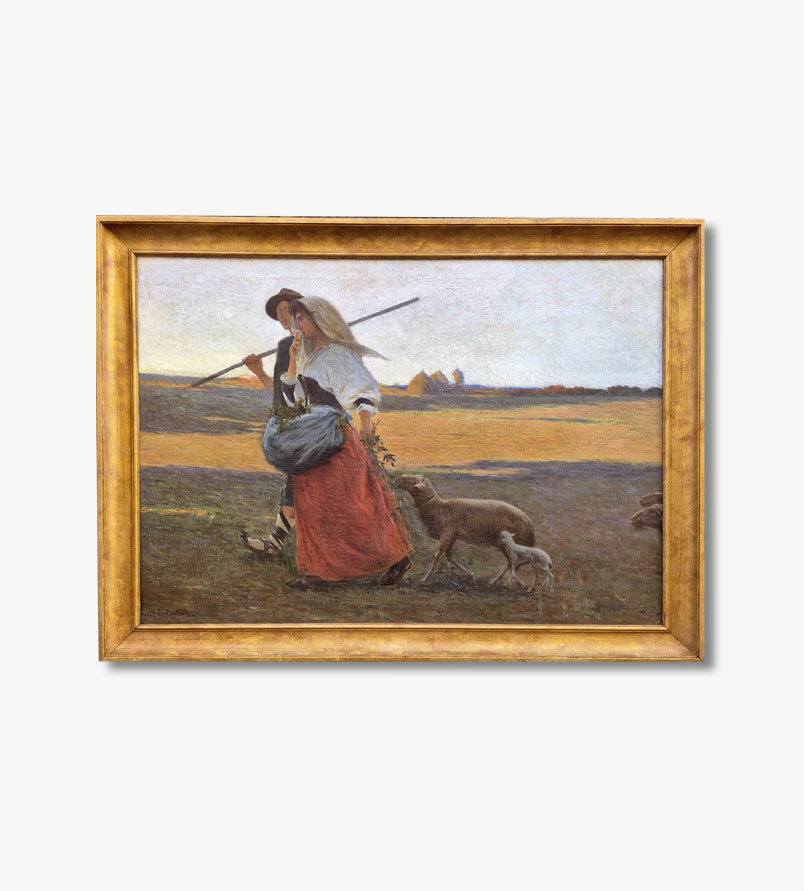
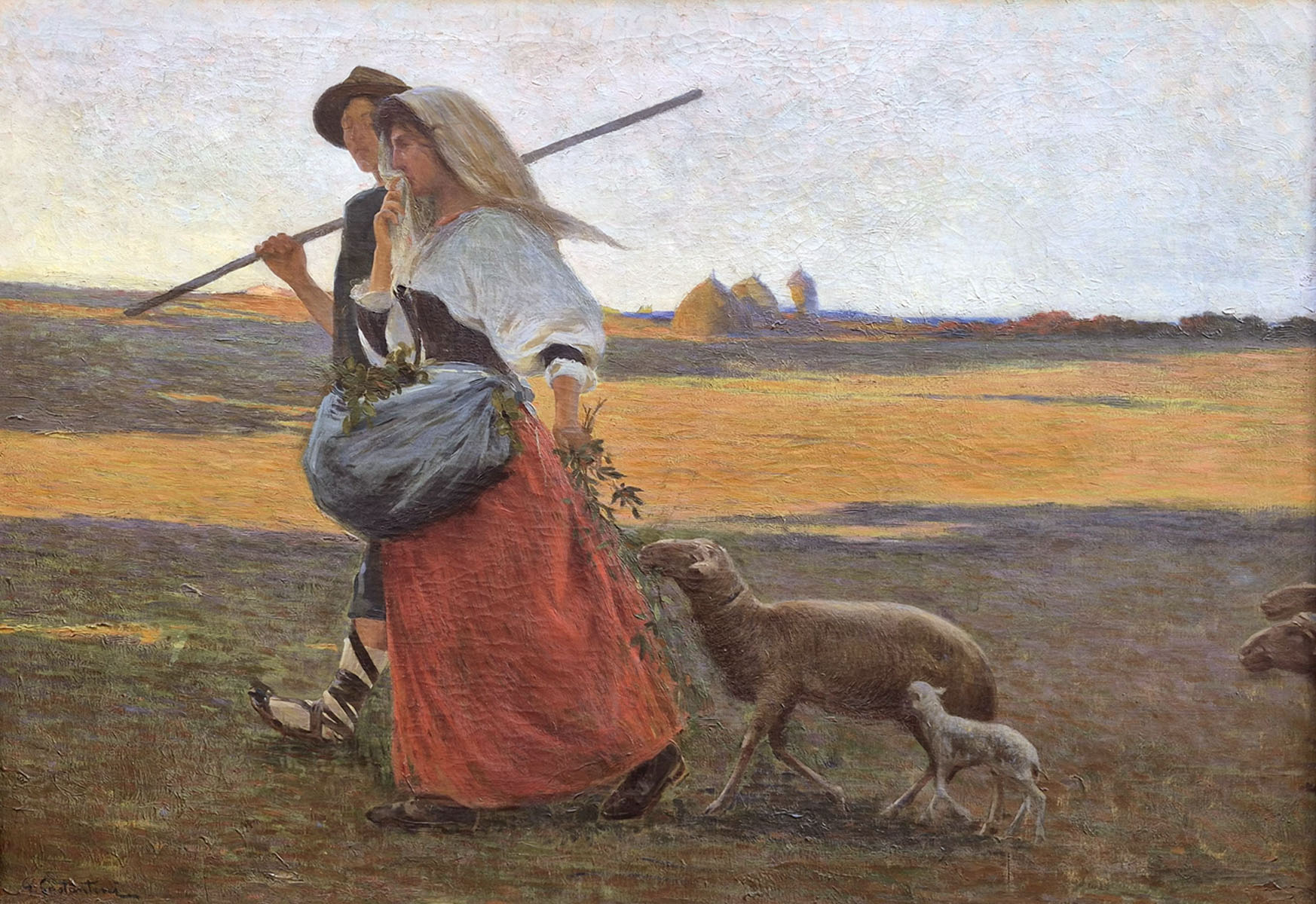
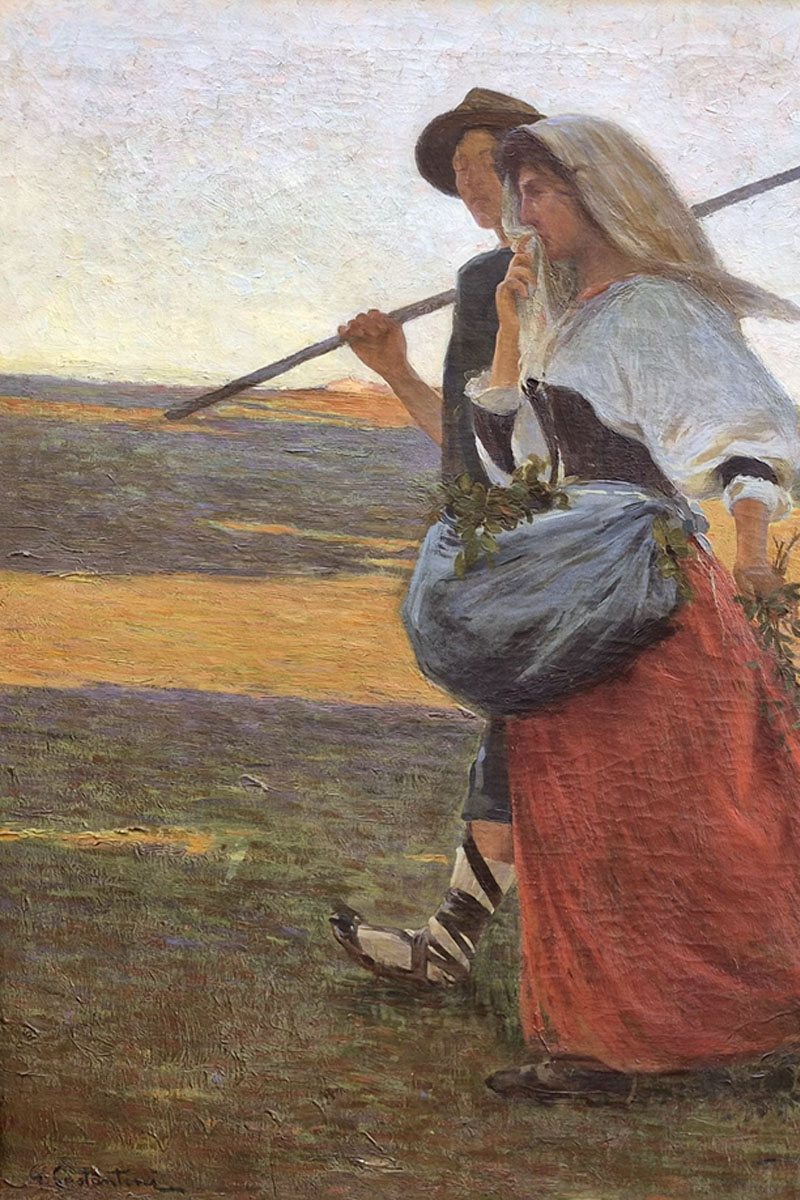
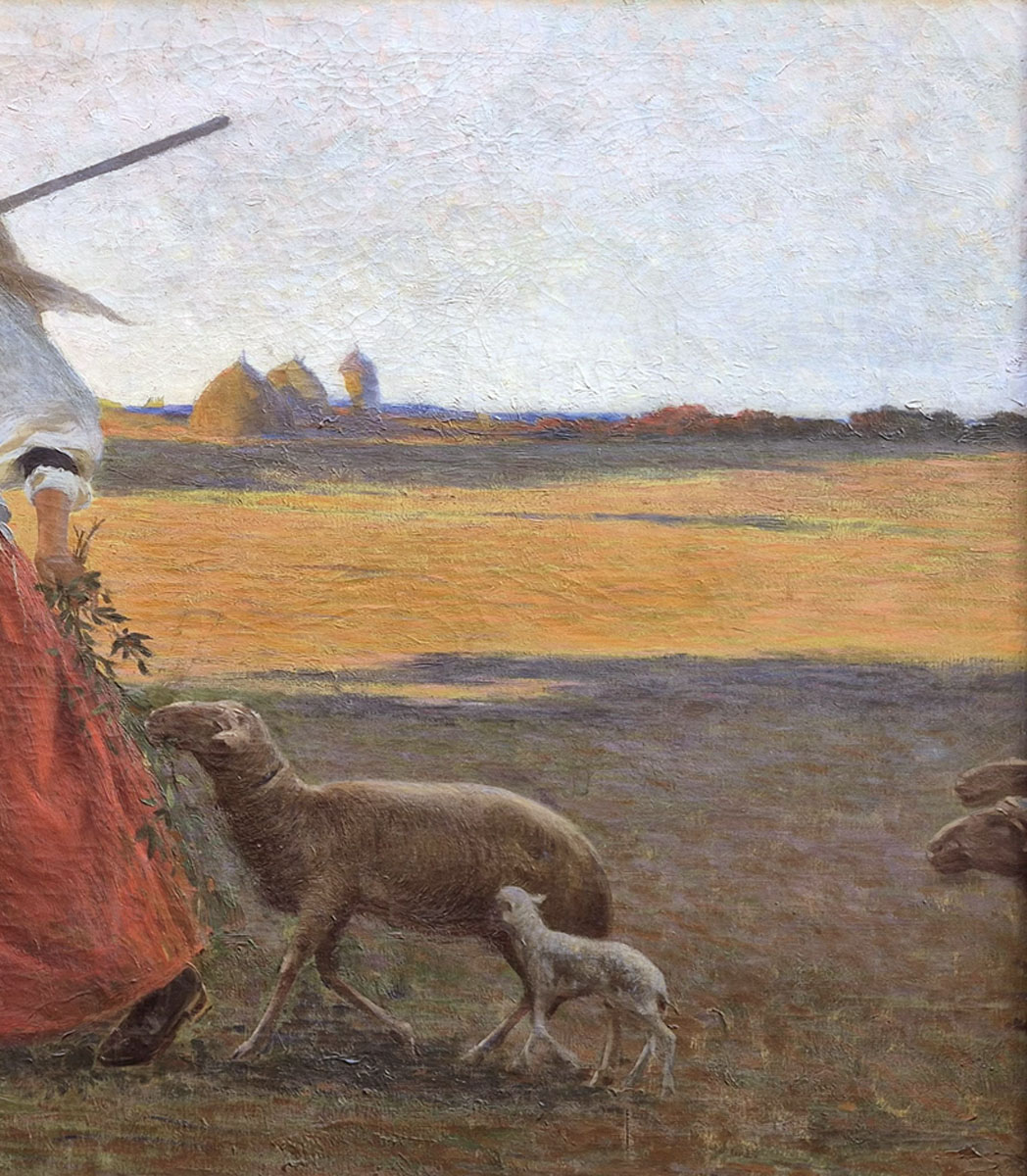
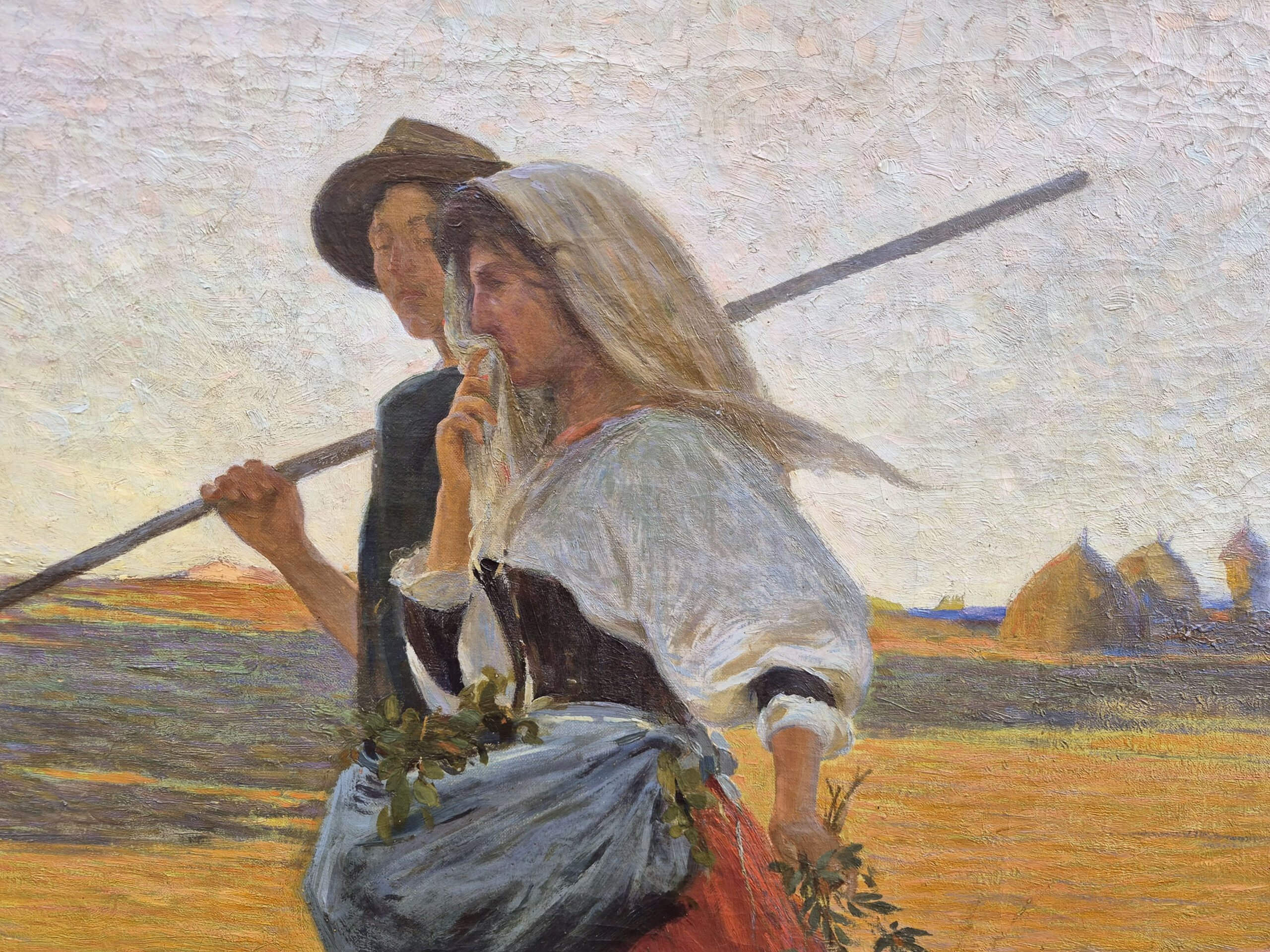
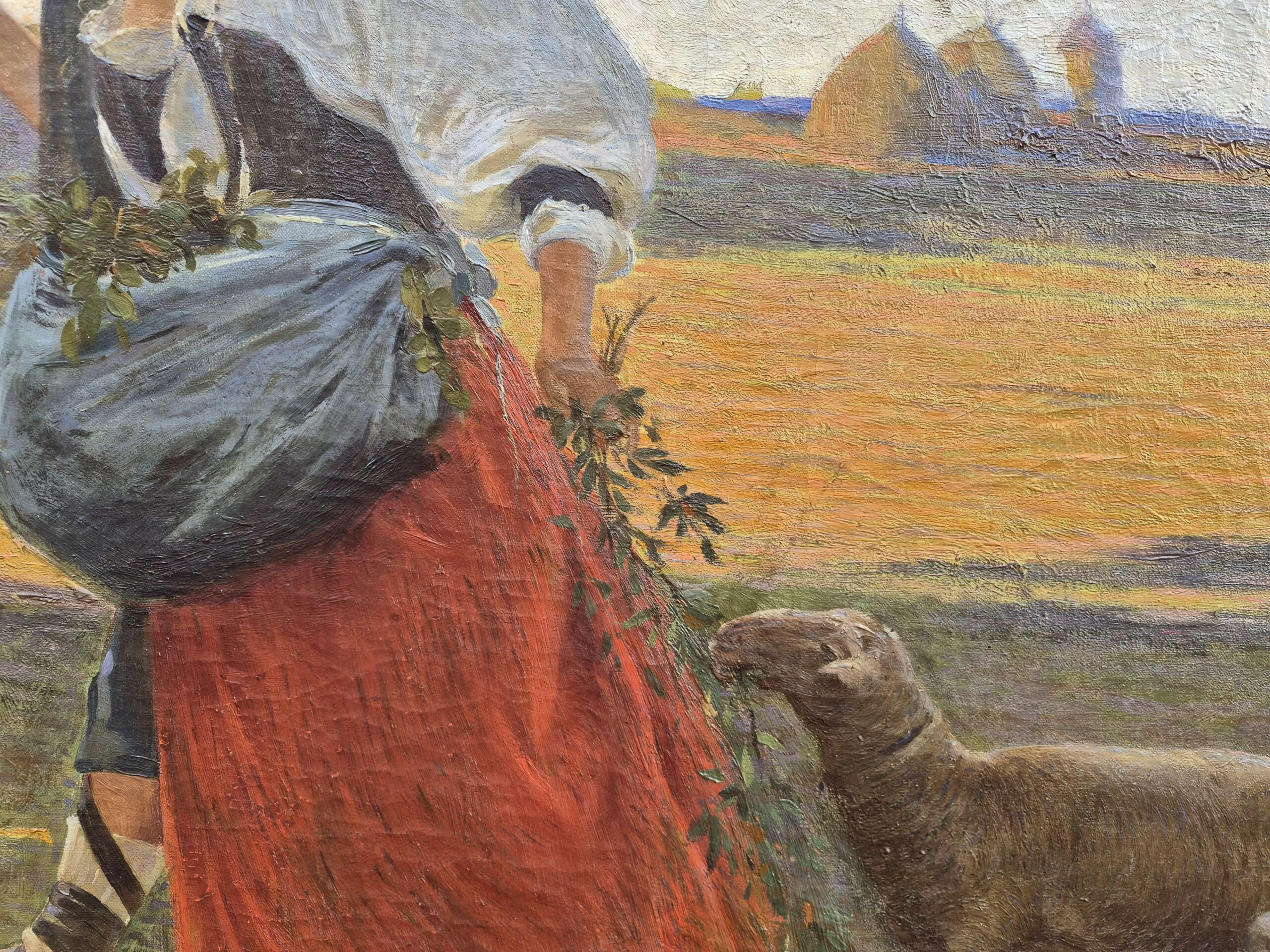
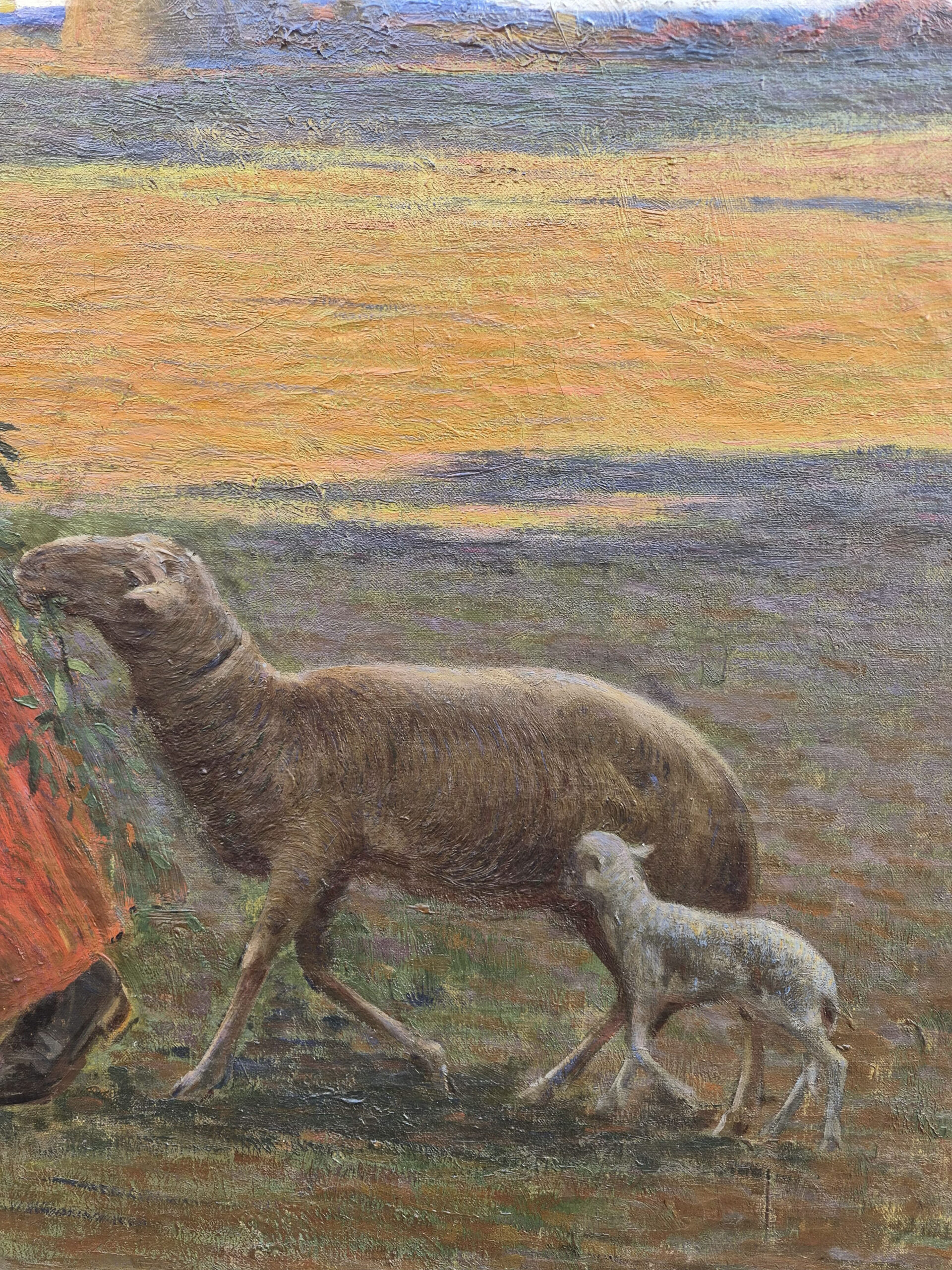
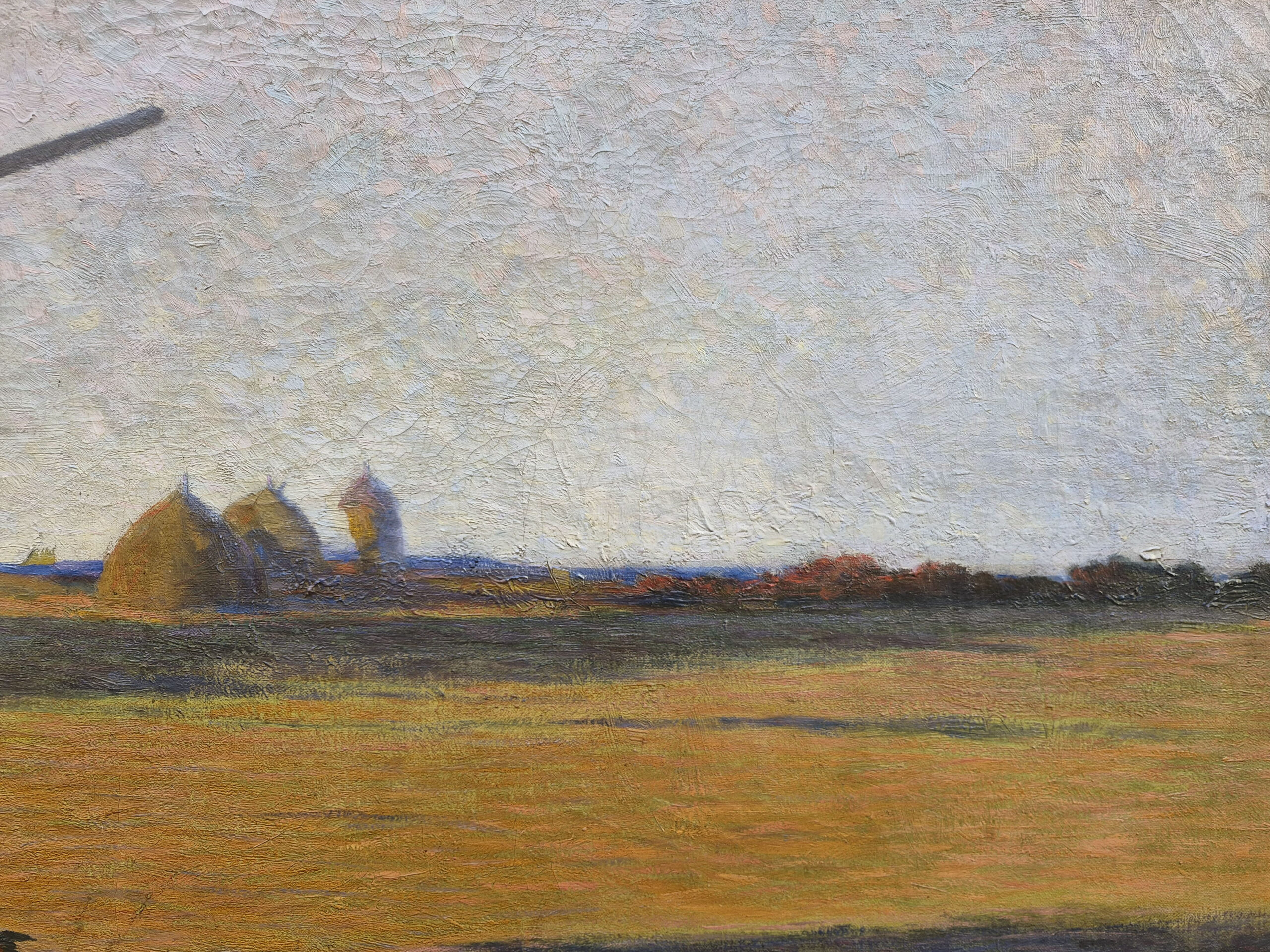
An oil on canvas, *Return to the Sheepfold* by Giovanni COSTANTINI
Prix sur demande / prices on request
Giovanni COSTANTINI 1872–1947
As a teenager, Giovanni honed his skills by occasionally attending evening drawing classes at the Académie de France at the Villa Medici; he then worked as an apprentice first for an interior designer and later for a painter.
His early paintings are classical in style and draw inspiration from the Roman countryside and depictions of shepherds. This work belongs to that period.
A naturalistic painting, with a light and luminous touch, based on plein air observation and the principles of the Macchiaioli.
In the early days, Giovanni was a member of what would come to be known as the “XXV of the Roman Countryside, ” a group of artists active in the late 19th century who, in their early days, were united in their opposition to “Mannerist art.”
But his career as a naturalist was short-lived, and his painting became more symbolist, darker, and deeply influenced by World War I.
Some of his paintings were censored “for defeatism,” while others were acclaimed for their brutal realism.
Further information
| Dimensions | 117 × 88 cm |
|---|
Giovanni’s paintings were exhibited at the major art salons. He helped decorate the Italian pavilion for a World’s Fair, created altarpieces for the Church of Santa Prisca, and restored Mantegna’s works in the Sala del Mappamondo
He served as a professor at the Academy of Fine Arts and as a member of the Academy of Saint Luke.
Costantini follows in the footsteps of those painters who cast a tender and attentive gaze upon the Italian countryside and the toil and dignity of the peasants.
Here, the artist seeks neither to idealize nor to glorify, but simply to capture the simplicity of this young couple’s life.
In this expansive composition, the simplicity of the landscape—constructed through broad horizontal lines and subtle color harmonies—brings a sense of modernity and power.
The young woman forms the center of the composition. She serves as an anchor, both for the viewer—drawn in by her color palette (white shirt, blue bag, red skirt)—and for the “participants” in the scene.
To this power, the artist adds a sense of tenderness and the bond between the woman and the animal: the sheep matching its steps to those of its owner, drawn to the grass peeking out from under her skirt, while the lamb continues to nurse.
His work reminds us of another great Italian painter, Giovanni Segantini, who also painted many pastoral scenes