
Oil on canvas: "Diane Bathing" by Paul BAUDRY
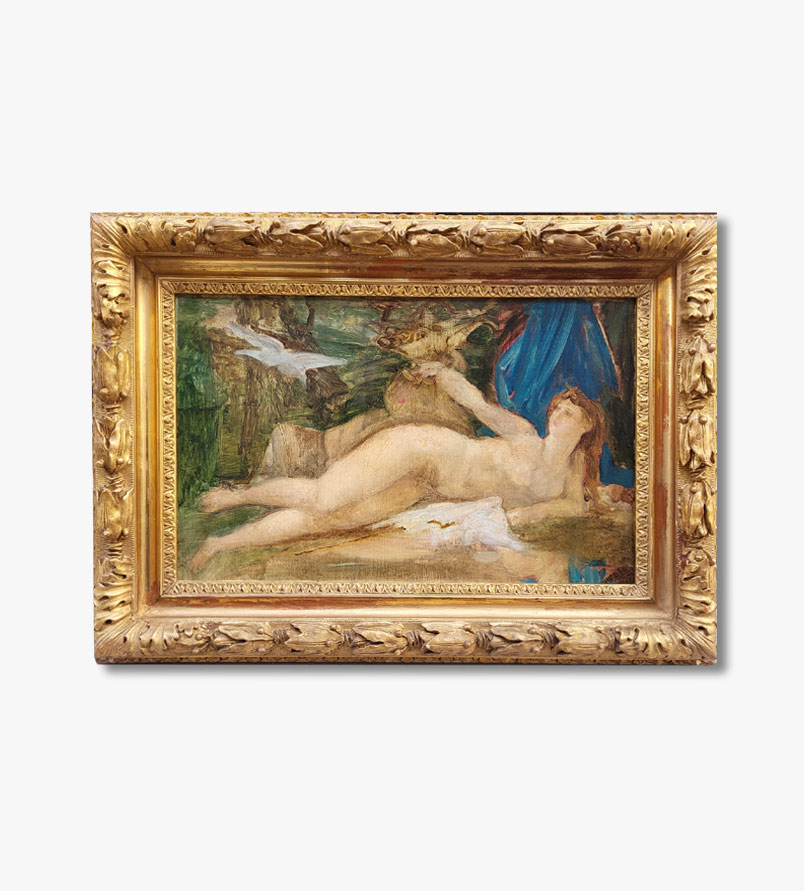
Oil on canvas: "Diane Bathing" by Paul BAUDRY
Prix sur demande / prices on request
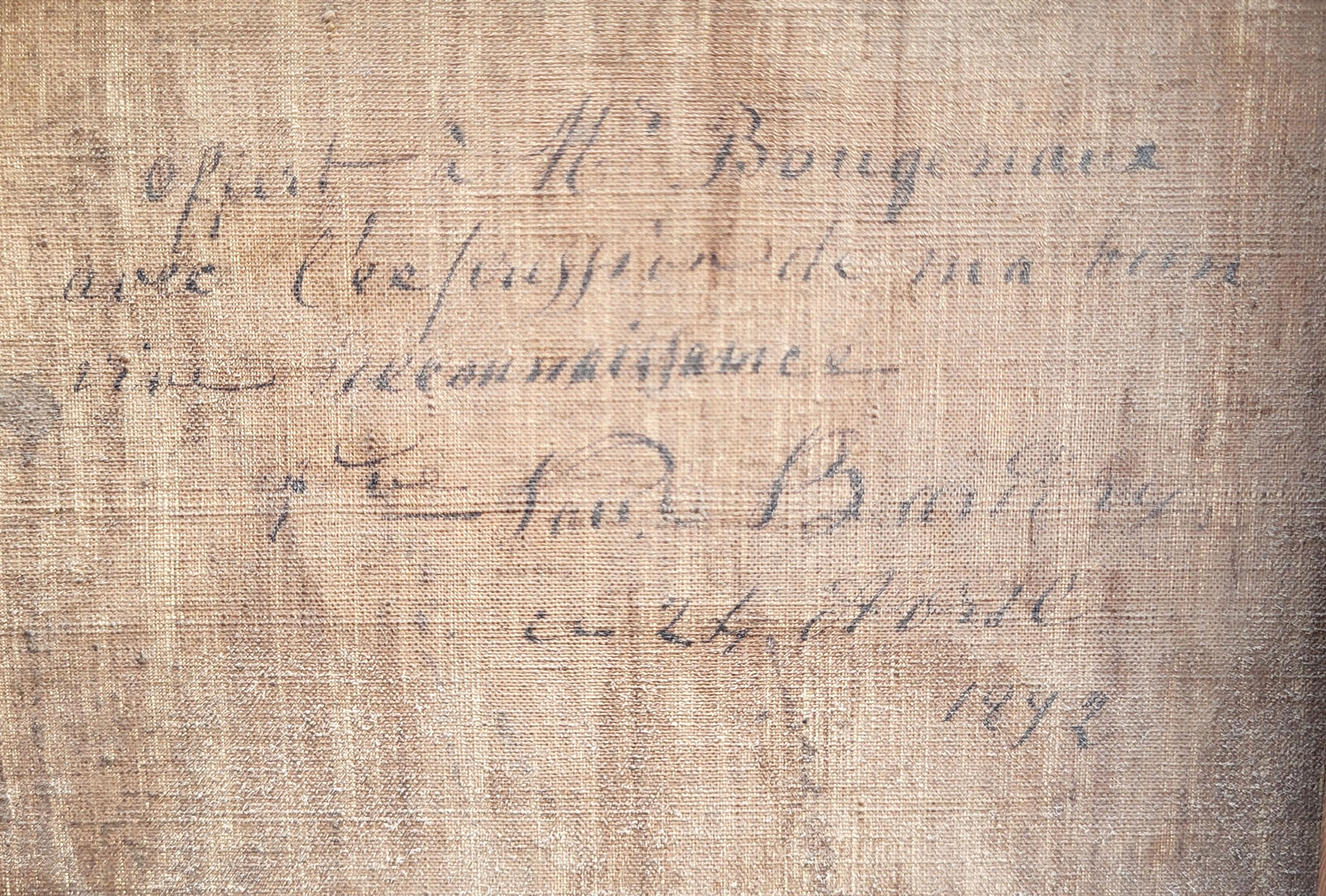
Our painting, executed in oil on canvas, bears an inscription on the reverse:
“Presented to Mr. Bougeneaux … (or Bouguereau?)
with the expression of my deepest gratitude,”
followed by the signature of Paul Baudry, dated April 24, 1842.
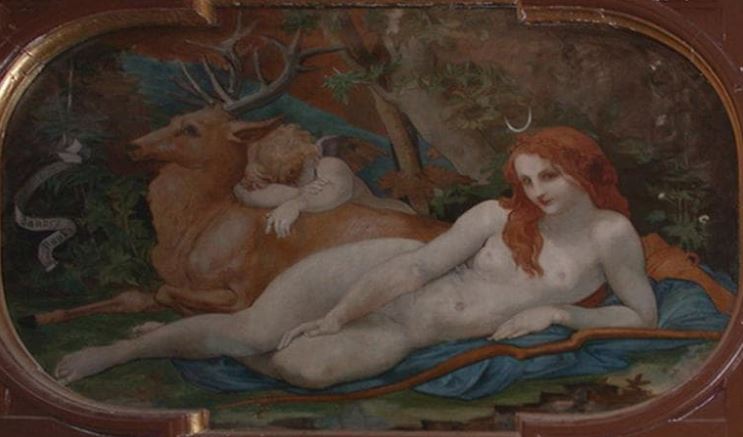
Our sketch appears more polished and may predate the one held
in Chantilly.
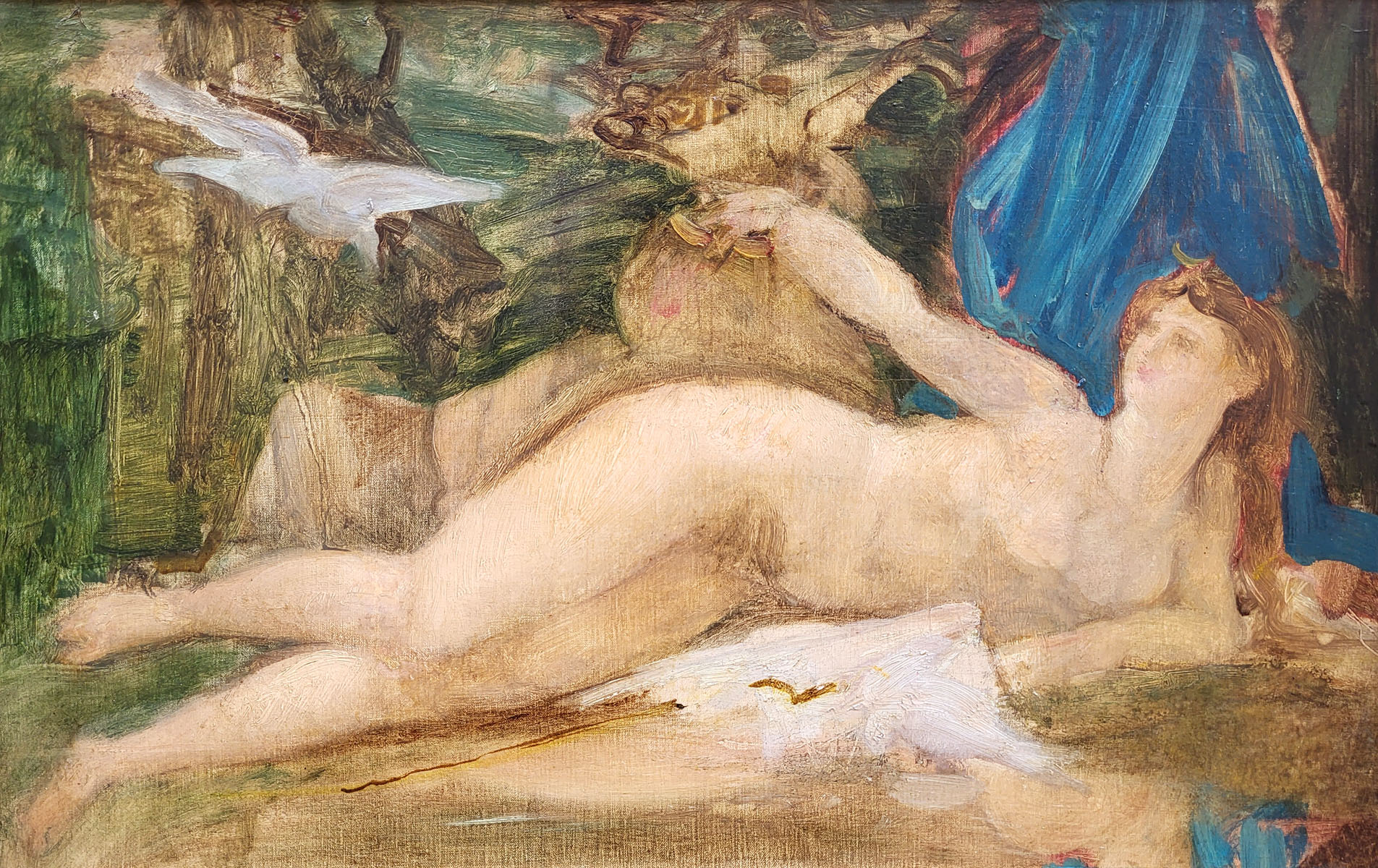
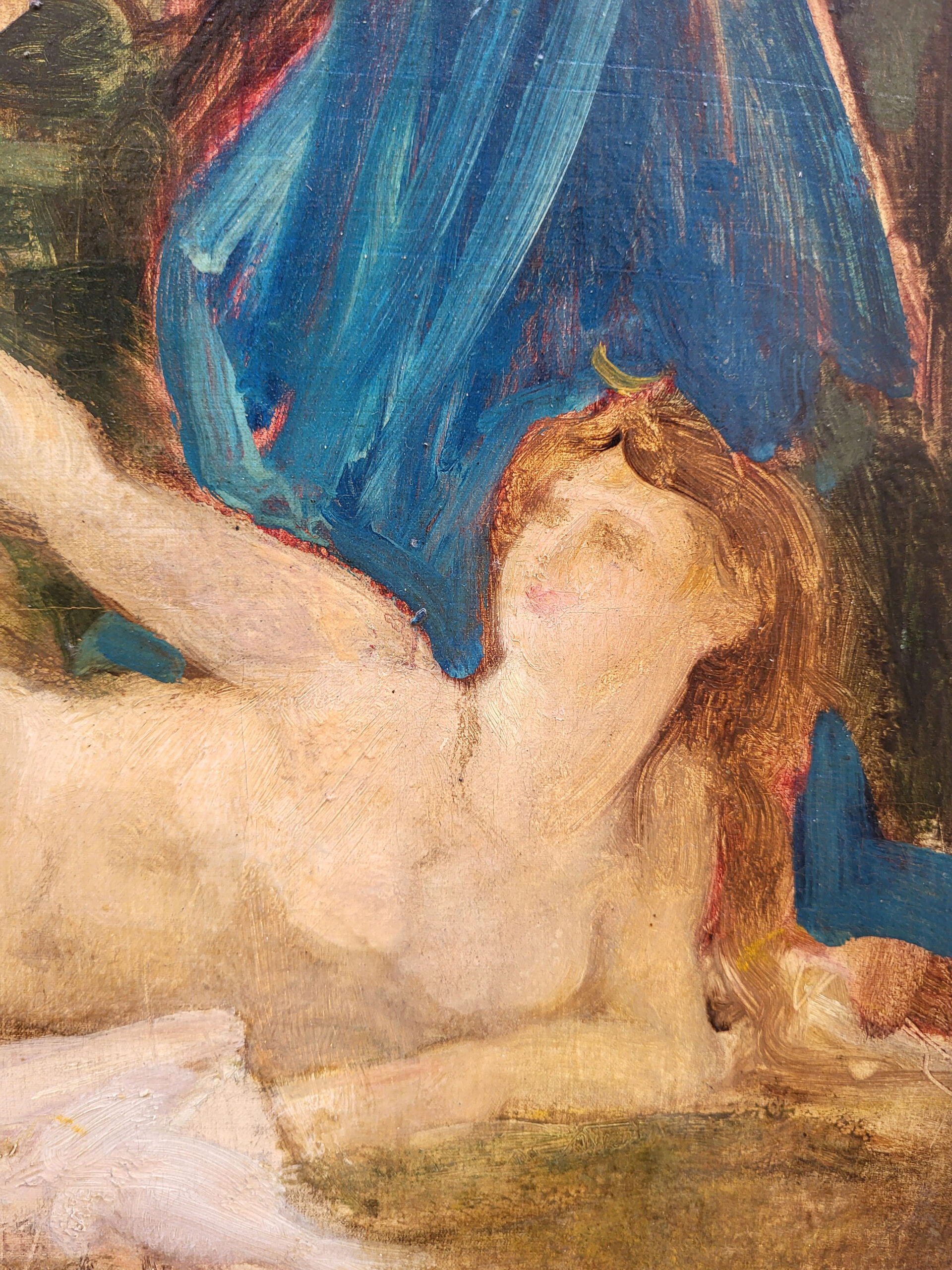
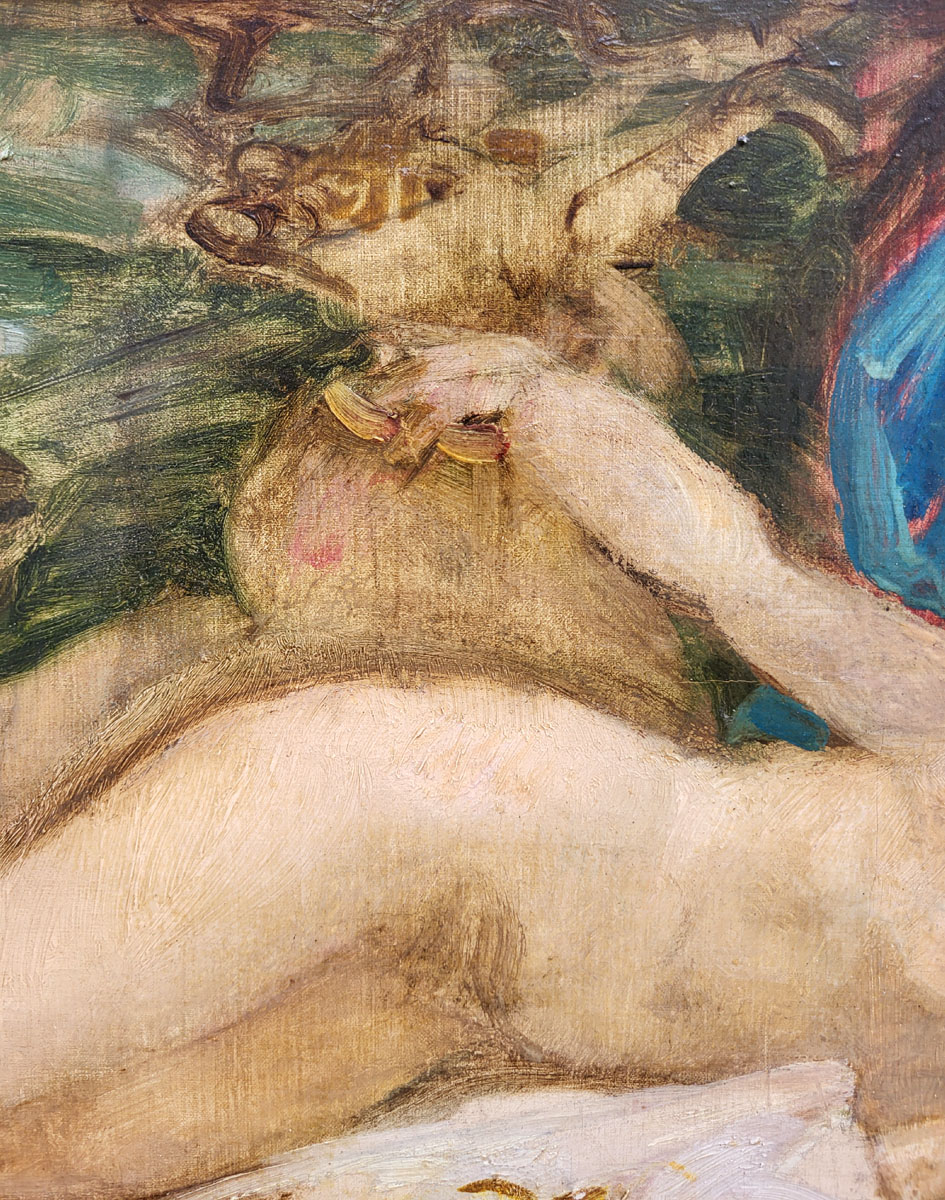
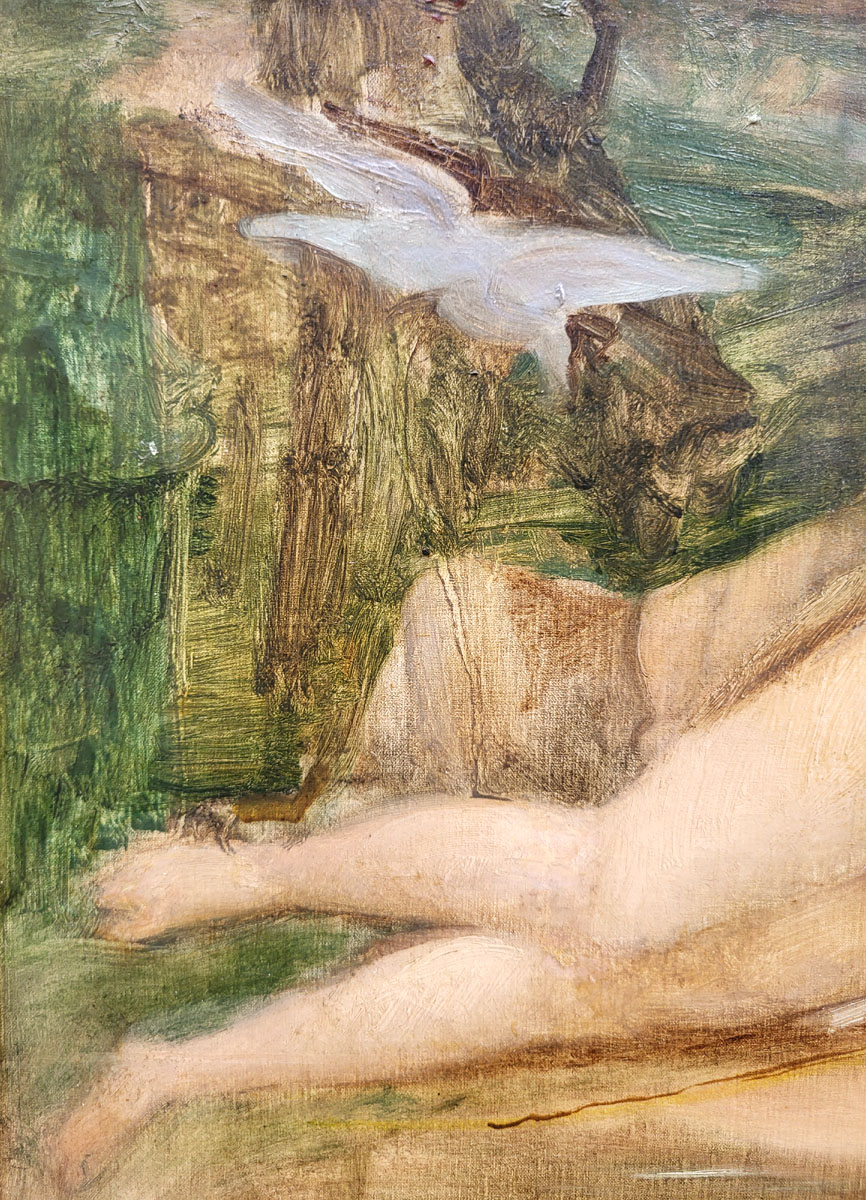
Several elements are common to both works: Diana reclining, recognizable by her crescent moon, and the presence of the stag.
However, in our composition, the blue drape rises high behind the goddess, contrasting with the Chantilly version, on which the goddess is reclining.
The stag, for its part, does not adopt the same posture; here, it seems to follow the contours of Diana, merging more closely with her.
On the left, a sketched plant-like background, made of tree branches, evokes a forest.
White brushstrokes suggest the silhouette of a bird.
Unlike the Chantilly sketch and the final version, where a putto is
present, it is absent here.
While Diana rests her arm against her legs in the 1848 sketch, in our composition she gracefully extends it toward the stag or perhaps the bird,
in a gesture full of tenderness.
Finally, Diana lies on a white sheet, almost touching a subtle body of water, in which her body and the blue sheet seem to be subtly reflected.
Further information
| Dimensions | 58.5 × 42 cm |
|---|
Paul Baudry 1828–1886
French painter, a highly renowned exponent of the Clarissimo style during the Second Empire.
It was in La Roche-sur-Yon, under the guidance of his high school teacher, that Baudry’s passion and talent began to flourish.
He then joined the studio of Michel Drolling (one of the greatest painters of his time).
In 1850, he won the Prix de Rome.
A history painter, but above all a portraitist and renowned interior designer, Baudry exhibited his paintings at the Salon while working on various projects in the capital, including the interior design of the foyer at the Opéra Garnier commissioned by Napoleon III.
At the same time, he designed interiors for the Hôtel Galliera, the Hôtel de la Paiva, and the Château de Chantilly.
In 1870, he was elected a member of the Academy of Fine Arts.
Paul Baudry represents one of the most popular trends ofthe 19th century: decorative painting strongly inspired by Venetian and Roman models, drawing on the themes of mythology or the most traditional allegory, combined with a sensibility and spirit that were thoroughly “modern.”
Our work is similar to another sketch by the artist, which is housed at the Château de Chantilly