Oil on panel, The Balcony by José Gonzalvez, 1885
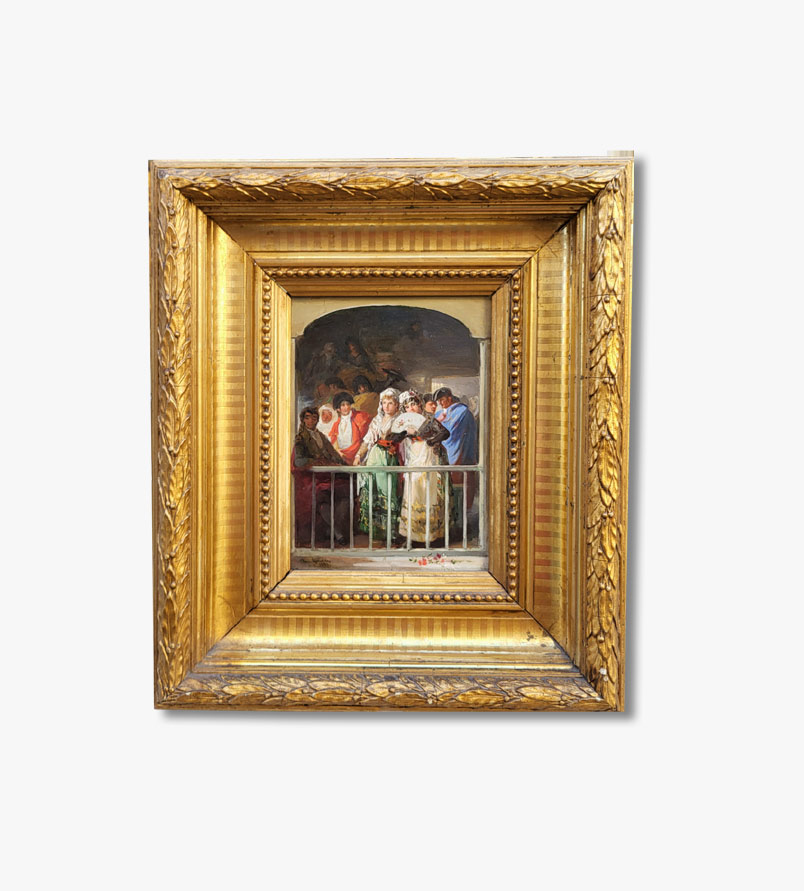
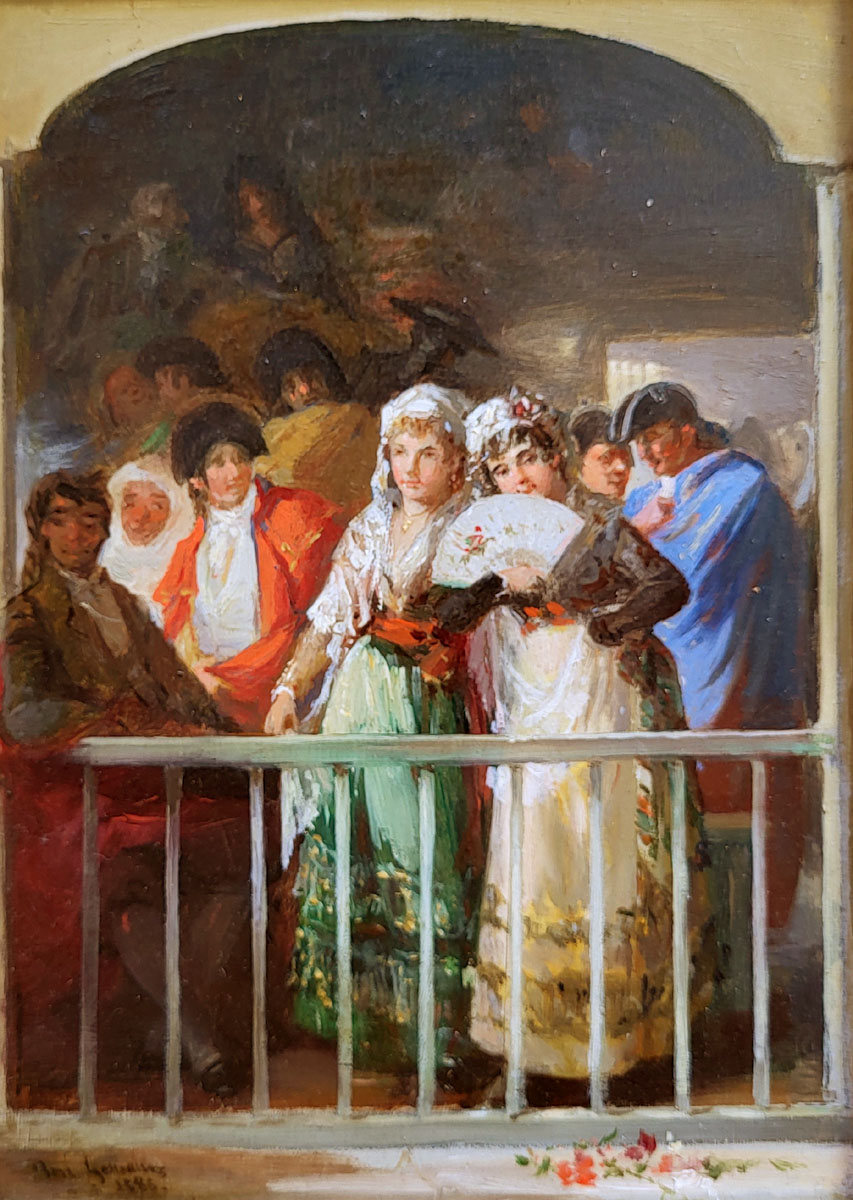
Oil on panel, The Balcony by José Gonzalvez, 1885
2.500,00 €
José Gonzalvez 1837–1897
Spanish painter renowned for his portraits and genre scenes, strongly influenced by the work of Francisco de Goya.
He continued his studies at the San Fernando School of Fine Arts in Madrid, where he became a student of Eugenio Lucas. In the 1880s, he moved to Zaragoza, where he painted several portraits, notably for the Casino hall, in collaboration with Nicolas Ruiz de Valdivia.
Among his notable works are portraits of Jerónimo Zurita y Castro and Ramón Pignatelli y Moncayo.
In 1894, the Zaragoza City Council commissioned him to paint a portrait of Maria Cristina and her son, King Alfonso XIII. Three years later, he painted a portrait of Juan Tomás y Sierra.
Gonzalvez y Martínez's works were presented at the Spanish-French Exhibition of 1908, marking an important milestone in his recognition in the art world.
Further information
| Dimensions | 34 × 40.5 cm |
|---|
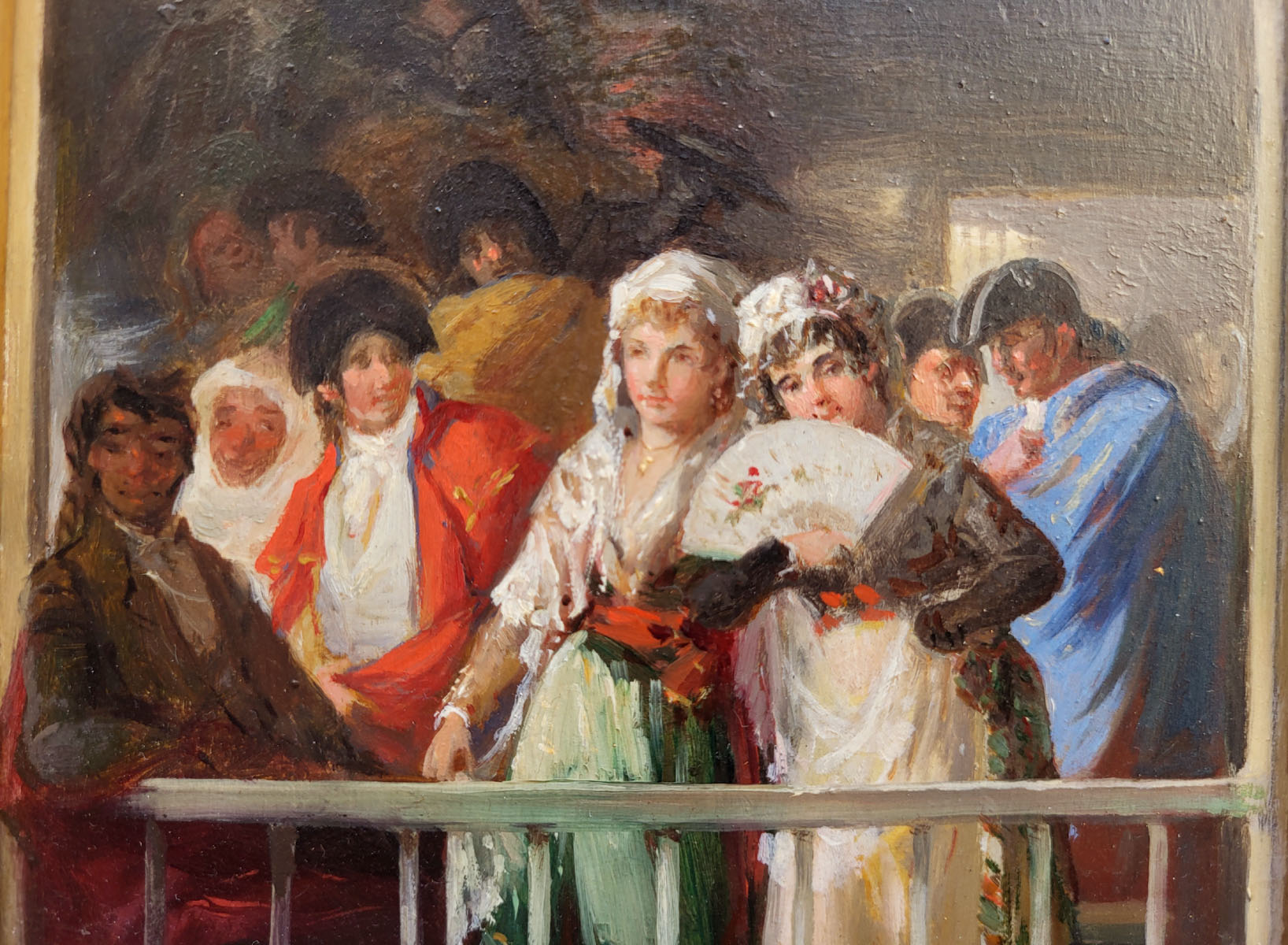
Our painting depicts a lively and colorful scene, typical of 19th-century genre paintings.
The main figures, two women in the foreground, are dressed elegantly, wearing bright dresses adorned with intricate details, such as accessories like fans.
One of the women is holding a fan, while the other seems to be looking outwards, both with delicately painted faces. They stand out thanks to the brightness of their clothes, which contrasts with the softness of the background.
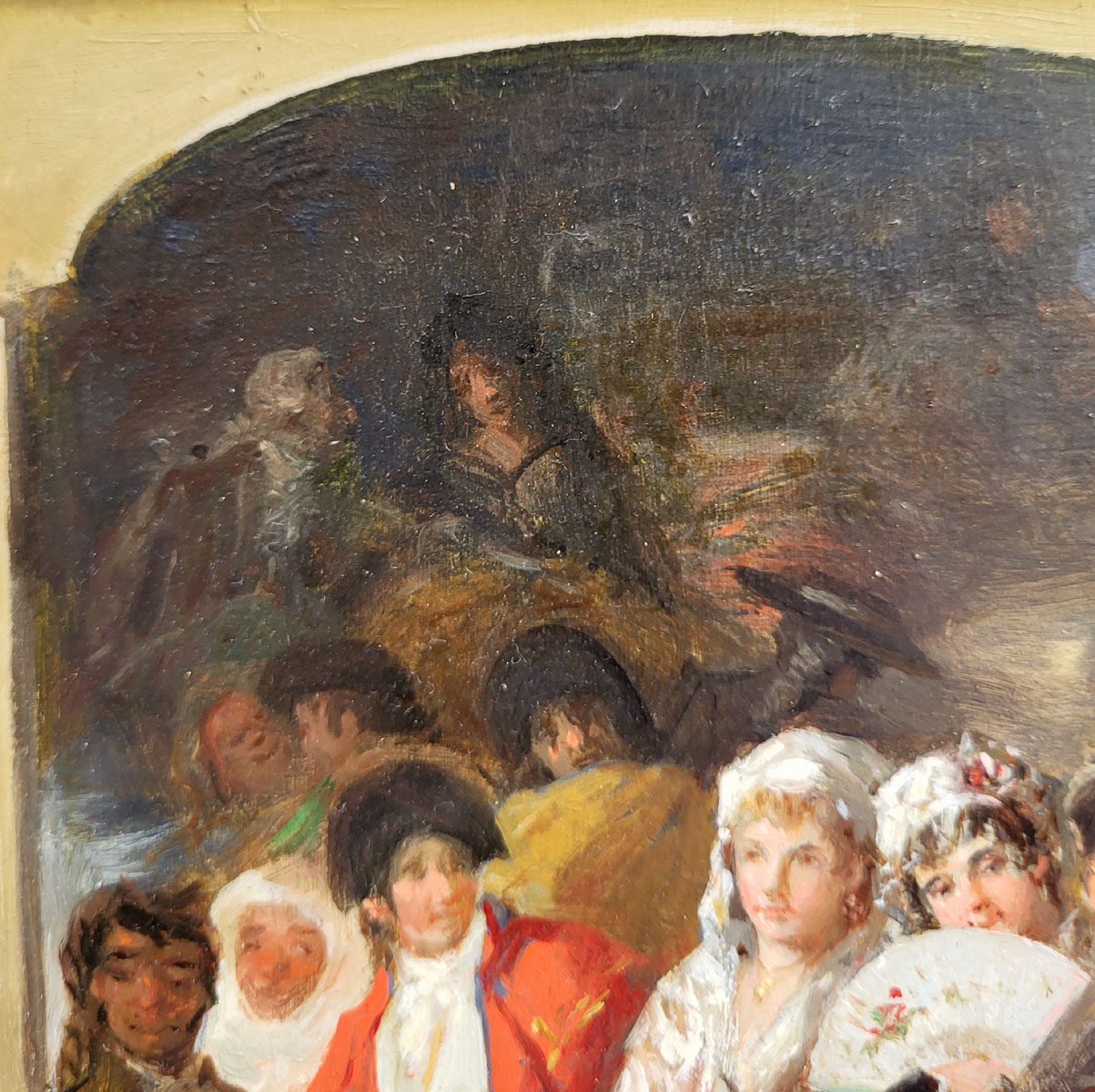
The background of the painting is dynamic, creating a contrast with the figures in the foreground.
We see characters dressed in historical costumes who seem to mingle in a lively social scene.
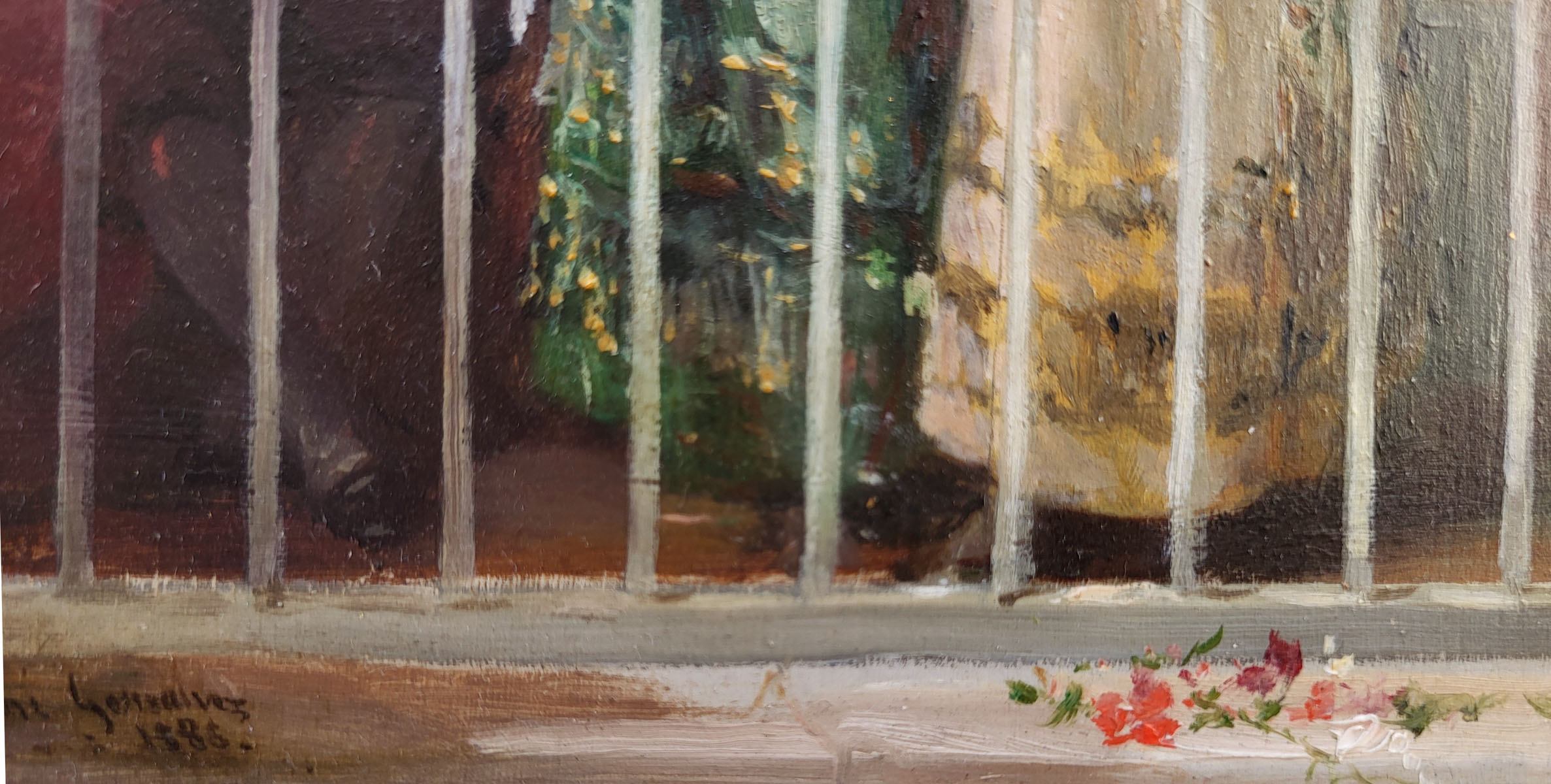
The architecture of the balcony, with its metal bars and the flower in the lower right corner, subtly frames this scene, while providing visual balance between the characters and the environment.
This painting, reminiscent of Goya's compositions in its treatment of characters and social atmospheres, perfectly captures the elegance of the era while remaining rooted in the realist tradition of the 19th century.