
Oil on panel, *The Pianist* by Jules CHERET
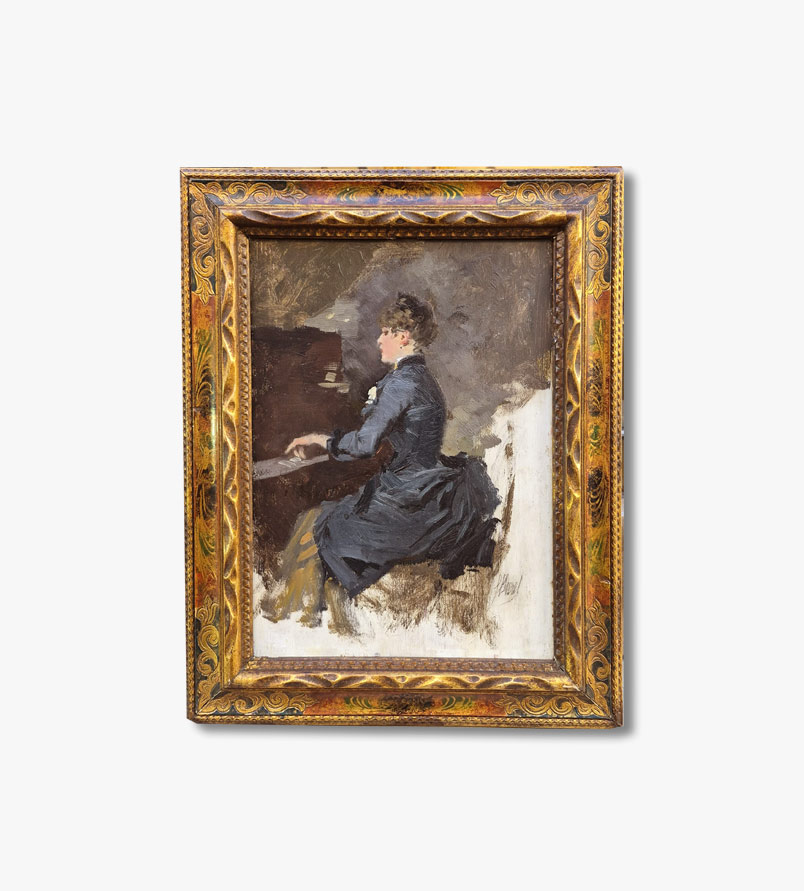
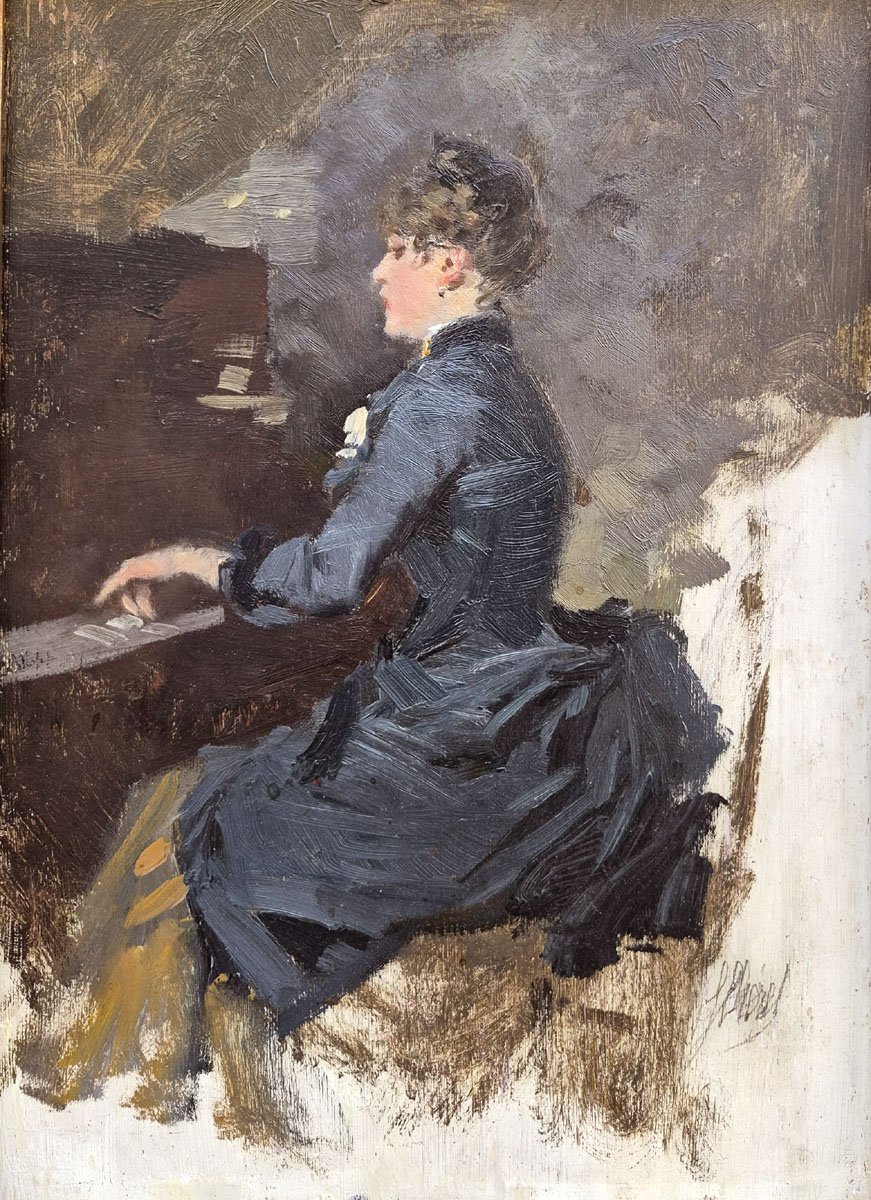
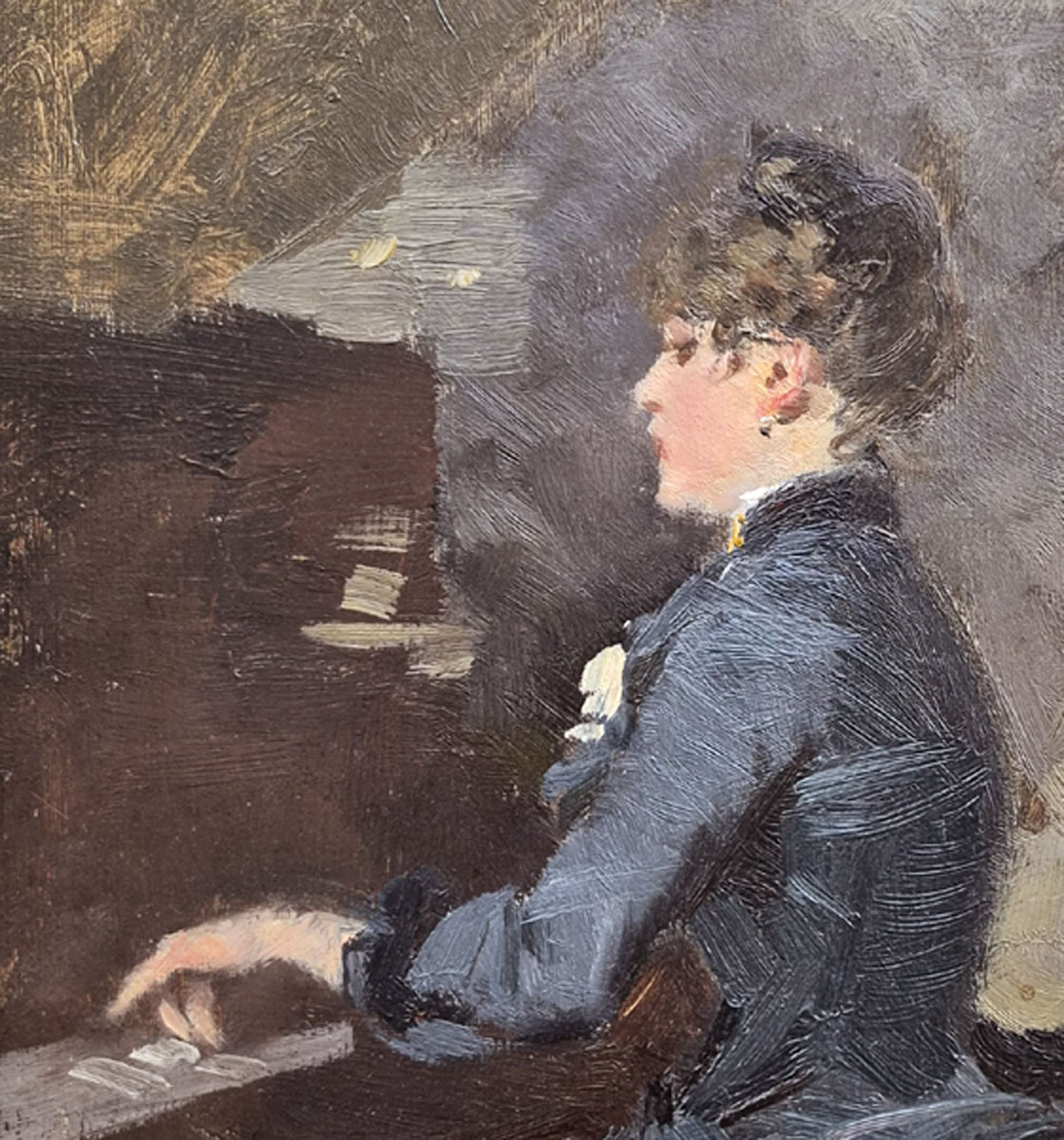
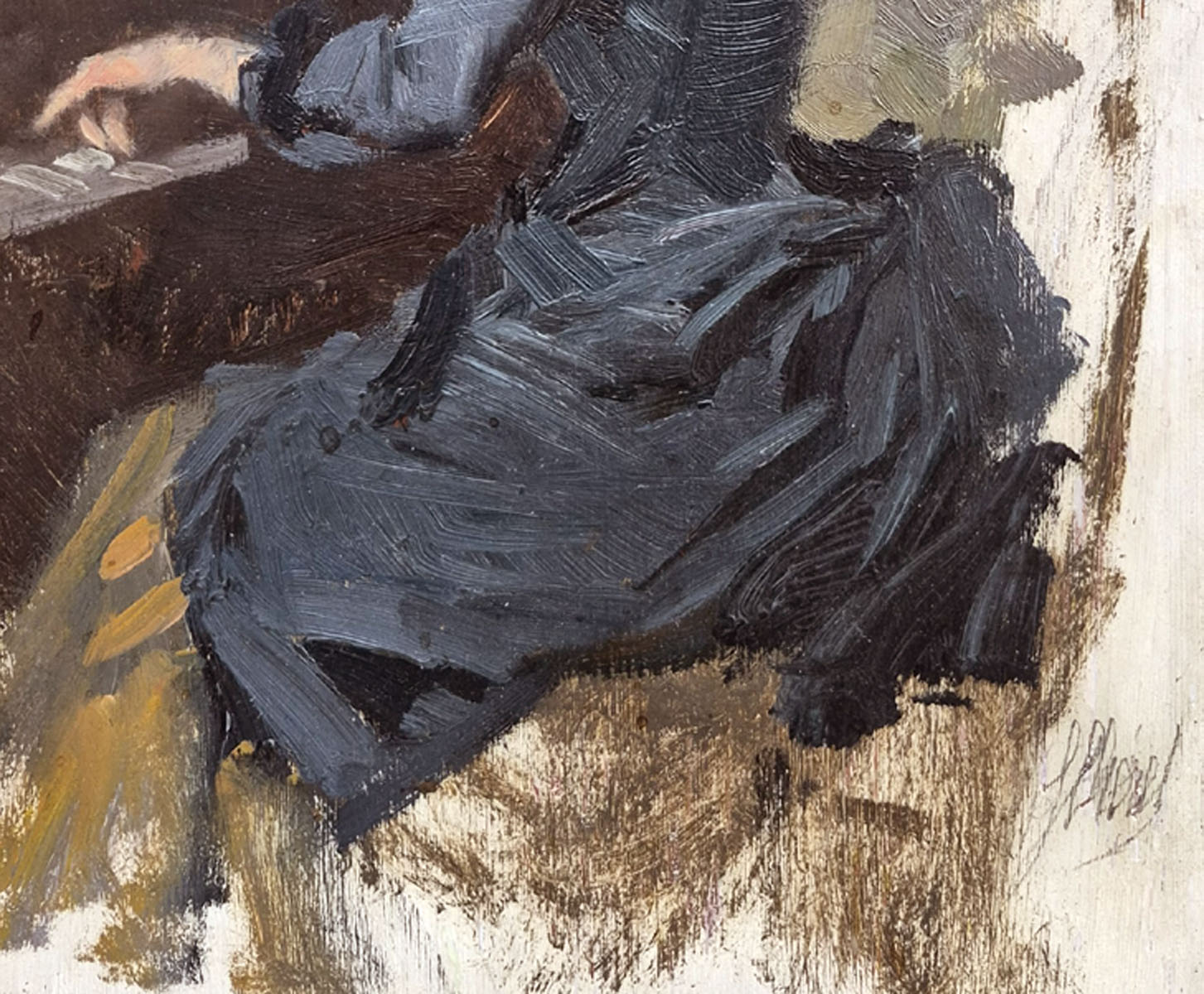
Oil on panel, *The Pianist* by Jules CHERET
Prix sur demande / prices on request
Jules CHERET 1836–1932
A lithographer by trade, he became familiar with poster design at a young age and took evening classes at the École nationale de dessin.
He then continued his artistic training at the École des Arts Décoratifs in Paris, where he mastered the techniques of lithography, decorative painting, and graphic design.
He completed his apprenticeship in the studio of the painter and lithographer Antoine Chazal.
His studies in London during the 1850s and 1860s introduced him to English posters and high-quality lithography, an influence he later adapted to French tastes with a unique sense of movement and liveliness.
Further information
| Dimensions | 42.5 × 33.5 cm |
|---|
Chéret is known for his ability to blend decorative art with folk art.
As early as 1866, he began creating posters for shows and consumer products, revolutionizing the genre with his luminous and dynamic female figures, known as the “Chérettes.”
These posters earned him the title of "father of the modern poster," an artist who combined painting and marketing with unparalleled creativity.
His experiments with color reached their peak in the 1880s and 1890s: by layering primary colors over three or four print passes, he was able to achieve every possible variation of hue. Manet nicknamed him “the Watteau of the streets.”
In 1895, he began his decorative work by creating monumental decorations for private residences and public buildings: in Évian, for the Villa La Sapinière, owned by Baron Vitta; in Paris, for a salon at City Hall (1896–1903) and the curtain for the Grévin Museum theater. These commissions attest to his talent for monumental art and his refined sense of decorative composition.
In addition to his posters and decorative projects, Jules Chéret also painted genre scenes and portraits.
His work, characterized by vivid colors, rapid brushstrokes, and great spontaneity, captures the elegance and vitality of Parisian society during the Belle Époque.
His depictions of everyday life, his portraits of women, and his intimate moments reveal a unique sense of movement and light.
1870: Bronze medal at the Salon for his early genre paintings.
1878: Gold medal at the World’s Fair for his posters.
1891: Legion of Honor, official recognition of his artistic and cultural contributions.
He has also received numerous awards at international trade shows, notably in London and Brussels.
Chéret’s work had a significant influence on the painters of his time, including Henri de Toulouse-Lautrec, Georges Seurat, Pierre Bonnard, and Édouard Vuillard, who drew inspiration from his sense of movement, color, and lightness in depicting modern life.