An oil painting on cardboard, *Houses by the River* by Paul MATHIEU
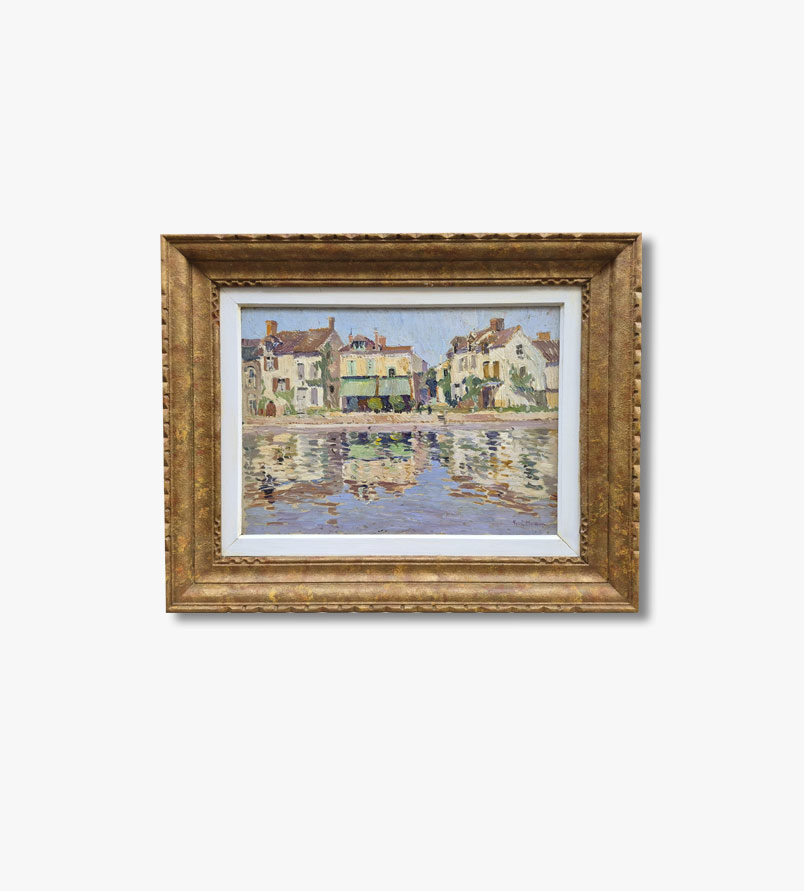
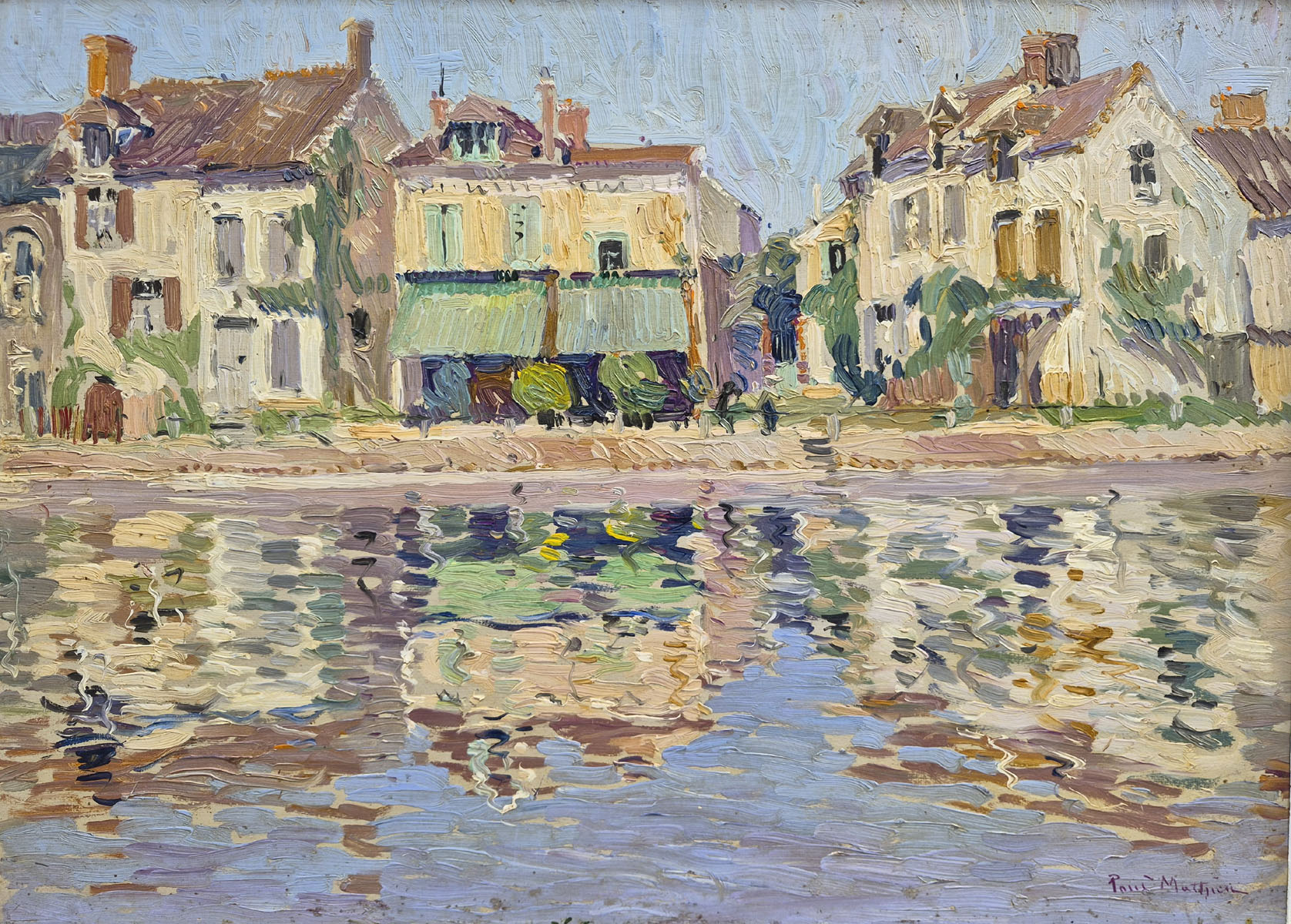
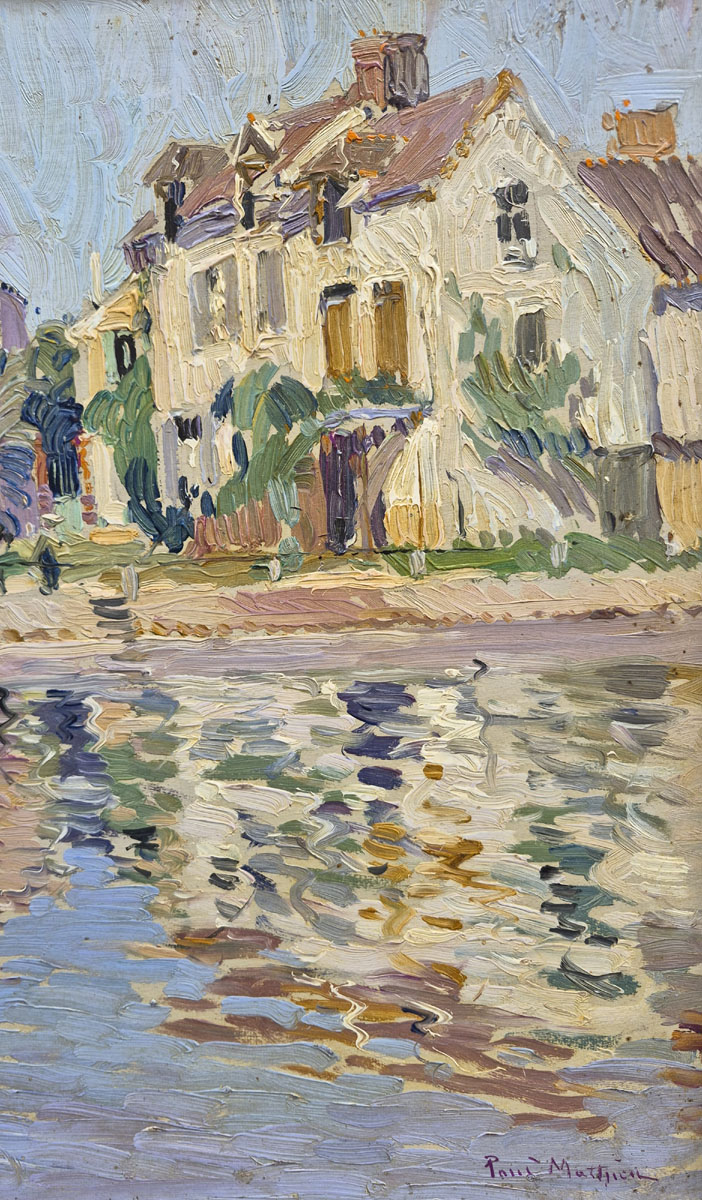
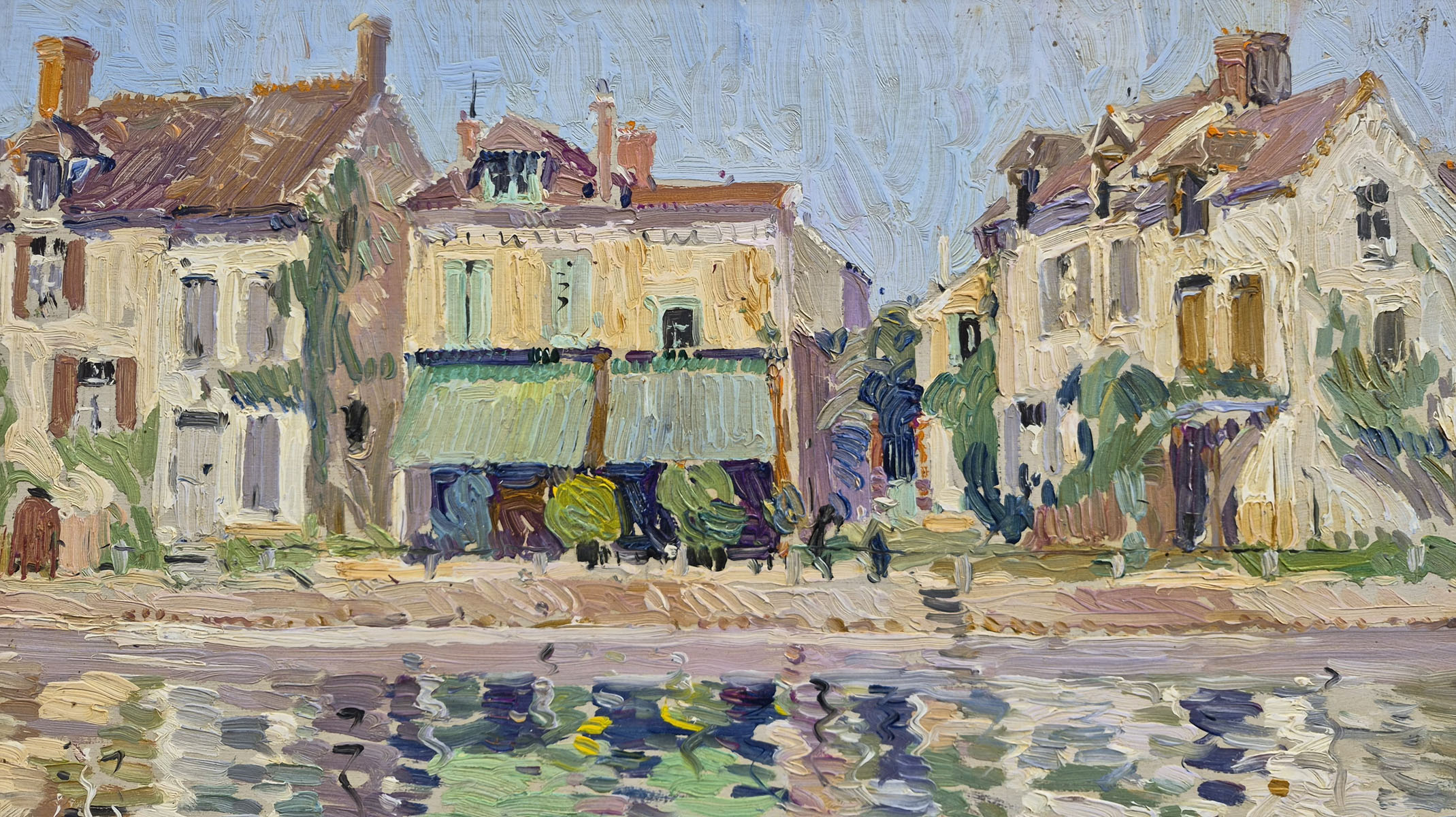
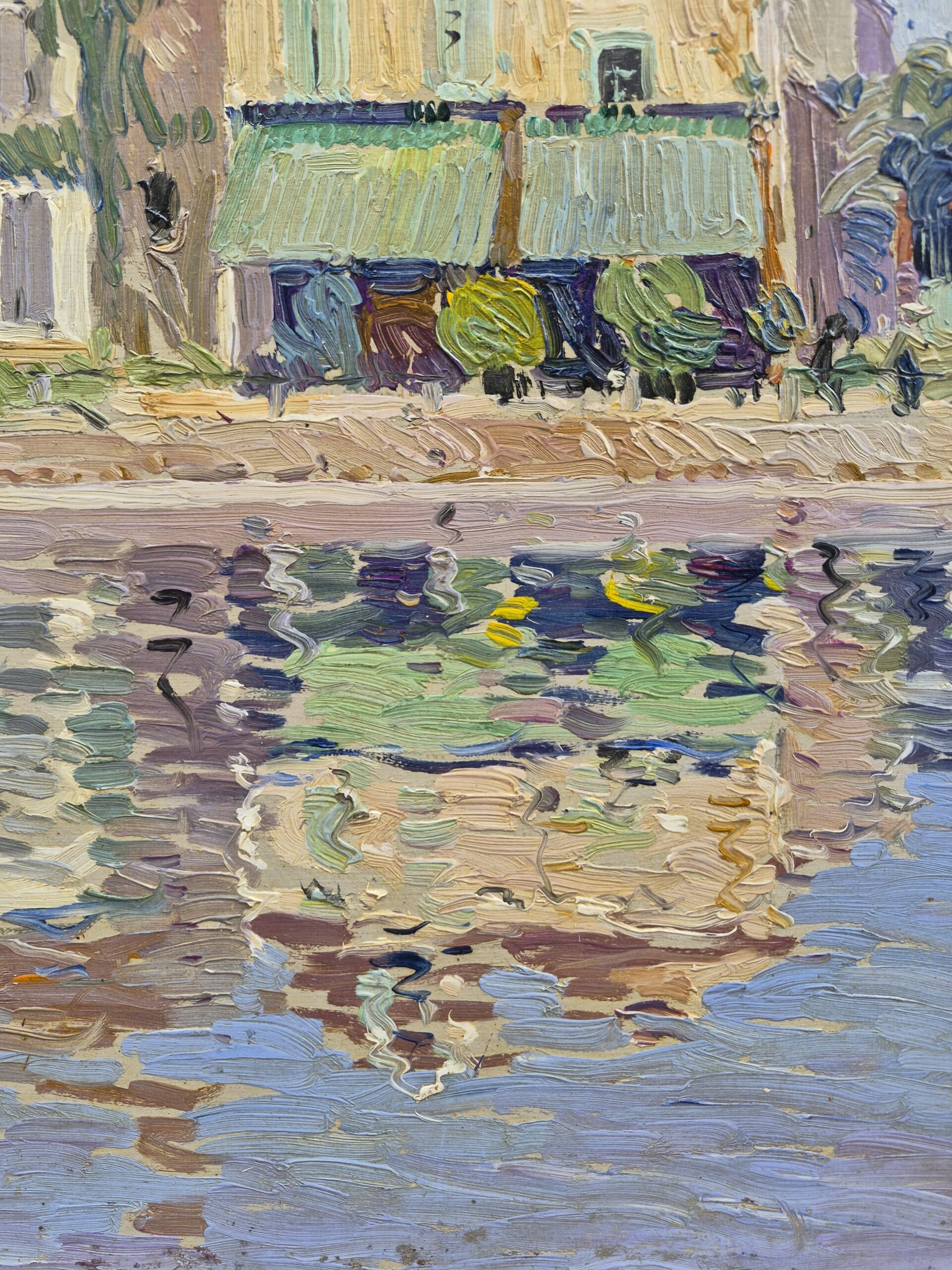
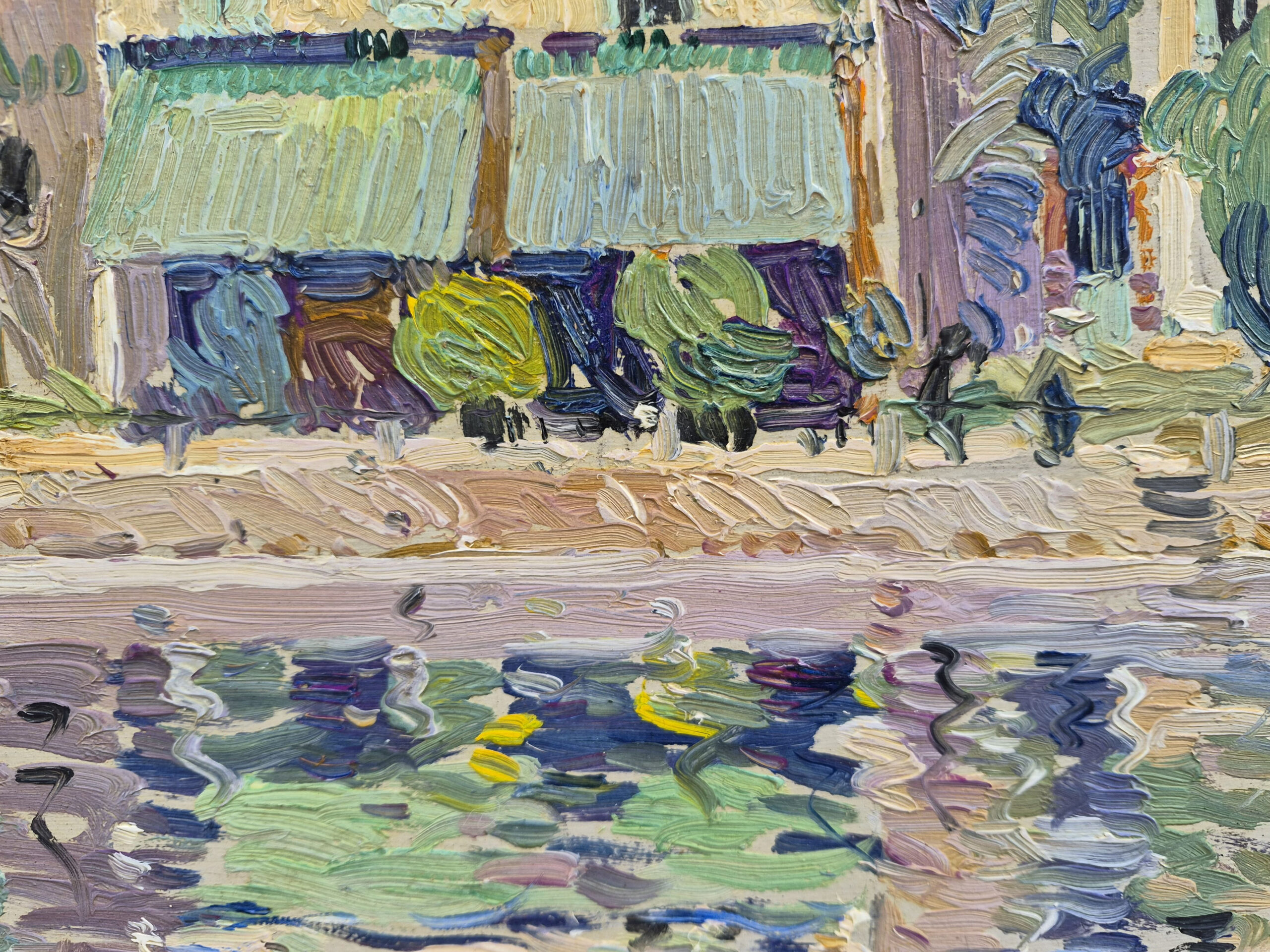
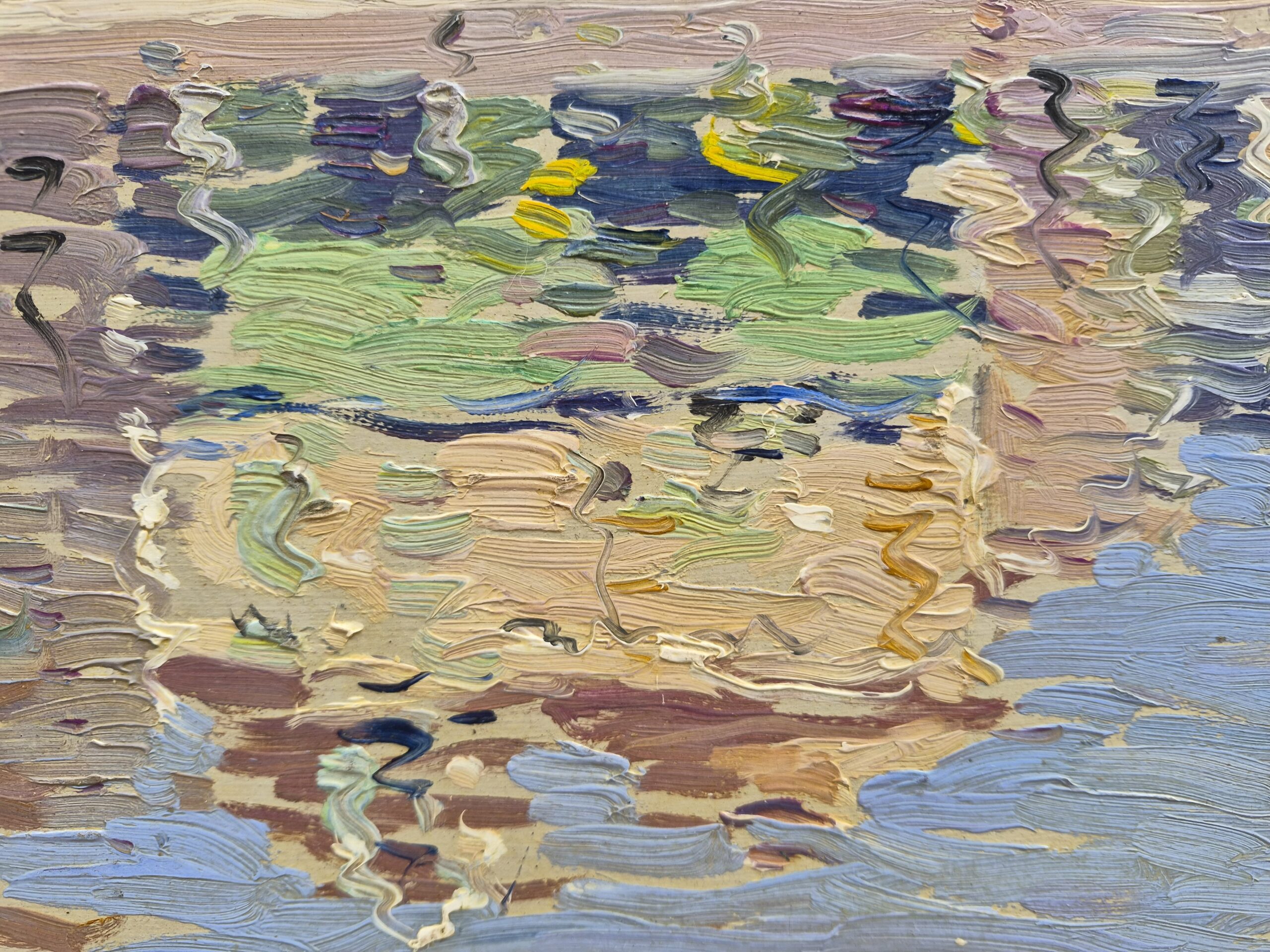
An oil painting on cardboard, *Houses by the River* by Paul MATHIEU
Prix sur demande / prices on request
Paul MATHIEU (1872–1932)
Belgian Impressionist painter
Our work is similar to a piece from 1918 on display at the Ixelles Museum in Belgium.
The son of architect Théophile Mathieu, Paul was raised in an artistic environment.
The early years of his training were heavily focused on learning to draw. He began at the Académie de Saint-Josse-ten-Noode, where he pursued a course in drawing, before studying under the artist and painter Joséphine Godaert-Meyer.
He then worked as a draftsman and set designer on the construction of the Alhambra Theater in Brussels.
In 1893, his professional career began: one of his works was exhibited at the Brussels Salon.
In 1894, he participated in the World’s Fair in Antwerp and exhibited his paintings at art salons and in artistic circles in Schaerbeek, Brussels, and Liège.
In 1896, he achieved recognition: he was appointed to a teaching position at the Academy of Fine Arts in Brussels, a position he would hold until his death.
As early as 1900, Paul traveled throughout the Belgian countryside to document changes in the atmosphere throughout the day.
He lays the groundwork for the central theme of his career: vast landscapes, with or without architectural elements, but never with people.
Further information
In 1911, he accompanied his friend, the painter Alfred Bastien, to the Congo as part of a mission organized by the Ministry of the Colonies, and traveled throughout the country.
In 1913, a large fresco measuring 115 meters long and 14 meters high was unveiled at the World’s Fair in Ghent, where Paul Mathieu showcased his talents as a landscape painter.
Then World War I broke out, and the painter fled Belgium for France.
His trip to Paris, in the Île-de-France region, following in the footsteps of the Impressionists, and then to the South, renewed his vision of landscape and light.
His color palette brightens, and his brushwork becomes more fluid. His works become more high-contrast, more carefully composed, and, paradoxically, more spontaneous.
Critics noted a greater sense of daring, and comparisons to Renoir and Sisley were highlighted when he held a solo exhibition of some forty paintings at the Georges Petit Gallery in 1922.
Our painting is very characteristic of this period.
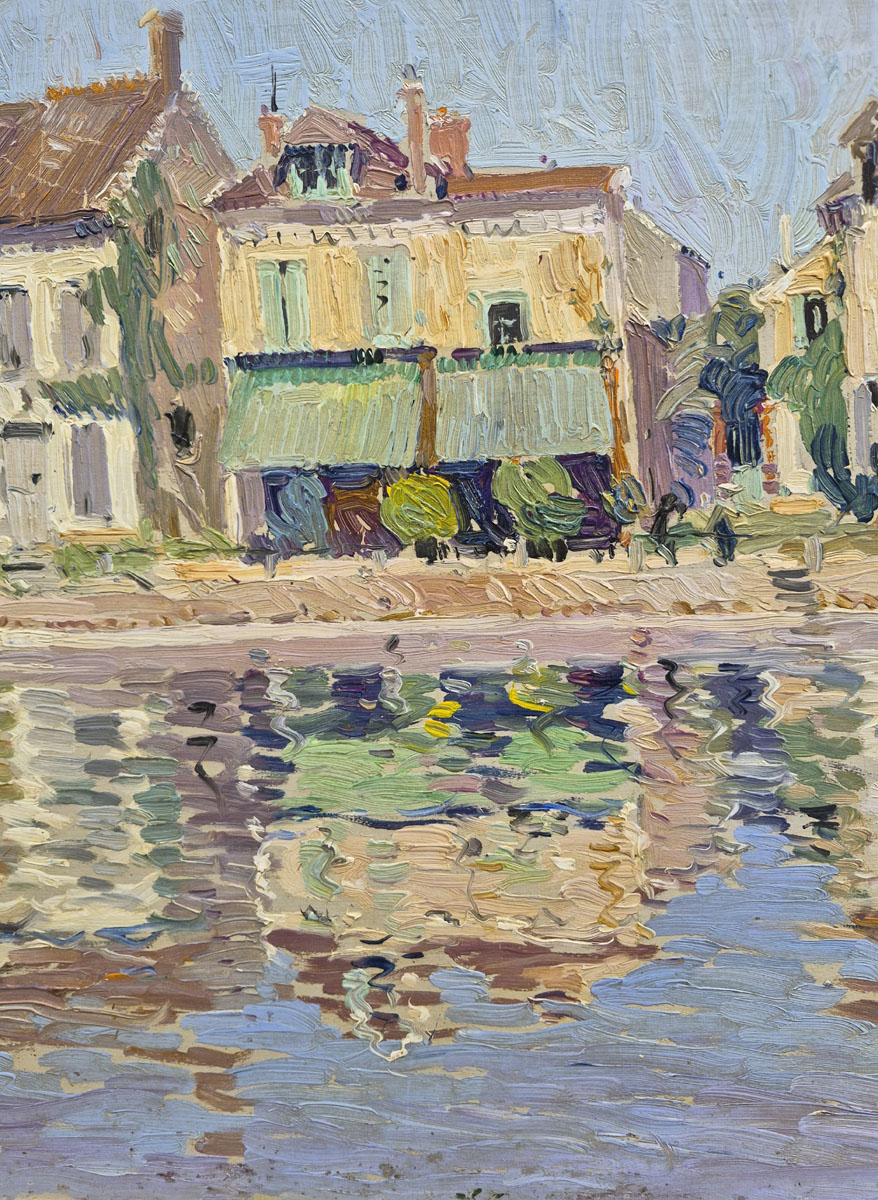
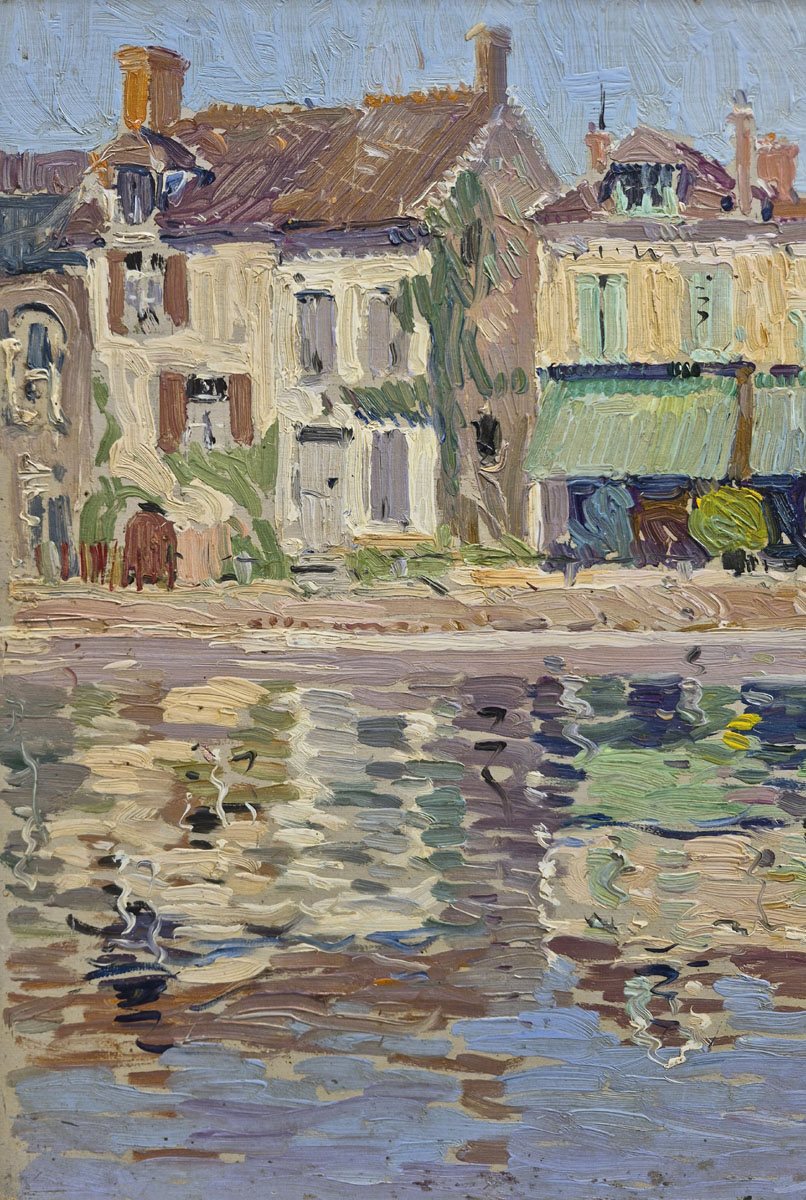
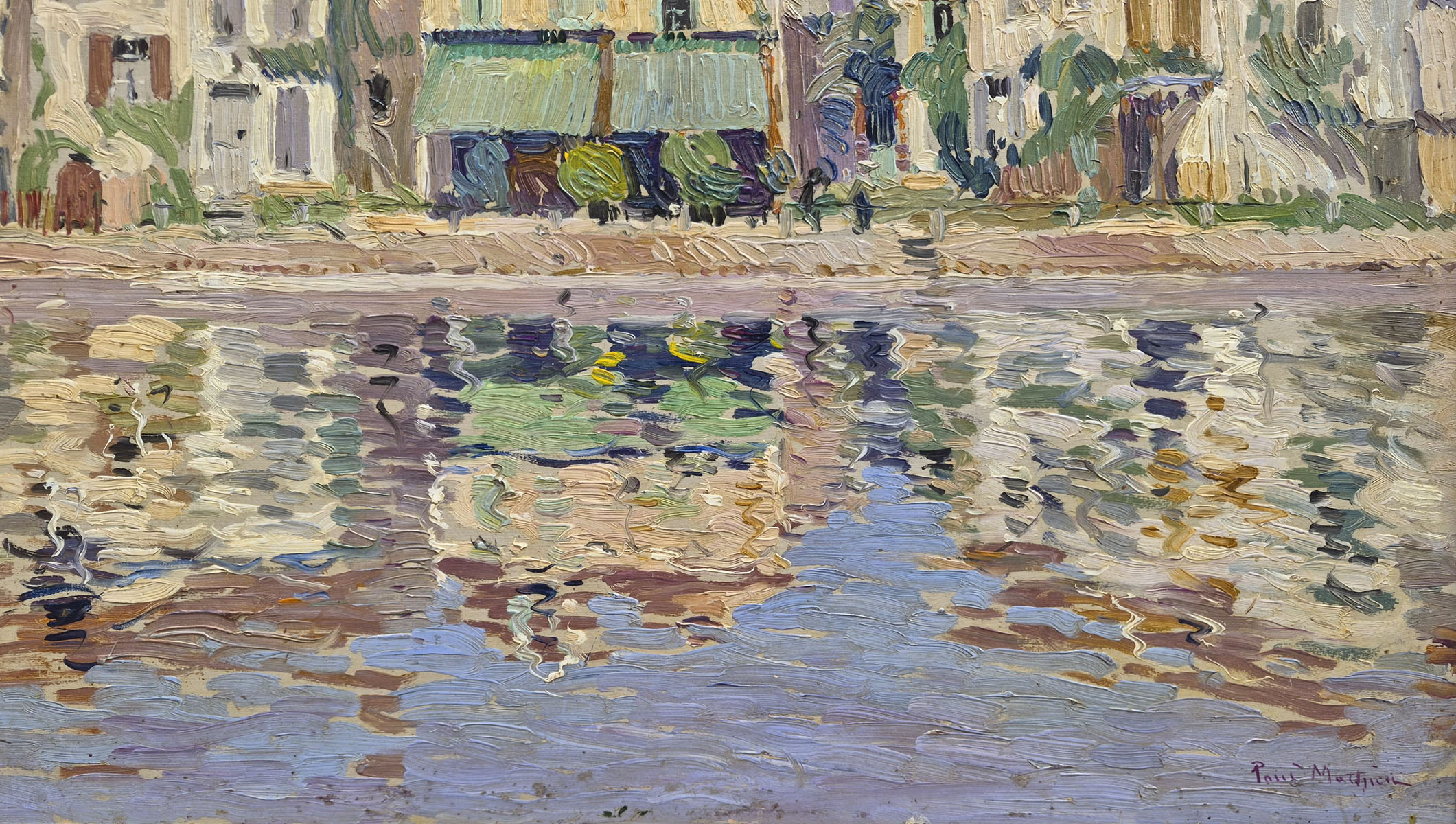
The painter organizes the landscape around a central horizontal line. The riverbank divides the canvas almost exactly in half, creating a fascinating mirror effect between the architecture and the river. A subtle symmetry. Little sky and lots of water.
This apparent geometric precision contrasts with the spontaneity of the brushwork.
The houses are rendered with broad, juxtaposed strokes of color, while their reflections break down into a multitude of small strokes.
Light no longer merely illuminates forms. It seems to pass through them and, at times, dissolve them.
This development brings Mathieu closer to Post-Impressionism and Belgian Luminism.
However, unlike painters who engage in a radical deconstruction of forms, he maintains a clear composition and a consistent commitment to natural motifs.