Oil on canvas, *The Troubadour* by Louis Carrier-Belleuse
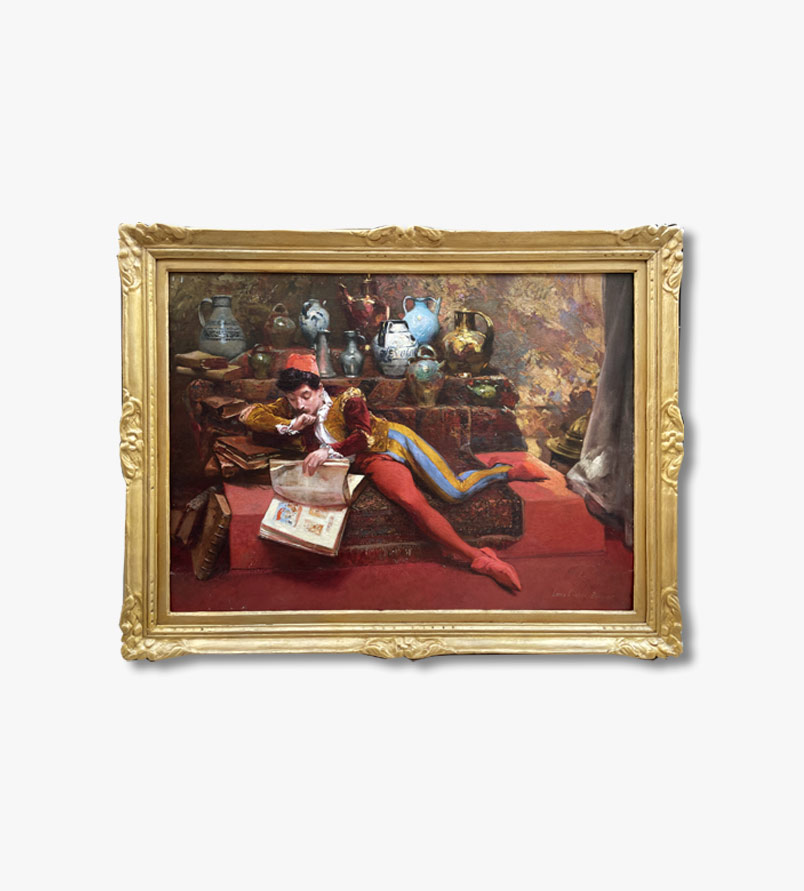
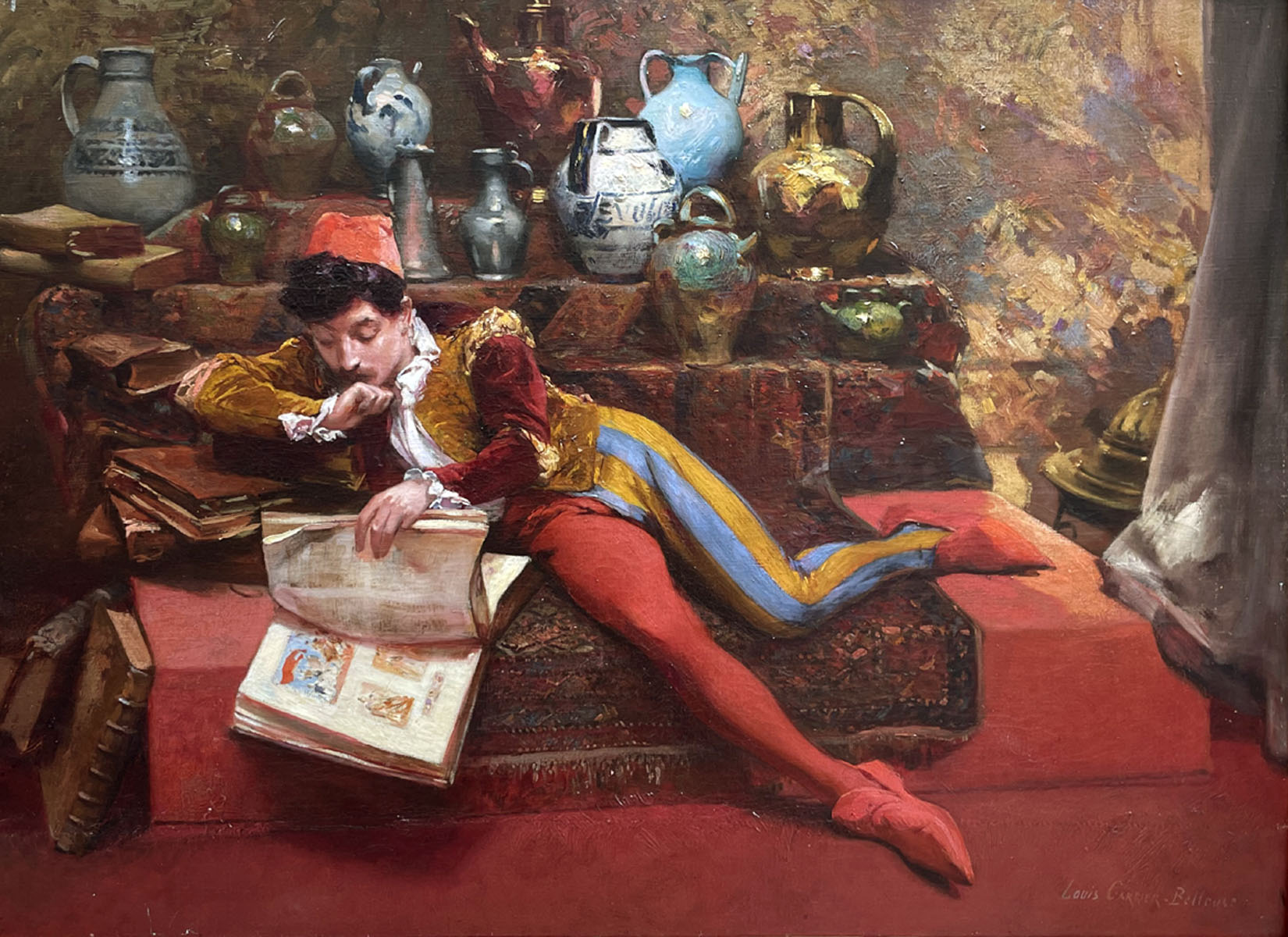
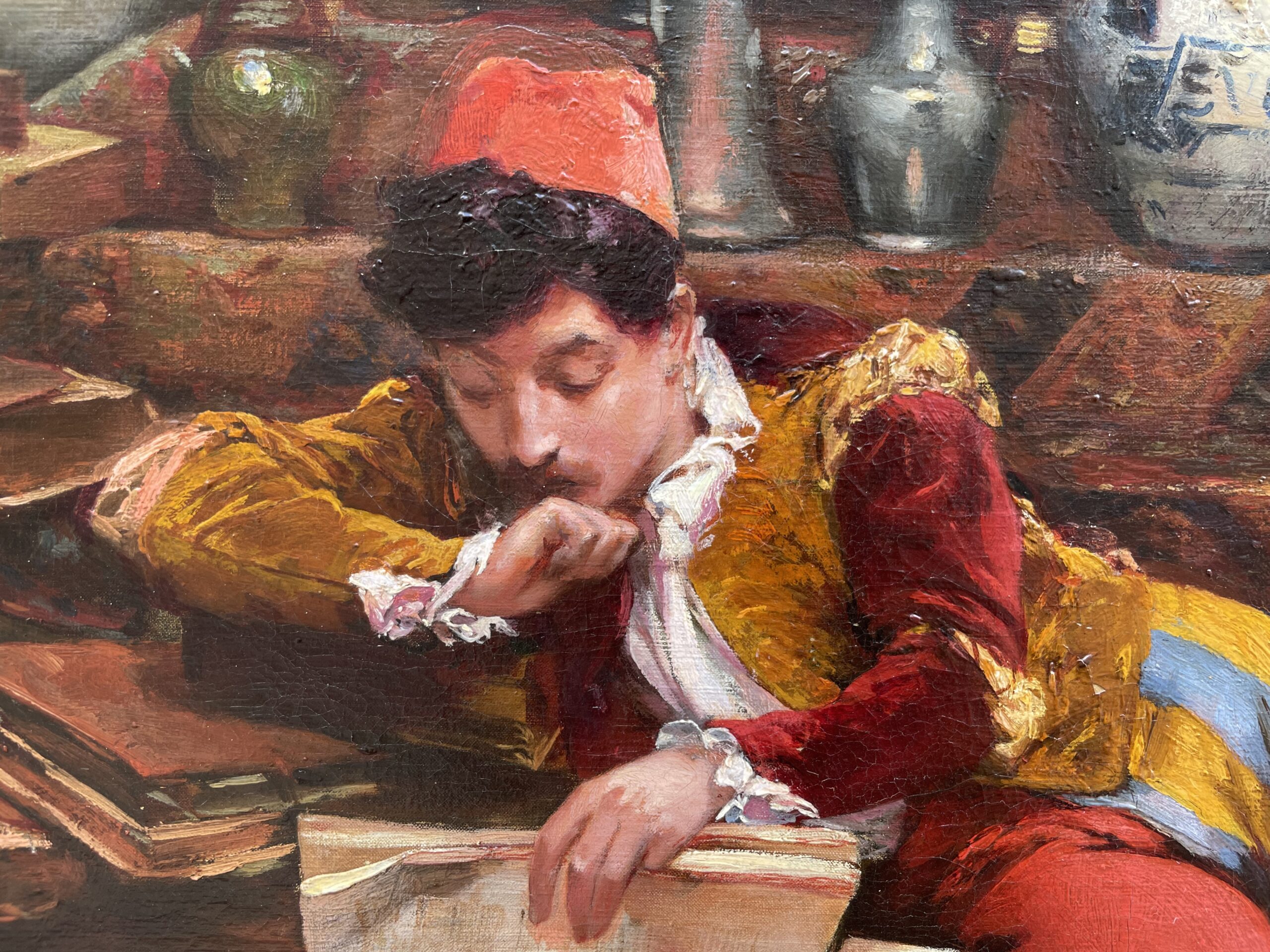
Oil on canvas, *The Troubadour* by Louis Carrier-Belleuse
8.500,00 €
Louis-Robert Carrier-Belleuse (1848–1913)
The son of the famous sculptor Albert-Ernest Carrier-Belleuse and brother of the painter Pierre Carrier-Belleuse, Louis-Robert Carrier-Belleuse was born in Paris in 1848. Trained from an early age in the family studio, he continued his studies at the École des Beaux-Arts under Gustave Boulanger and Alexandre Cabanel, while developing a solid mastery of the decorative arts.
A remarkably versatile artist, he distinguished himself as a painter, sculptor, ceramicist, and draftsman. He exhibited his first works at the 1870 Salon, went on to receive an honorable mention at the 1881 Salon for his painting, and later won an award for his sculpture at the 1889 World’s Fair.
His paintings are distinguished by a sensitive naturalism, focusing on scenes of Parisian life and working-class occupations.
Through paintings such as *A Team of Pavers*, *Flour Porters*, and *Les Halles*, he offers a vivid portrayal of the capital in the midst of industrial and urban transformation, combining precise draftsmanship, a keen sense of light, and a deep concern for the human condition.
Further information
| Dimensions | 62 × 75 cm |
|---|
Alongside his career as a painter, Carrier-Belleuse played a major role in the decorative arts.
After working at the Manufacture de Sèvres, he became artistic director of the Faïencerie de Choisy-le-Roi in 1889, where he revitalized the ceramic designs with a refined aesthetic inspired by nature and the arts of his time.
He also completed several monumental commissions, notably the National Monument of Costa Rica and the tomb of President José María Reina Barrios in Guatemala.
Here, far from theatrical compositions or heroic scenes, the artist chooses to depict a young musician in a moment of rest and contemplation.
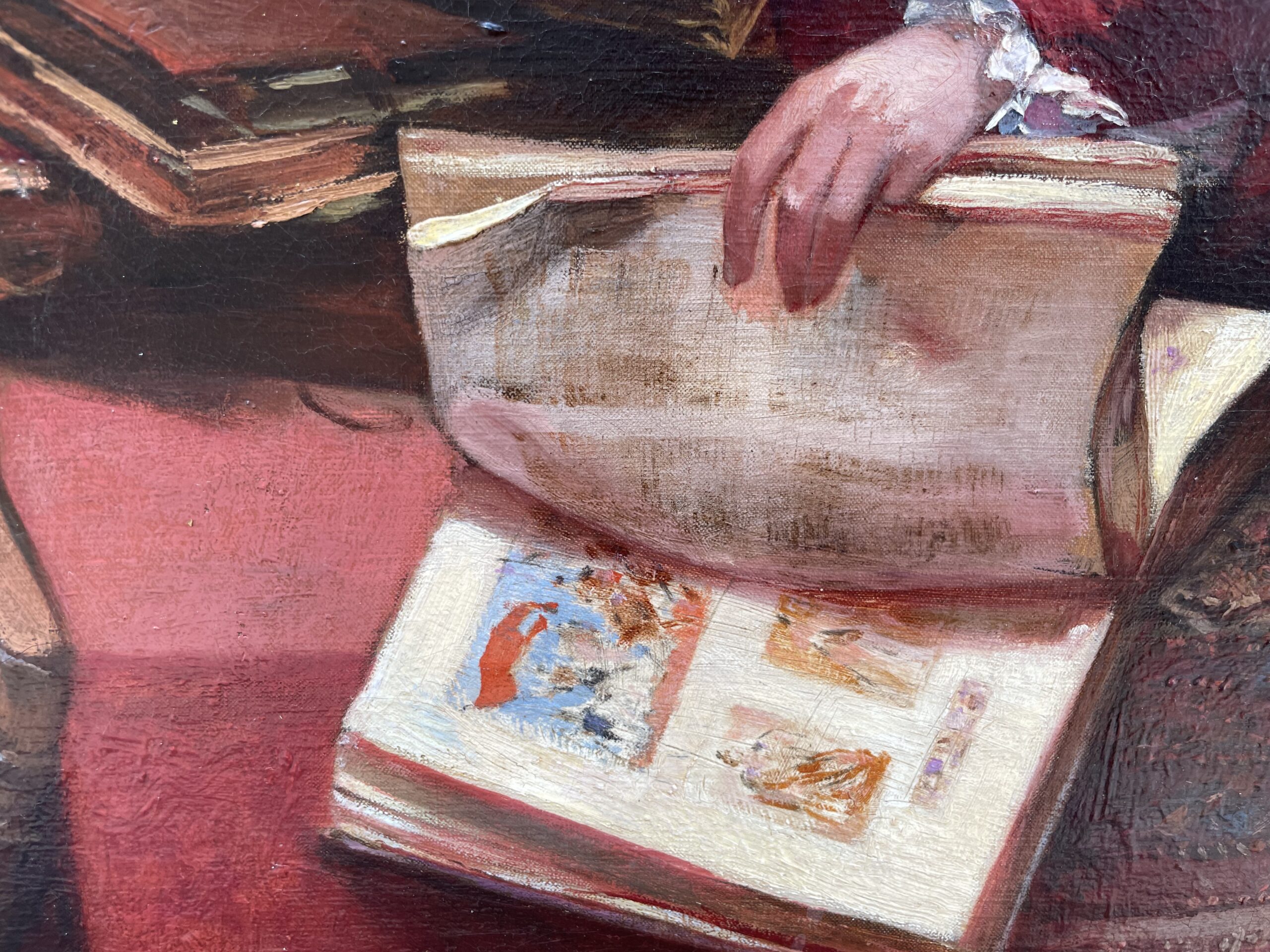
Lying casually on a chest, with an illuminated book open before him, the figure seems lost in thought, creating a quiet and deeply human scene.
The close-up framing reinforces this sense of intimacy. The viewer shares the space with the troubadour, whose relaxed pose breaks with the solemn postures he typically adopted in other paintings on this subject.
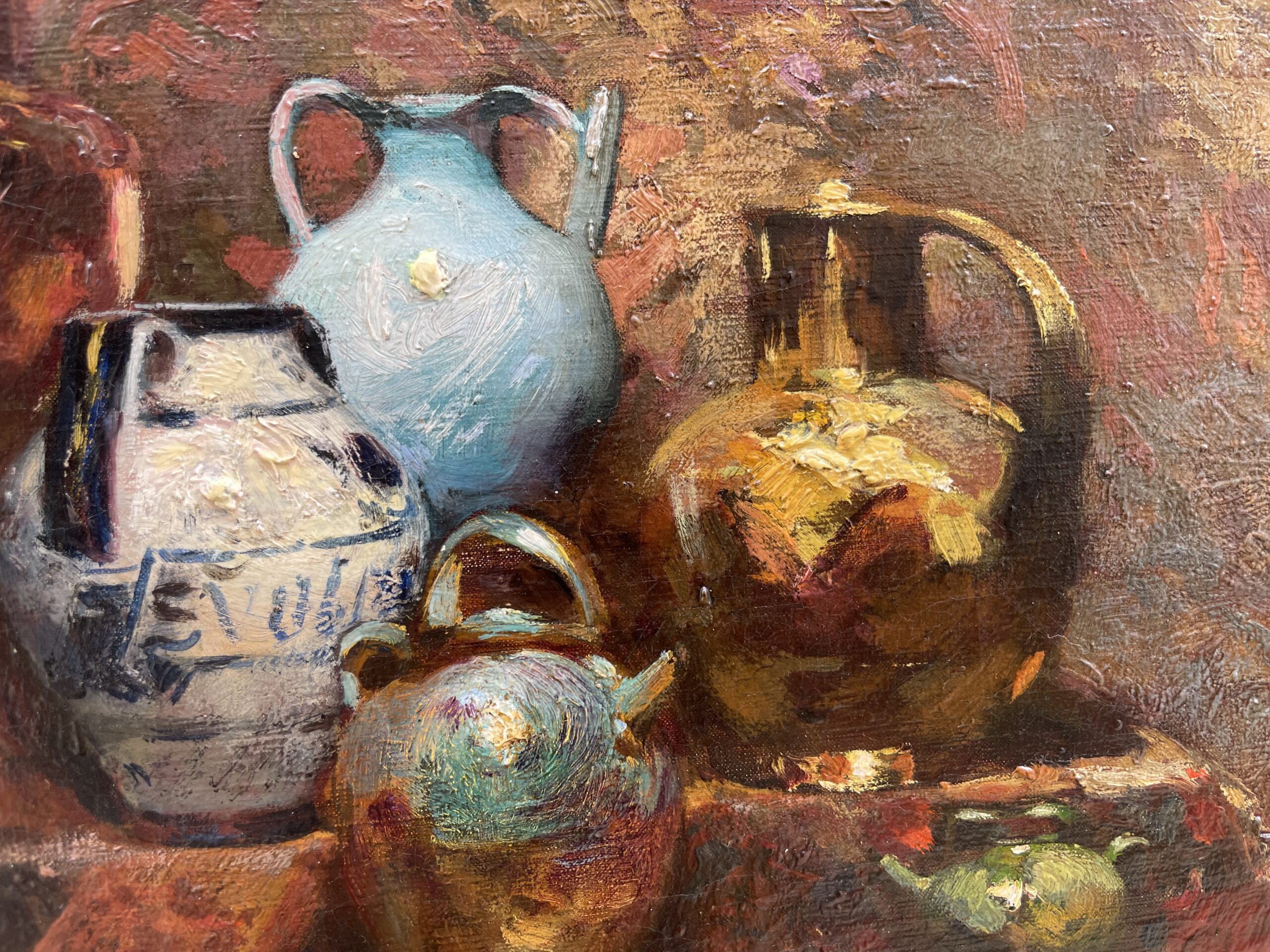
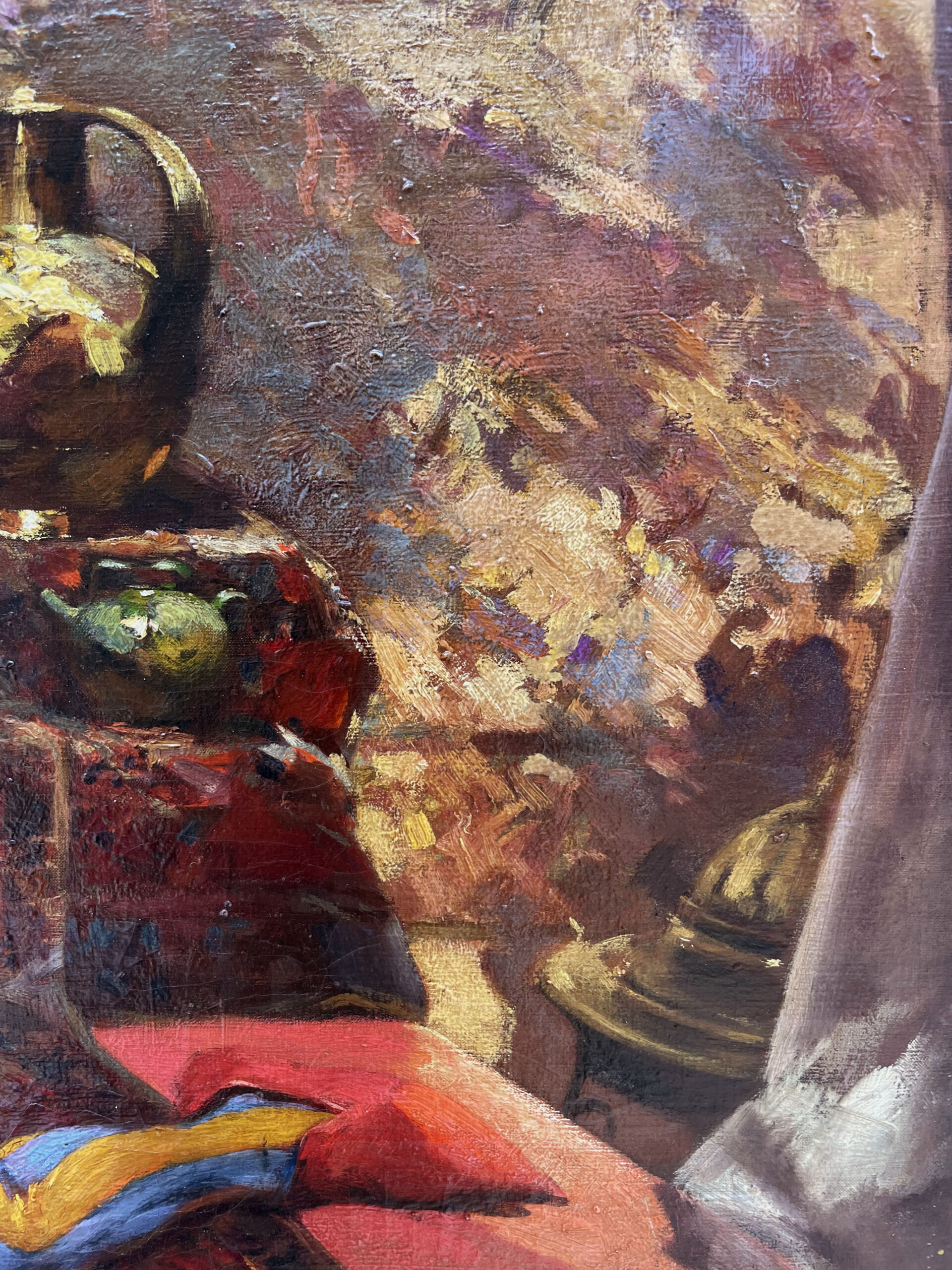
In the background, a large collection of ceramics and earthenware catches the eye.
Their presence is undoubtedly significant: he was a prominent ceramic artist and artistic director of the Choisy-le-Roi pottery.
These objects, painted with as much care as the figure itself, reflect his taste for the decorative arts and his interest in the interplay of materials, glazes, and reflections.