Oil on canvas, Studio view by Suzanne DINKES
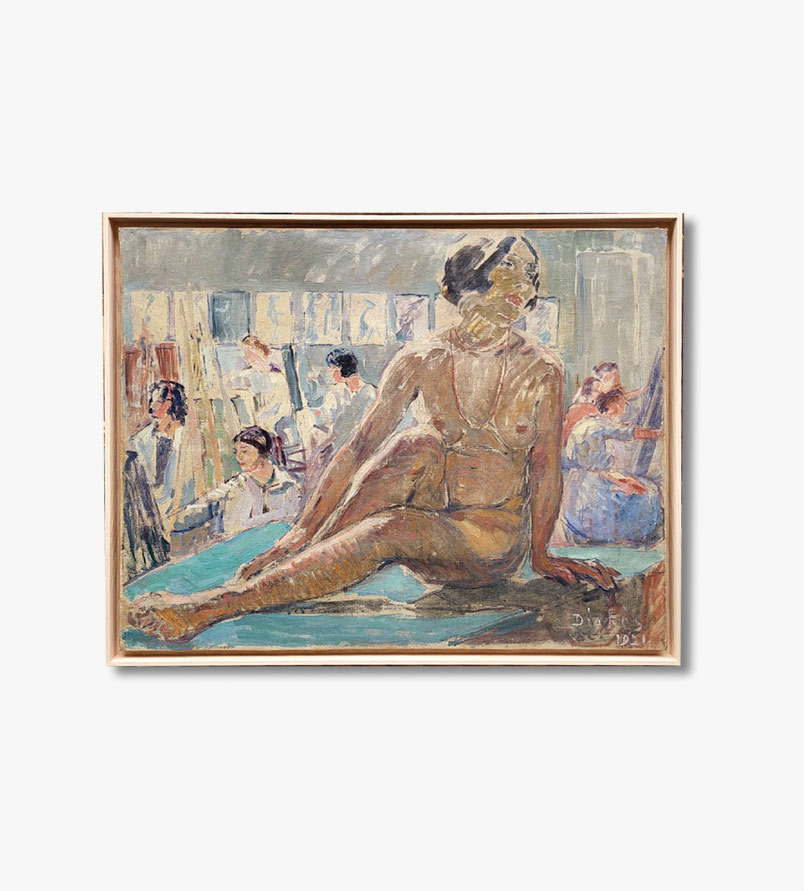
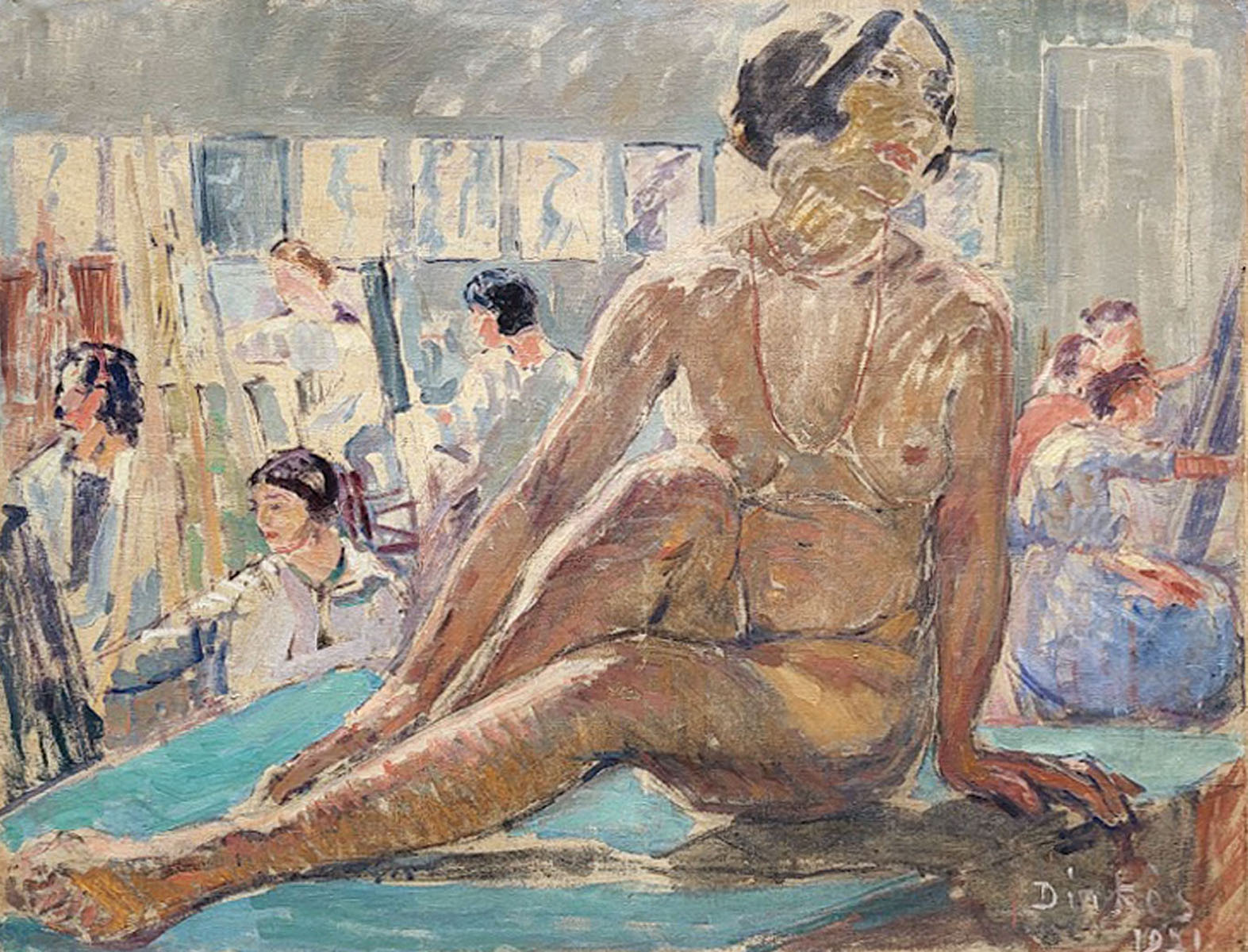
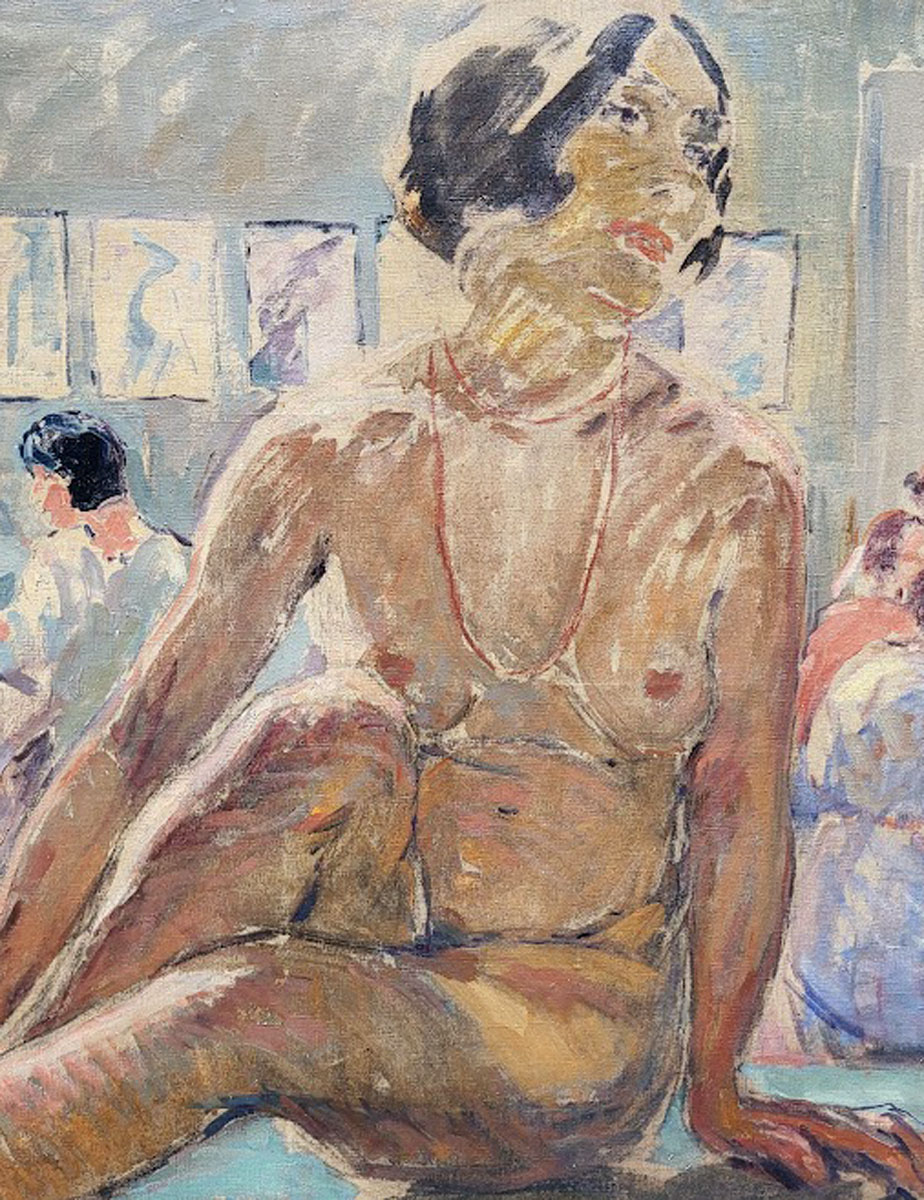
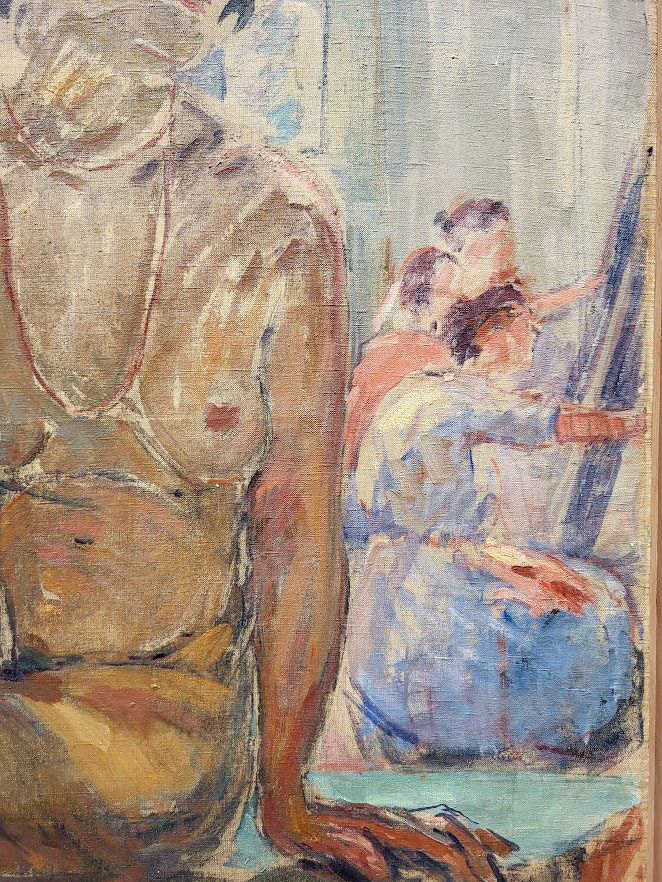
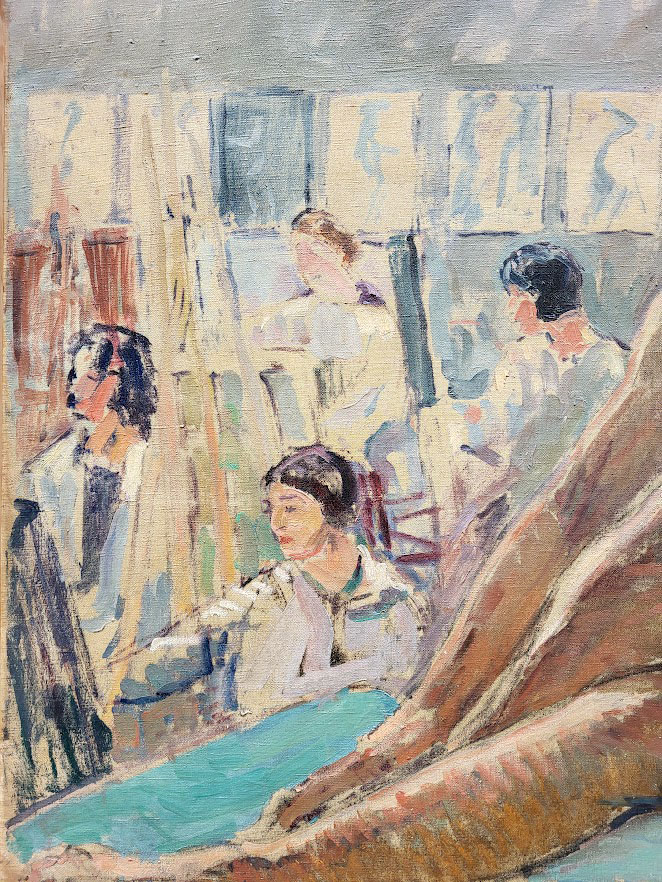
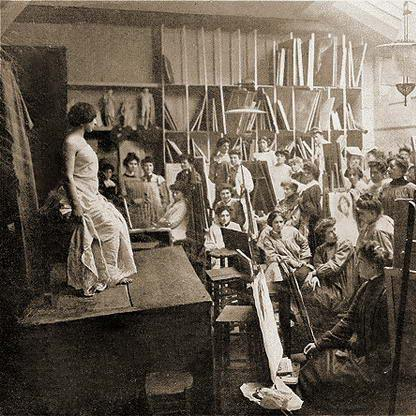
Oil on canvas, Studio view by Suzanne DINKES
6.500,00 €
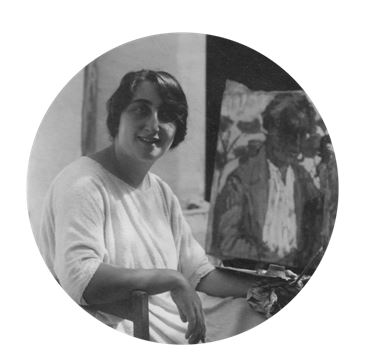
Suzanne DINKESPILER or DINKES
1895-1984
Painter of genre, portraits, landscapes and scenes
A pupil of Humbert, she exhibited from 1920 at the Salon d'Automne, the Salon des Indépendants and the Salon des Artistes Français.
Critics love the intensity of his touch, the "slightly roguish matter" free of academicism, but also of modernity.
She frequented the artists of her time, notably the Pré-Saint-Gervais school.
Suzanne is as free a woman as her painting. This is reflected in her correspondence with Maurice Loutreuil, a leading figure in landscape painting.
Critics love the intensity of her touch, "the slightly roguish matter" free of academicism, but also of modernity.
. If some of her works remind us of van Gogh or Valtat, Suzanne replies that "she paints what she paints, as she sees and feels it", regardless of whether the viewer makes comparisons.
Further information
| Dimensions | 107 × 86 cm |
|---|
Her work follows in the tradition of classical painting, inherited from academic teaching, while revealing a personal sensibility, particularly in her rendering of light and volume. Like many artists of her time who remained on the fringes of the avant-garde, Suzanne Dinkes seems to have pursued an intimate and consistent approach, probably nourished by her studio practice and local exhibitions or salons.
The unique feature of this painting by Suzanne Dinkes lies in the perspective she takes on her own work. By painting both the nude model and the studio space, the artist goes beyond a simple nude study: she offers an overview of the creative process, as if the viewer were standing in the painter's place.
The model, treated with great freedom of touch and sensitive attention to volume, fits naturally into the living space of the studio, animated by the figures of artists at work. This mise en abyme of the gaze—the painter painting a painter painting—gives the work an almost introspective dimension, rare and particularly modern for its time.
Above all, however, the painting offers a rare and valuable insight into painting academies as seen by a woman, at a time when these training spaces remained largely dominated by men and the place of women artists was still marginal.
Dated 1921, the painting was exhibited in 1922, receiving excellent reviews that praised the mastery of the nude, the intelligence of the composition, and the accuracy of the view of the studio scene.