
An oil on canvas painting, *Walkers in Granville, Normandy* by Richard LE BLANC
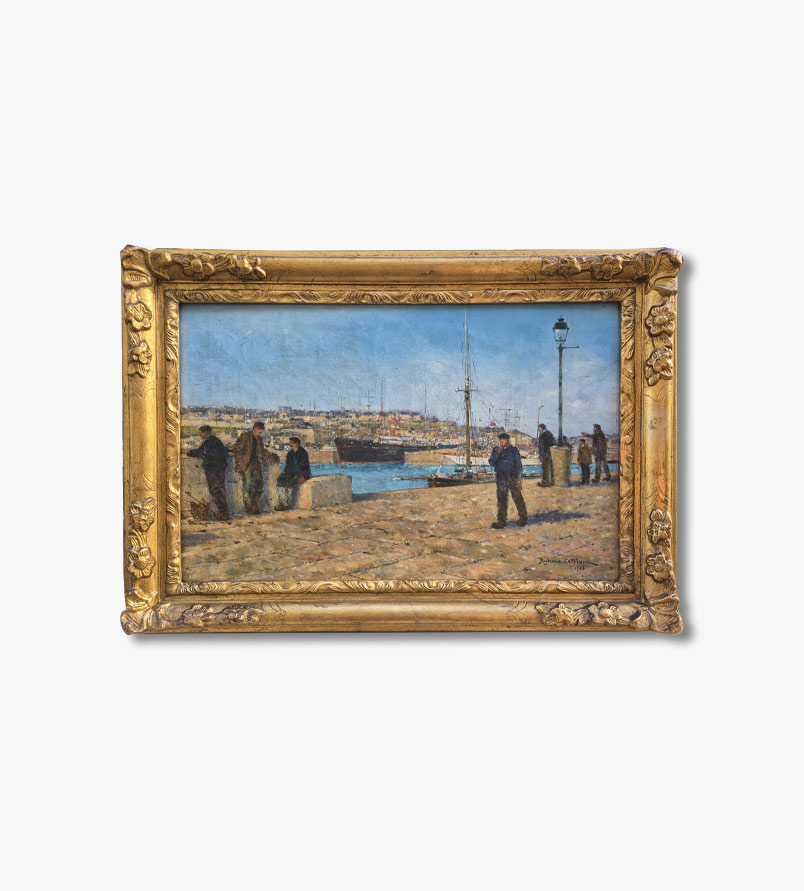
An oil on canvas painting, *Walkers in Granville, Normandy* by Richard LE BLANC
Prix sur demande / prices on request
Richard Leblanc 1882–1953
Painting dated 1906
Richard Le Blanc is a true product of Normandy!
Born in Granville, he attended the town’s art school from a very young age.
At age 17, like others before him, he headed to Paris to pursue a comprehensive education in the fine arts and decorative arts.
But the call of the sea brought him back to Granville, which he would never tire of depicting in his paintings.
After World War I, in 1918, he opened a drawing class in his home and taught at the municipal school at the same time.
To understand the artist, one must view Granville as the true thread running through his work.
He is regarded as the painter of life in Granville.
Further information
| Dimensions | 67 × 50 cm |
|---|
In the early 20th century, the city had a dual identity: a fishing port and a seaside resort attracting a growing number of tourists.
In fact, the opening of the railroad line in 1870 contributed to this development.
Le Blanc’s Normandy is not the same as that of the Impressionists.
While Monet turned Normandy’s landscapes into a laboratory for experimentation, Le Blanc sought to capture the atmosphere of these places—as a witness to the life of his time—in a style freer than classicism.
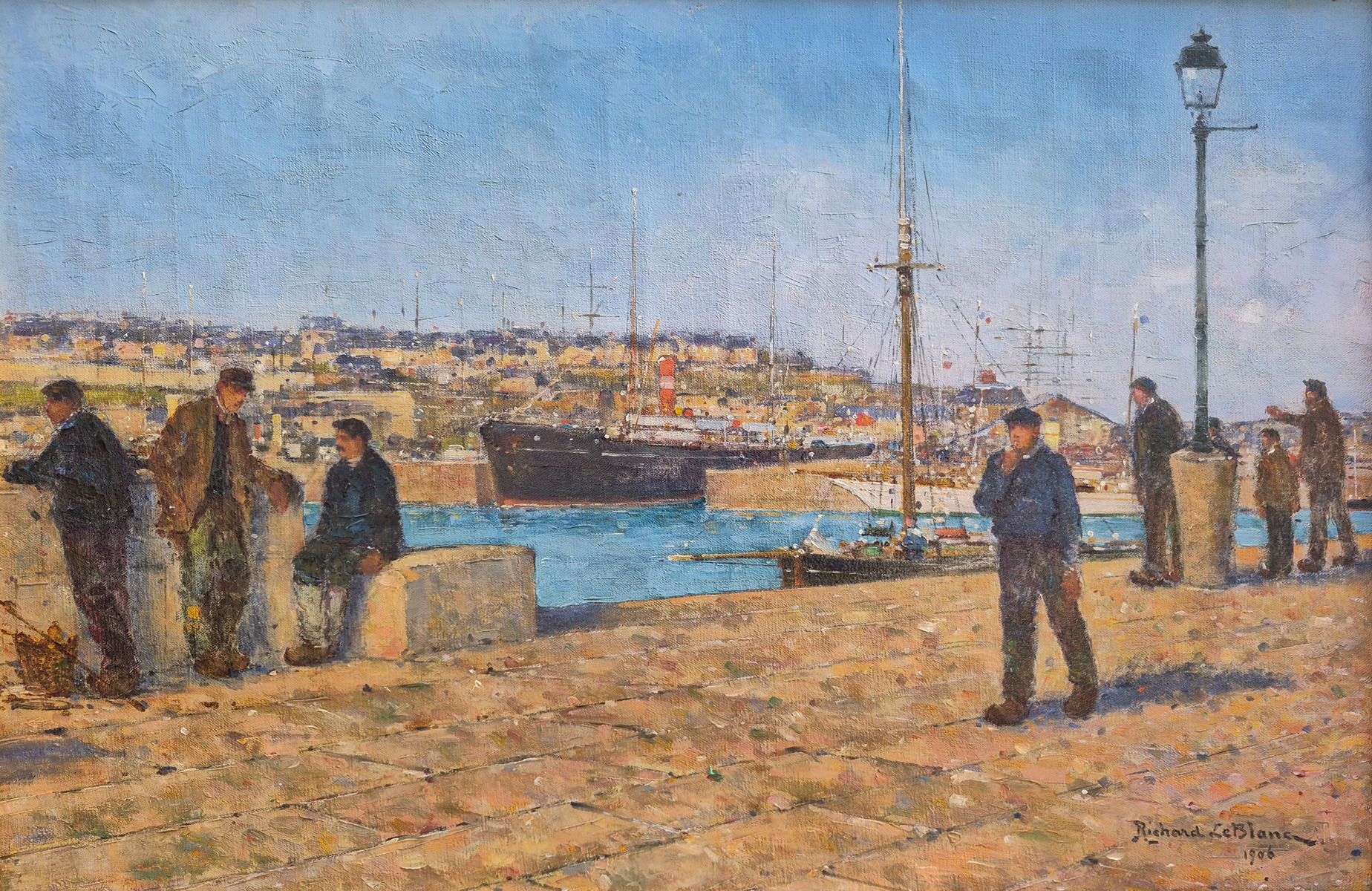
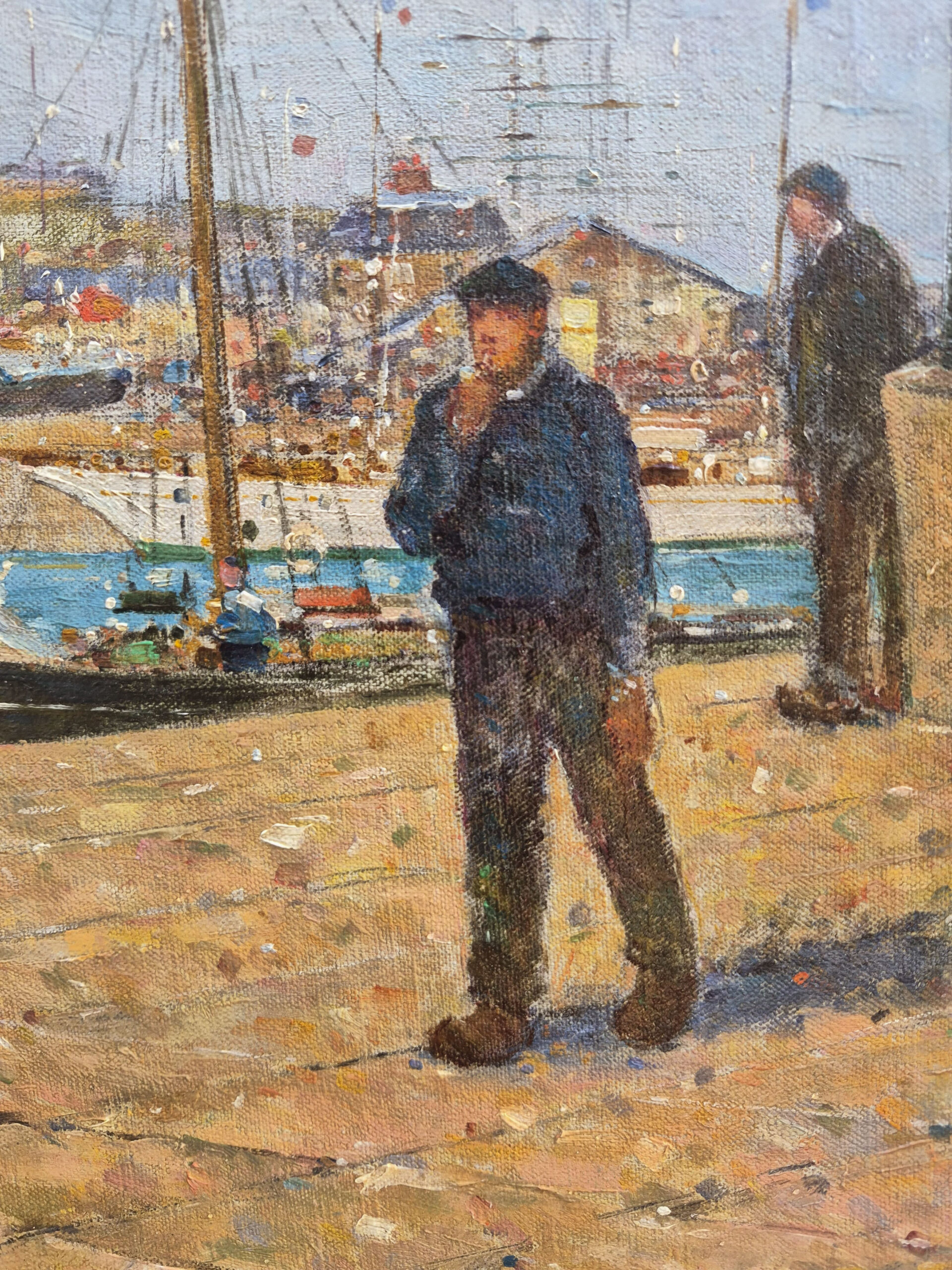
In our painting, Le Blanc chooses to depict an ordinary moment in port life.
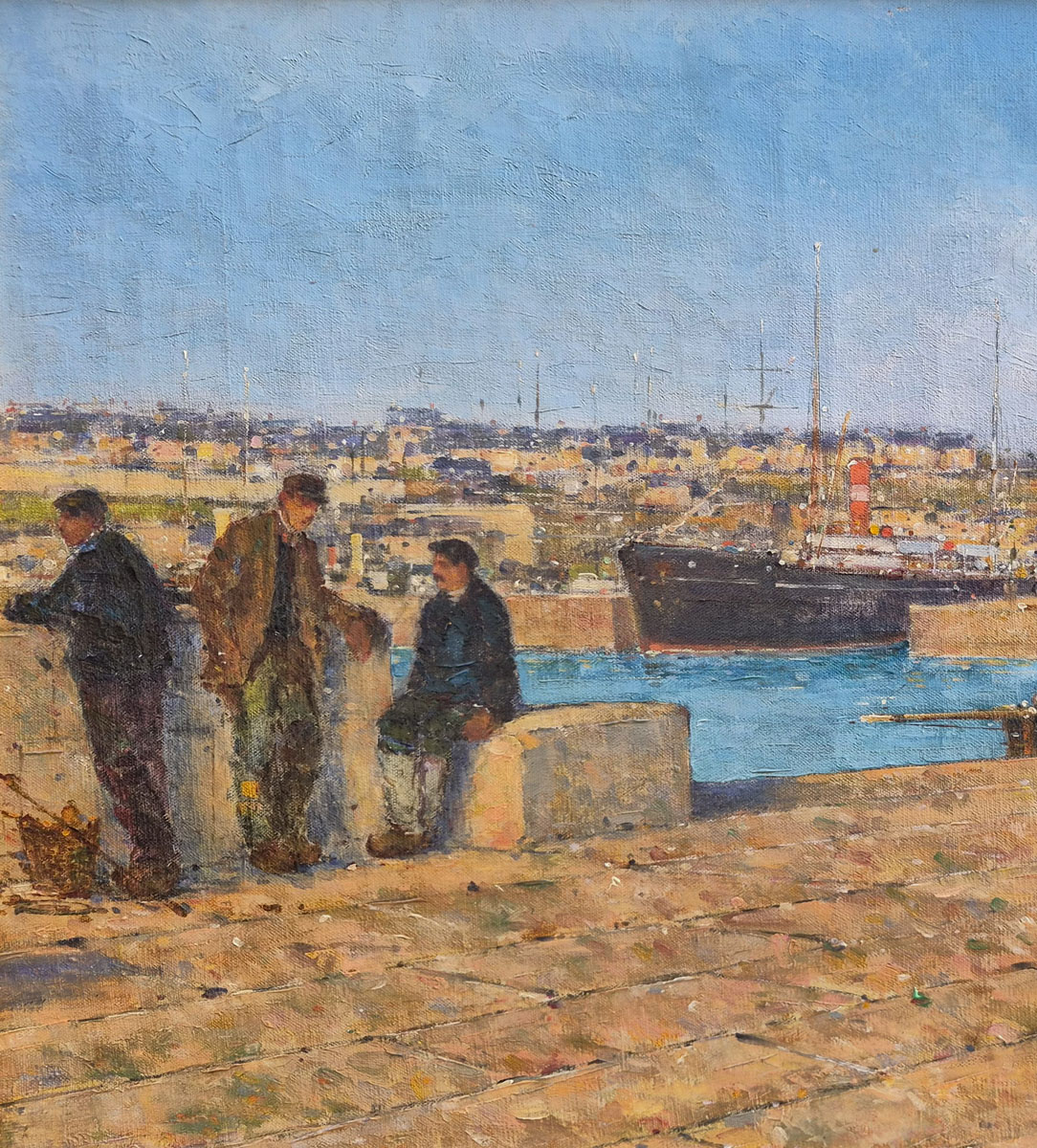
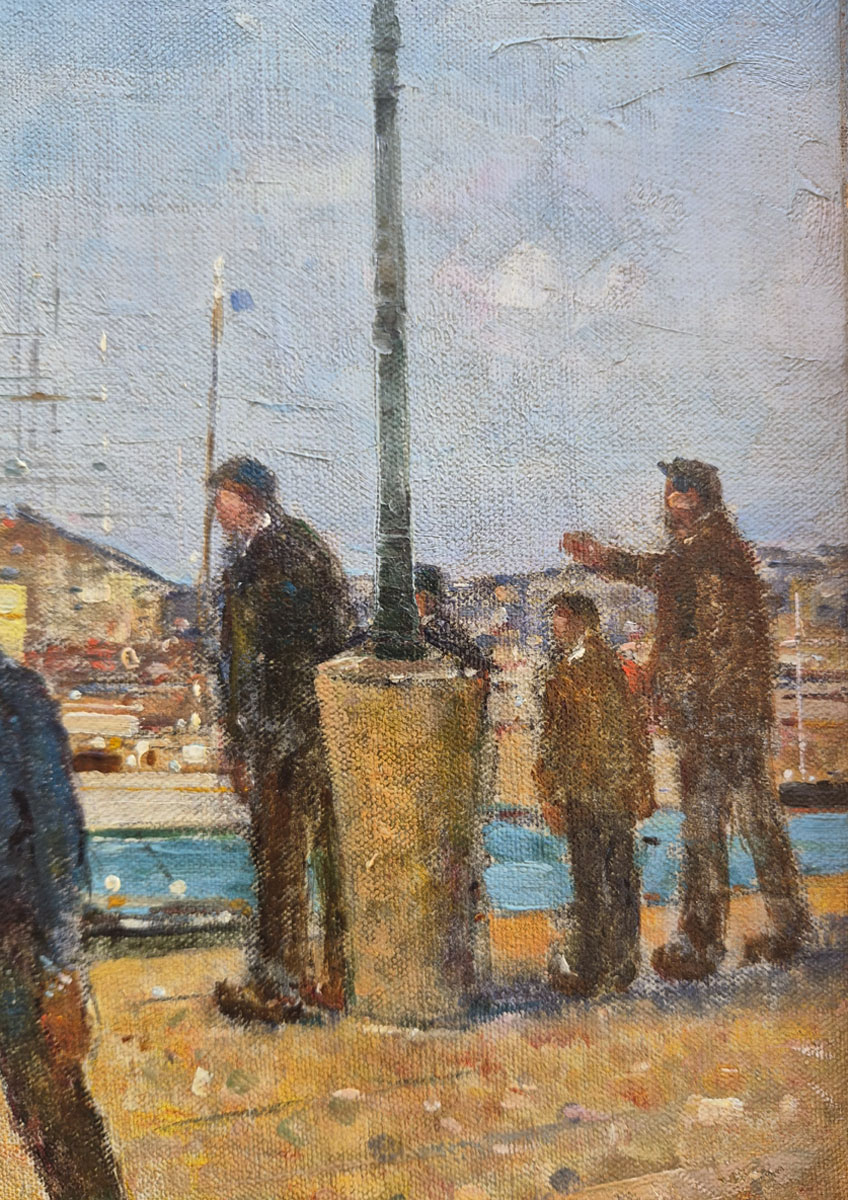
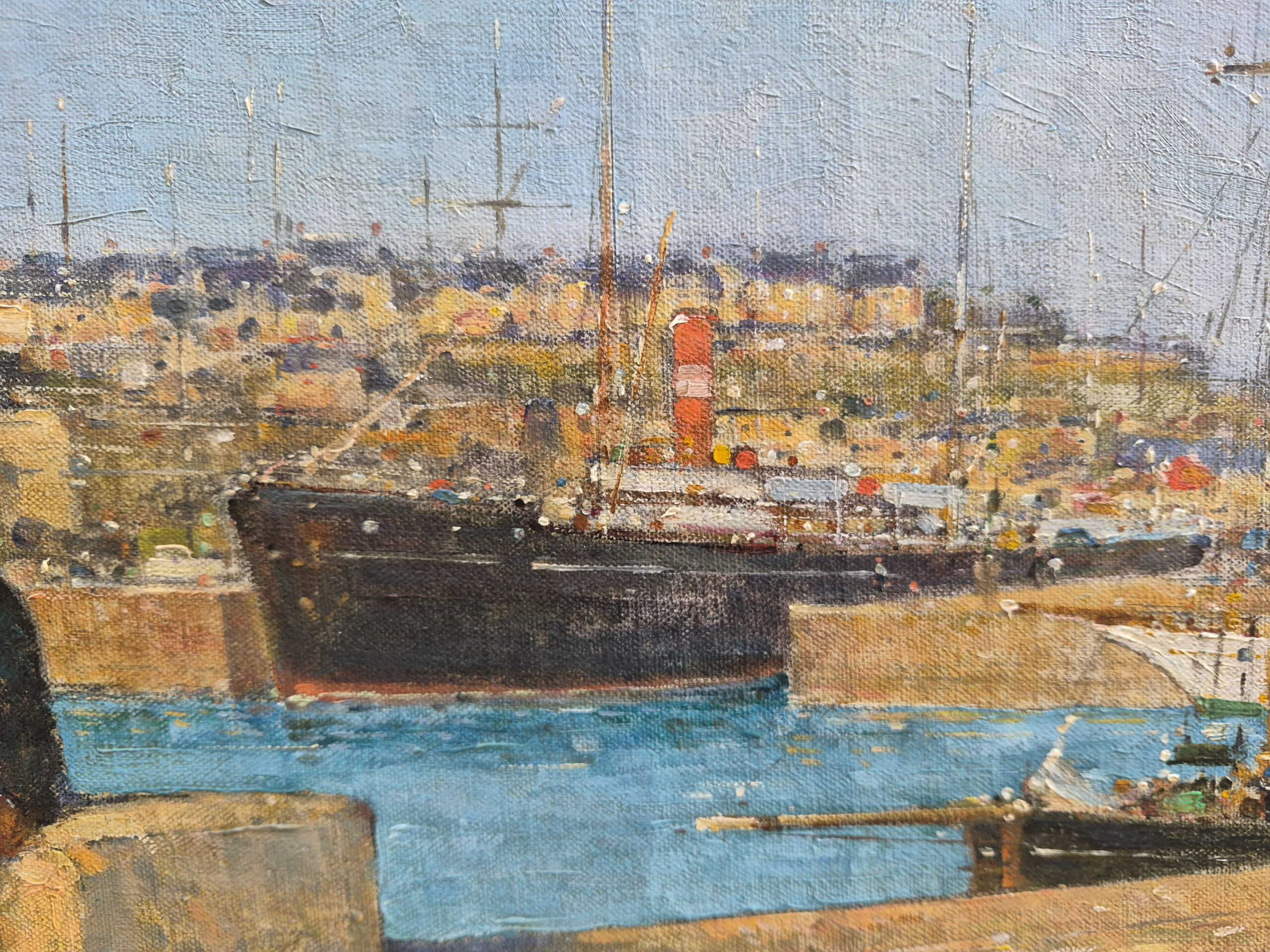
Several figures are chatting or strolling along the Granville docks, while boats and port facilities are visible in the background.
The painter organizes the space into three large horizontal zones.
The first is the pier, whose cobblestones occupy a significant portion of the painting.
The second is the harbor basin, bustling with ships.
The third consists of the buildings of Granville and the sky.
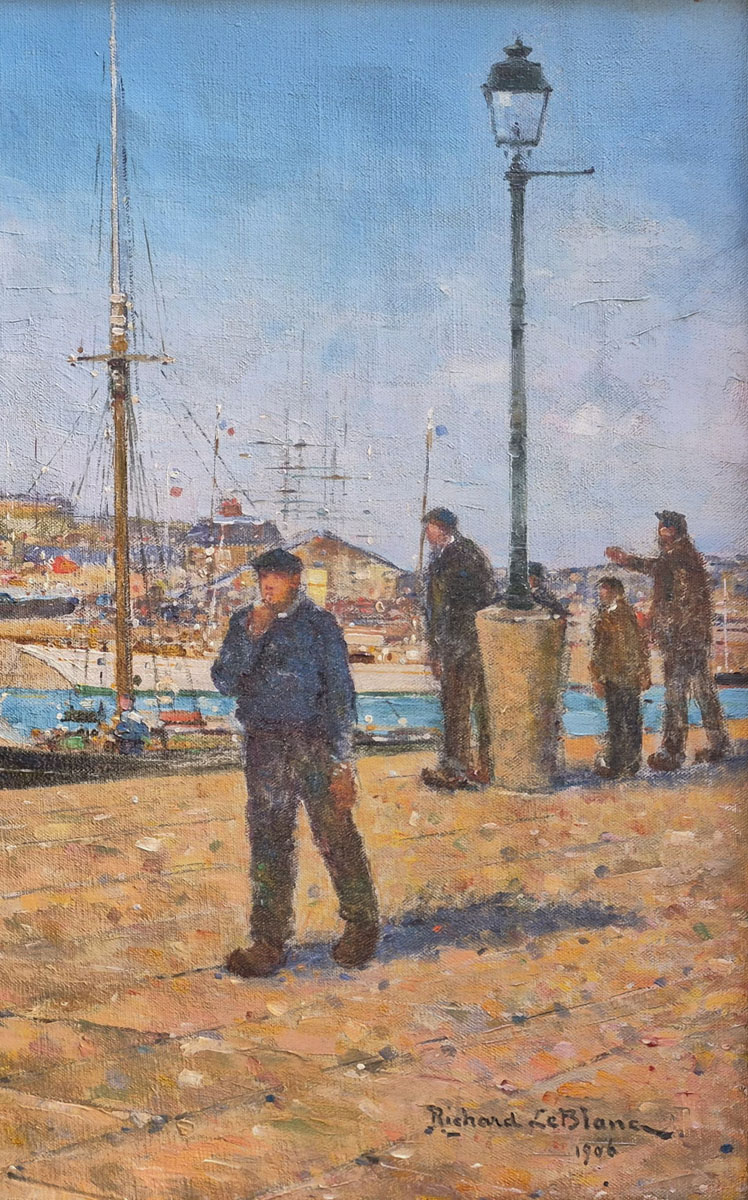
This horizontal structure is balanced by the vertical lines of the masts and the streetlight on the right.
The large streetlamp frames the composition and creates a counterpoint to the expanse of the sky.
The figures, positioned at varying distances, allow the viewer to gauge the depth of the space.
The ochre hues of the cobblestones and the city contrast with the pure blue of the sea and the sky, which illuminates the composition.