
Oil on canvas , Nude back by Vera ROCKLINE
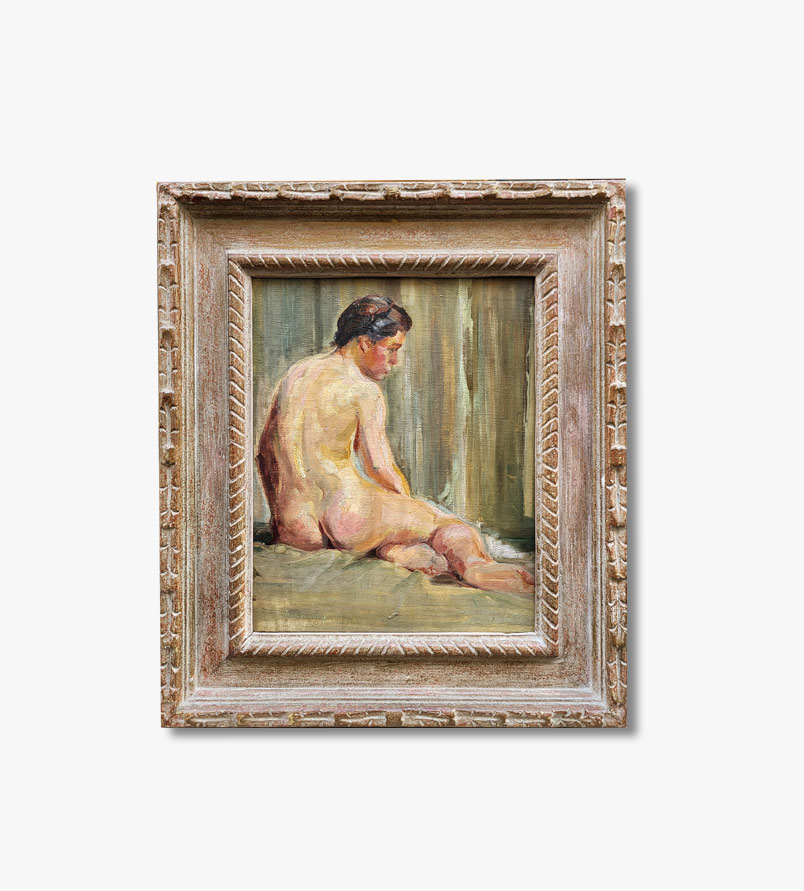
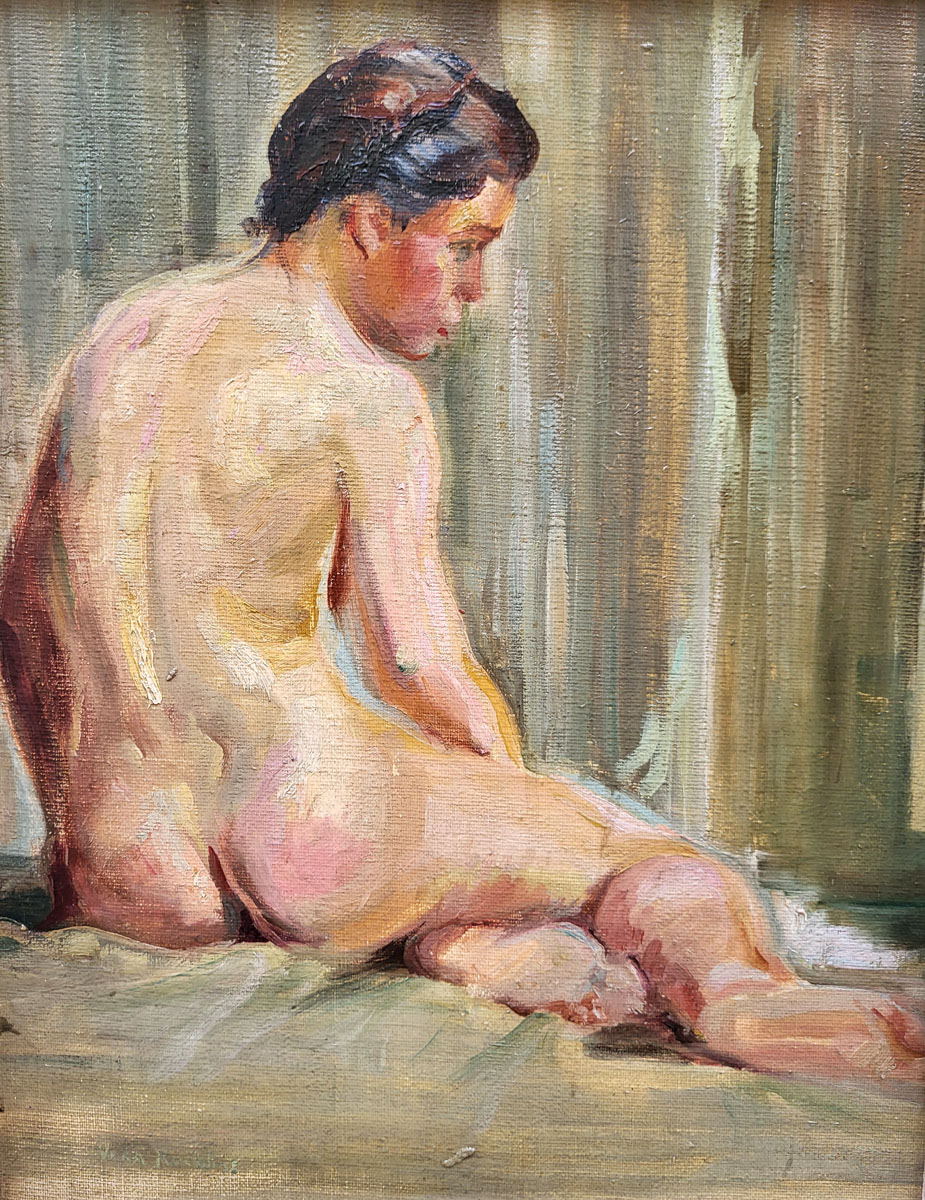
Oil on canvas , Nude back by Vera ROCKLINE
5.800,00 €
Vera ROCKLINE(1896-1934)
Born in Moscow, Véra Rockline began her studies in her native Russia, where she entered the art school run by the famous painter Ilia Machkov, who took notice of her.
She then moved on to Kiev, where she studied under Alexandra Exter, painter, costume and set designer.
After the war, between 1918 and 1919, his talent was rewarded in numerous exhibitions: e at the Union of Russian Painters, at the 24th Exhibition of the Muscovite Artists' Association and even at the5th National Painting Exhibition entitled "From Impressionism to Abstraction".
She fled her country with her husband in 1919 and left her husband to come to France in 1921. Arriving in Paris in 1922, she settled in Montparnasse, right in the heart of the Russian artistic scene, which was very active at the time.
Further information
| Dimensions | 51 × 59 cm |
|---|
From then on, she became a regular at Parisian exhibitions, showing her work at the Salons des Indépendants and the Tuileries, as well as the Salons d'Automne, where the famous couturier Paul Poiret bought 4 of her paintings.
She then entered the intellectual center of Paris, where she met and became friends with Amedeo Modigliani, Pablo Picasso and Henri Matisse.
To promote her work, the couturier organized a retrospective in her honor and wrote in the preface to the exhibition catalog, "I love Véra Rockline's painting. I pity those who don't".
In 1923, the Musée du Luxembourg bought a painting from her, and in 1926 she was crowned with honors when she exhibited at the prestigious Galerie Georges Bernheim.
In 1933, she became a member of the Russian Art Union before taking her own life the following year.
Throughout her career, Vera has shown a singular taste for the nude, which she exploits in all its forms.
Front, back, reclining, standing, in profile, she is fascinated by the female body.
Initially influenced by her first mentor Alexandra Exter, she painted in a rather cubic style, but when she arrived in Paris, she blossomed through new influences.
She appreciated the work of painters such as Pierre-Paul Rubens and Renoir, particularly their treatment of the nude and portrait.
She also loves Cézanne for his palette, which can be seen in her rare landscapes infused with post-impressionism.
Here, she offers us a canvas in line with her aesthetic claims and in continuity with her work.
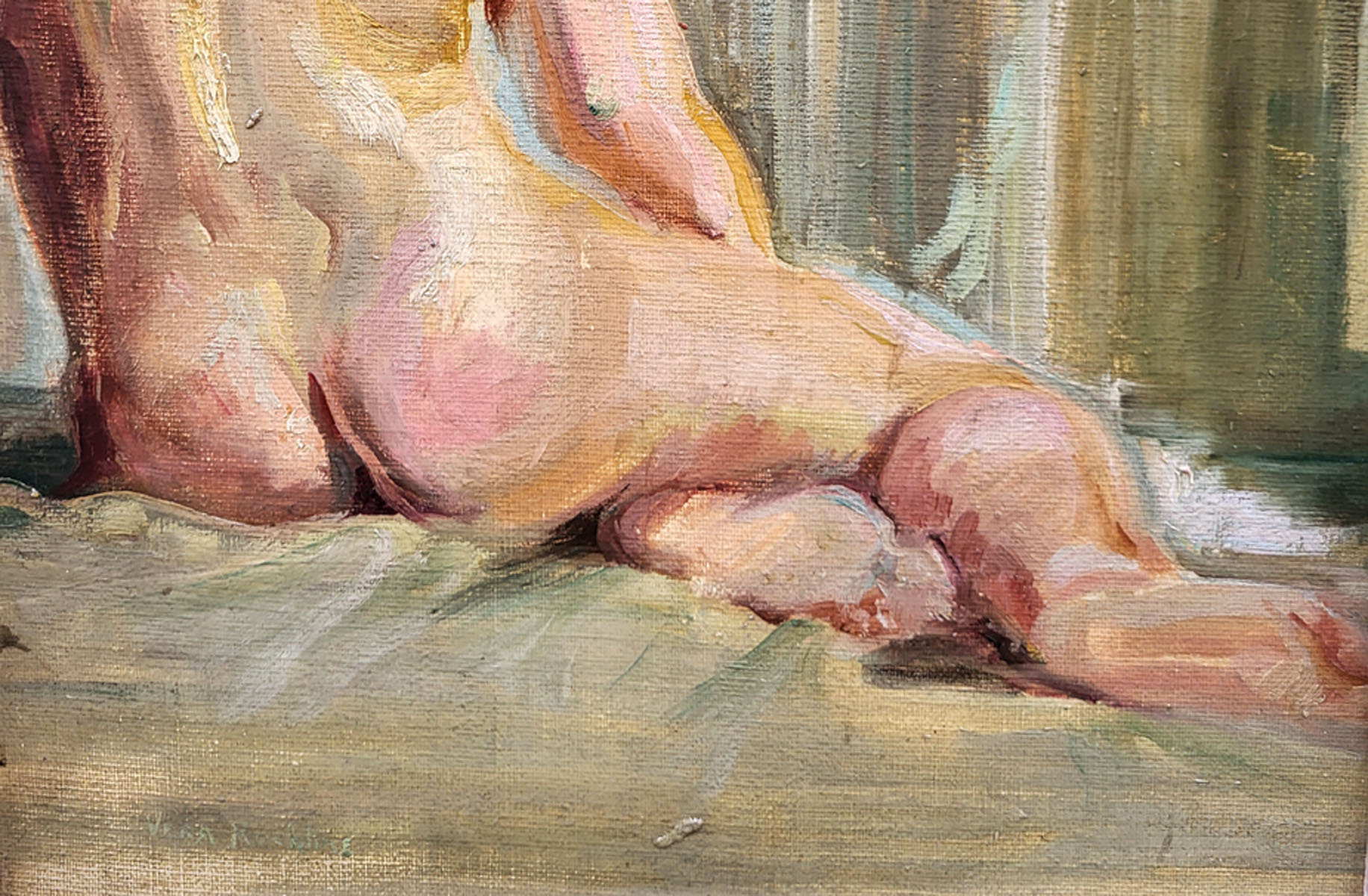
We can observe a nude in a contorted, semi-recumbent position. The environment is very spare, allowing us to understand what really holds the painter's attention: the human body.
The renowned critic Raymond Escholier, curator of the Petit Palais, described Véra's nudes as a "symphony of flesh".
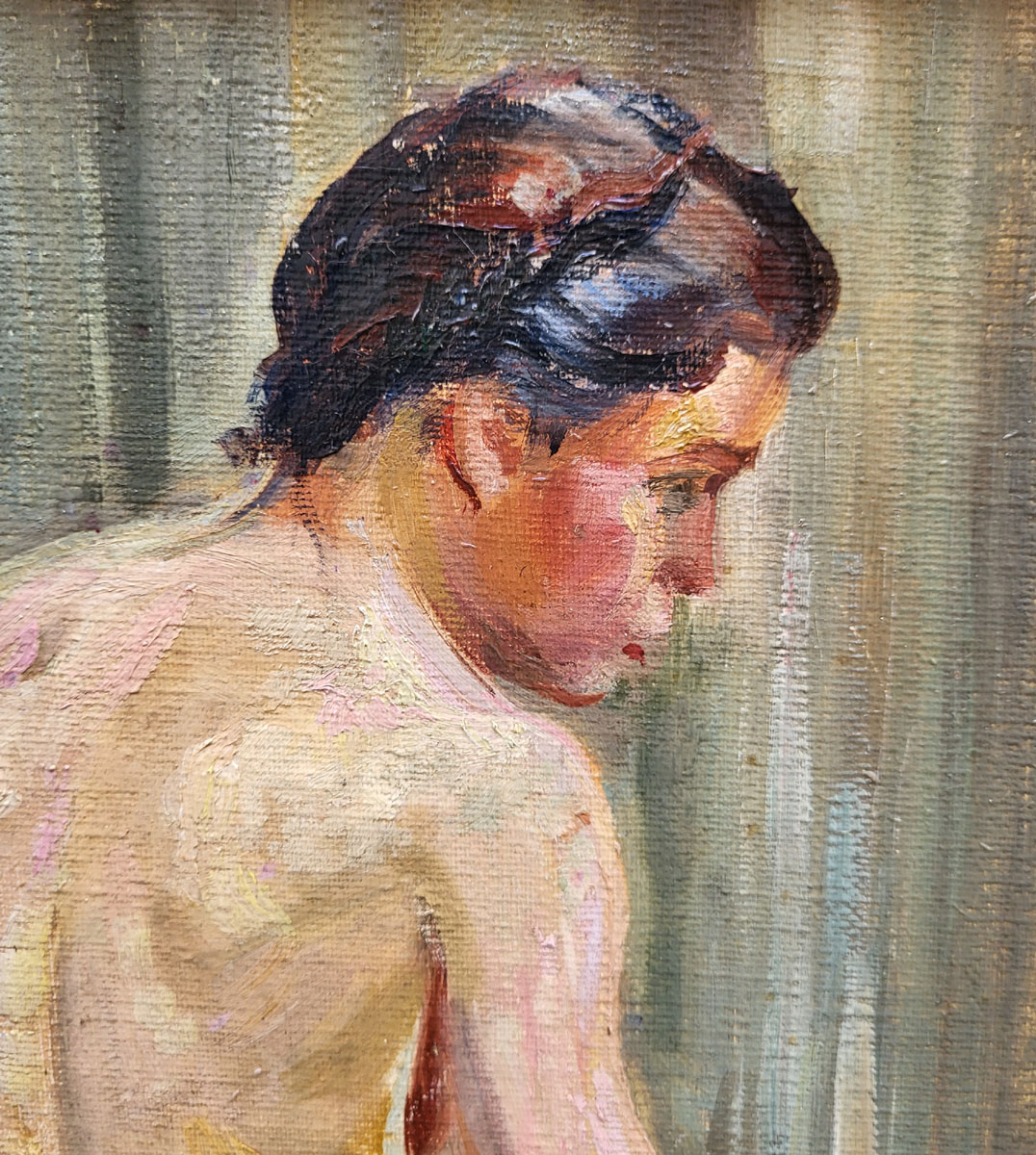
Renoir's inspiration is clearly evident here in the long, split brushstrokes. We can make out the brushstrokes used by the artist, giving the canvas its materiality.
The pure, simple tones, in the same monochrome of beige, bring harmony to the picture and highlight the undressed young woman.
The receding gaze prompts a personal reflection on the part of the viewer. Are we invited to contemplate the scene or not?