An oil on canvas, *July 14* by Ernest QUOST
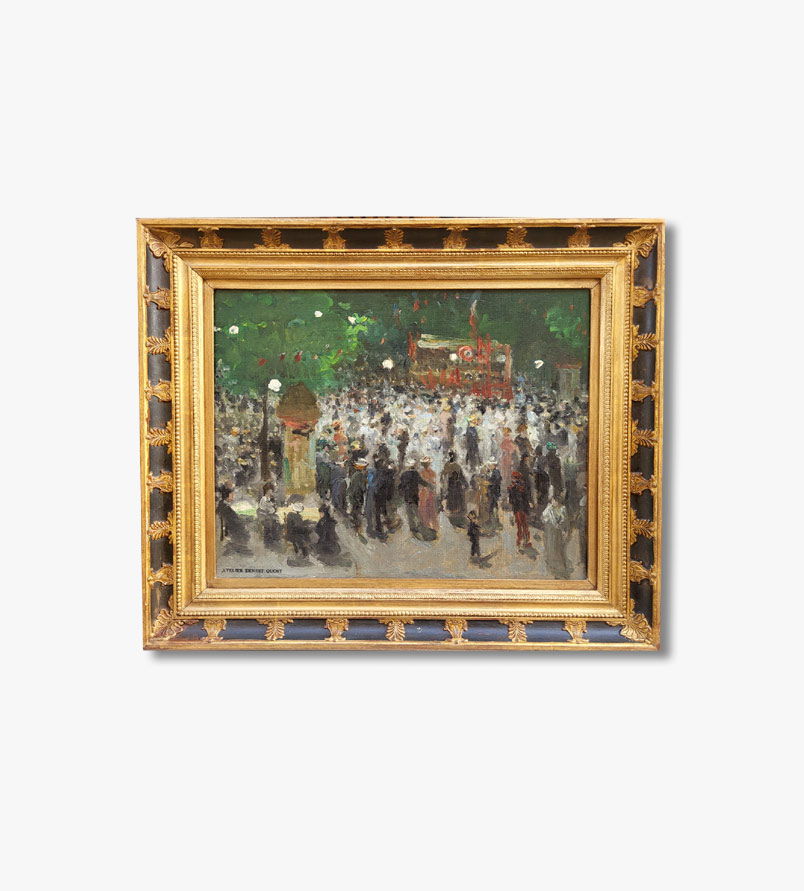
An oil on canvas, *July 14* by Ernest QUOST
5.400,00 €
Ernest Quost (1842–1931)
was a French Impressionist painter, born in Avallon and died in Paris.
Probably a student of Horace Aumont, he made his debut at the Paris Salon in 1866 and quickly established himself as a recognized artist on the Parisian art scene.
A specialist in animated landscapes, boulevard scenes, flowers, and still lifes, he developed a luminous and sensitive style of painting that was highly appreciated by his contemporaries.
His work, which is reminiscent of Impressionism, spontaneously captures urban life and the vibrancy of color.
Further information
| Dimensions | 49.5 × 42.5 cm |
|---|
Throughout his career, Ernest Quost received numerous awards.
He was awarded a medal at the Salon des Artistes Français in 1880 and 1882, and went on to win a silver medal at the 1889 Paris World’s Fair. He also received awards in 1890 and 1900 for his participation in major official exhibitions.
In recognition of his artistic career, he was named a Knight of the Legion of Honor in 1883 and then an Officer in 1903
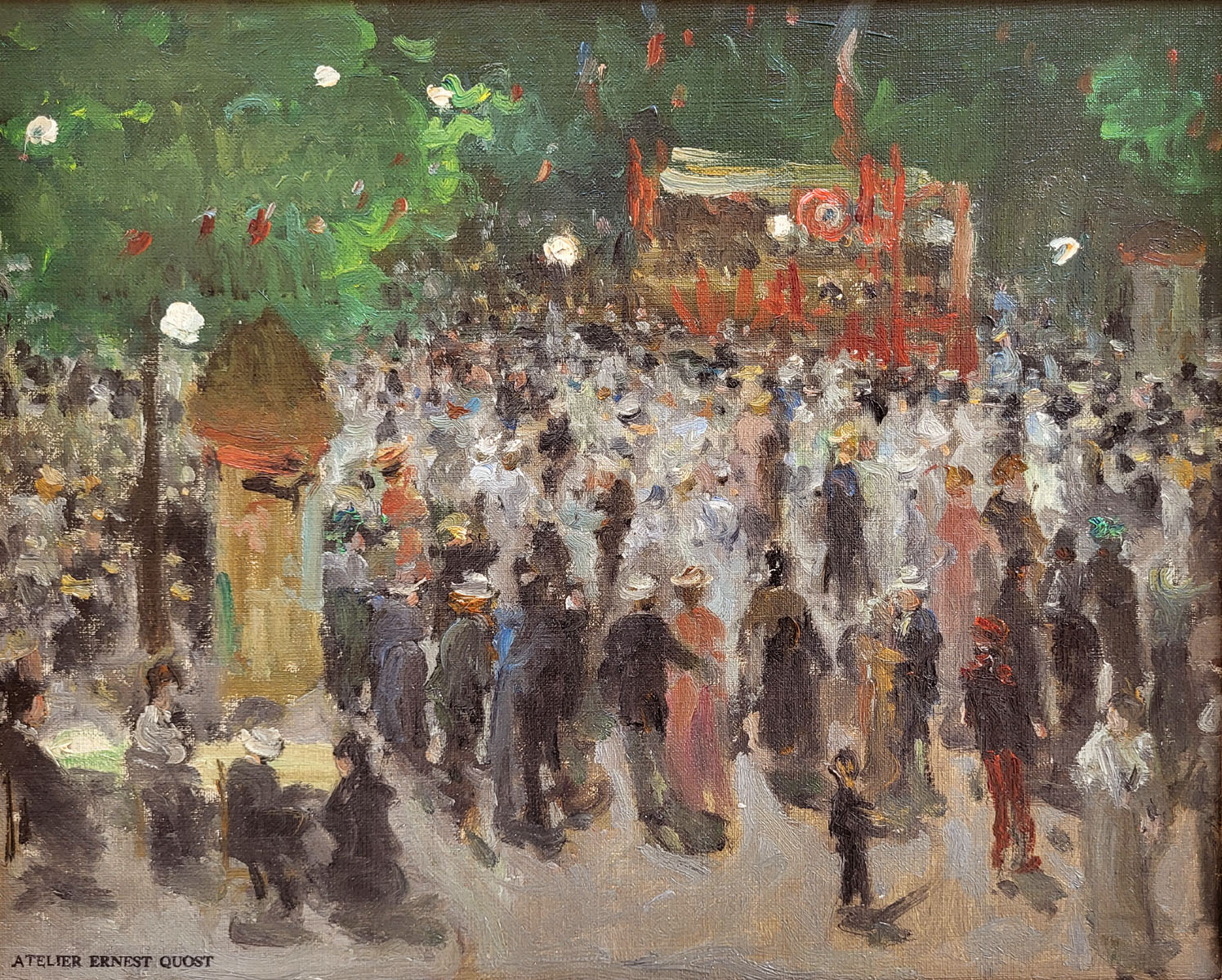
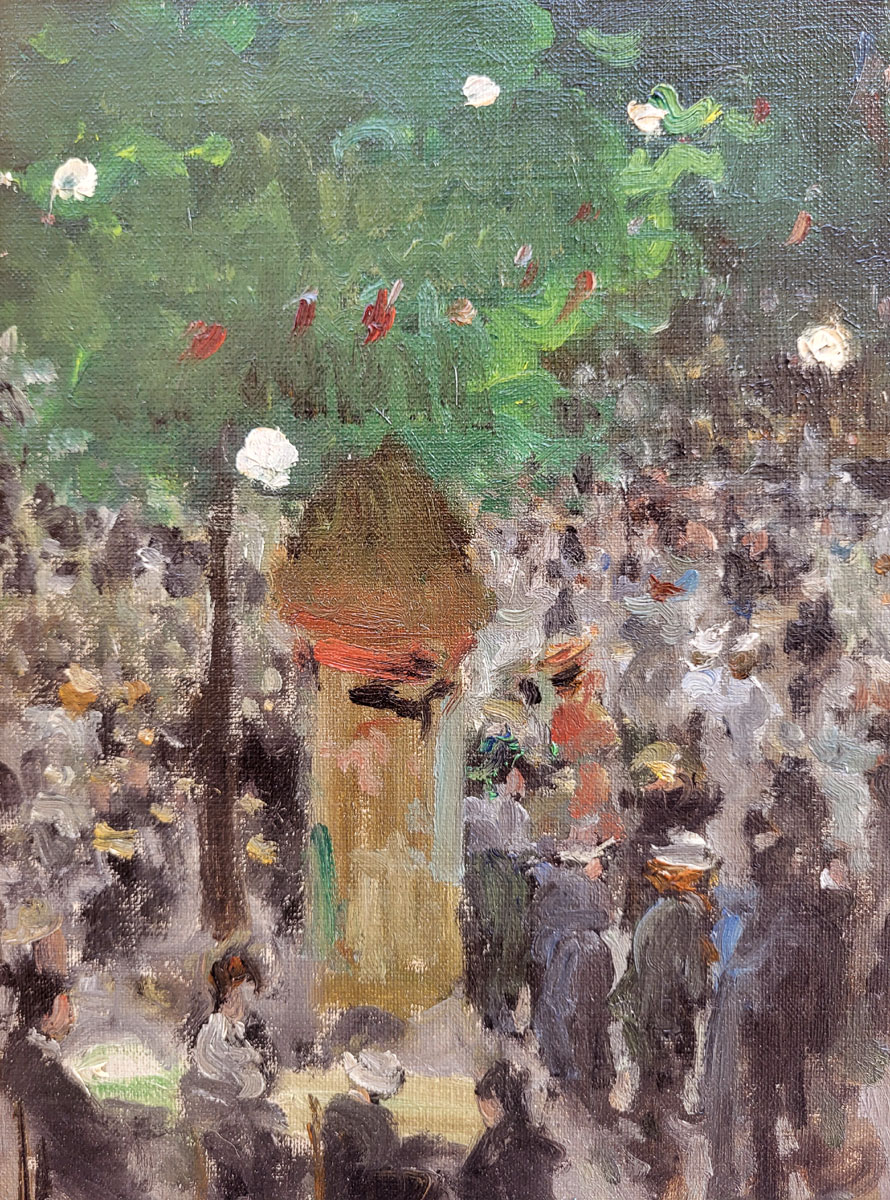
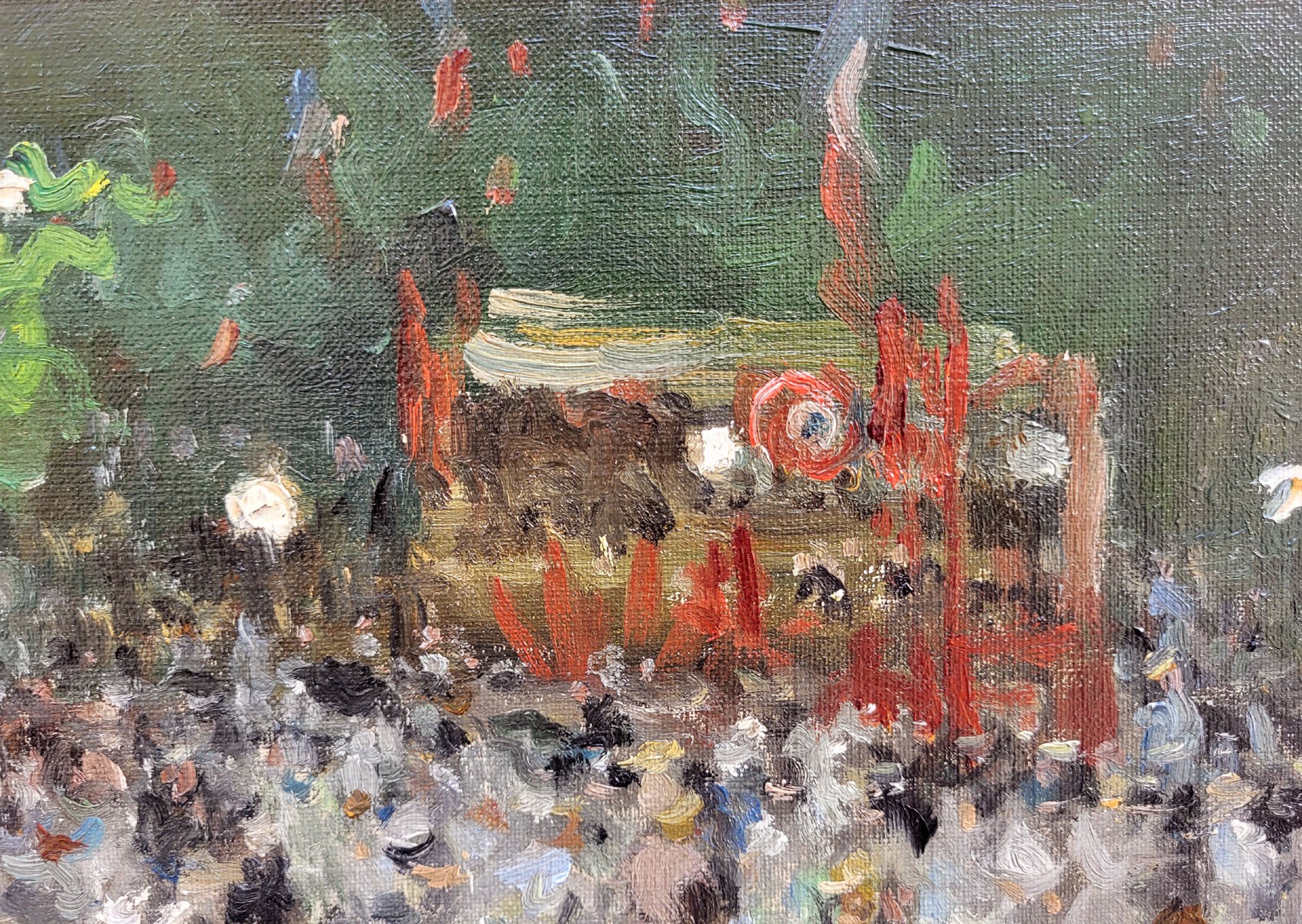
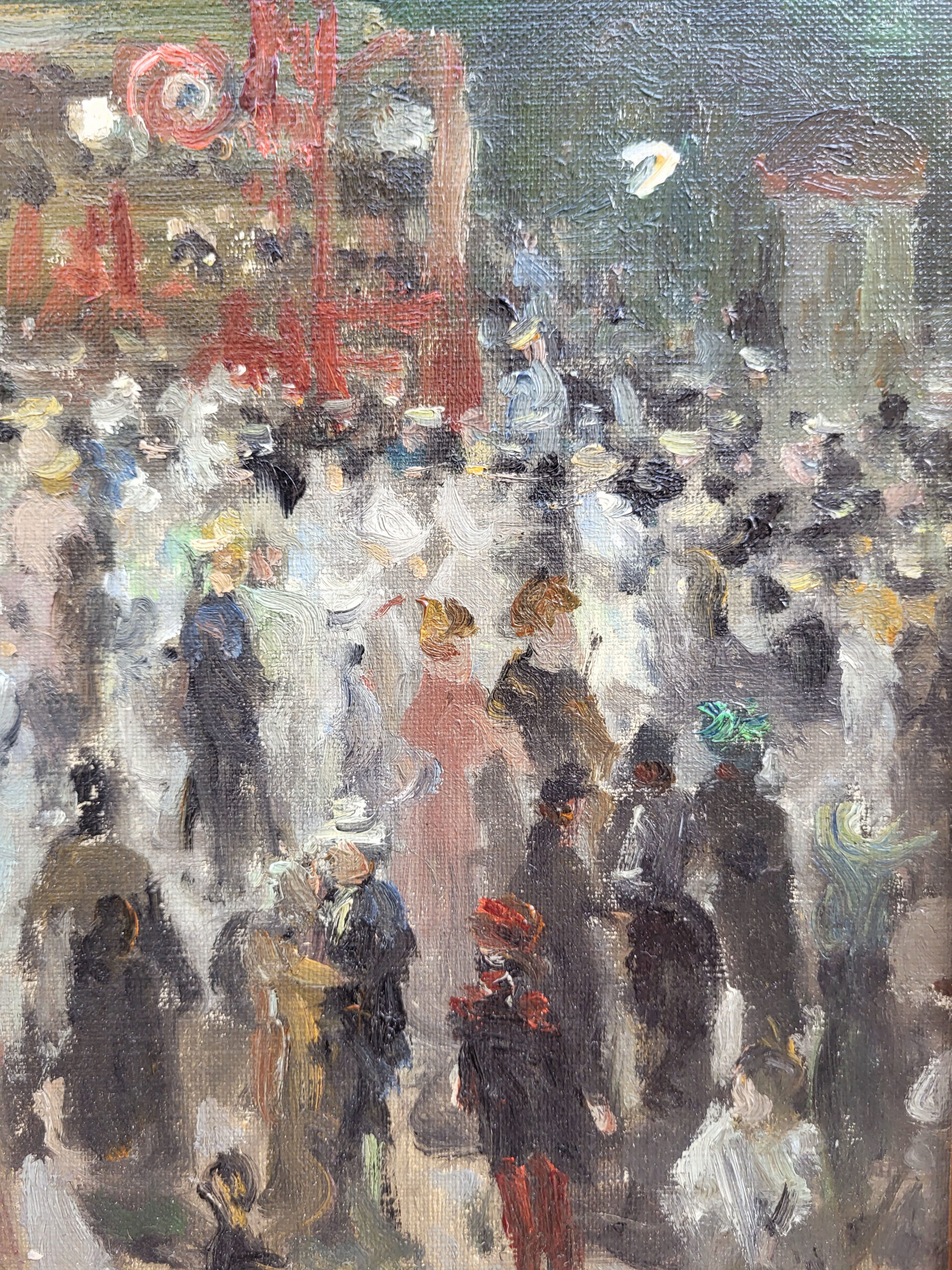
This work by Ernest Quost depicts a scene from a Parisian street festival—most likely on July 14—captured in all its vibrant bustle.
The painting depicts a dense crowd, captured as if in a snapshot, in the heart of a bustling boulevard. The figures are not depicted individually but are suggested by quick, vibrant brushstrokes, which give the impression of continuous movement.
The composition is based on an immersive vision: the viewer feels as if they are immersed in the crowd. The light of night or late afternoon breaks up into small highlights, making the scene shimmer rather than depicting it. Here we find a true aesthetic of the fleeting impression, where the moment takes precedence over detail.
In its execution, this painting is very close to Renoir’s style: it shares his taste for scenes of everyday life, joyful crowds, the play of light, and human warmth. As in Renoir’s work, form dissolves into color, and the scene becomes, above all, a sensation: that of a festive, lively, almost musical Paris.
But Quost stands out for his sometimes more energetic and fragmented style, which is less polished than Renoir’s, with a painterly approach that at times borders on quick plein air sketches, lending the work as a whole an even more immediate spontaneity.