An oil on canvas, *The Colosseum* by Alessandro La Volpe, 1879
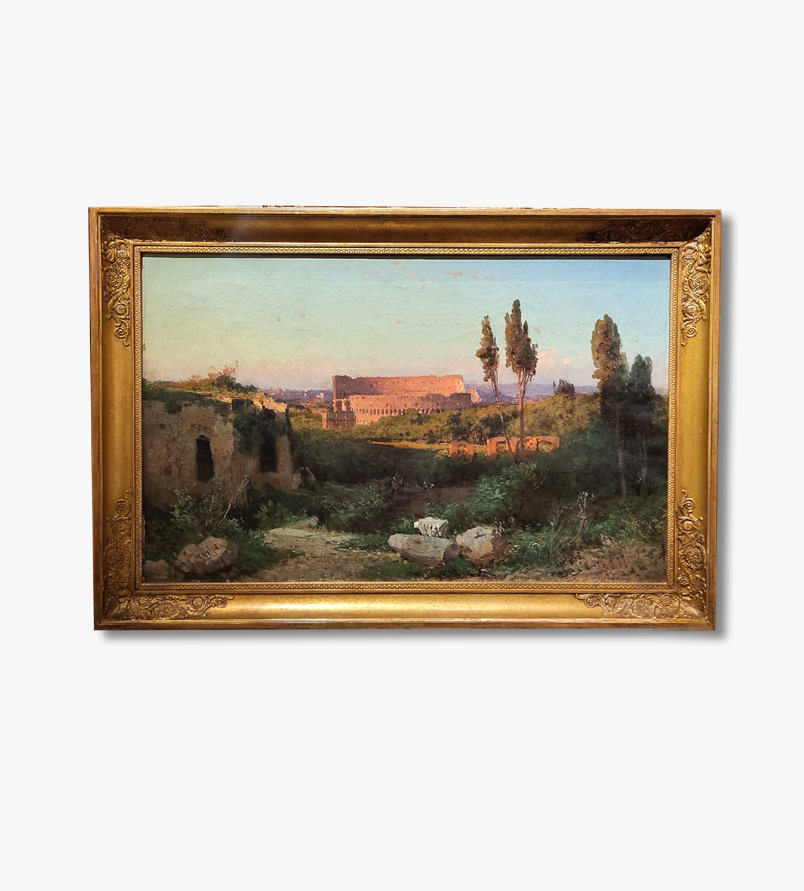
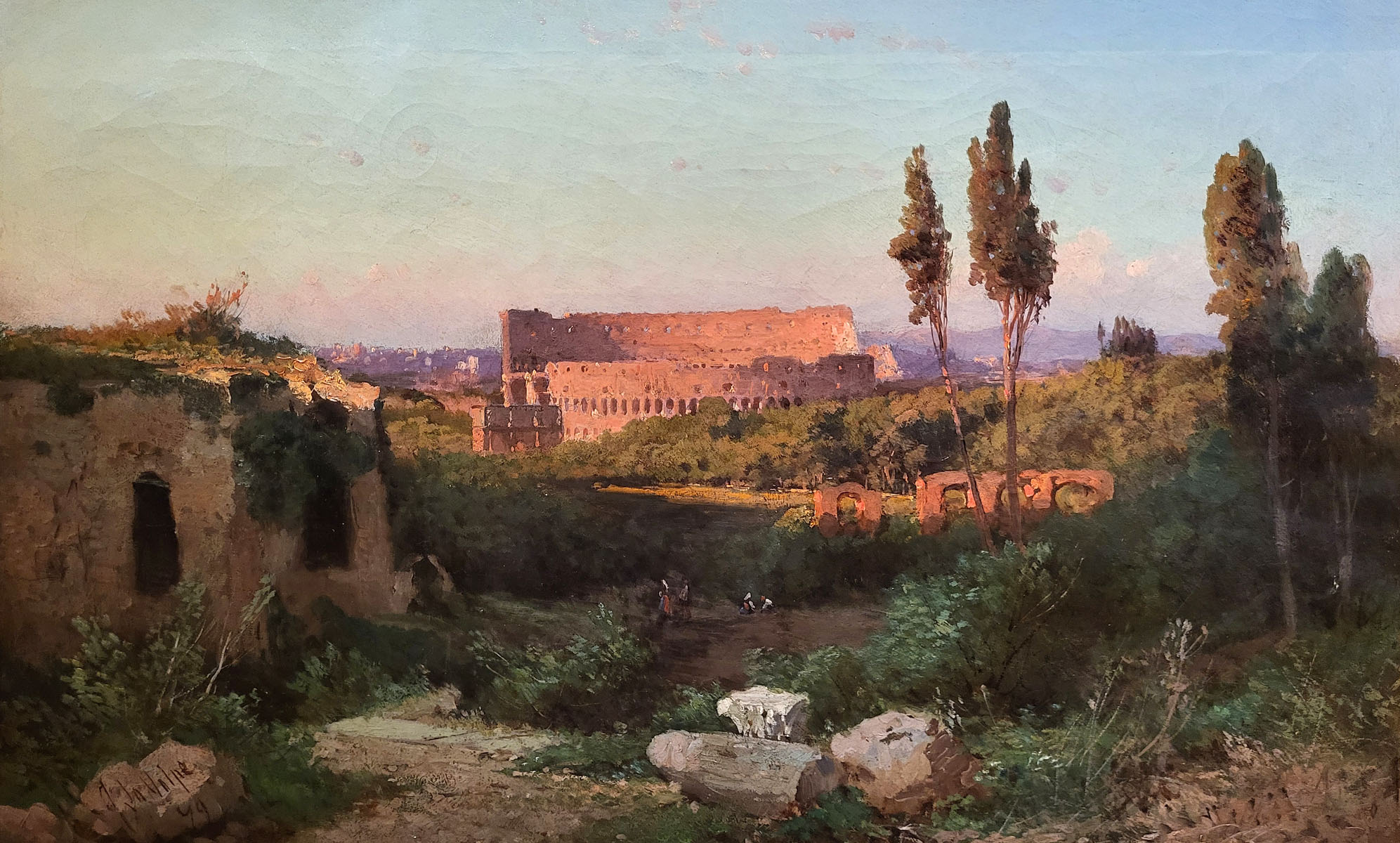
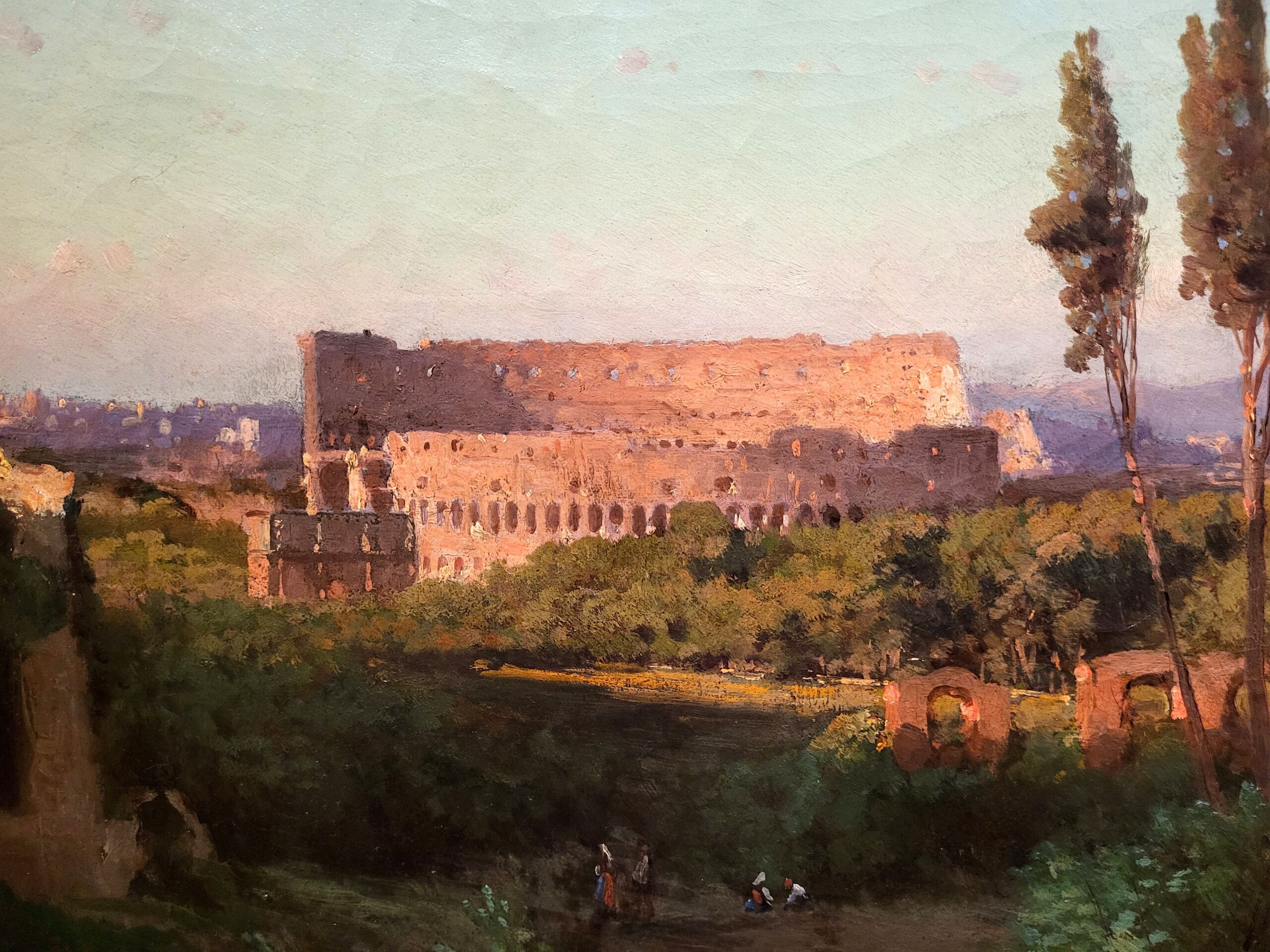
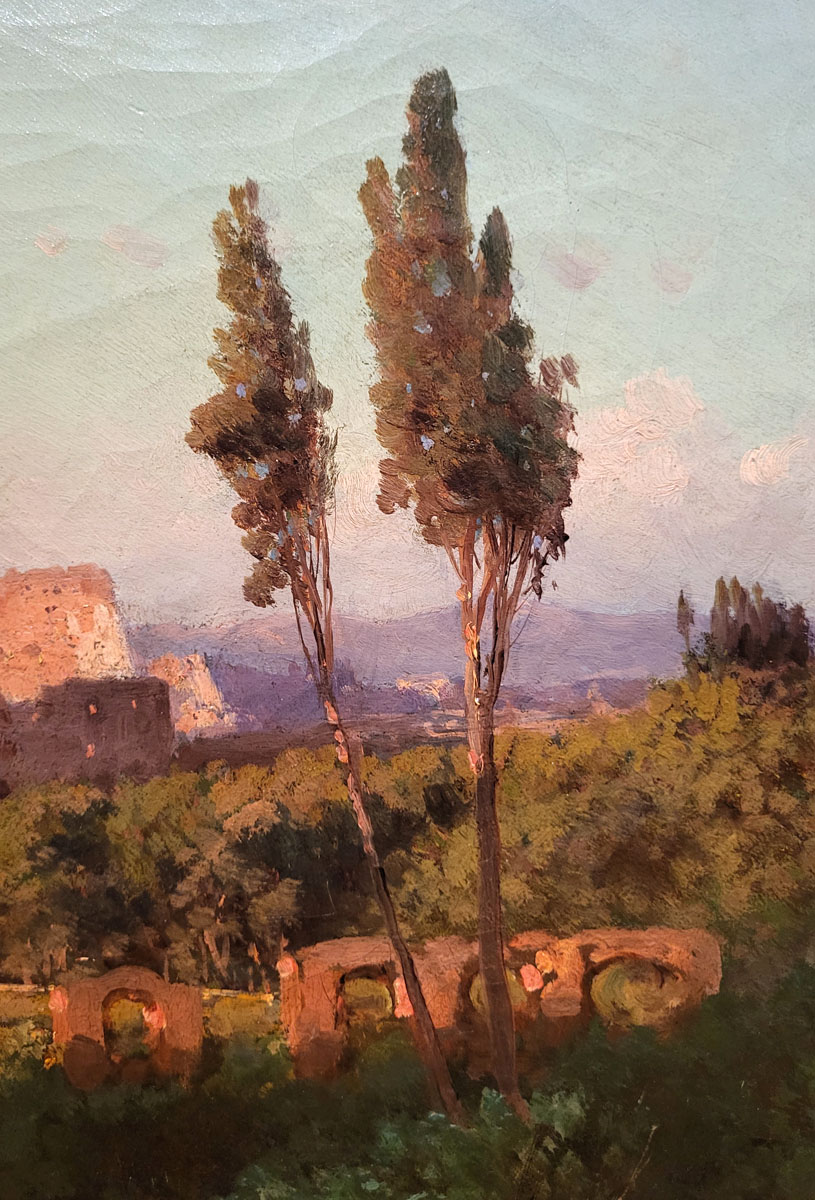
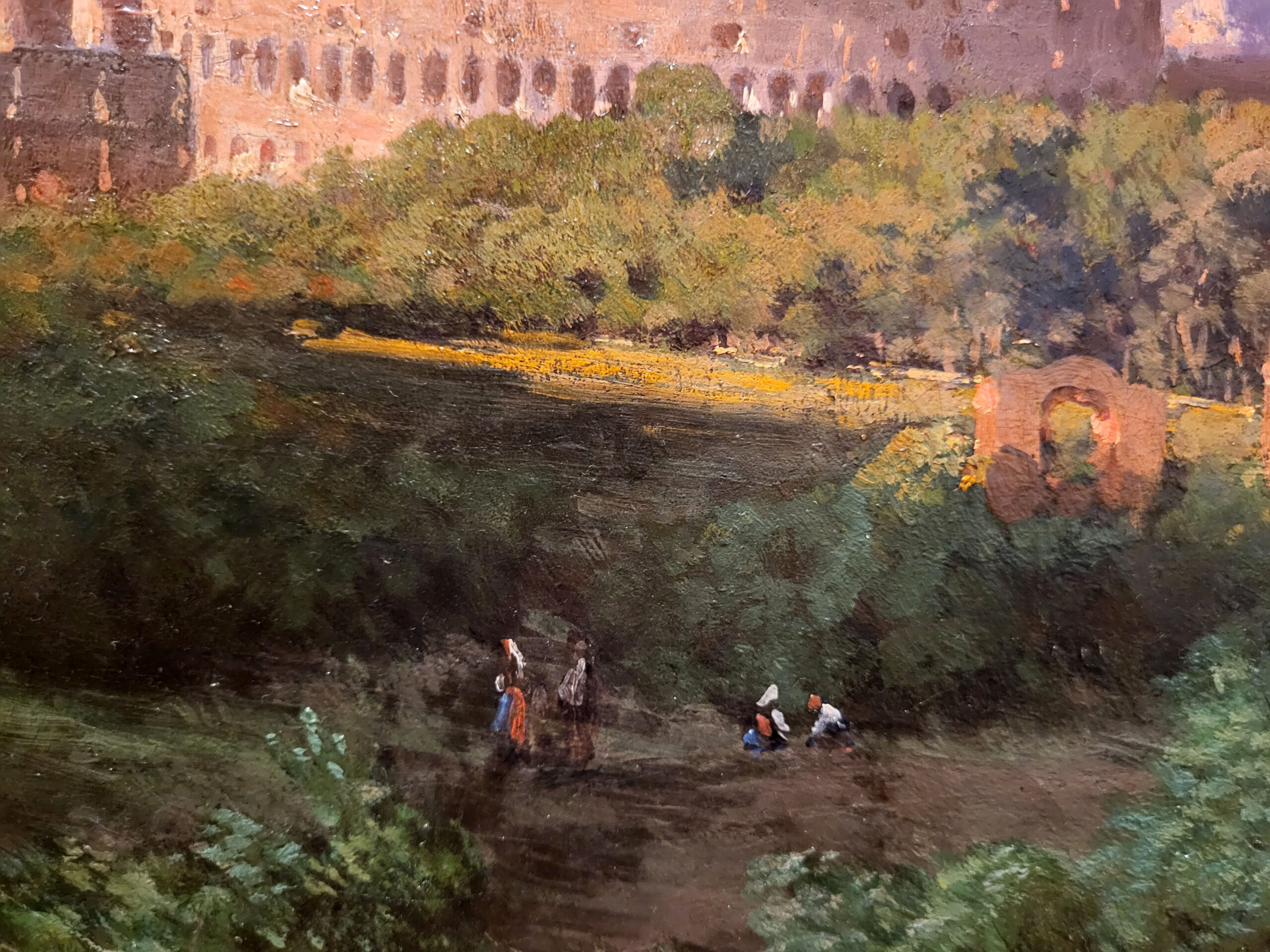
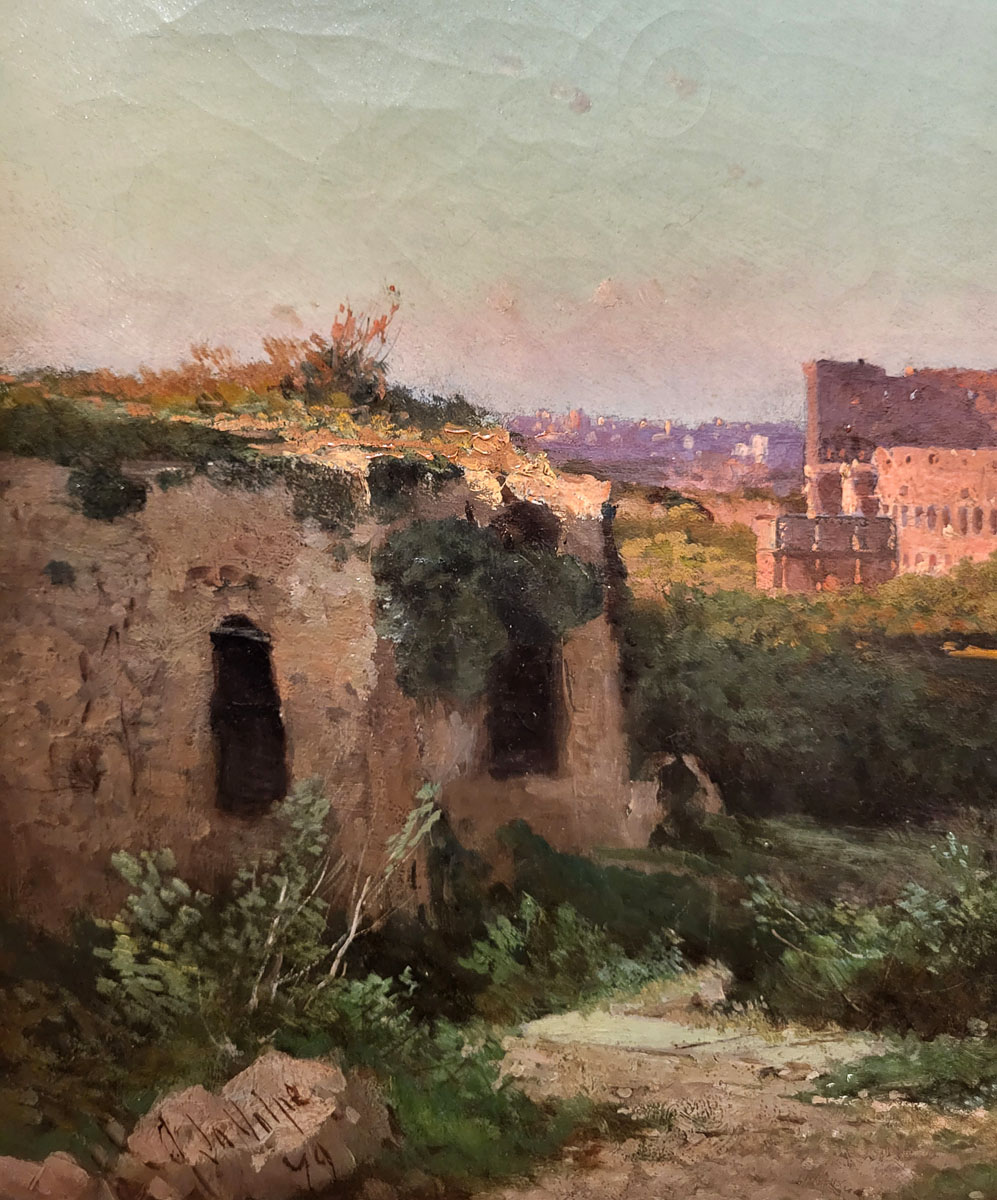
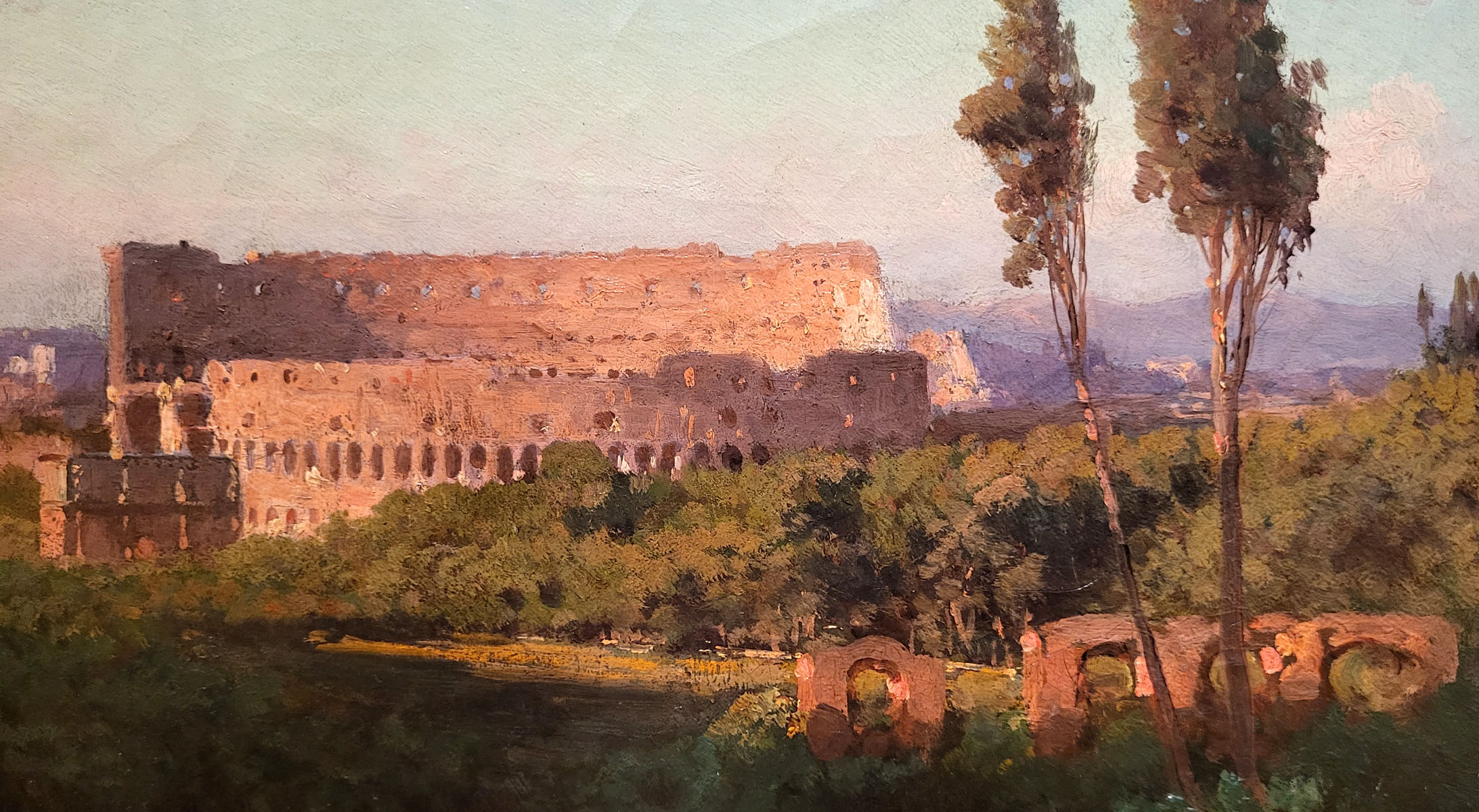
An oil on canvas, *The Colosseum* by Alessandro La Volpe, 1879
Prix sur demande / prices on request
Alessandro La Volpe
His father, Nicola La Volpe, a painter himself, gave him his first drawing lessons before Alessandro went on to study at the Royal Academy of Fine Arts in Naples.
In Naples, he studied under two of the most important Italian landscape painters of his time, Gabriele Smargiassi and Salvatore Fergola.
A decisive turning point in his career came in 1851, when he accompanied Duke Maximilian of Leuchtenberg on an official expedition to Sicily and Egypt. Tasked with depicting the landscapes and major monuments encountered during the journey, La Volpe produced numerous studies from life, which demonstrate his remarkable ability to accurately capture the architecture, the crystalline light, and the transparency of the atmosphere.
Upon his return to Italy, La Volpe stayed in Florence, where he became associated with the Scuola di Staggia, one of the first Italian groups to emphasize painting directly from nature. This experience played an important role in the evolution of Italian landscape painting and foreshadowed several of the artistic principles that would later be developed by the Macchiaioli.
La Volpe made his official debut at the Bourbon Exhibitions in Naples in 1848, where he presented, among other works, views of the temples at Paestum and the Grotta di Bone.
He then began participating regularly in exhibitions organized by the Neapolitan Society for the Promotion of Fine Arts, presenting landscapes inspired by Campania, Tuscany, and Egypt.
In 1866, his monumental *Panorama of Pompeii* was awarded the Gold Medal, one of the highest Italian artistic honors of the time.
This prestigious award led to his work being exhibited at the 1867 Paris World’s Fair, thereby cementing his international reputation.
In 1870, Alessandro La Volpe was appointed honorary professor at the Royal Academy of Fine Arts in Naples. Shortly thereafter, he moved to Rome, where he opened a studio on the famous Via Margutta, one of the hubs of Rome’s artistic life. There he continued his work as a painter until his death on August 2, 1887.
Further information
| Dimensions | 83 × 55 cm |
|---|
A decisive turning point in his career came in 1851, when he accompanied Duke Maximilian of Leuchtenberg on an official expedition to Sicily and Egypt. Tasked with depicting the landscapes and major monuments encountered during the journey, La Volpe produced numerous studies from life, which demonstrate his remarkable ability to accurately capture the architecture, the crystalline light, and the transparency of the atmosphere.
Upon his return to Italy, La Volpe stayed in Florence, where he became associated with the Scuola di Staggia, one of the first Italian groups to emphasize painting directly from nature. This experience played an important role in the evolution of Italian landscape painting and foreshadowed several of the artistic principles that would later be developed by the Macchiaioli.
La Volpe made his official debut at the Bourbon Exhibitions in Naples in 1848, where he presented, among other works, views of the temples at Paestum and the Grotta di Bone.
He then began participating regularly in exhibitions organized by the Neapolitan Society for the Promotion of Fine Arts, presenting landscapes inspired by Campania, Tuscany, and Egypt.
In 1866, his monumental *Panorama of Pompeii* was awarded the Gold Medal, one of the highest Italian artistic honors of the time.
This prestigious award led to his work being exhibited at the 1867 Paris World’s Fair, thereby cementing his international reputation.
In 1870, Alessandro La Volpe was appointed honorary professor at the Royal Academy of Fine Arts in Naples. Shortly thereafter, he moved to Rome, where he opened a studio on the famous Via Margutta, one of the hubs of Rome’s artistic life. There he continued his work as a painter until his death on August 2, 1887.