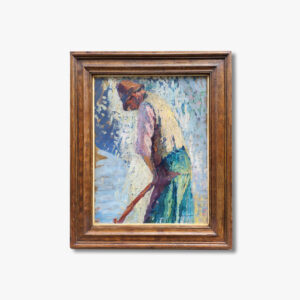
An oil painting on canvas, Reading by Henri Martin
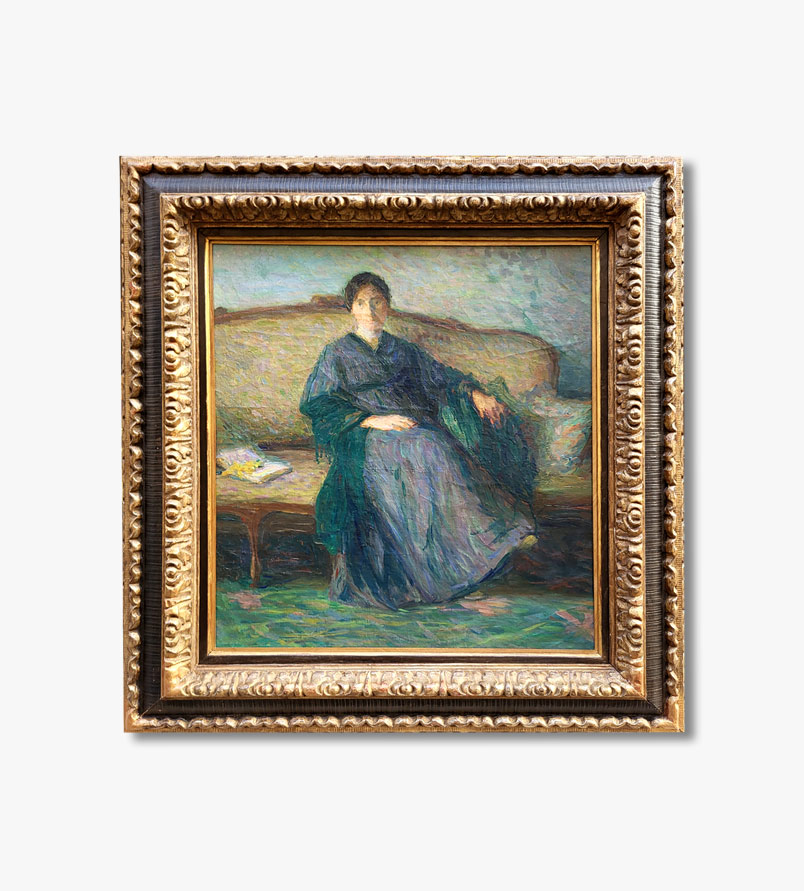
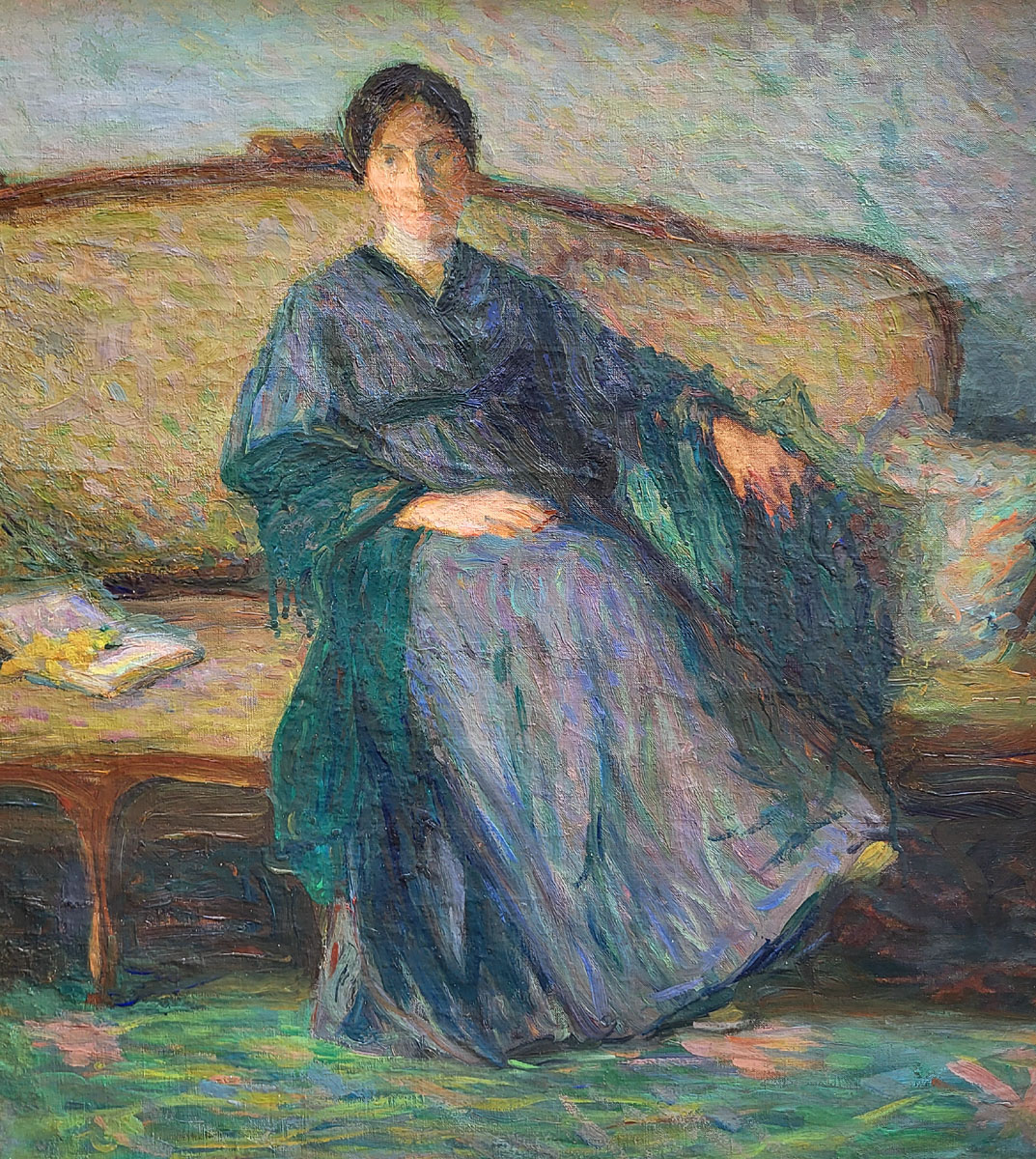
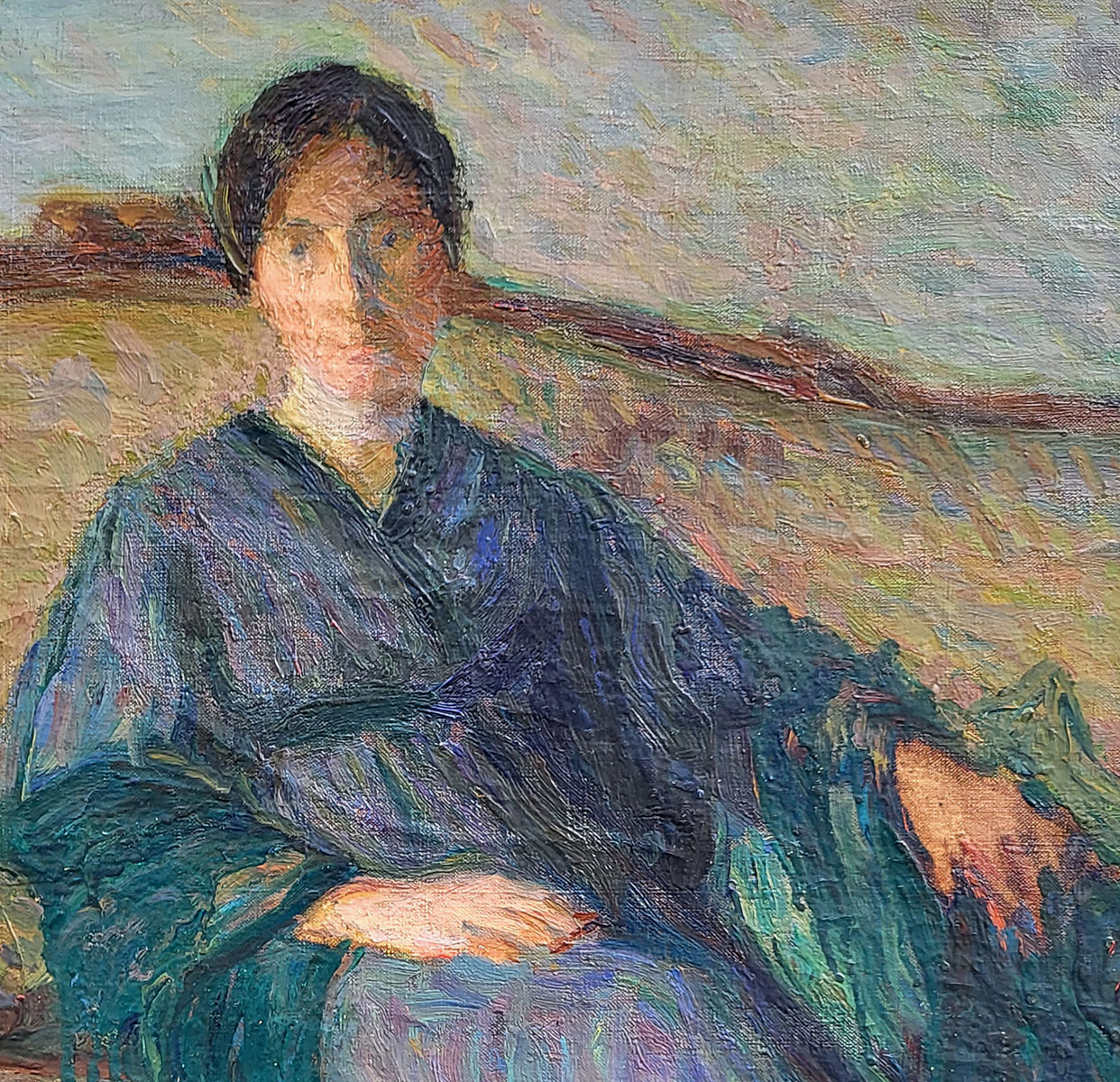
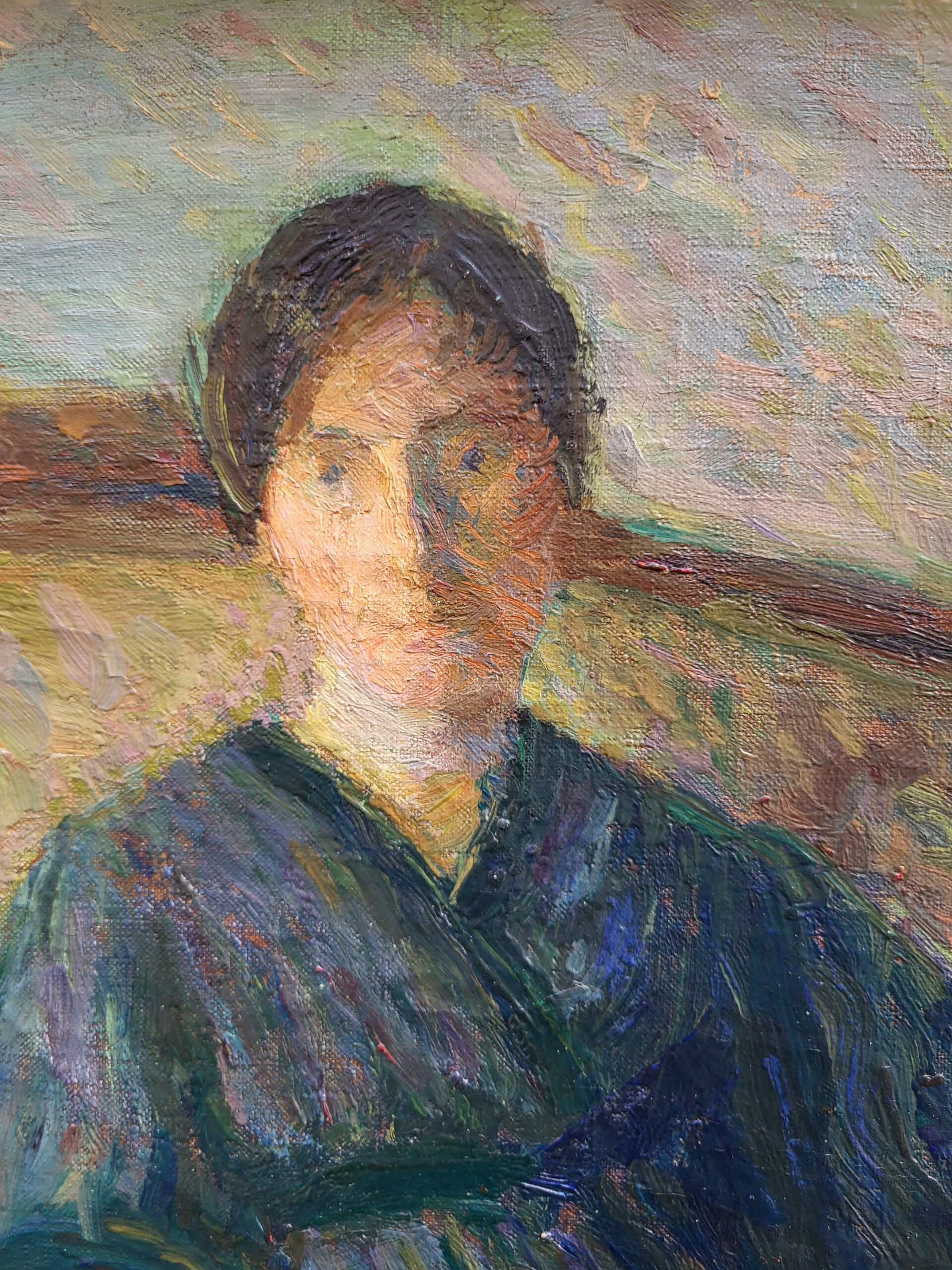
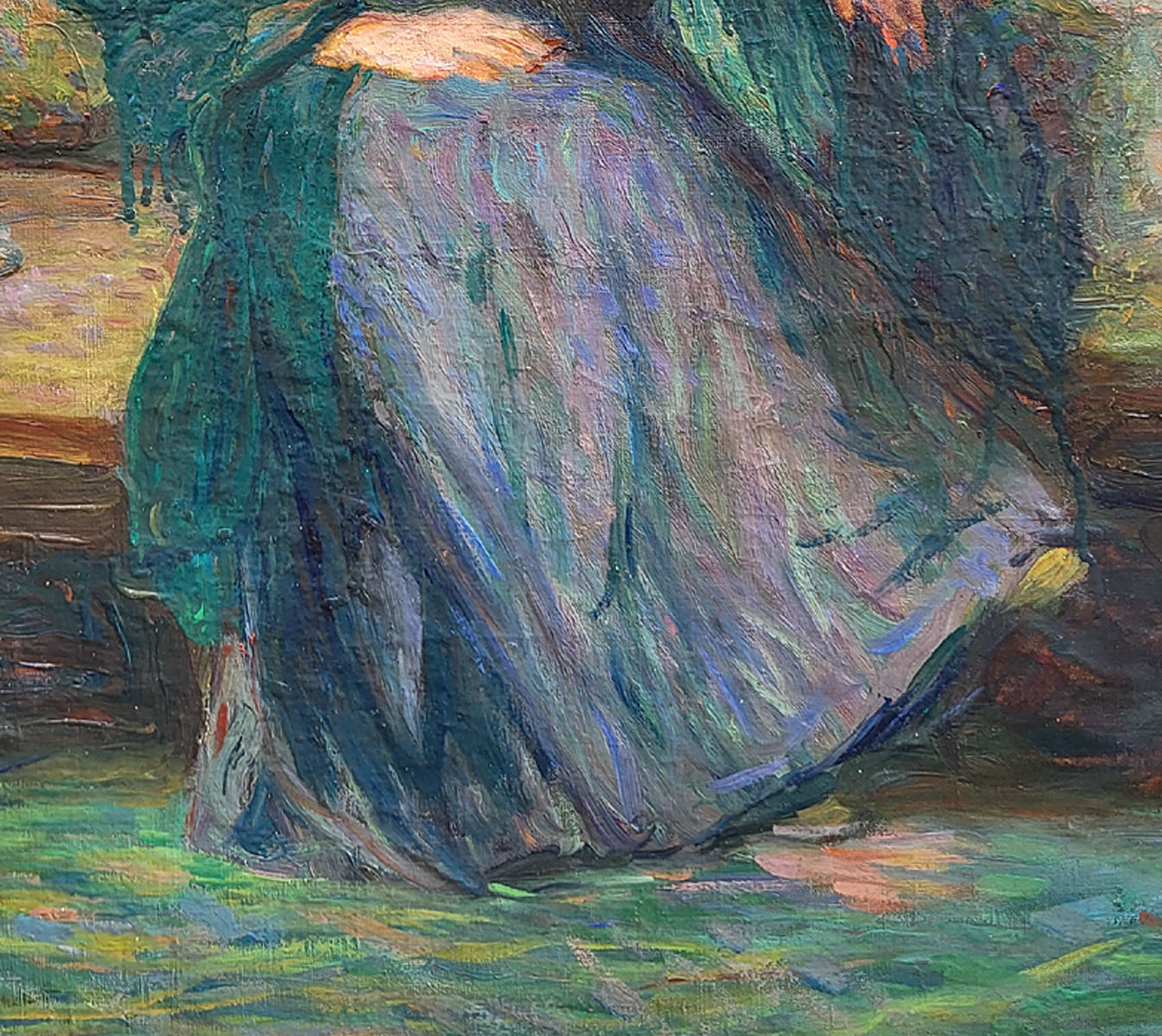
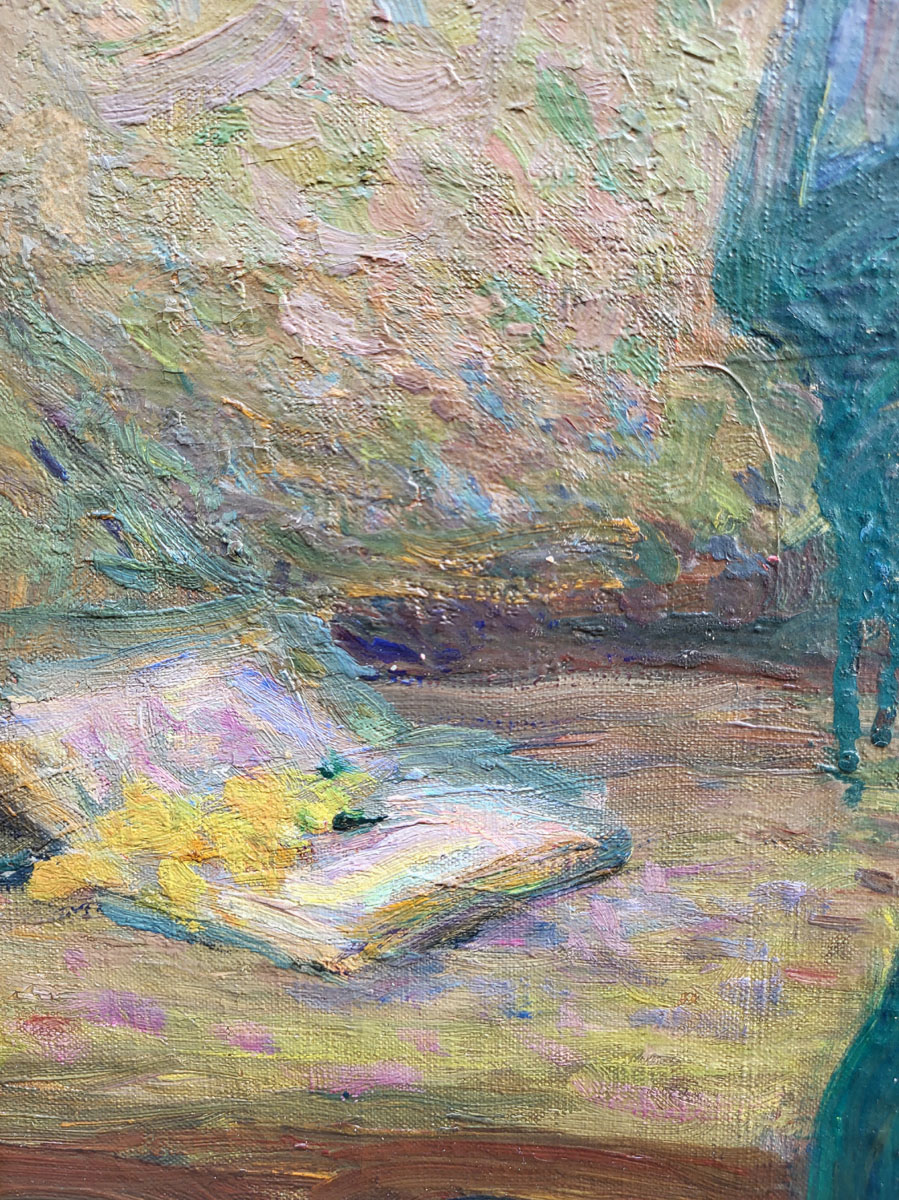
An oil painting on canvas, Reading by Henri Martin
Prix sur demande / prices on request
Our painting is unsigned
but its authenticity has been recognized by Ms. Destrebecq-Martin.
Henri Martin 1860-1943
is one of the major French post-impressionist painters, renowned for his intimate scenes, luminous landscapes, and monumental decorative work.
Henri Martin first trained at the École des Beaux-Arts in Toulouse before continuing his studies in Paris at the École des Beaux-Arts in Jean-Paul Laurens' studio.
From the 1890s onwards, his style underwent a profound change.
Moving away from academic painting, Henri Martin developed a personal style, influenced by Impressionism but structured by a decorative and meditative vision. He adopted a fragmented touch, made up of small streaks and vibrant strokes
.
Color became the real driving force behind his compositions.
He regularly exhibited at the Salon, where he received several awards, including a gold medal at the 1900 World's Fair
.
He was elected a member of the Academy of Fine Arts in 1917.
Alongside his easel work, he created important decorative ensembles for public buildings, notably the Capitole in Toulouse and the Palais du Luxembourg in Paris.
Further information
Wife of painter Henri Martin, Marie-Charlotte Barbaroux played a fundamental role in the artist's life and work. A pastel artist trained at the Beaux-Arts in Toulouse, she married Henri Martin in 1881, sharing with him not only a family life, but also a common artistic sensibility.
This intellectual and aesthetic closeness explains the unique place she holds in the painter's pictorial universe.
Marie-Charlotte Barbaroux appears several times in Henri Martin's work, often in the guise of calm, meditative female figures, set in hushed interiors or spaces conducive to contemplation.
These representations are not mundane or mundane descriptions: they are part of an intimate and idealized vision of women, seen as a harmonious presence rather than as assertive psychological subjects.
Seated in a cozy interior, Madame Henri Martin appears here, pensive, on a light-colored sofa. Her green and blue dress echoes the other shades of green in the painting, with the sensitivity and subtlety we have come to expect from the painter.
The free and vibrant brushstrokes blur the contours, creating an enveloping atmosphere in which the figure seems to emerge from the pictorial material itself.
The face, rendered without descriptive insistence, conveys a calm gaze and a meditative attitude to the viewer.