
Alongside his work as a painter, Jeandel developed a genuine passion for archaeology, as well as an early and daring interest in photography, particularly in the erotic genre, a field in which he proved to be surprisingly innovative for his time.
Upon his death, his wife, who was younger than him, dispersed and sold all of his works. None of the artist's writings have been found. It was only thanks to photographs bequeathed to the Musée d'Orsay by a couple of collectors in the 1980s that the photographer was rediscovered and, by cross-referencing, certain paintings visible in the background of his studio were identified.
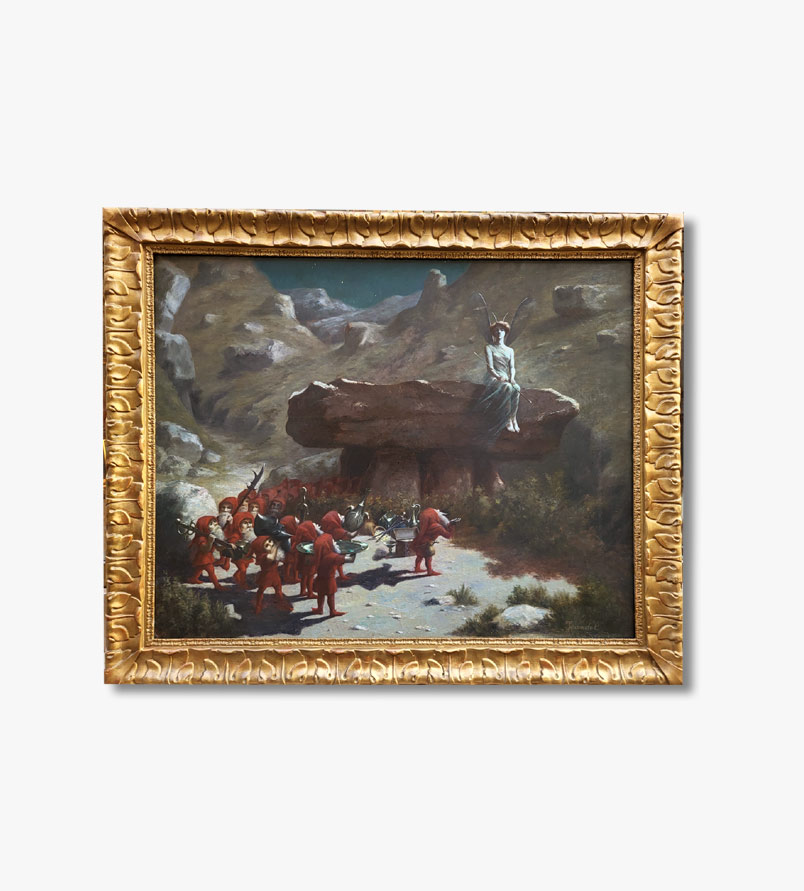
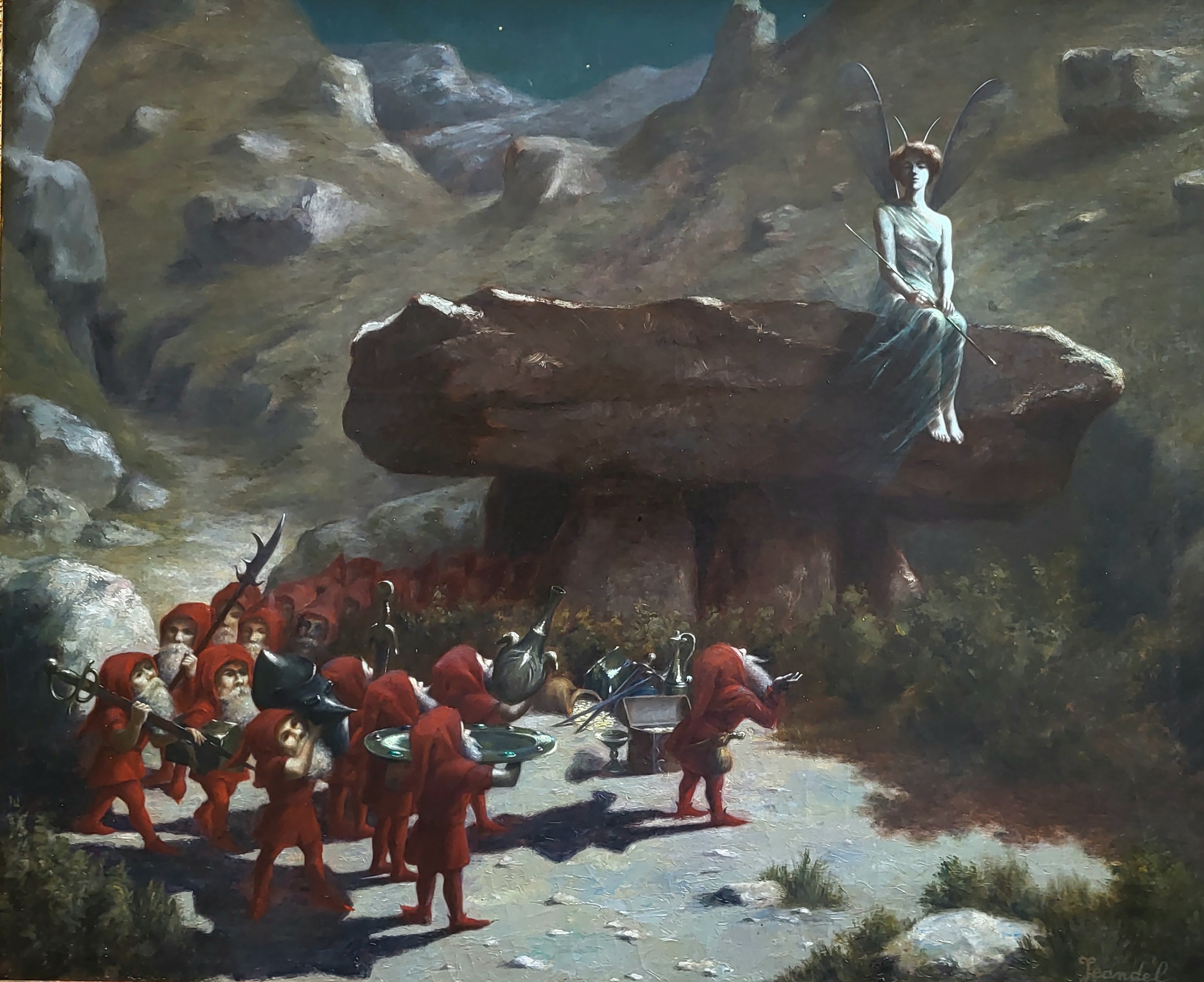
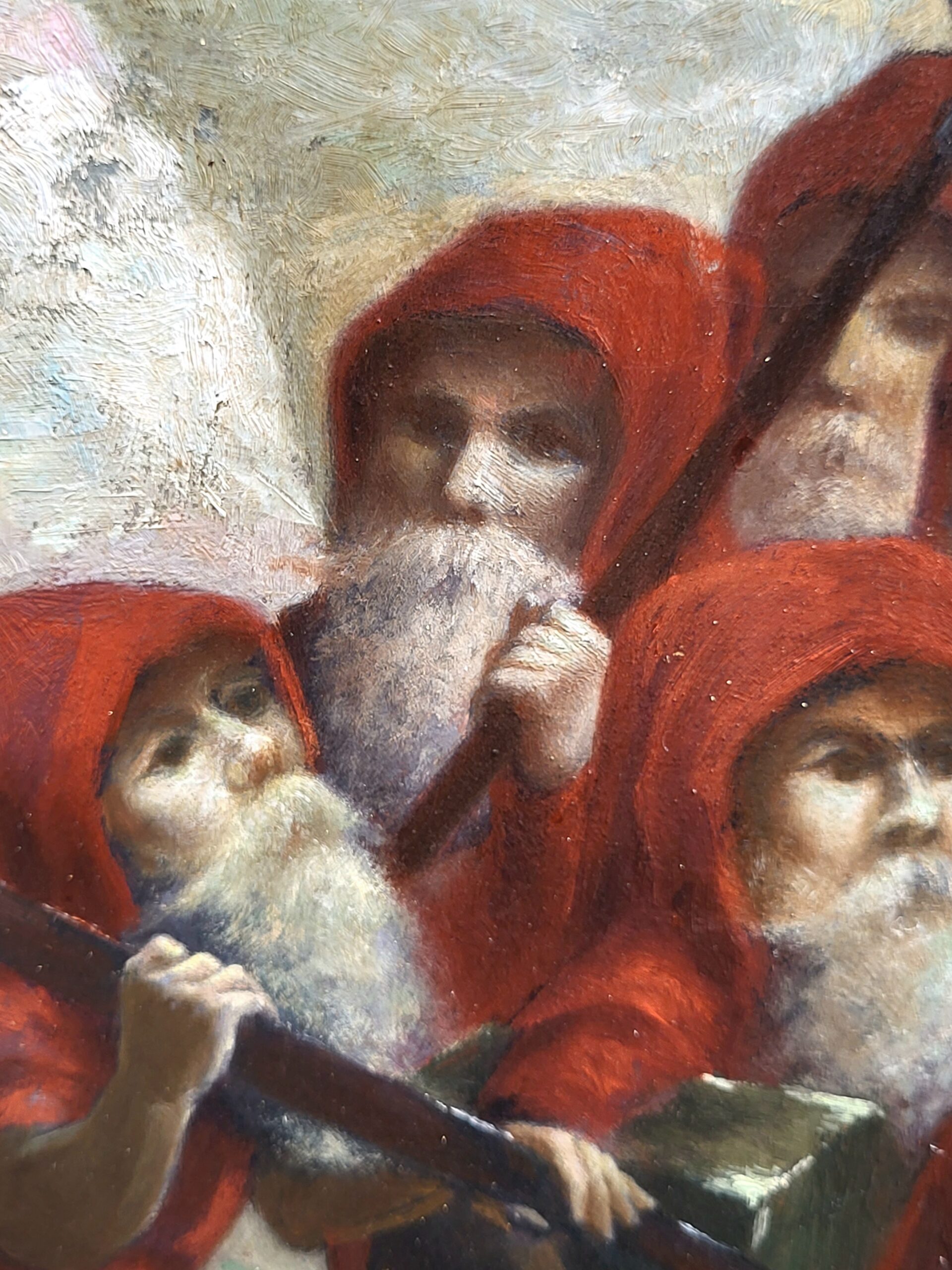
The appearance of our painting adds little to our understanding of this mysterious figure. This unique work by Charles-François Jeandel stands out for its dreamlike and symbolist imagery, a far cry from the academic painting presented by the artist at the 1889 Salon.
The artist offers us a representation drawn from Celtic and Breton folklore.
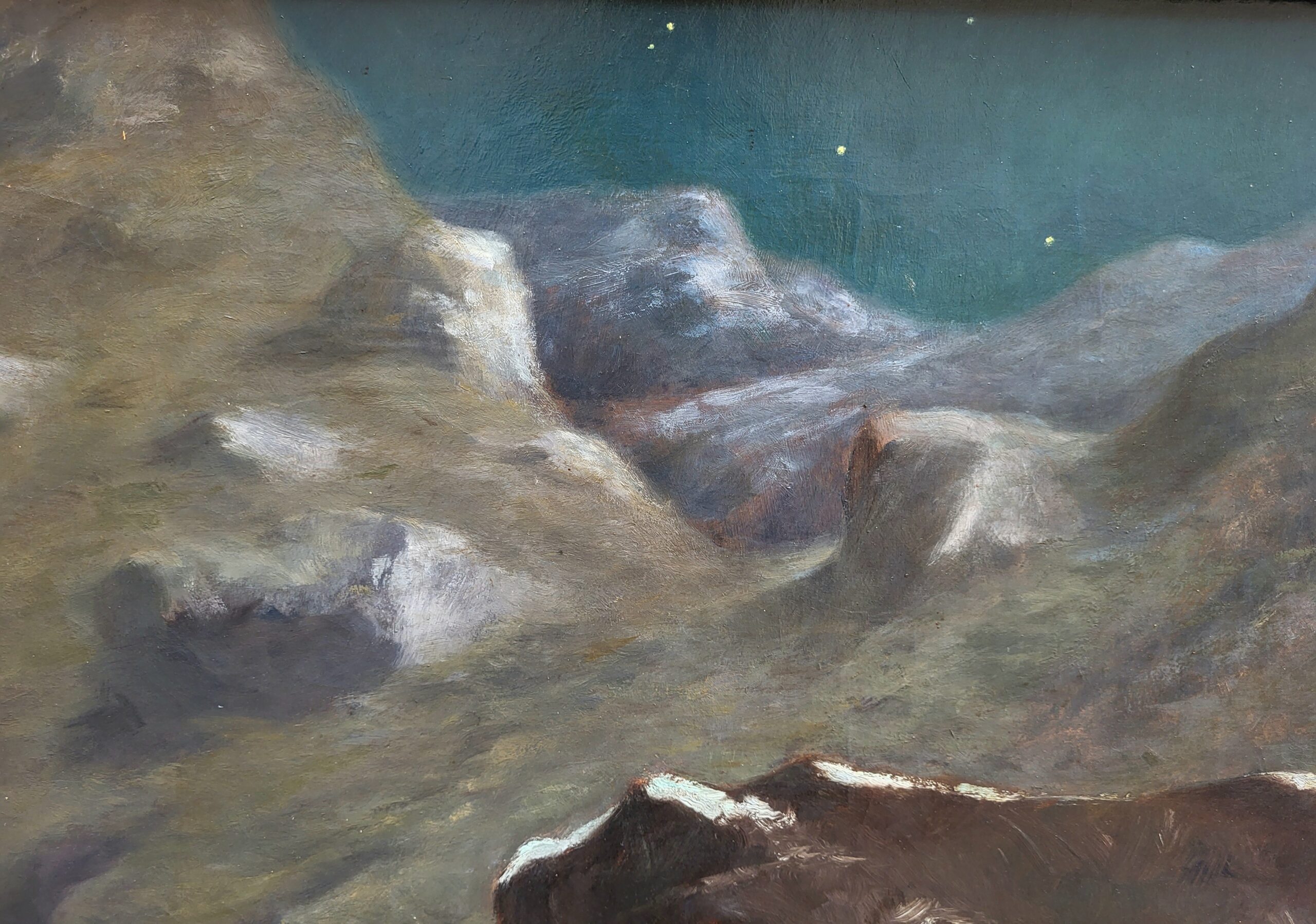
The scene unfolds in a rocky, mountainous landscape, bathed in a muted, twilight light, evoking an ancient, timeless world.
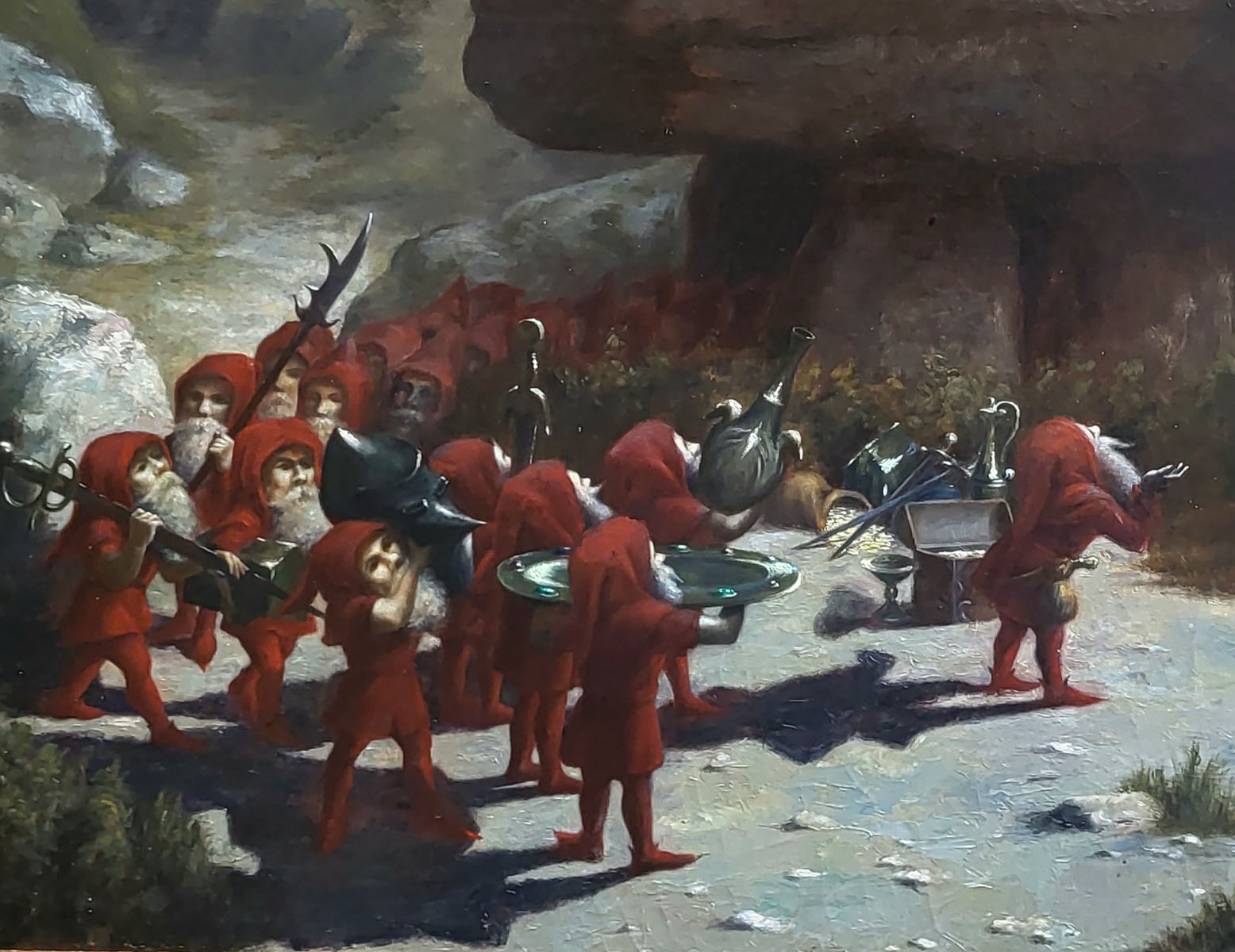
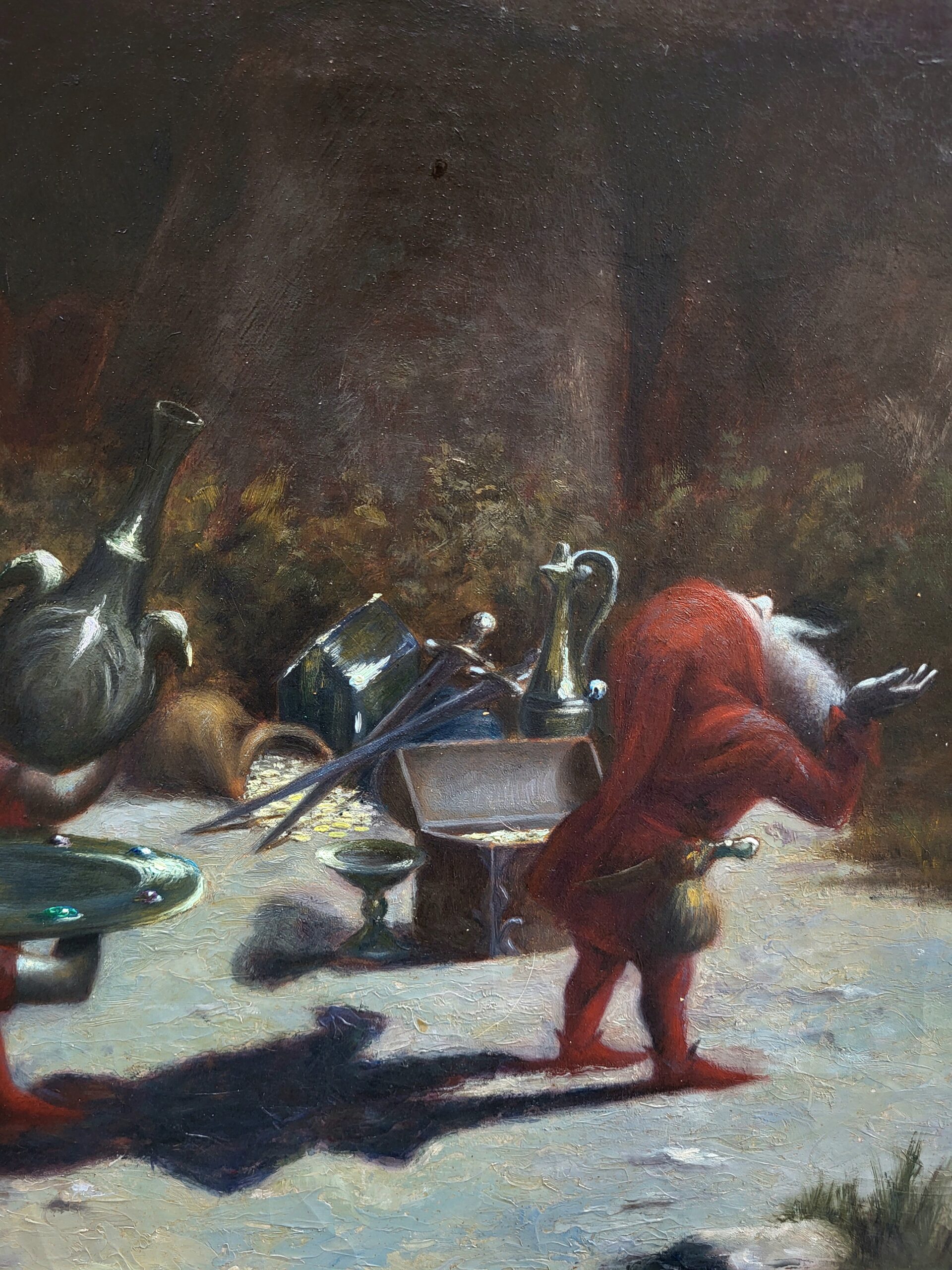
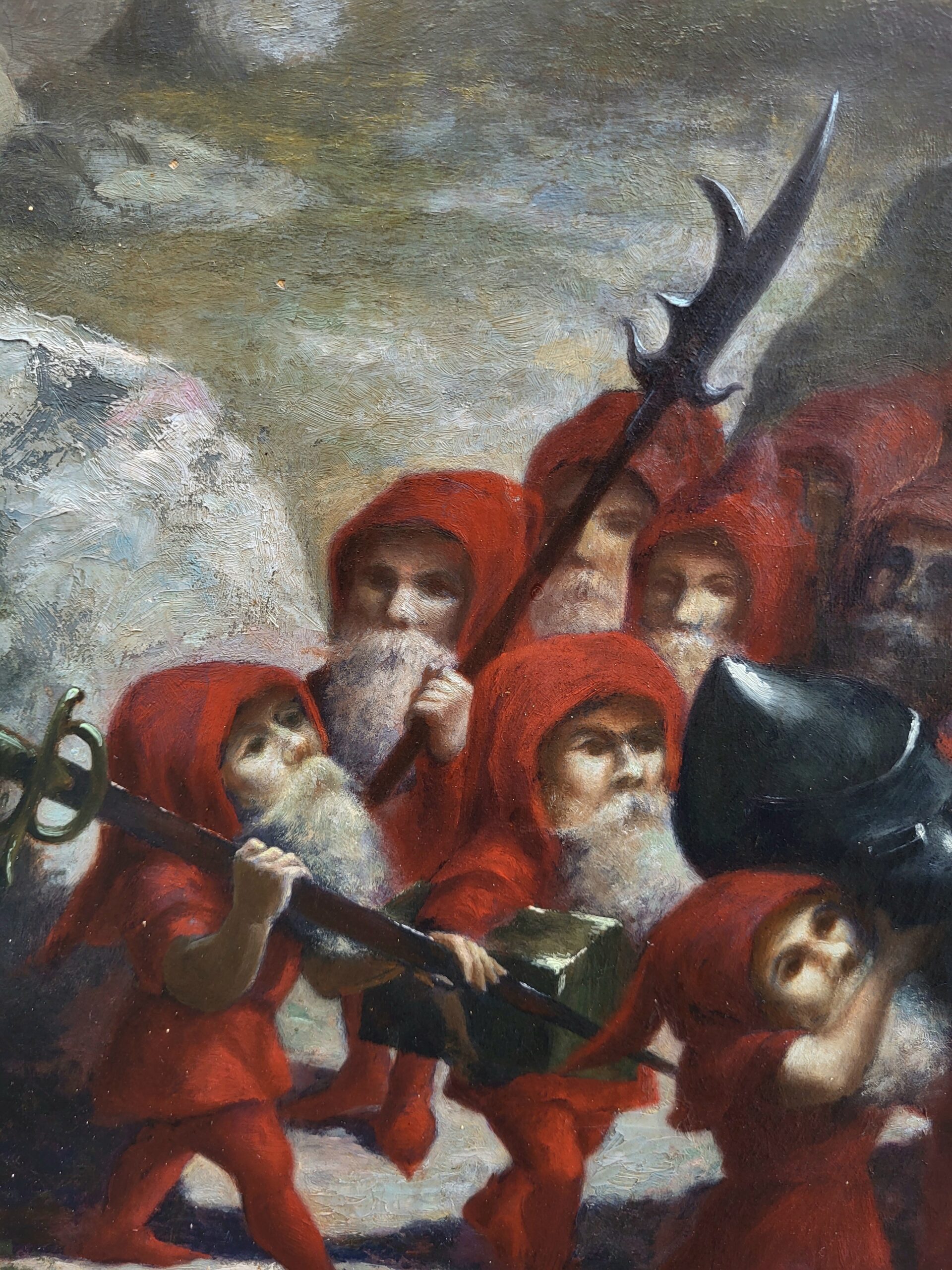
In the foreground, a procession of Korrigans, recognizable by their small stature, red clothing, and expressive faces, advance carrying precious or mysterious objects, suggesting a ceremonial offering.
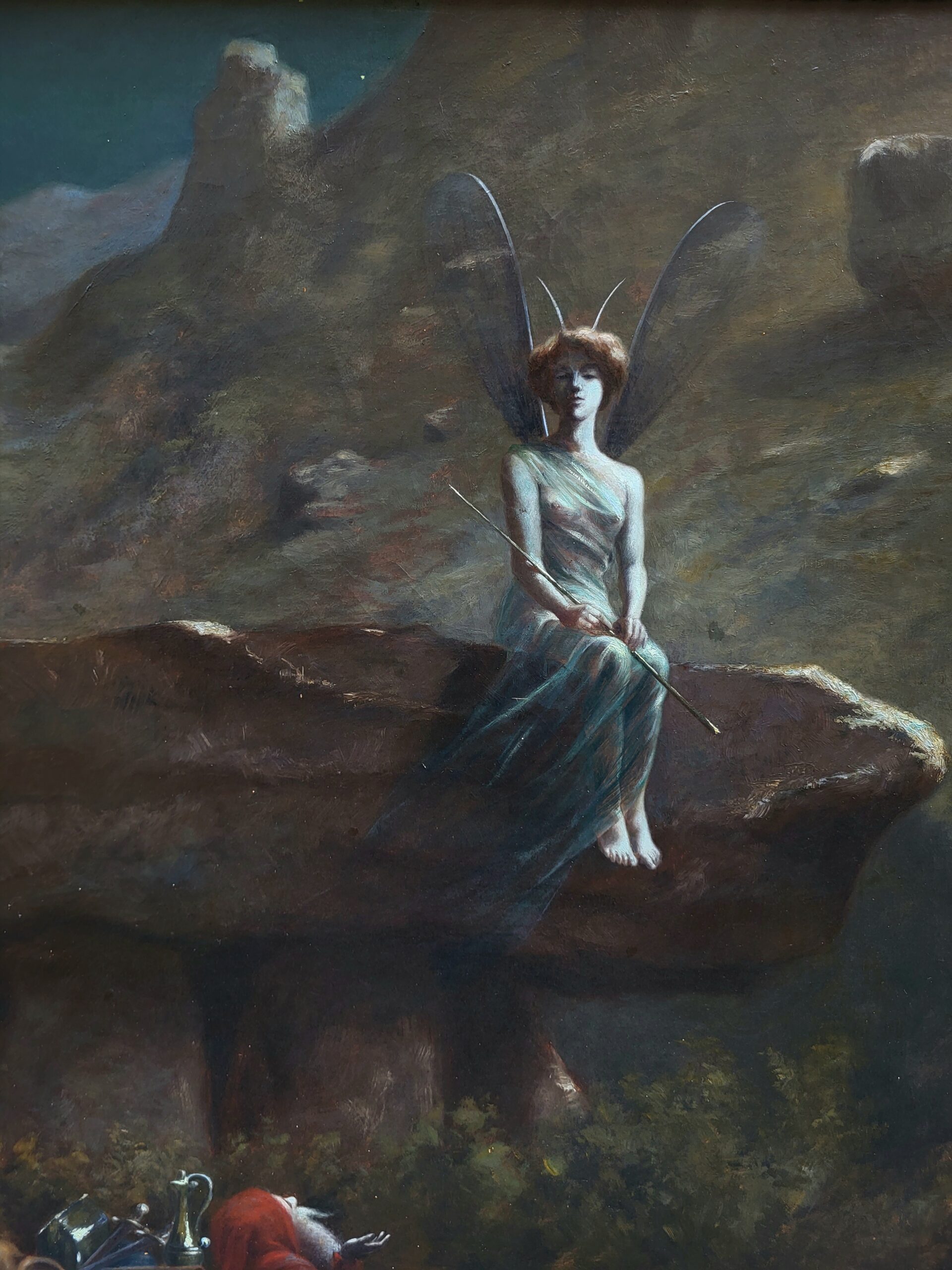
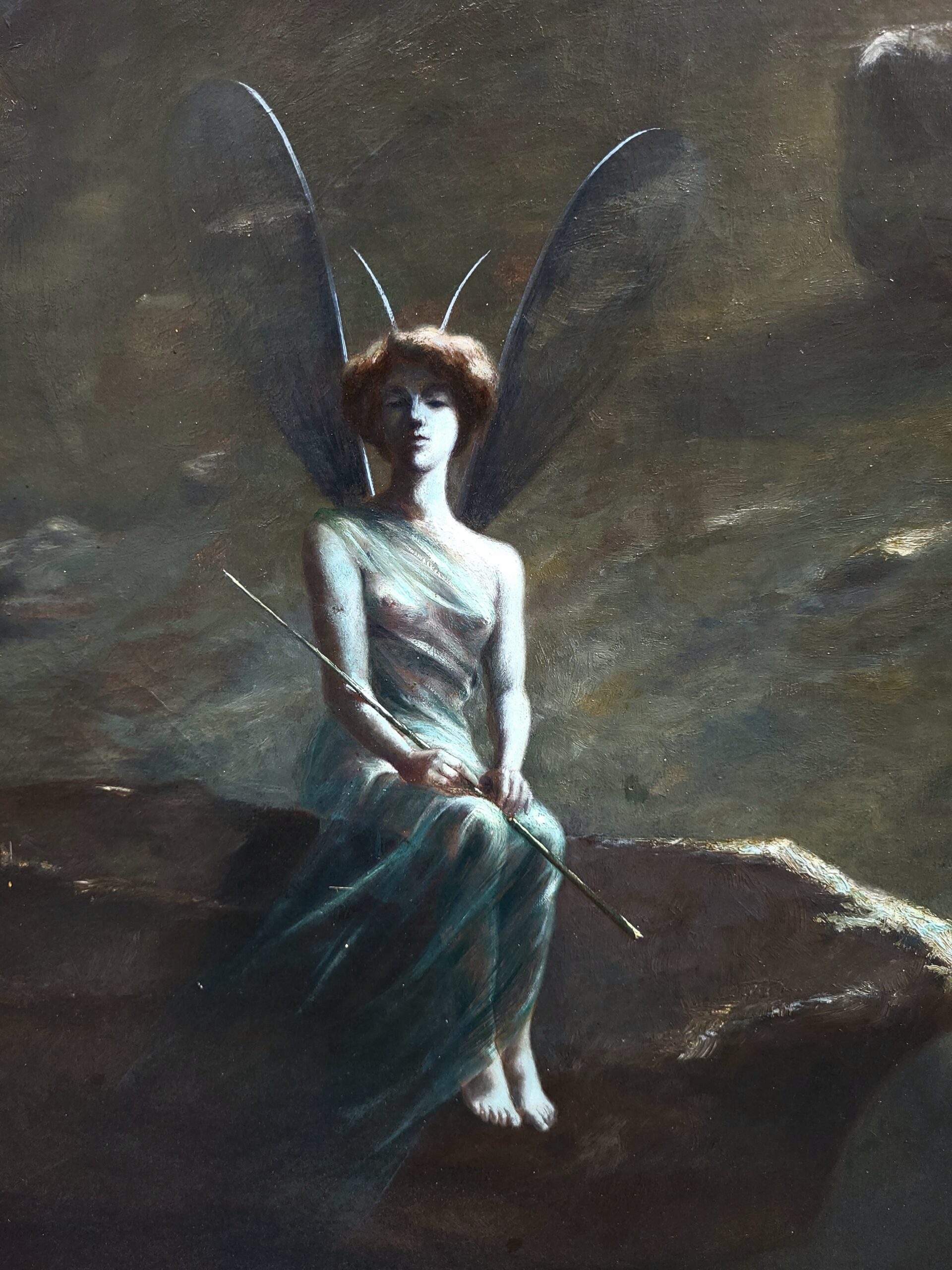
Dominating the scene, perched on a dolmen, a fairy draped in a light veil and holding a slender wand, she embodies a protective presence, both distant and sovereign.
According to popular tradition, the gifts brought by the Korrigans could be votive offerings, intended to ensure the fairy's protection.
This ancestral motif runs through the stories collected by the great chroniclers of Breton folklore, such as Anatole Le Braz and Paul Sébillot, where echoes of pagan nights still resonate.