
An oil on canvas, *Cats* by Eugène LAMBERT
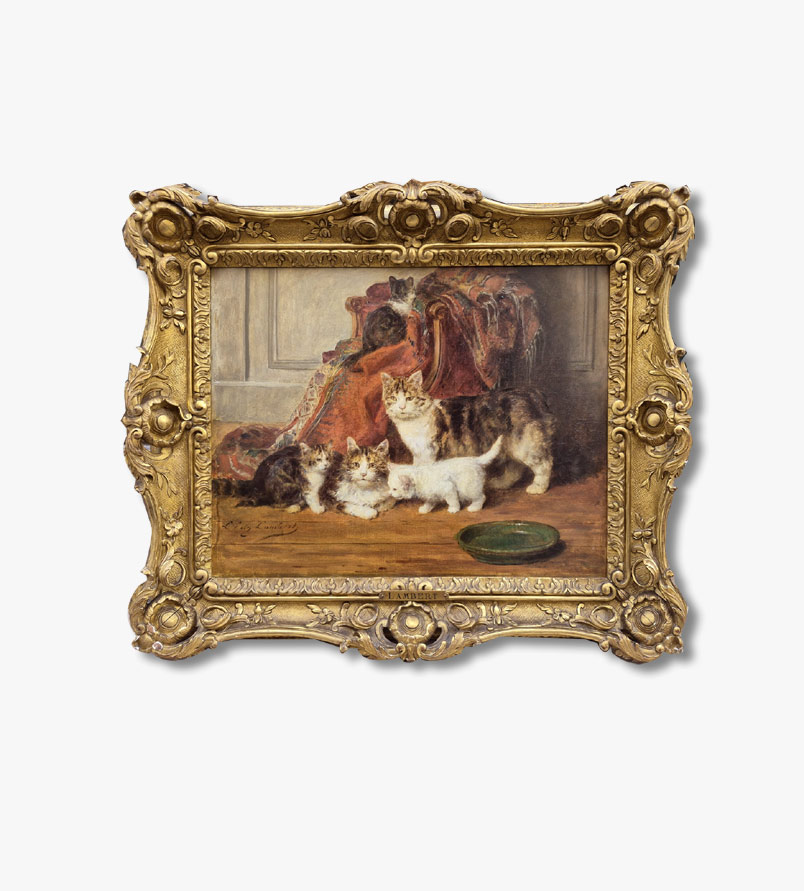
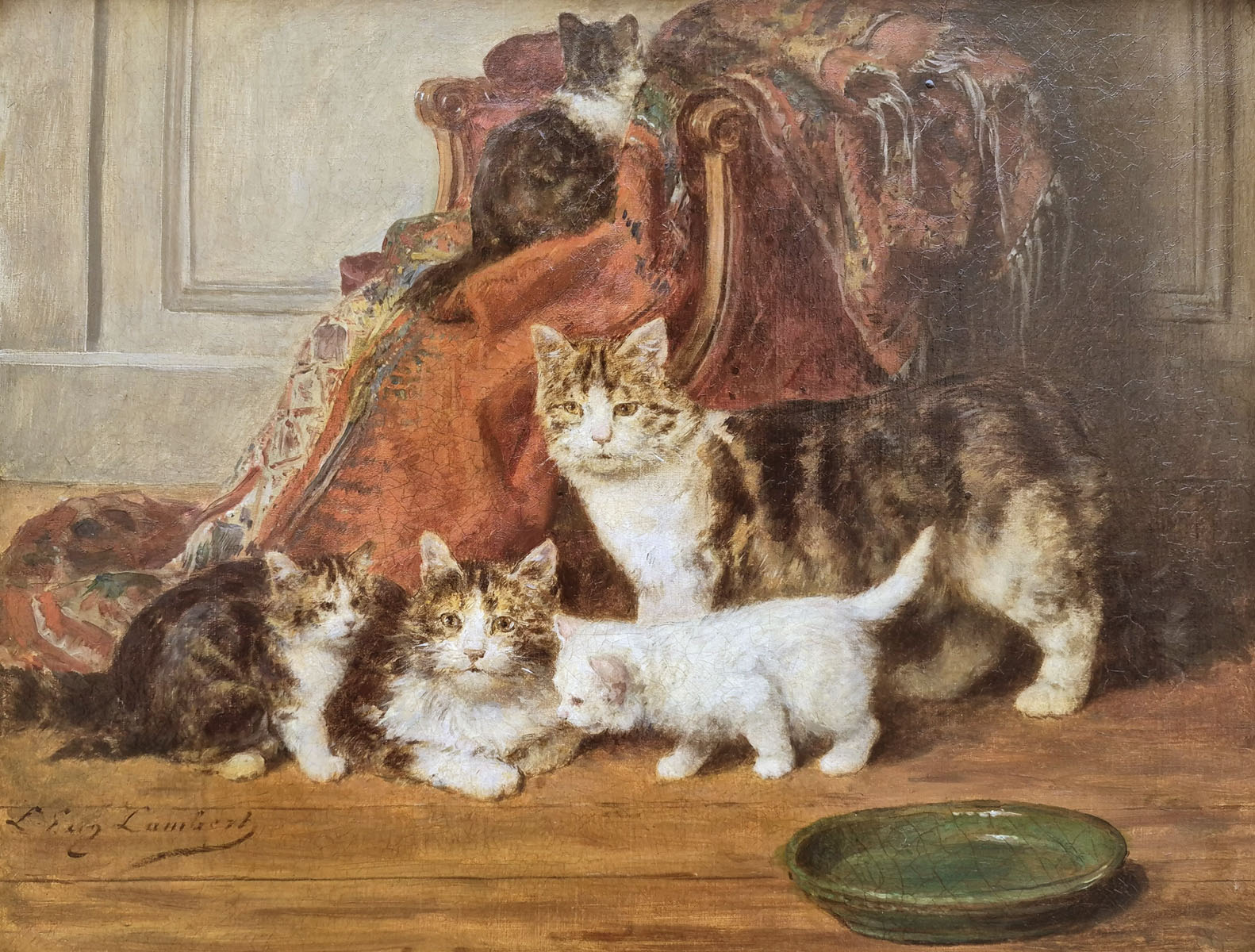
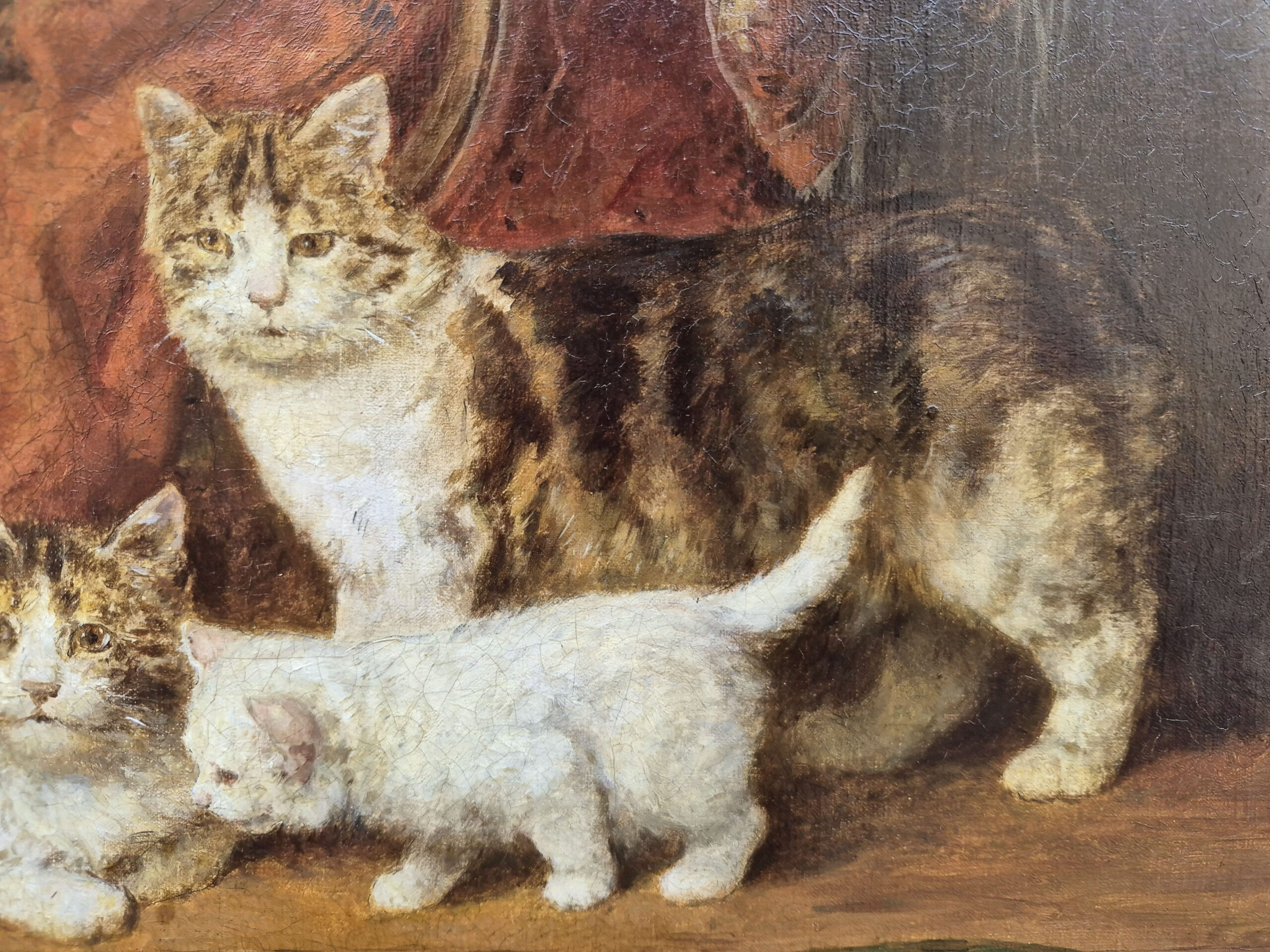
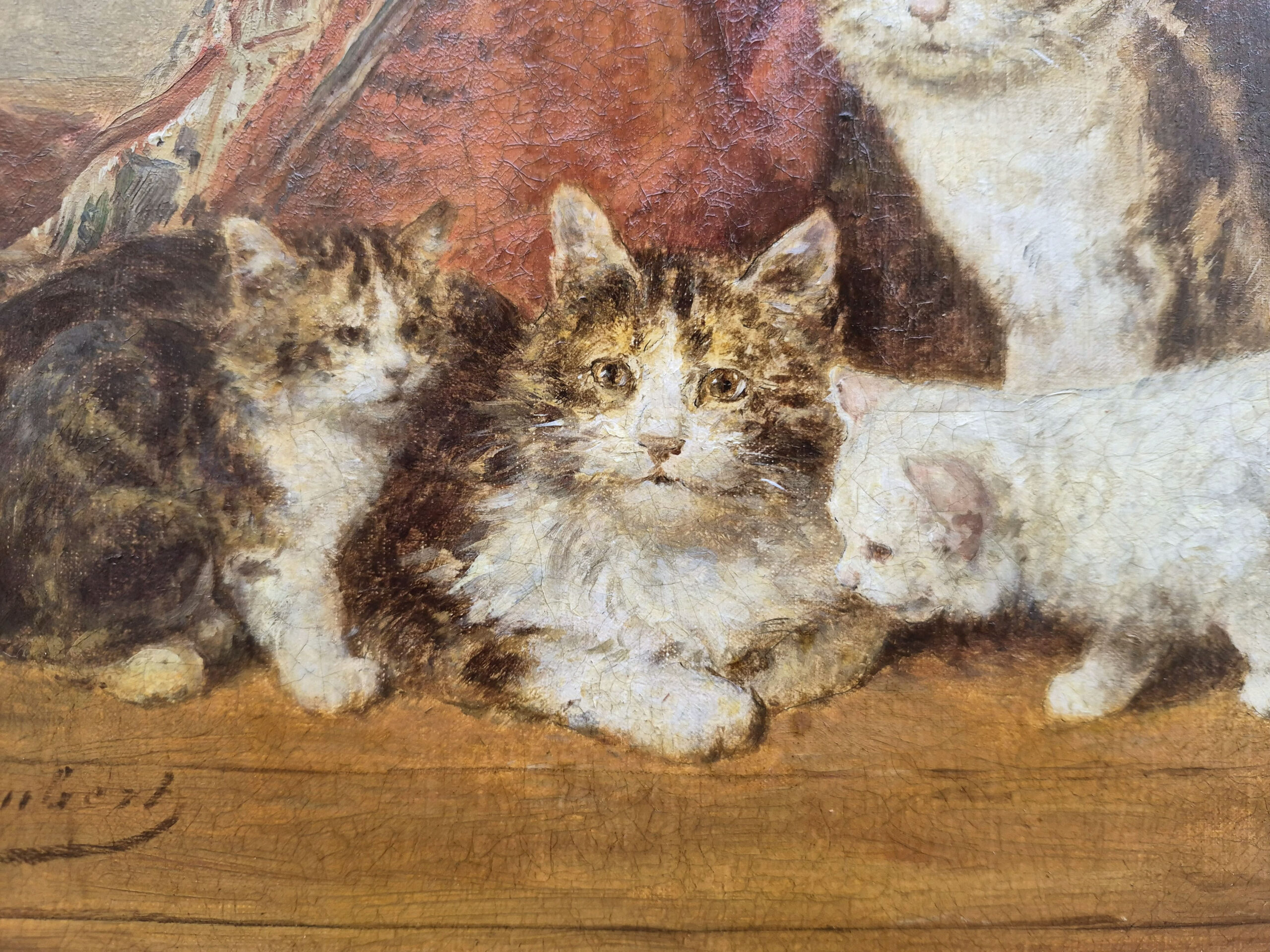
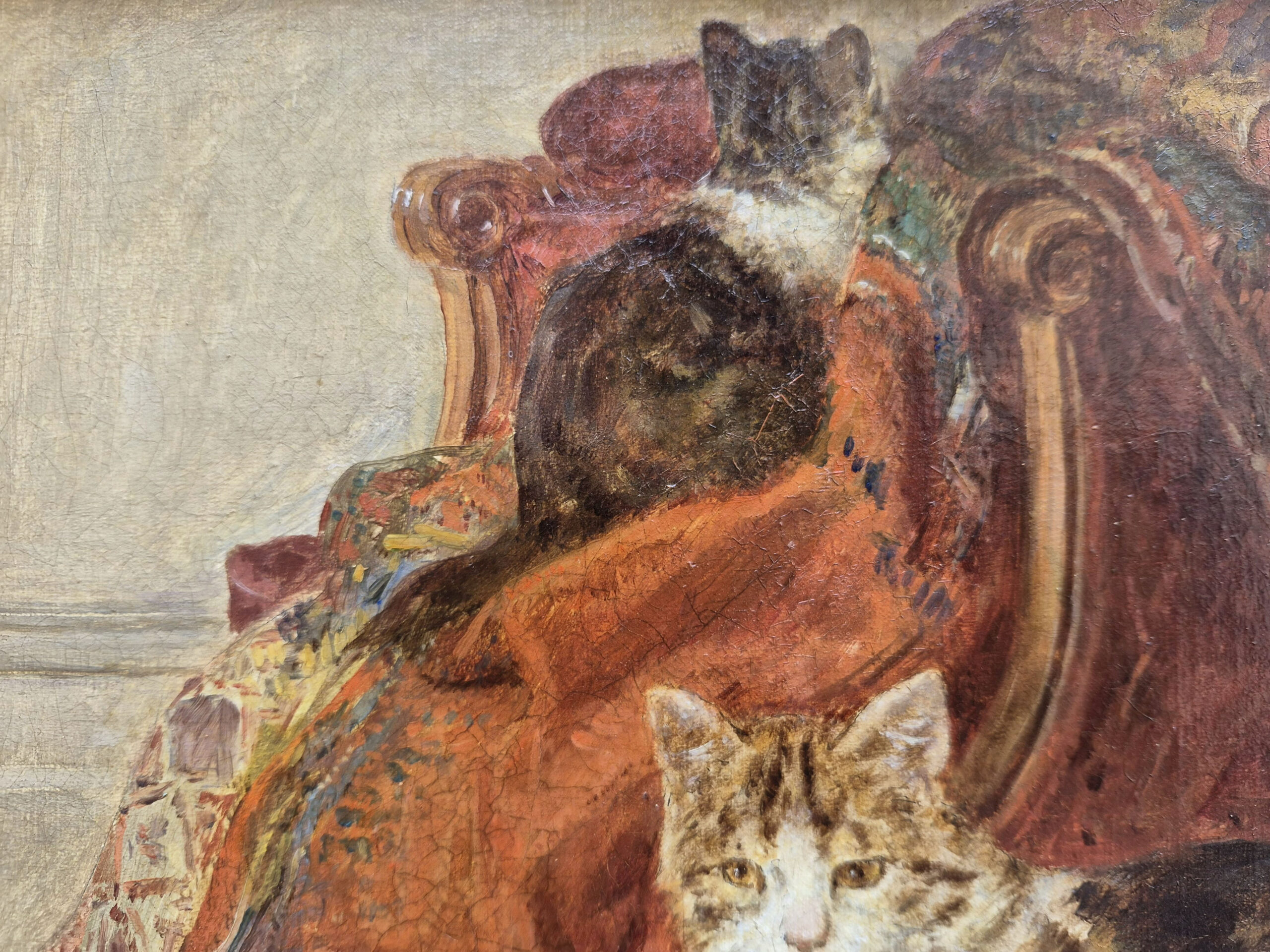
An oil on canvas, *Cats* by Eugène LAMBERT
5.200,00 €
Eugène LAMBERT 1825–1900
Between 1842 and 1846, he studied under two leading figures in French painting: Eugène Delacroix and Paul Delaroche.
During the early years of his career, he explored a relatively wide range of subjects: rural scenes, farmyard animals, hunting dogs, rustic interiors, still lifes, and landscapes.
But it was really in 1857, with his painting *Cat and Parrot*, that he found the subject that would make him famous.
The success of this painting prompted him to devote an increasing portion of his work to domestic cats. He quickly became one of the most sought-after animal painters of his time, both in France and abroad.
Critics and the public have given him the particularly complimentary nickname “Raphael of the Cats”
Further information
| Dimensions | 44.5 × 36.5 cm |
|---|
1865: Medal at the Salon.
1866: Another medal.
1870: Another award at the Salon.
1874: Knight of the Legion of Honor.
1878: Third-class medal at the Paris World’s Fair.
1879–1896: Member of the Society of French Watercolorists.
At the 1878 Salon, he exhibited, among other works, *The Cats of Cardinal Richelieu* and *Fallen Grandeur*. The official catalogs listed him at that time as an artist outside the competition.
In 1874, he painted, among other works, a portrait of Baron Nathaniel de Rothschild surrounded by his dogs.
He is also very active as an illustrator and engraver, notably illustrating La Fontaine's Fables.
What sets Lambert apart is that he no longer treats the cat as a secondary element in the composition, but rather as its main subject.
While his paintings are part of the great naturalistic tradition of animal painting, Lambert stands out for his ability to portray animals almost as if they were human characters.
He observes their psychology, their curiosity, their nonchalance, their maternal instinct, their love of play, and their insatiable need to explore.
Armchairs, oriental rugs, curtains, works of art, and fine fabrics often serve as the backdrop for these small domestic scenes. The contrast between the refinement of these interiors and the carefree nature of the animals adds a touch of humor to his compositions.

