An oil on canvas, Couple au bar a Villefranche sur Mer by Edmond PICARD
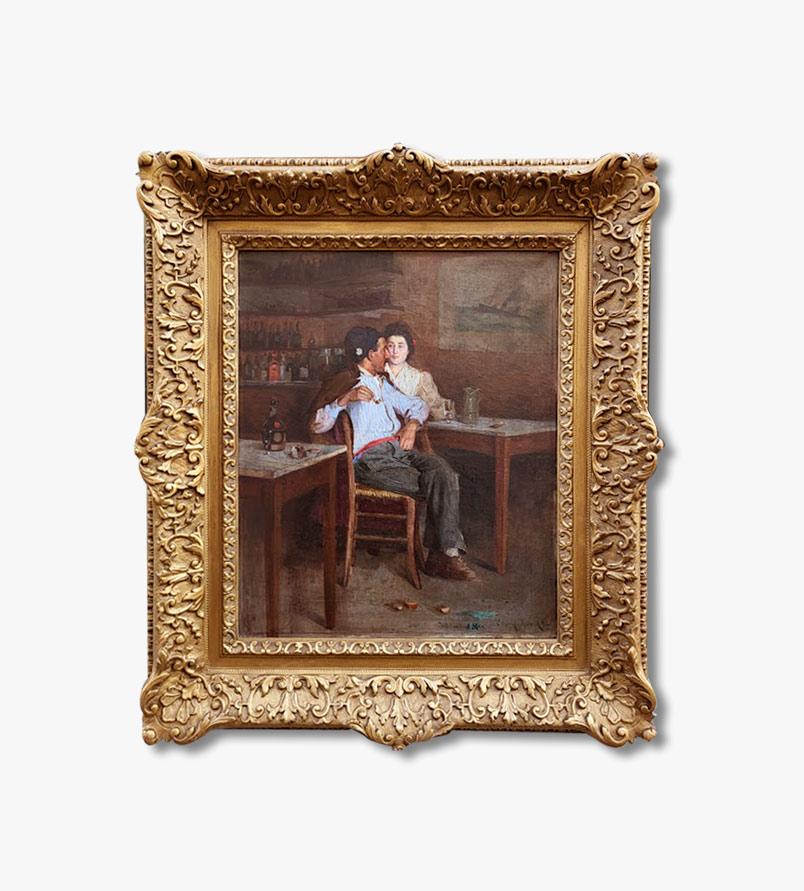
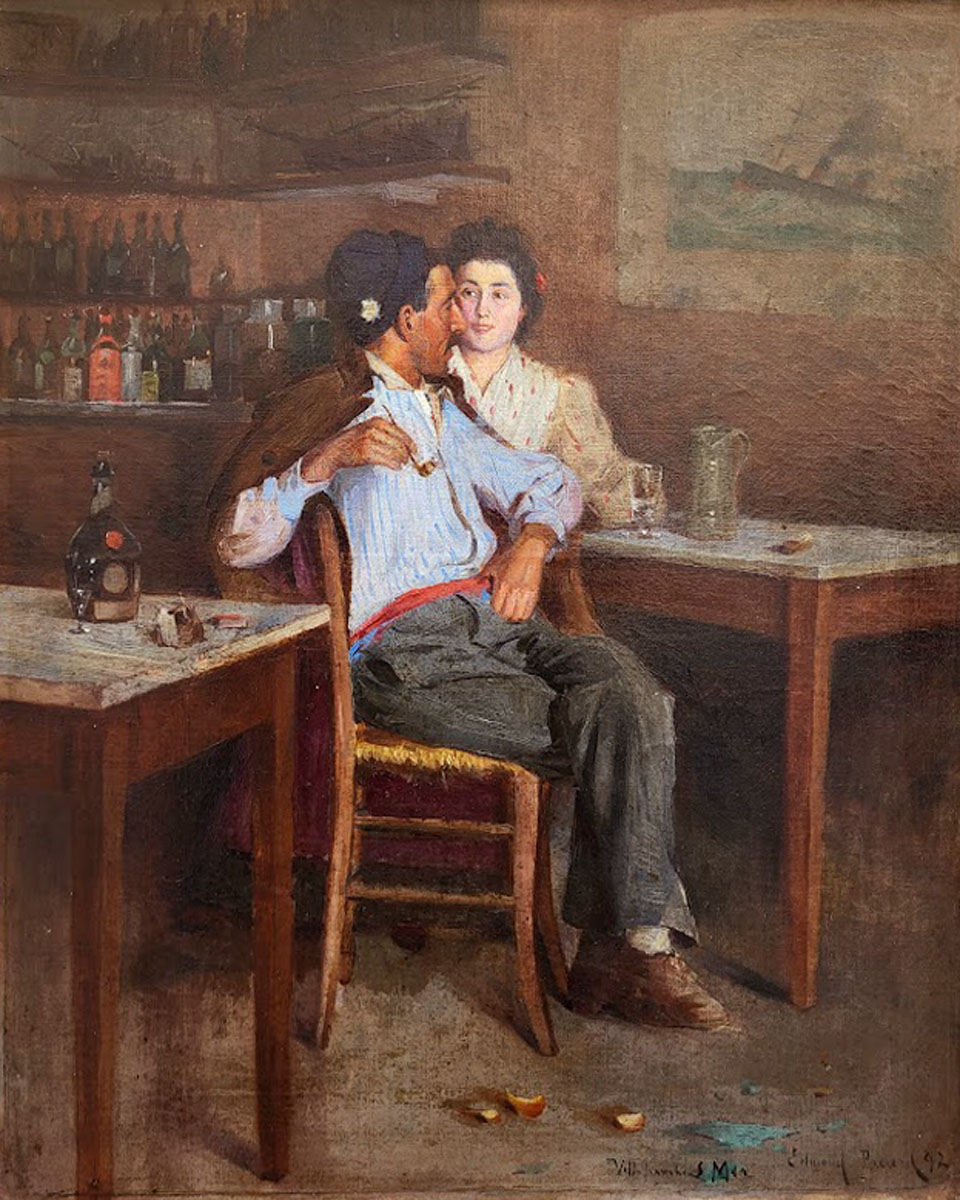
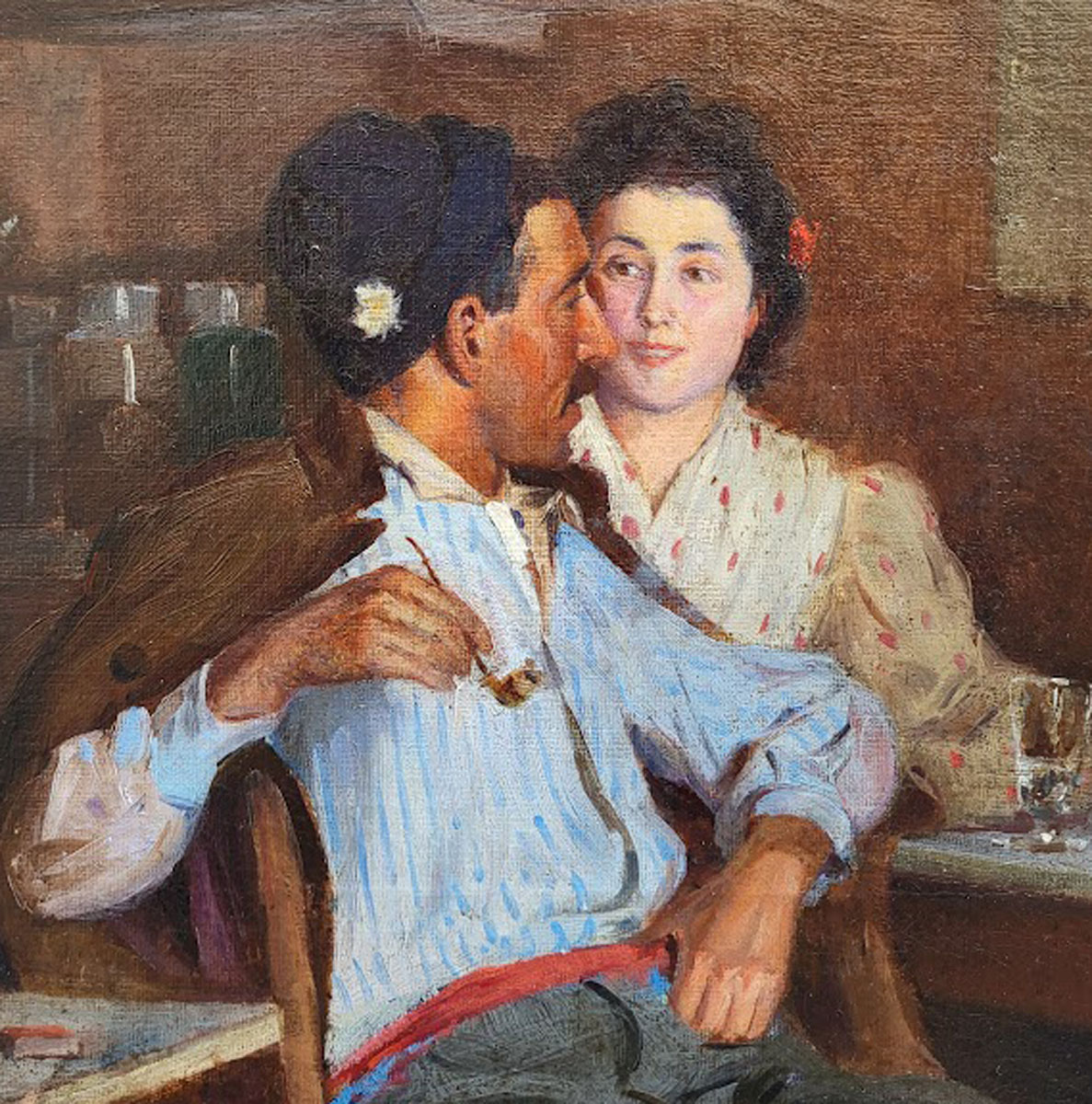
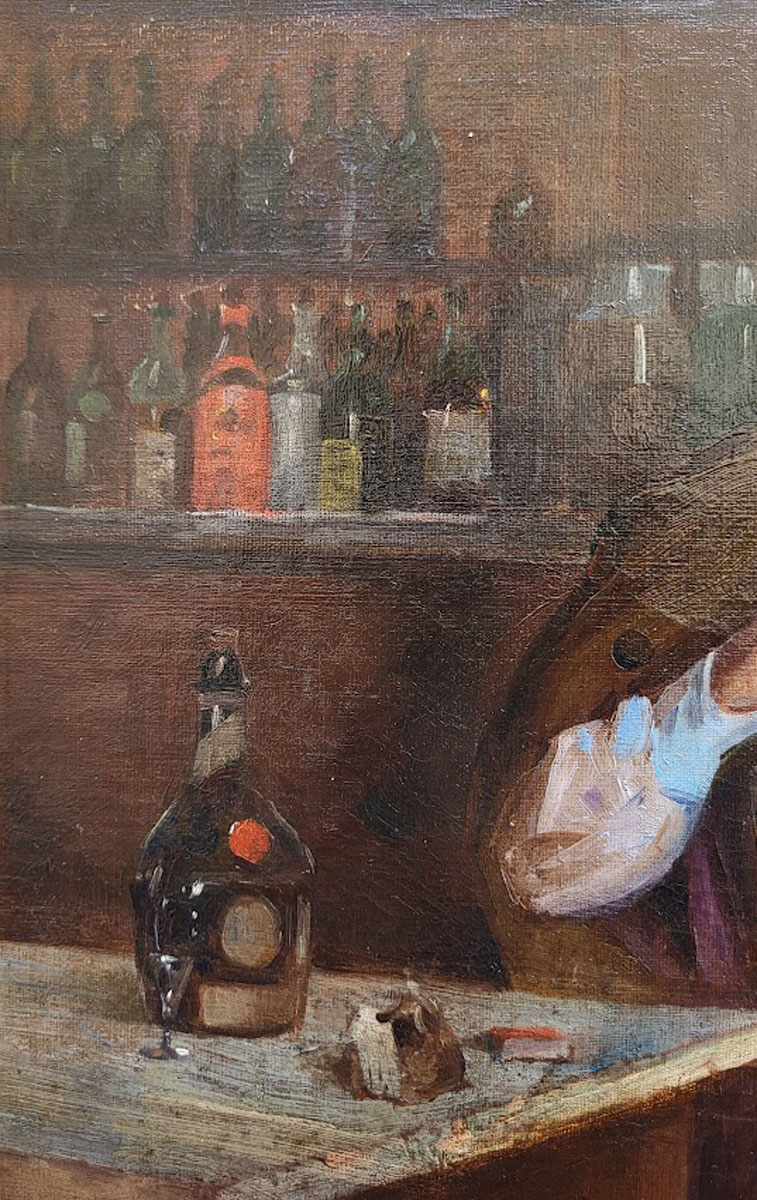
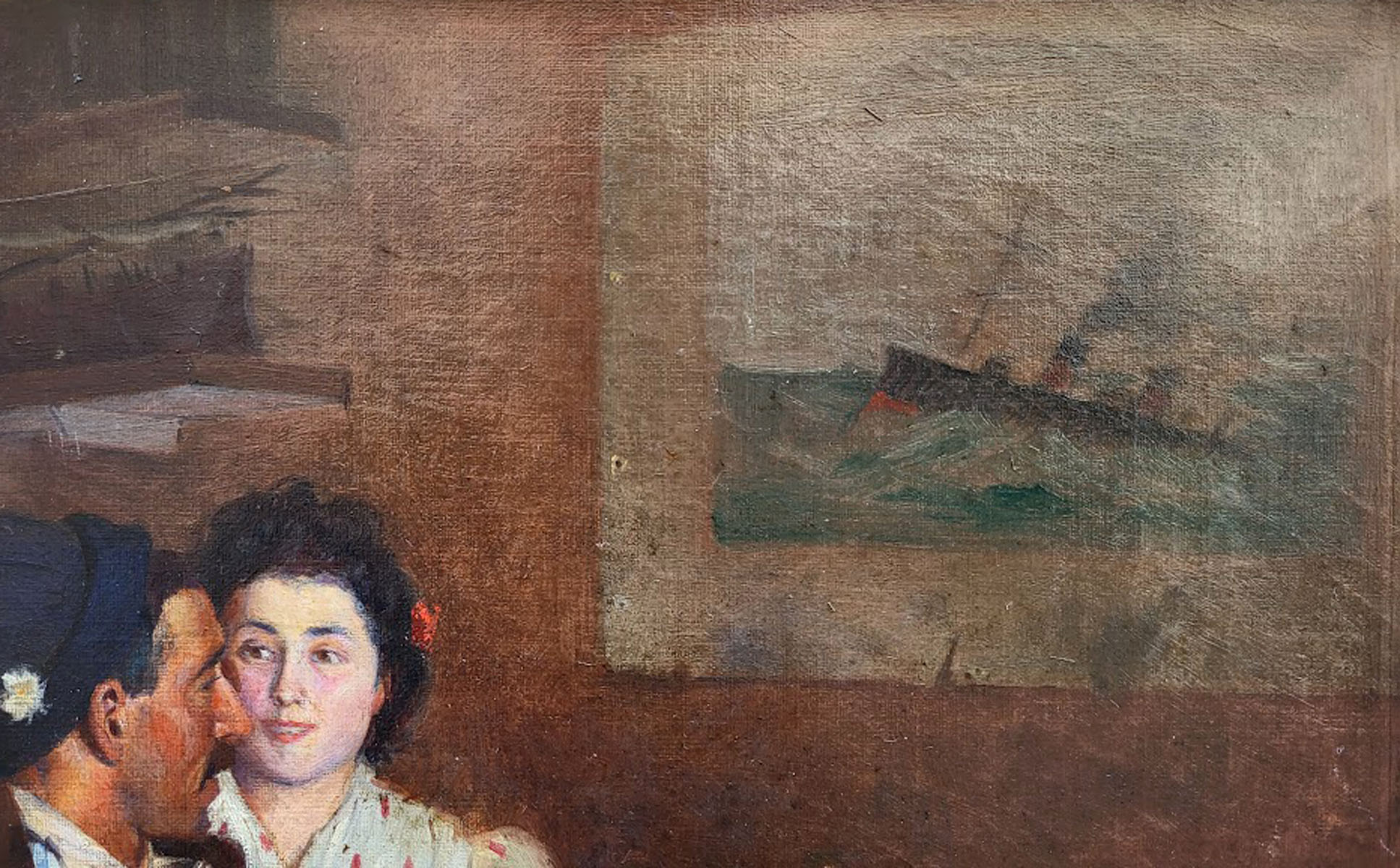
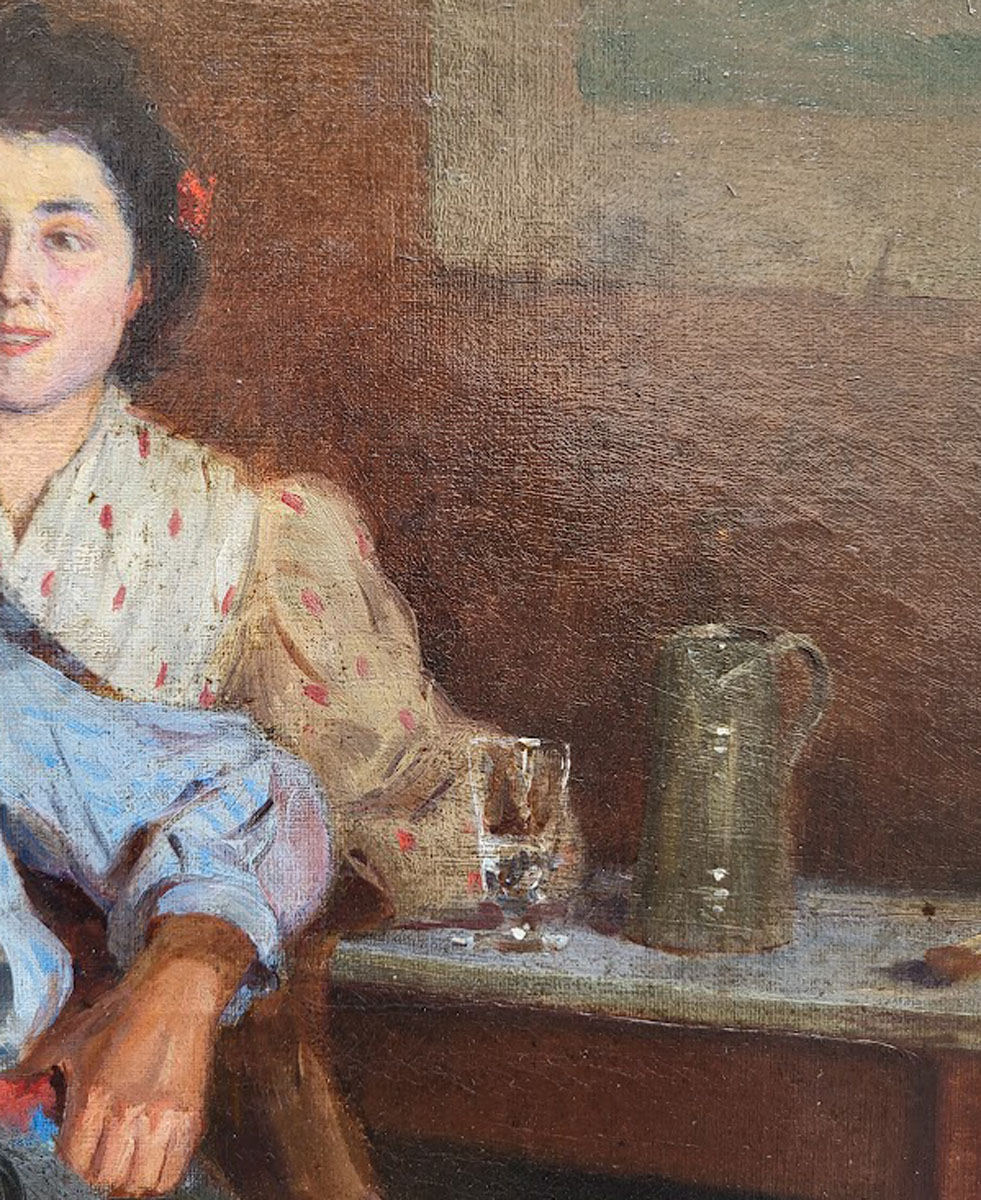
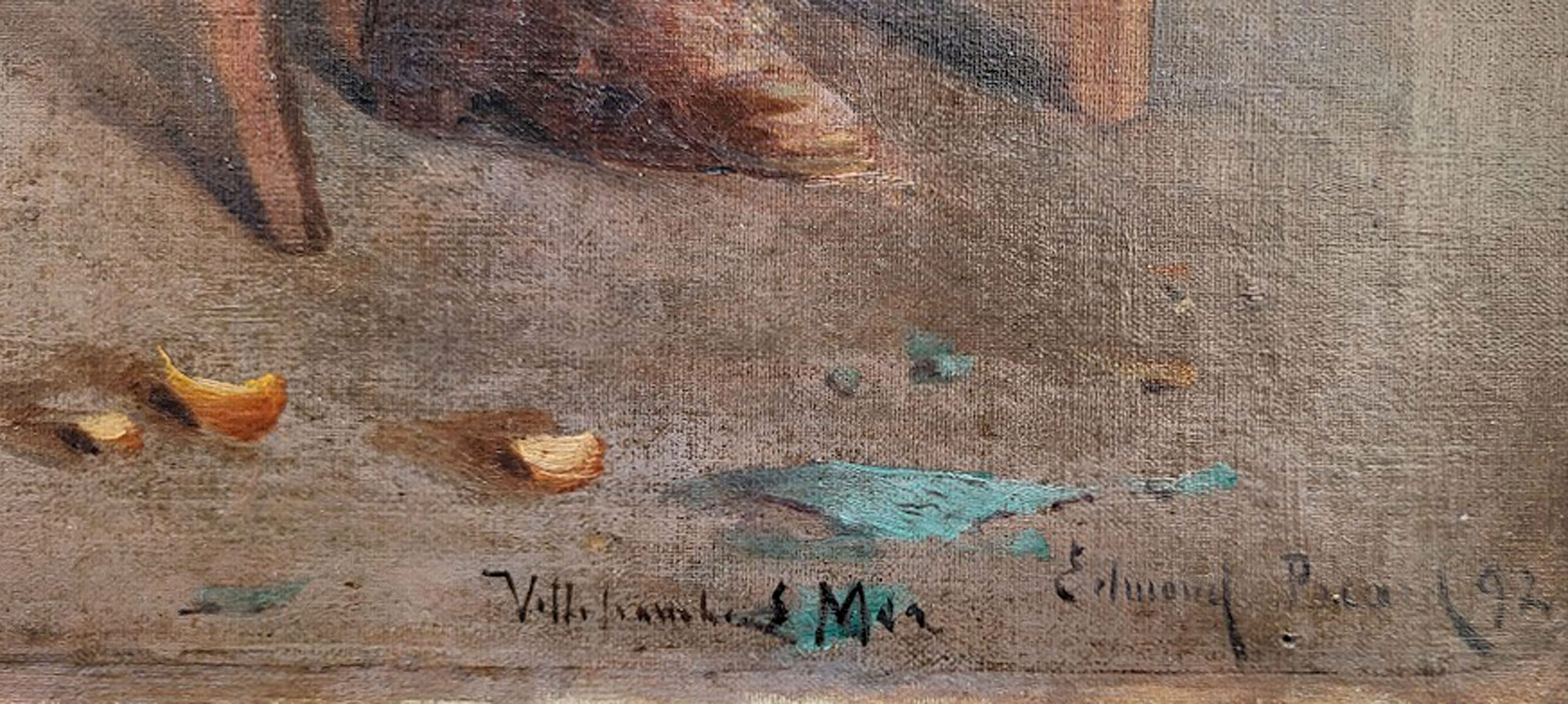
An oil on canvas, Couple au bar a Villefranche sur Mer by Edmond PICARD
Prix sur demande / prices on request
Edmond Picard, painter (1861-1899)
Born into a Jewish family in Besançon and destined to study watchmaking,
Picard showed an early talent for drawing and, at the age of thirteen, in 1873, he enrolled at the Municipal School of Drawing in Besançon.
In 1877, at the age of just 16, Edmond Picard became a member of
the Société des Amis des Beaux-Arts de Besançon (Besançon Society of Friends of Fine Arts).
There, he was taught by painter Honoré Chapuis, before being noticed by landscape artist Alexandre Rapin, who convinced his family to train in Paris.
Picard first joined the École Nationale Supérieure des Arts Décoratifs, then the studio of Léon Gérôme and Jean Paul Laurens.
He participated in the Salon for the first time in 1881.
In 1885, he won the prestigious "Troyon" prize for animal painting,
becoming one of the youngest artists to receive this distinction.
Several medals will follow, as well as numerous government purchases.
Further information
| Dimensions | 70 × 80 cm |
|---|
During the 1880s and 1890s, Edmond Picard established himself as a painter deeply committed to depicting everyday life.
Although the artist lives and works in Paris, he remains strongly attached to his region and often returns to Franche-Comté.
His work therefore oscillates between evoking peasant life
and describing Parisian life, demonstrating his attentive
and sensitive observation of the society of his time.
From 1890 onwards, his style evolved towards a more assertive naturalism,
marked by an increased search for emotional truth and a particular concern for rendering atmospheres.
This turning point reached its peak in 1893 with Les Adieux au Marin (Farewell to the Sailor),
a work that strikes the viewer with the pure emotion it exudes.
Our work, completed a year earlier, reflects this spirit.
Picard pulls off a remarkable feat with this genre scene:
The almost geometric balance of the composition reinforces this feeling of intimacy.
The horizontal tables, arranged to frame the couple,
create an enclosed space around them, accentuating their centrality
and isolating the scene from the rest of the world.
This contrast between the simple set design and the couple's dynamic,
makes the scene even more palpable, as if we were entering a suspended moment in their lives.
Color also plays an essential role in this immersion.
The ecru of the woman's dress and the whiteness of her skin immediately catch the eye, contrasting intensely with the sailor's weathered skin.
This exchange of glances, knowing, tender, and loving,
the close postures, plunge us into the heart of their relationship,
making the scene all the more touching and realistic.
Far from being a simple portrait, Picard offers us a vivid and emotional representation of a simple but emotionally charged everyday life.