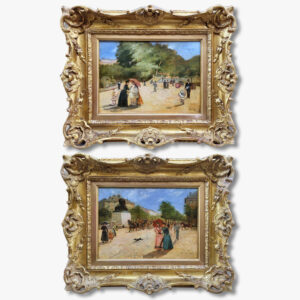
Oil on panel, Boulevard parisien by Louis HAYET
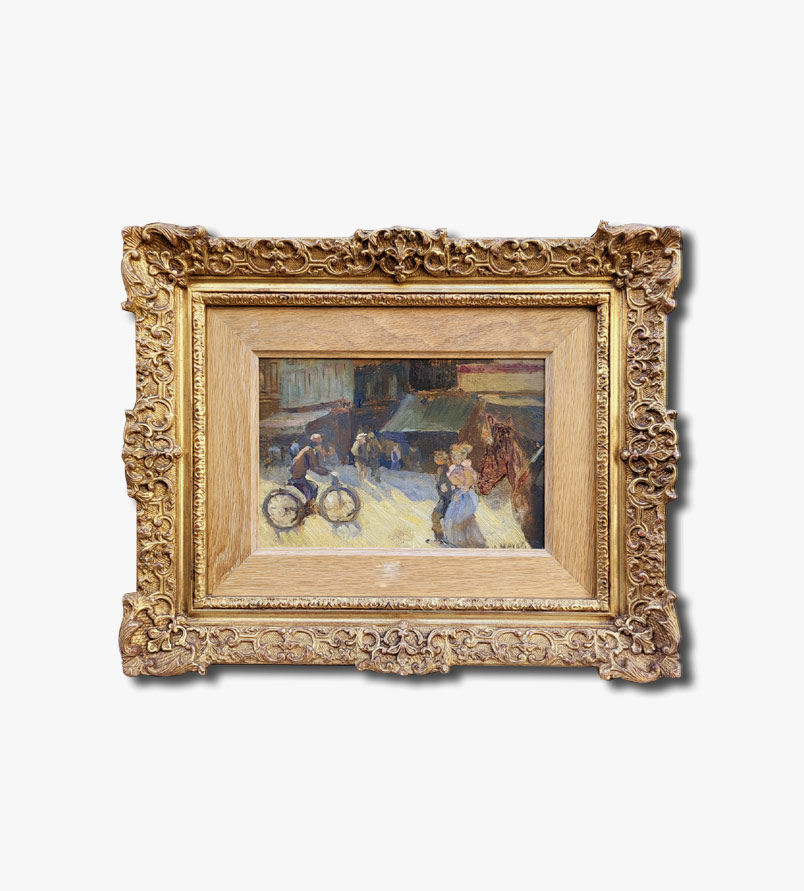
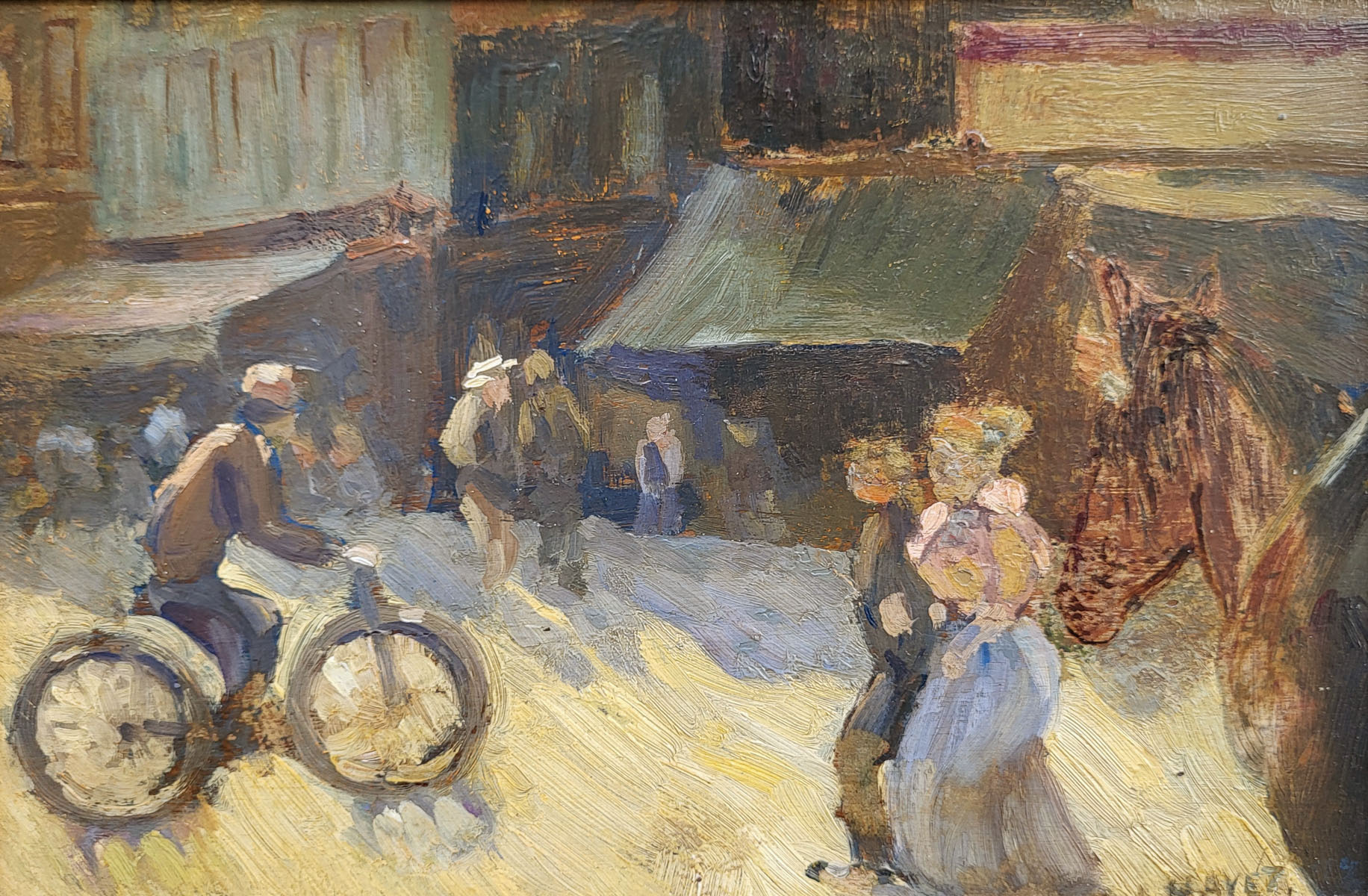
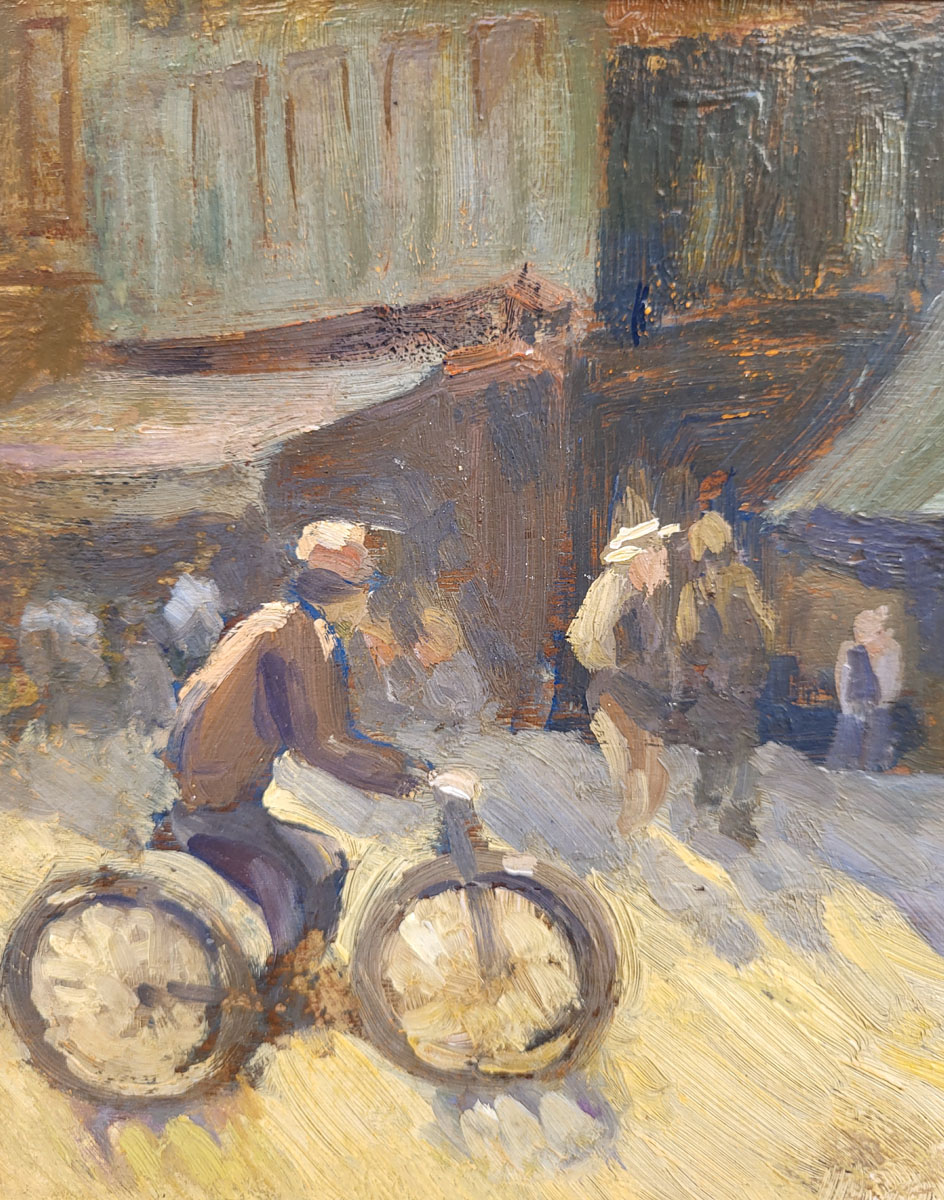
Oil on panel, Boulevard parisien by Louis HAYET
9.200,00 €
Louis HAYET 1864–1940
Our painting is dated 1895
He began his studies at the Arts-Décoratifs.
His meeting with Camille Pissarro and his son Lucien, during a work session, was decisive.
In 1886, the two artists invited themselves into Georges Seurat's studio to preview "Un après-midi à l'île de la Grande-Jatte", the painting that would become the manifesto of Neo-Impressionism.
He began with pointillism and returned to more impressionistic principles.
Further information
| Dimensions | 41 × 37 cm |
|---|
His excellent oil paintings on cardboard, cross-hatched drawings, pastels and watercolors enabled him to shine at the Salon des Indépendants in 1889, and to be one of the few Frenchmen (alongside Cézanne, Van Gogh, Renoir and Pissarro) to exhibit at the Salon des "XX" in Brussels in 1890.
Hayet likes to paint Paris, but also the landscapes of the Val d'Oise, in the Paris suburbs, where he has a studio.
Theorist and inventor, he won the Lépine competition and at the end of his life carried out scientific research into pigments and color.
A luminous vibration of extreme accuracy gives his landscapes, street scenes and portraits a unique sense of movement.
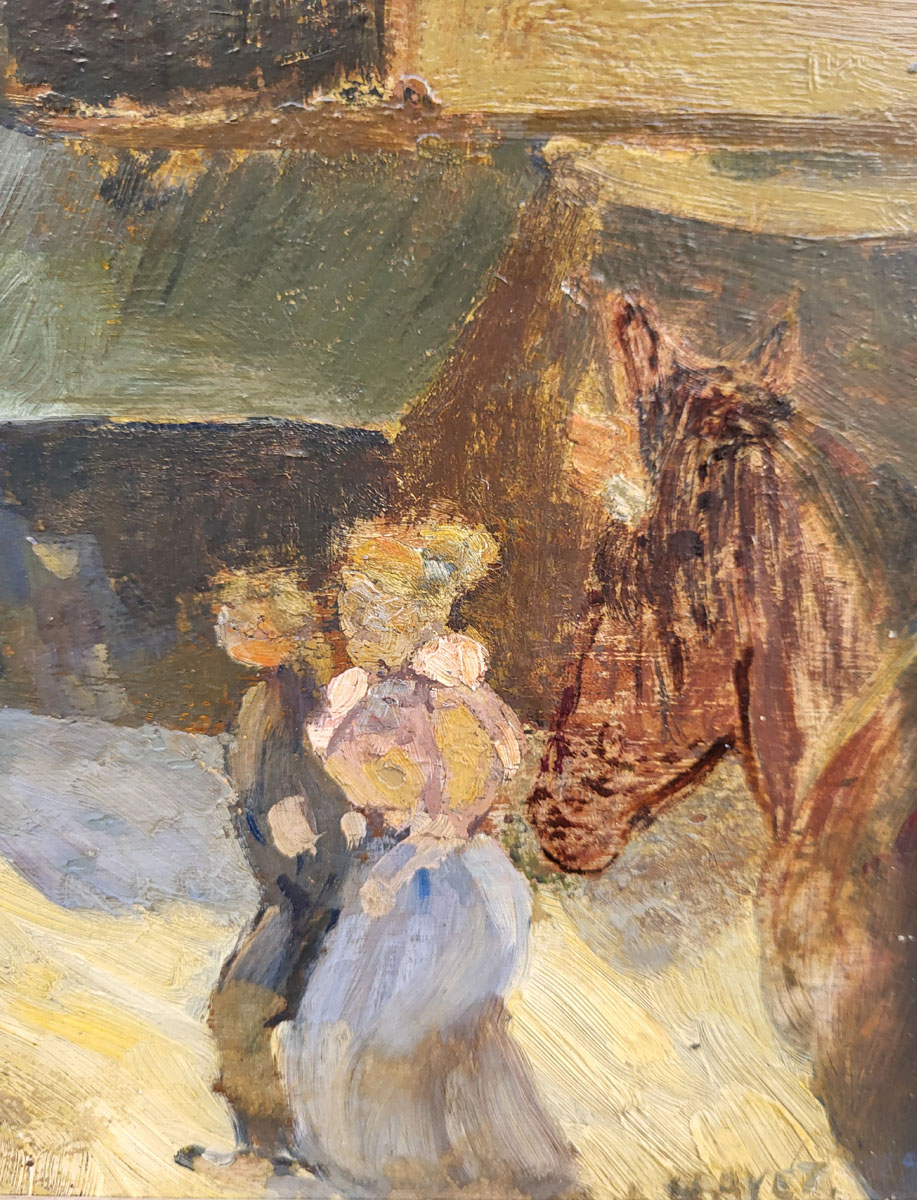
Here, Hayet vividly depicts a bustling Parisian boulevard in the late 19th century. The artist masterfully captures the movement and light of the city, revealing his fondness for urban scenes and everyday life in Paris.
In the foreground, a cyclist crosses the scene while a couple, accompanied by a horse, walks by.
The figures are sketched with fluid, evocative strokes, conveying the rhythm of urban life without getting lost in excessive detail.
In the background, passersby and shops come to life in darker tones, lending depth and perspective to the composition.
The light, rendered through warm hues and luminous reflections on the ground, contrasts with the subtle shadows cast by buildings and passersby, creating an atmosphere that is both realistic and poetic. Hayet’s style, reminiscent of late Impressionism, brings dynamism and modernity to the scene, while retaining a keen sense of social observation.