Oil on cardboard, *Le Cap Roux* by André WILDER
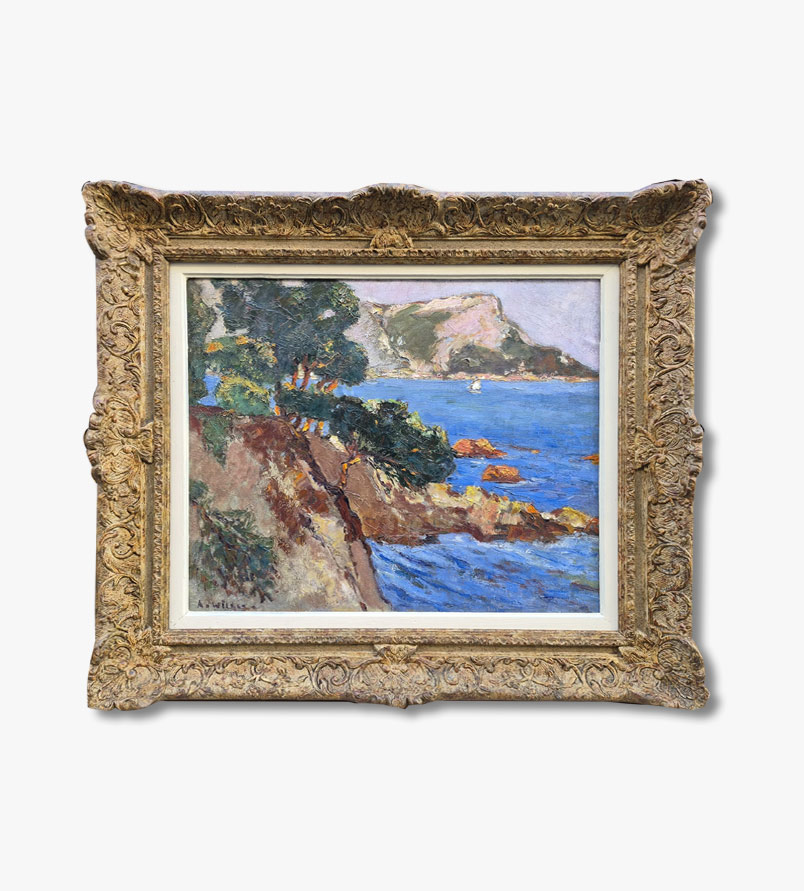
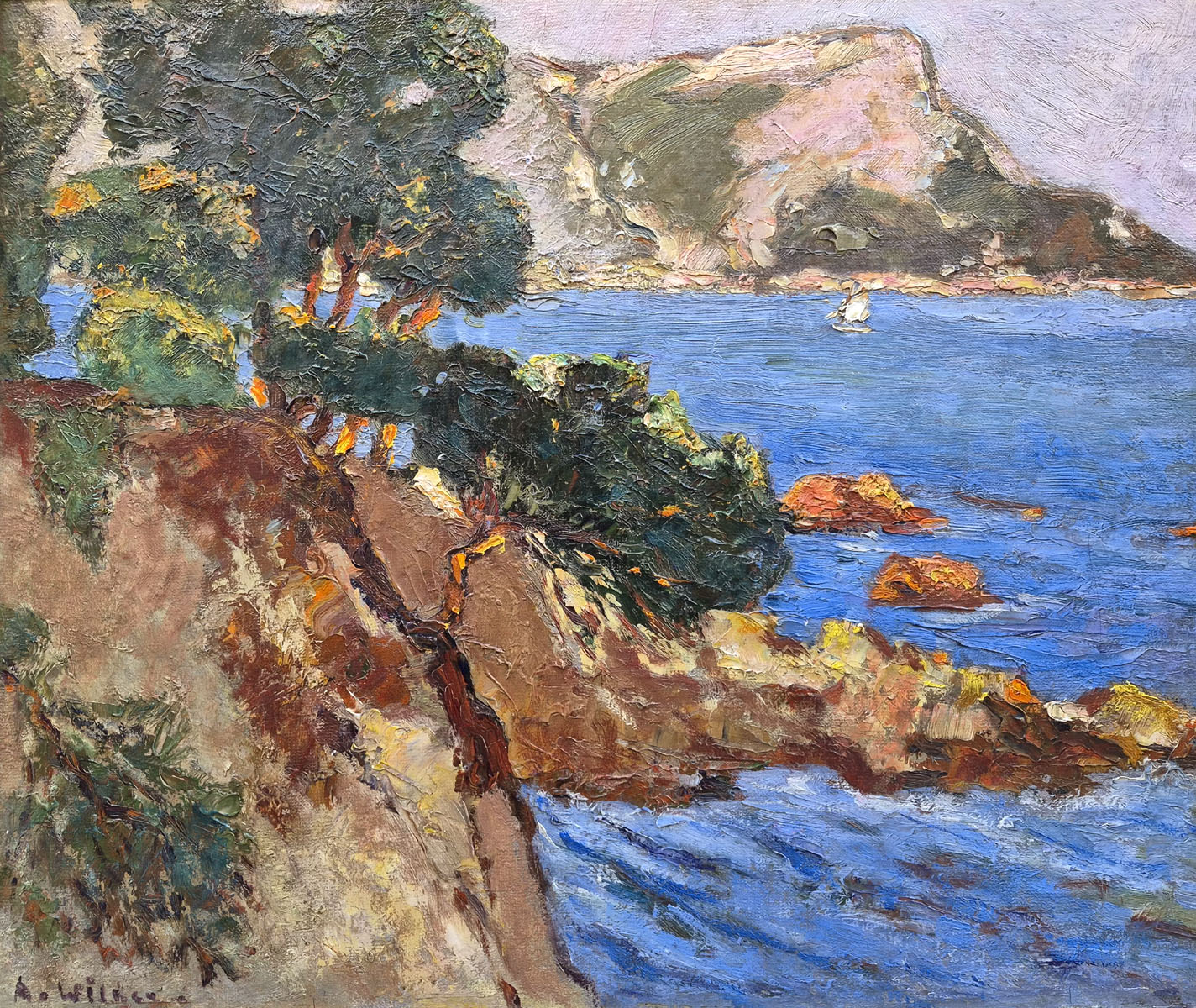
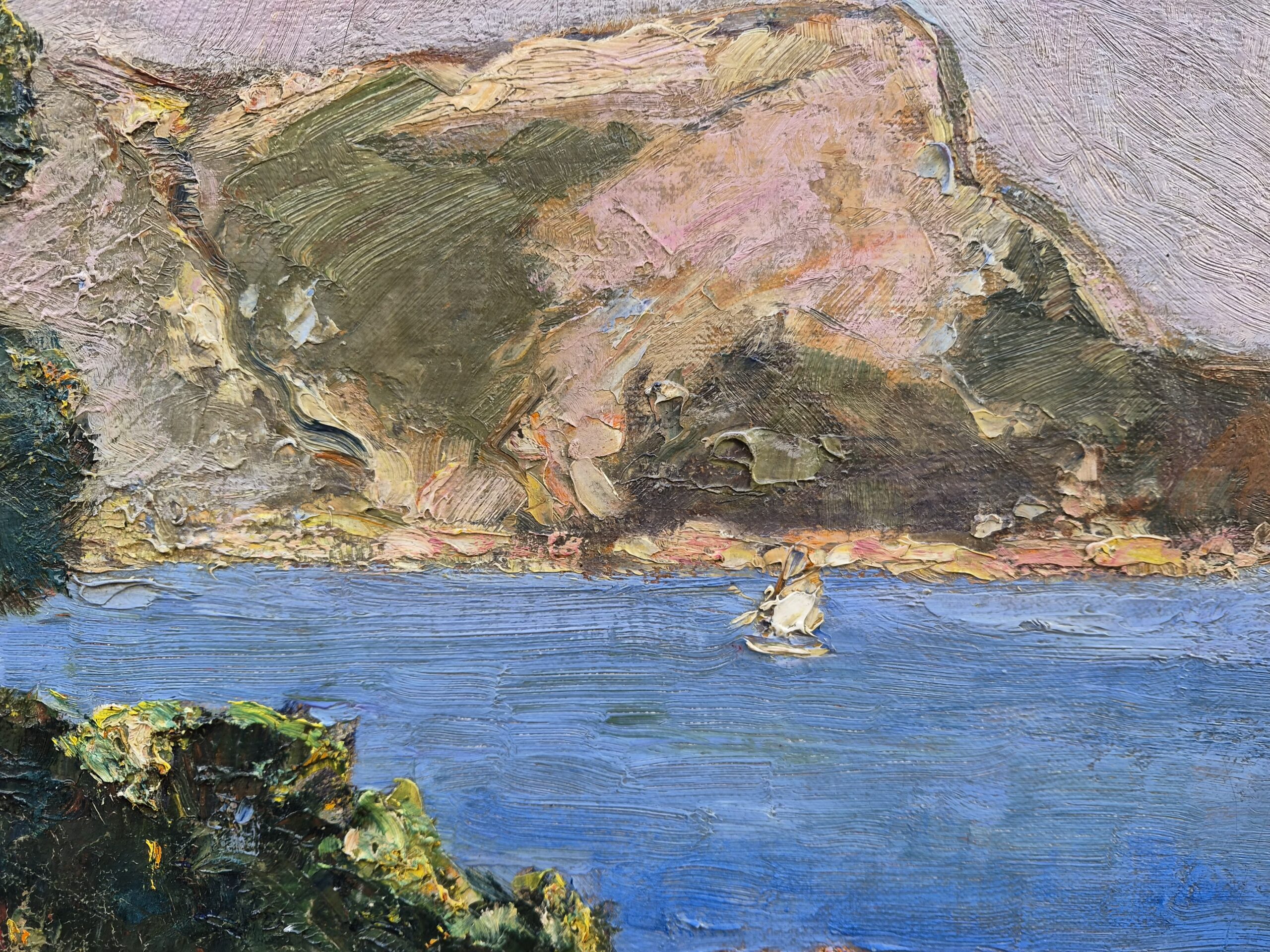
Oil on cardboard, *Le Cap Roux* by André WILDER
6.800,00 €
André Wilder is a French painter whose work follows in the Impressionist and Post-Impressionist traditions.
Coming from an intellectual background, his father, Victor Wilder, was a music critic for major Parisian newspapers as well as the French translator of Richard Wagner’s operas.
André began his training at the École des Arts Décoratifs in Paris, where he worked in the studios of Jean-Léon Gérôme and Marius Michel.
Early in his career, he also worked as an illustrator for Parisian publications before devoting himself entirely to painting.
Further information
| Dimensions | 75 × 68 cm |
|---|
A turning point came in 1895 when he met the painter Maxime Maufra in Trébeurden; Maufra became a major source of inspiration for him and encouraged him to paint outdoors.
This experience led him to explore the coastlines of Brittany—Belle-Île, Saint-Briac, the Gulf of Morbihan, and Quiberon—as well as the coastal and river landscapes of Holland and Belgium, drawn to their distinctive light
Wilder exhibited for the first time in 1904 at the Bernheim-Jeune Gallery in Paris, in a solo exhibition with a preface by Octave Mirbeau, a renowned art critic who praised his talent.
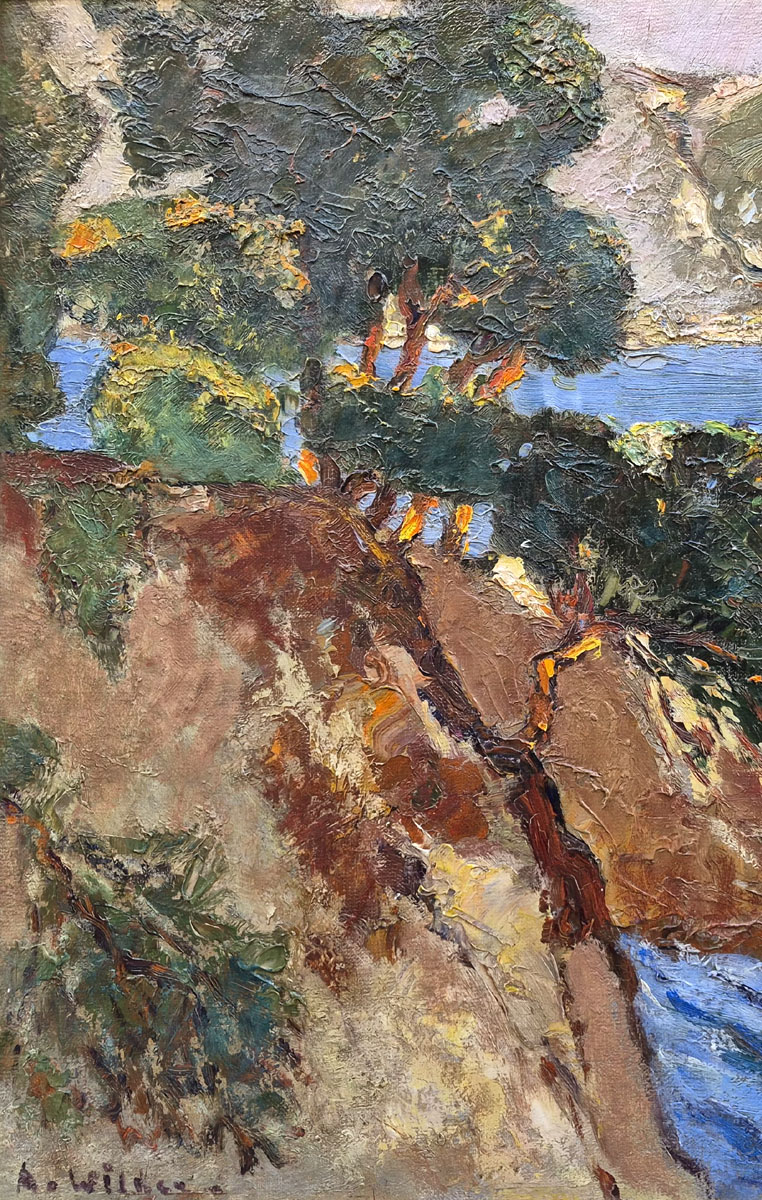
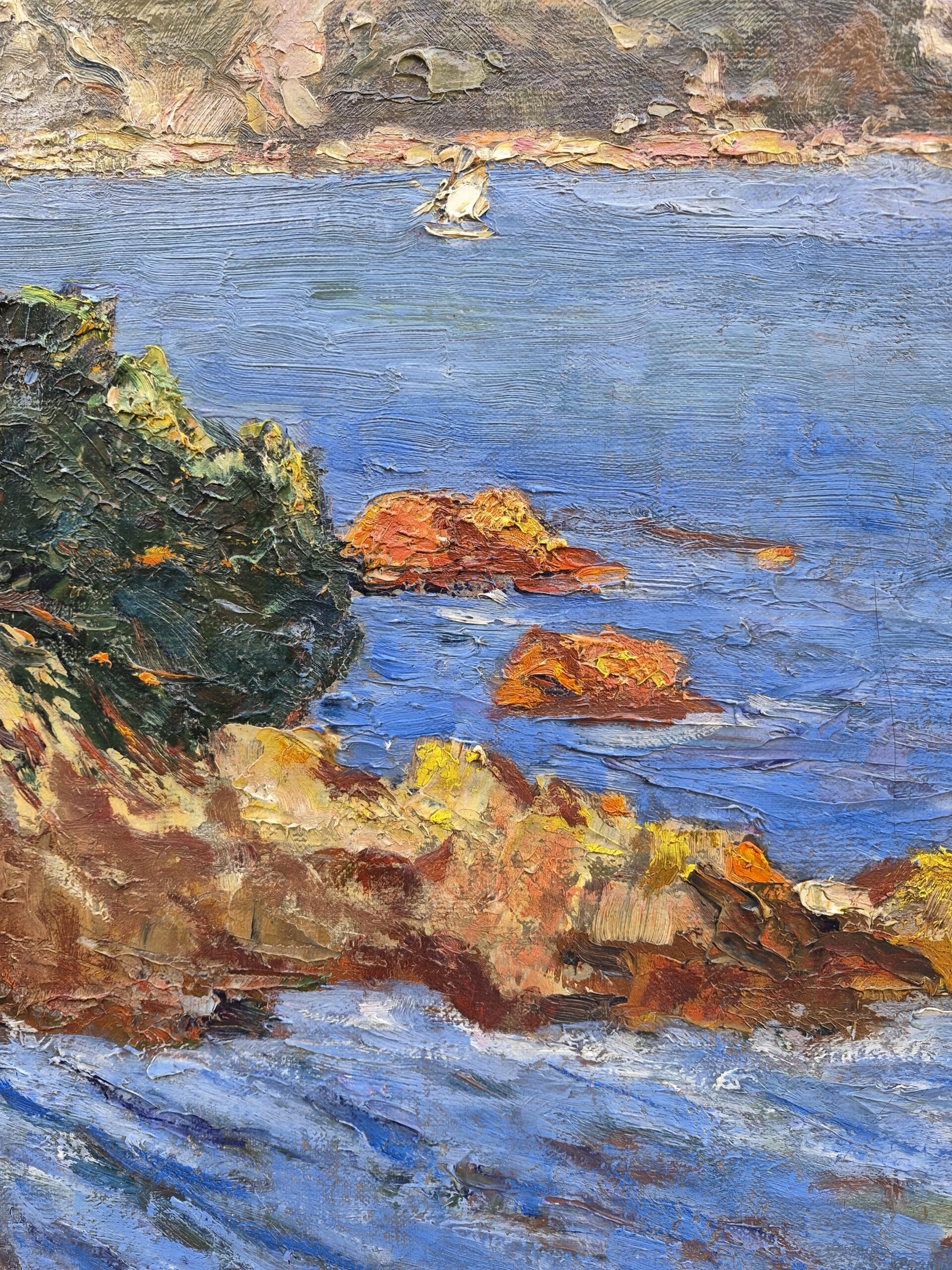
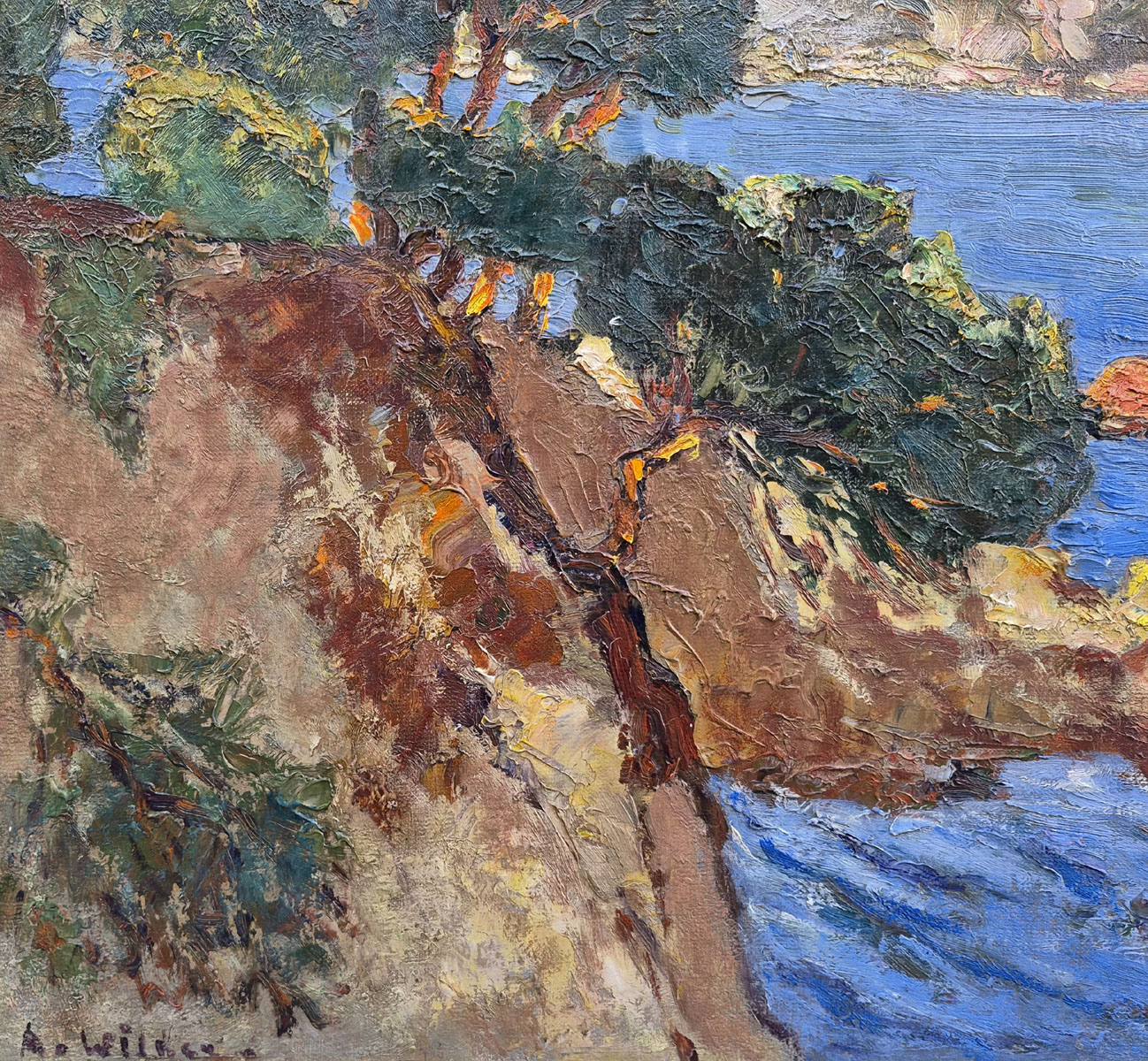
Here, Wilder depicts the Red Cape, with its steep cliffs, ochre-colored rocks, and deep blue sea.
In the foreground, a tree with red trunks and dense foliage leans toward the water, framing the scene and drawing the eye toward the horizon.
The artist explores the shifting effects of sunlight, saturated colors, and rugged landscapes. These journeys regularly take him to Beaulieu-sur-Mer, Villefranche, and the Var coastline;
“On vermilion-based grounds, he revisits his plein-air sketches in the studio.
He does not stylize like Cézanne; instead, he conveys his emotions in the heat of the moment;
soon giving up the studio, he paints directly from nature: a frank and clear art that never strayed from Impressionism;
without imitating them, Wilder spontaneously channels Sisley or Maufra, a painter he greatly admired after meeting him in Trebeurden in 1895.” Gérald SHURR