
Oil on cardboard, *The Artist's Studio—Holzminden—1915* by Henry BING
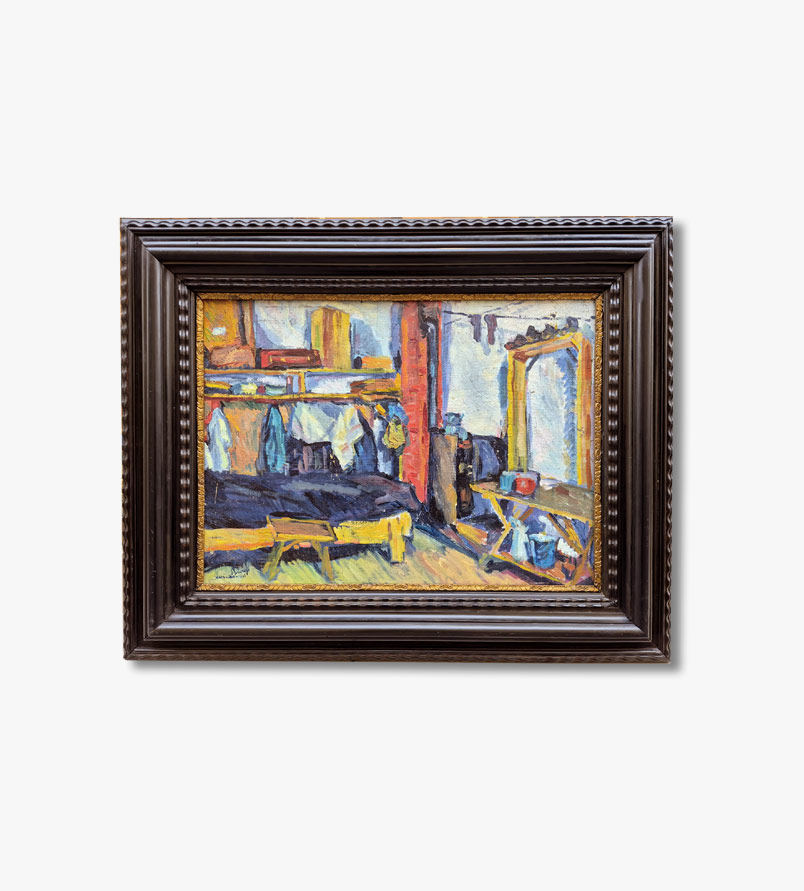
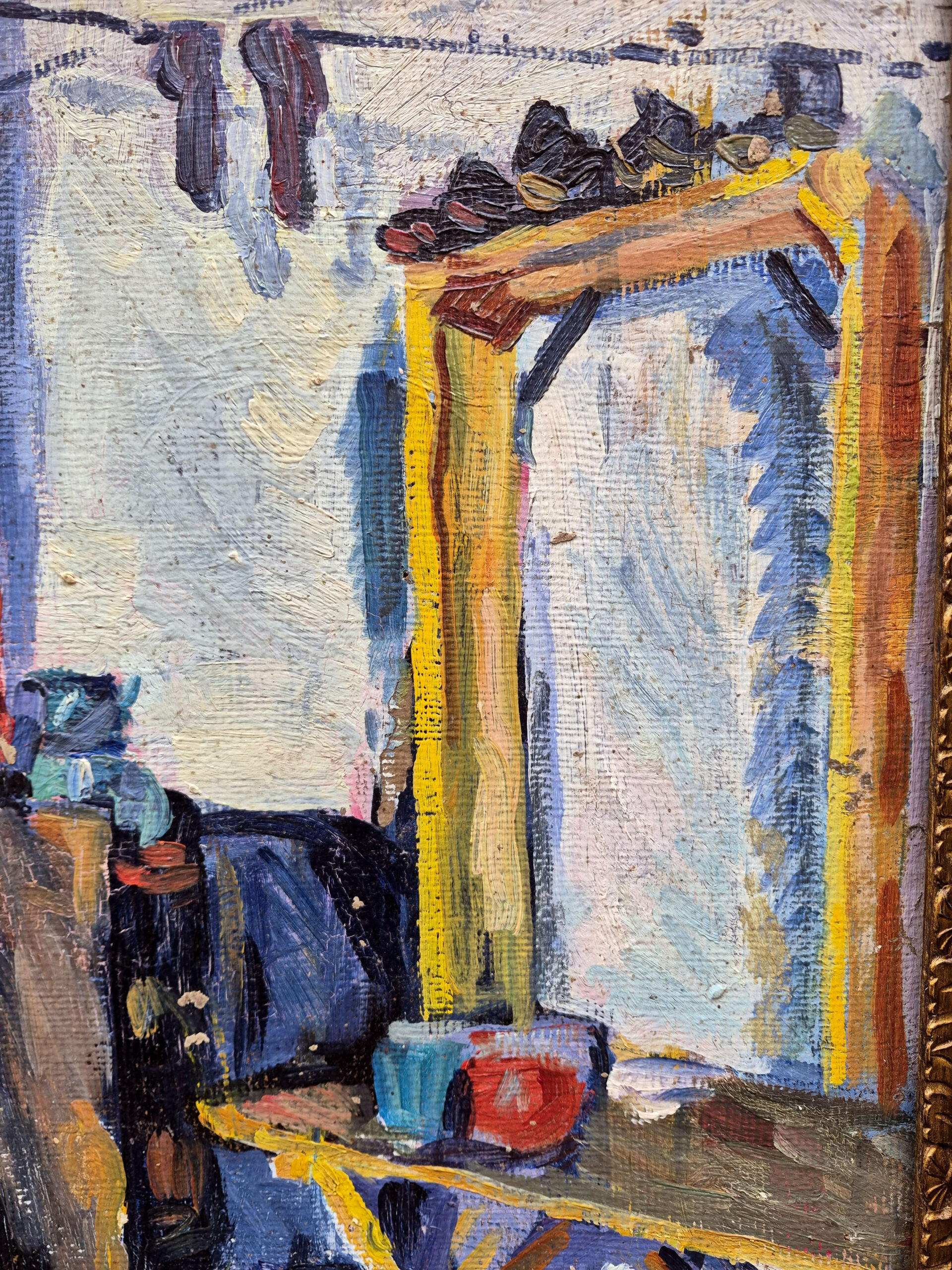
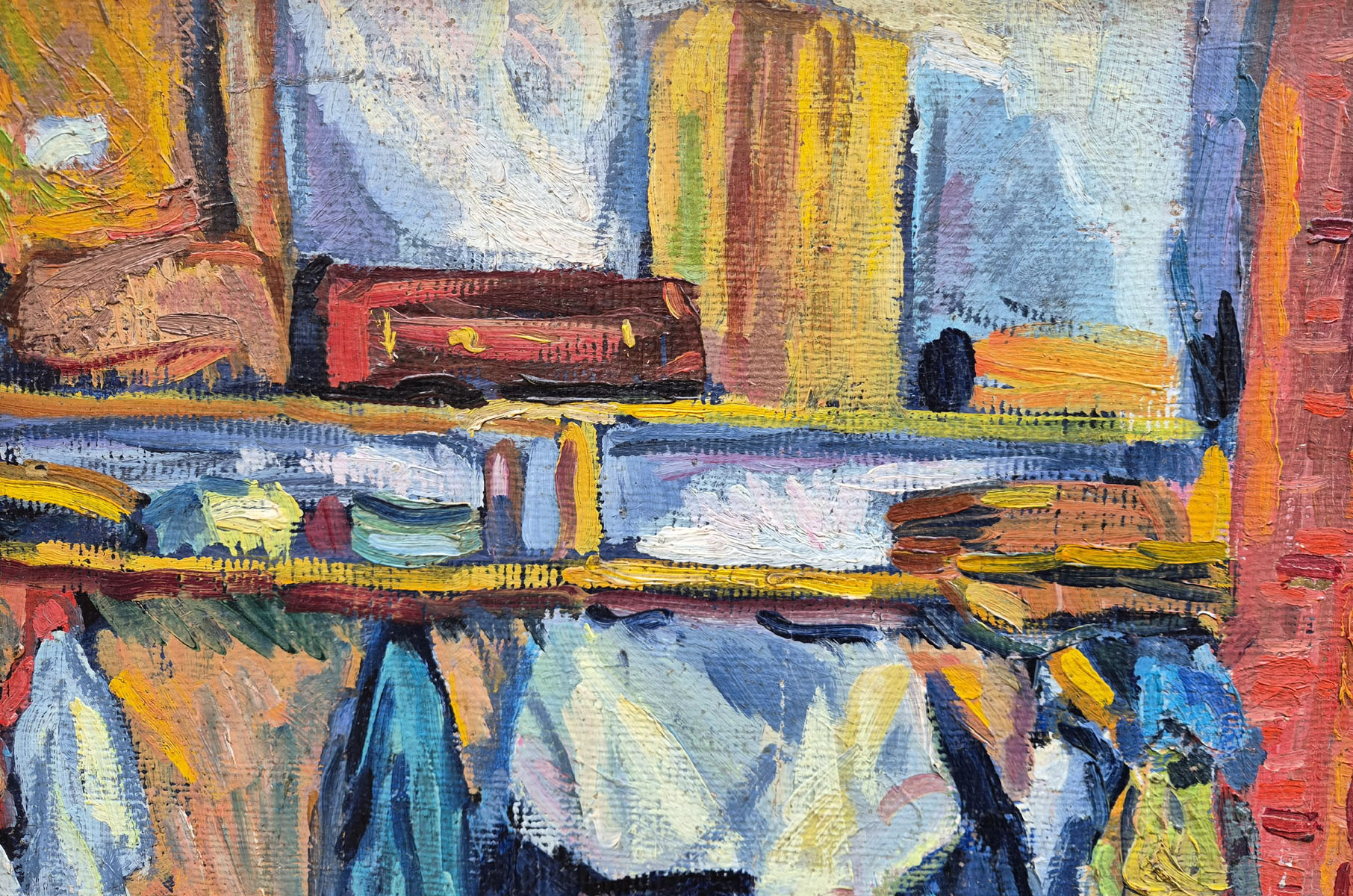
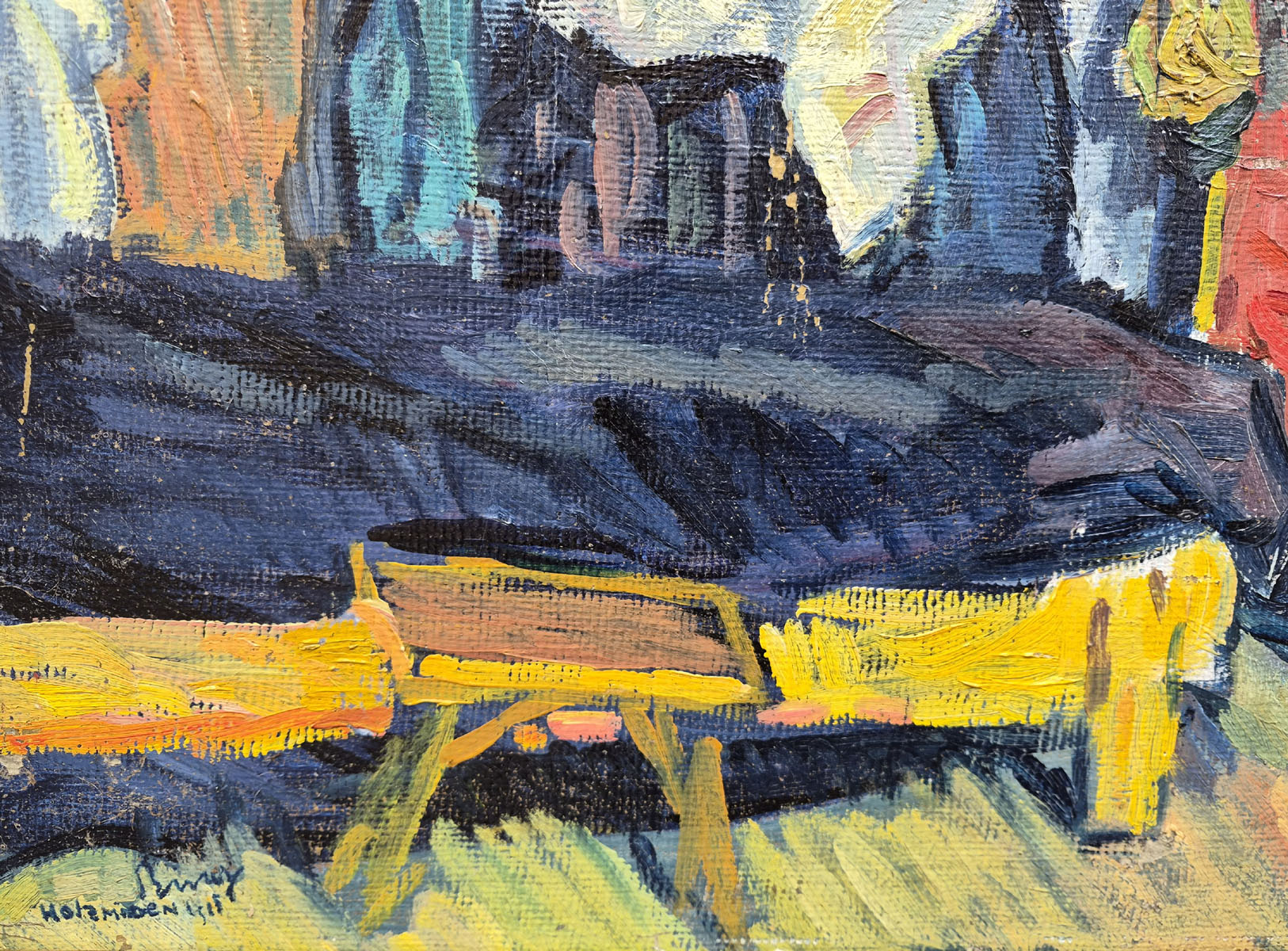
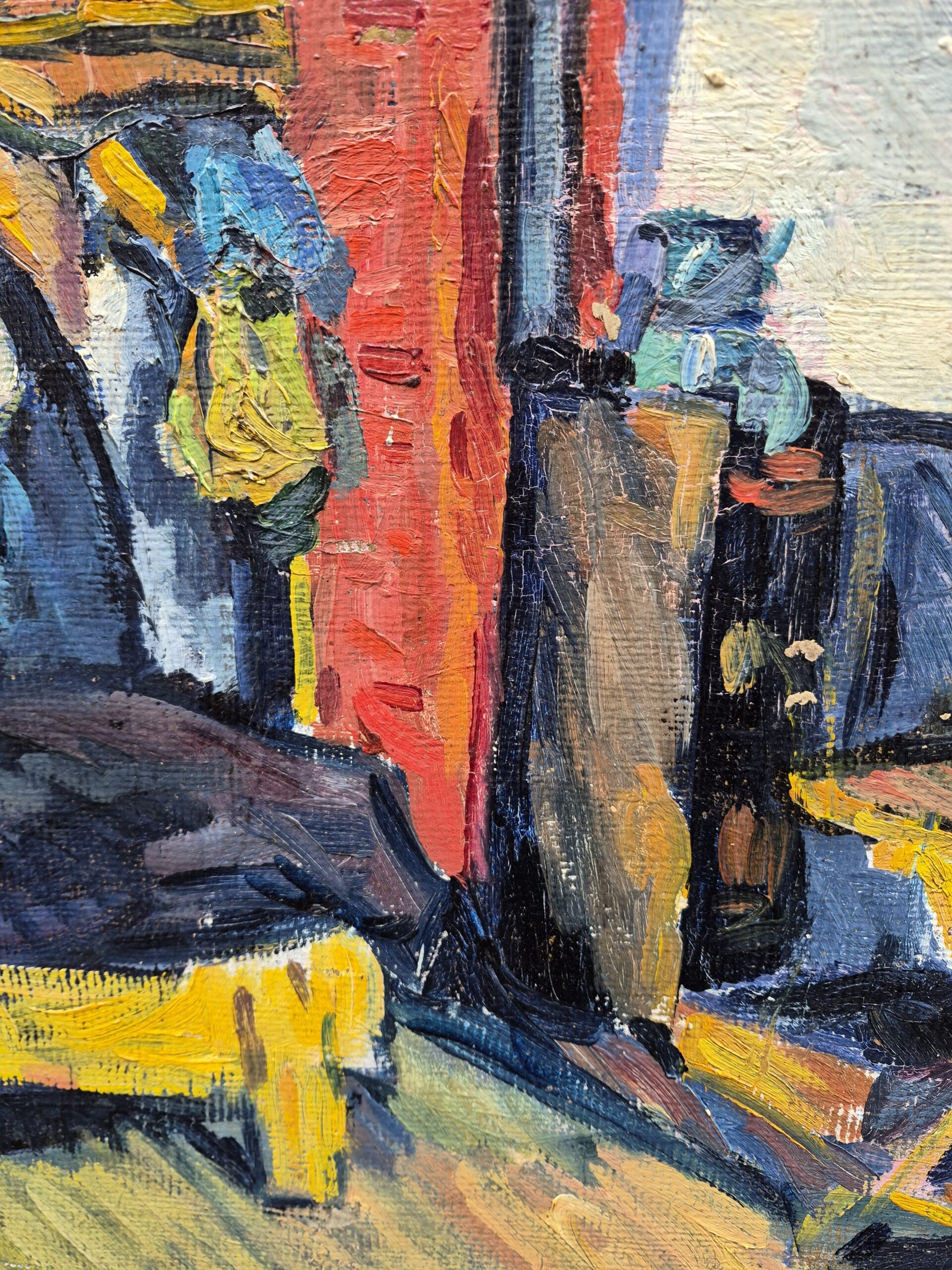
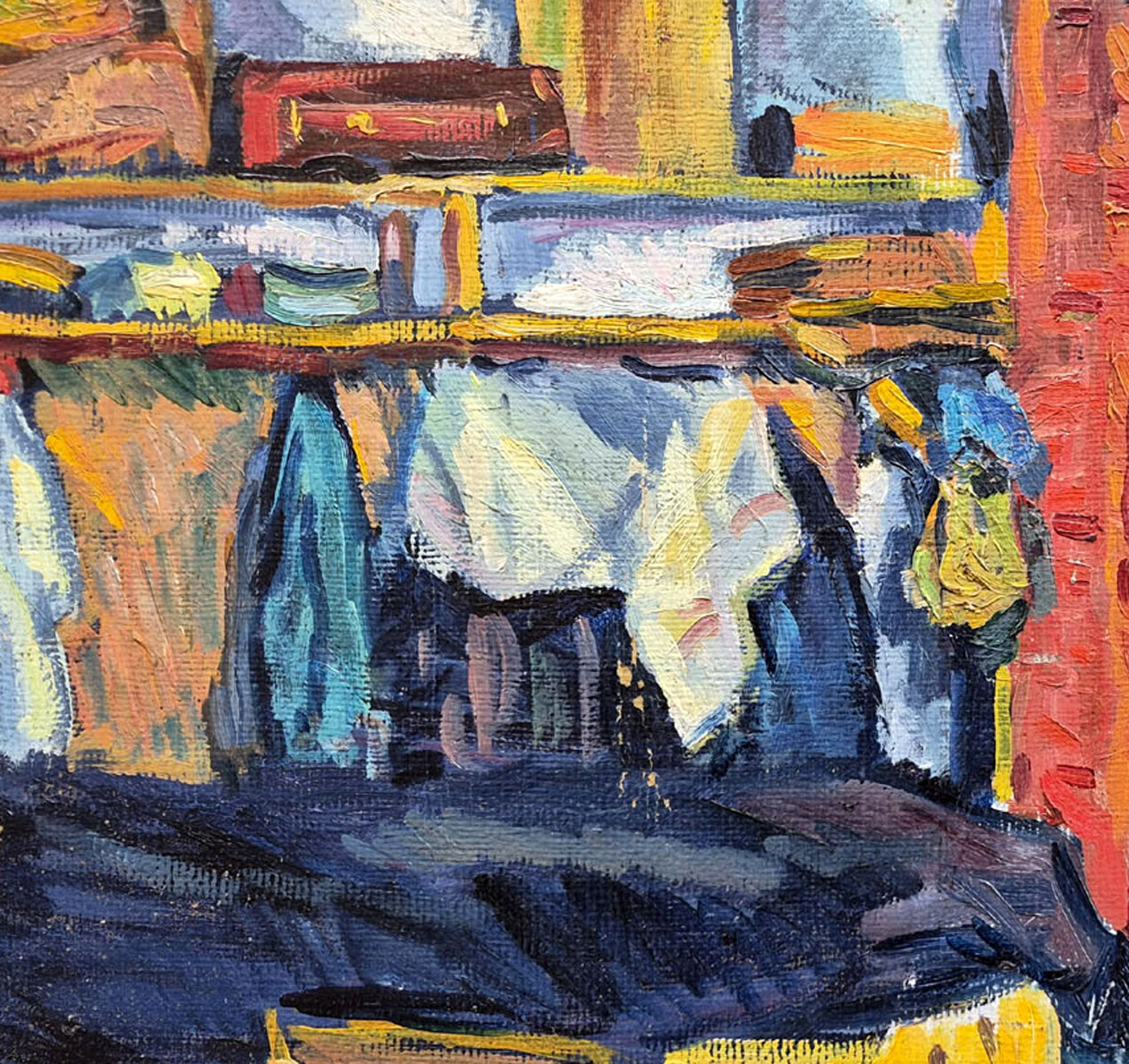
Oil on cardboard, *The Artist's Studio—Holzminden—1915* by Henry BING
Prix sur demande / prices on request
Henry BING 1888–1965
Our painting is located in Holzminden and dates from 1915.
It is a poignant account of the artist’s time as a prisoner of war in Germany during World War I.
From Munich’s Bohemian Scene to the Parisian Avant-Garde
Although sources say relatively little about Henry Bing’s childhood and education, records show that the very young artist was already living in the Bavarian capital as early as 1905.
At just 19 years old, he began contributing illustrations to the two leading satirical magazines of the time, *Jugend* and *Simplicissimus*, where his artistic style and humor struck a chord.
In fact, he produced no fewer than 900 drawings over the course of ten years, making him one of the most important caricaturists.
His work was also featured in the Berlin Secession exhibitions, in the graphic arts section, where Matisse, Klimt, and Munch also exhibited.
Further information
| Dimensions | 95 × 78 cm |
|---|
During this period, Munich was a major hub of the European avant-garde.
The local art scene revolved around private academies and groups that rejected naturalism, seeking instead to emphasize pure color and direct emotion.
In 1909, the NKVM (New Association of Munich Artists) was founded. Kandinsky served as its president, and its members included Jawlensky and Münter. In reaction to Impressionism, they sought to align themselves with the French Fauves and were open to all forms of art.
Kandinsky then went on to create his first abstract paintings, and in 1912, the NKVM gave rise to *The Blue Rider* with Franz Marc and August Macke, seeking to transcend academic conformism as well as Fauvism and Cubism.
It was in this bohemian, cosmopolitan, and rebellious atmosphere—in the Schwabing neighborhood and in cafés such as Café Stefanie—that Bing came of age.
Where poets, writers, and painters come together, there are also art dealers, such as Franz Josef Brakl and Hans Goltz, pioneers and pillars of modernism. Both encouraged the artist to break free from caricature and develop his talents as a painter.
Just as his career was taking off, war broke out in Europe, and the painter was imprisoned and then released in 1917. We’ll come back to that later.
He settled in Switzerland, where he tried to rebuild his life and began painting again
In 1920, he moved to Paris, which was buzzing with excitement after the end of the war. Life there moved at breakneck speed; it was the beginning of the Roaring Twenties, when social mores were becoming more liberal—and so was art. In this hub of the avant-garde, Bing adapted perfectly and opened a gallery. In 1925, he went into partnership with another gallery owner, and the gallery remained in operation until 1952.
In 1927, he presented the first solo exhibition of Chaïm Soutine, a painter of Russian origin whose paintings are a true cry from the soul. Under his brush, trees twist, flesh and skeletons come to life, and colors blaze.
Next came Modigliani, Max Beckmann, Sonia Delaunay…
Our painting is located in Holzminden and dates from 1915.
It is a poignant account of the artist's time in captivity in Germany during World War I.
In August 1914, when France entered the war, Bing was in Germany. As a French citizen, he was considered by the Germans to be a national of an enemy power.
He was then interned at the Holzminden camp in Lower Saxony.
Apart from our artwork, another rare account from the artist has come down to us: a letter he wrote to his godmother from his barracks.
He then mentions the exhibition of “the prisoner-of-war’s work,” held on the Avenue des Champs-Élysées, to which several artists—such as Forain, Léandre, and others—contributed.
He informs him that several prisoners at the camp wish to contribute to this exhibition: “The painters and draftsmen imprisoned at the Holzminden camp wanted to contribute to the project. For my part, I sent a drawing titled *The Exodus*; since I am entitled to a postcard as an exhibitor, I asked the committee to have it sent to you […]”
He describes to her the daily routine that allows him to paint: “We, the few artists, are privileged, because our time isn’t entirely wasted. Work brings comfort and helps us forget. For my part, I’ve made the most of it and have now completed a respectable collection of drawings and paintings.”
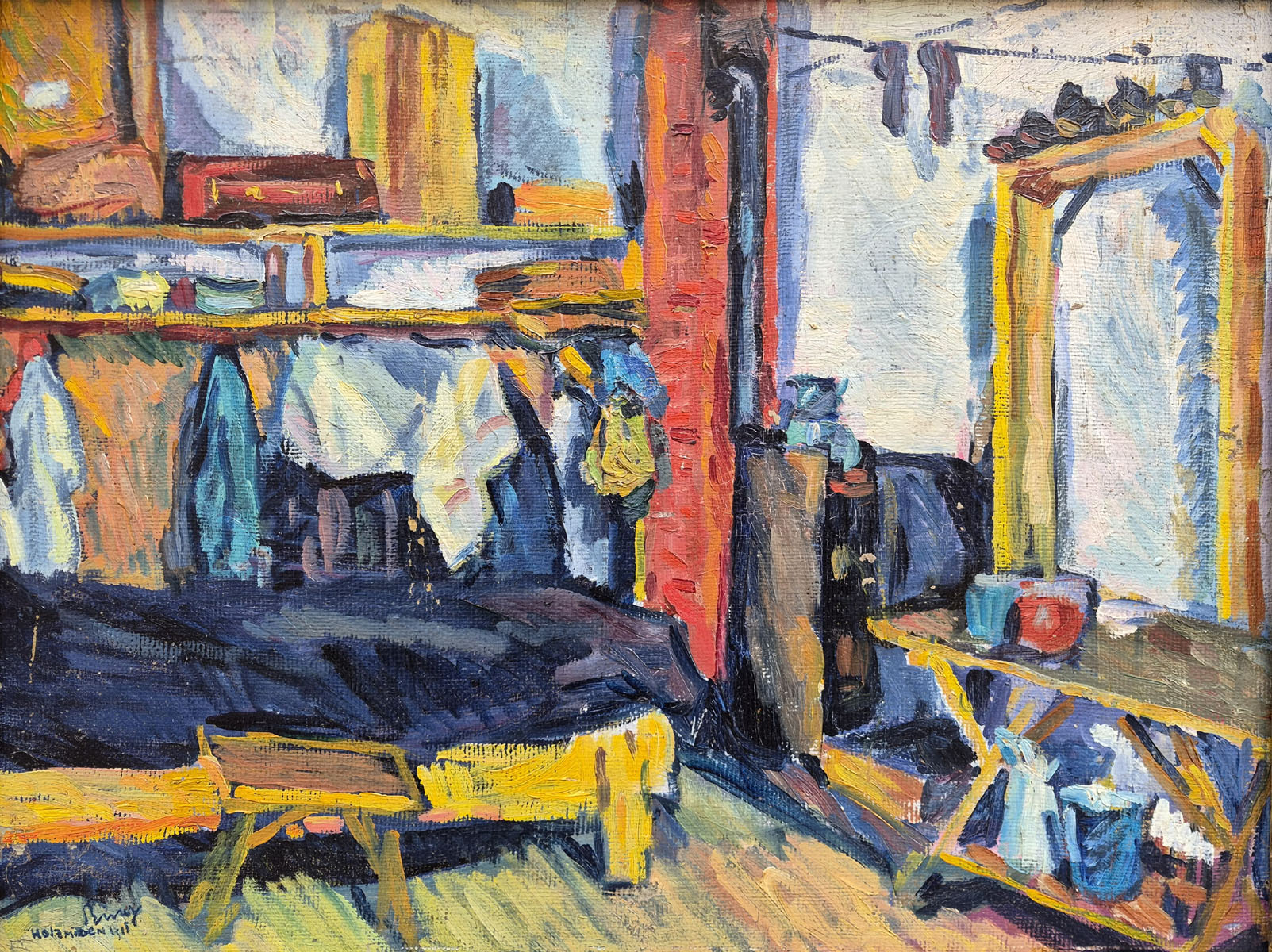
In this cramped space, where his entire material existence is concentrated, the artist finds the subject for a composition of incredible power.
Henri Bing invites us into the intimate details of his daily life as a prisoner.
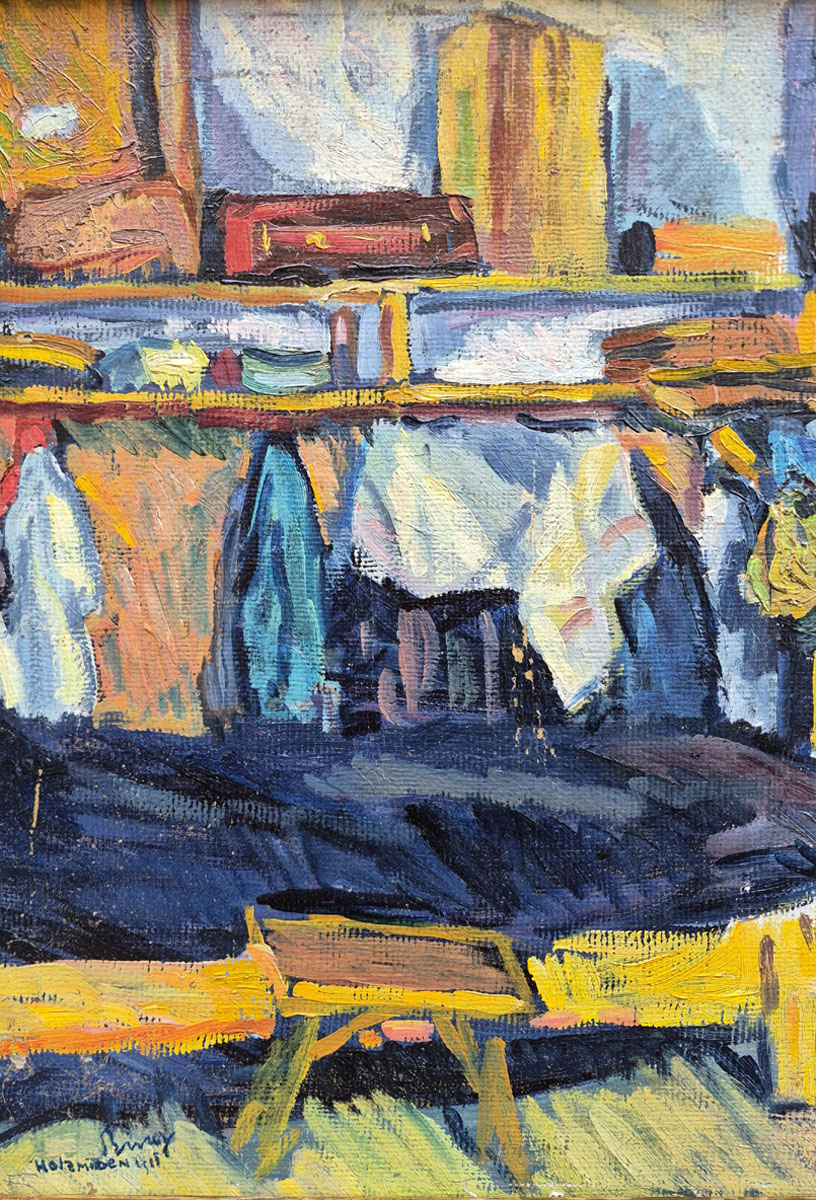
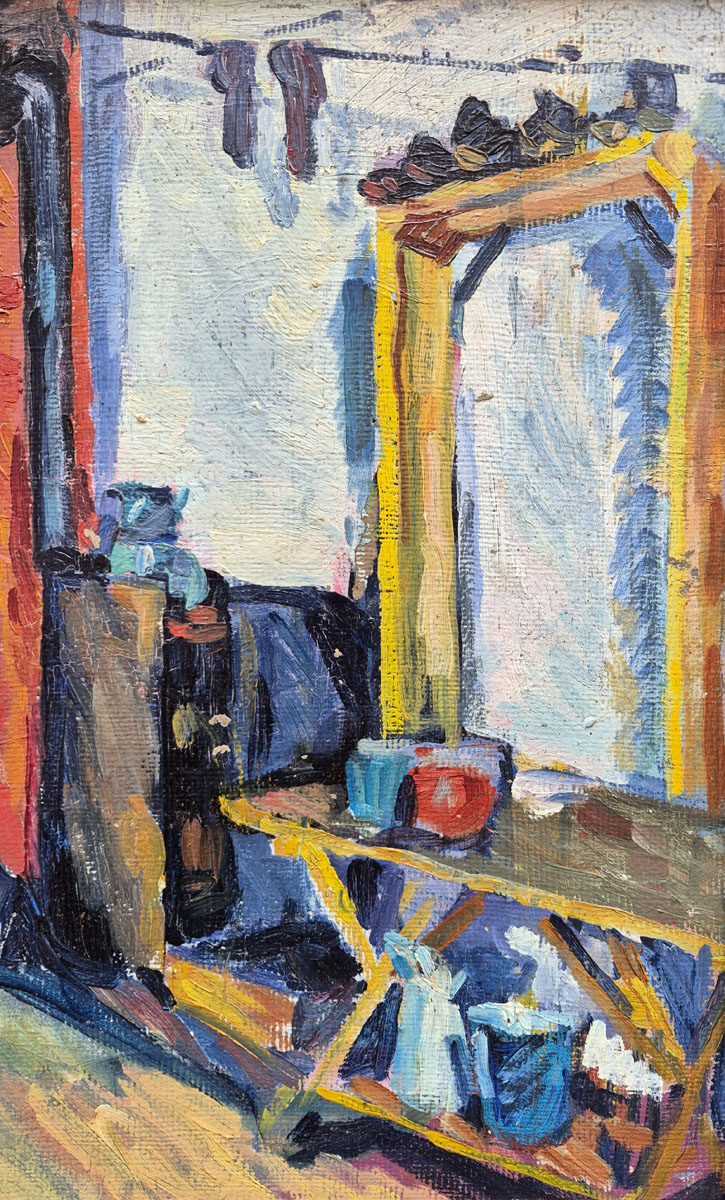
A simple bed, a few items of clothing hanging on a rack, suitcases, shoes, a dressing table, and its modest accessories make up the painter’s entire material world.
Yet, far from presenting a bleak view of his imprisonment, Bing transforms this space of deprivation into a vibrant and colorful one.
The vibrant yellows contrast with the deep blues, while a bold vertical red adds rhythm to the composition.
Between Van Gogh’s legacy and the boldness of Fauvism, Bing contrasts the harshness of his captivity with the joy of painting.
Physical confinement is counterbalanced by an extraordinary freedom in painting.
