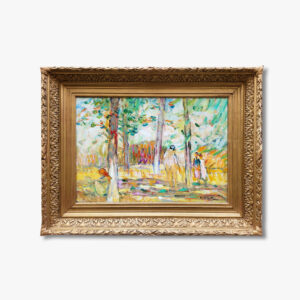
Oil on wood, Fishing Village by Abel Bertram
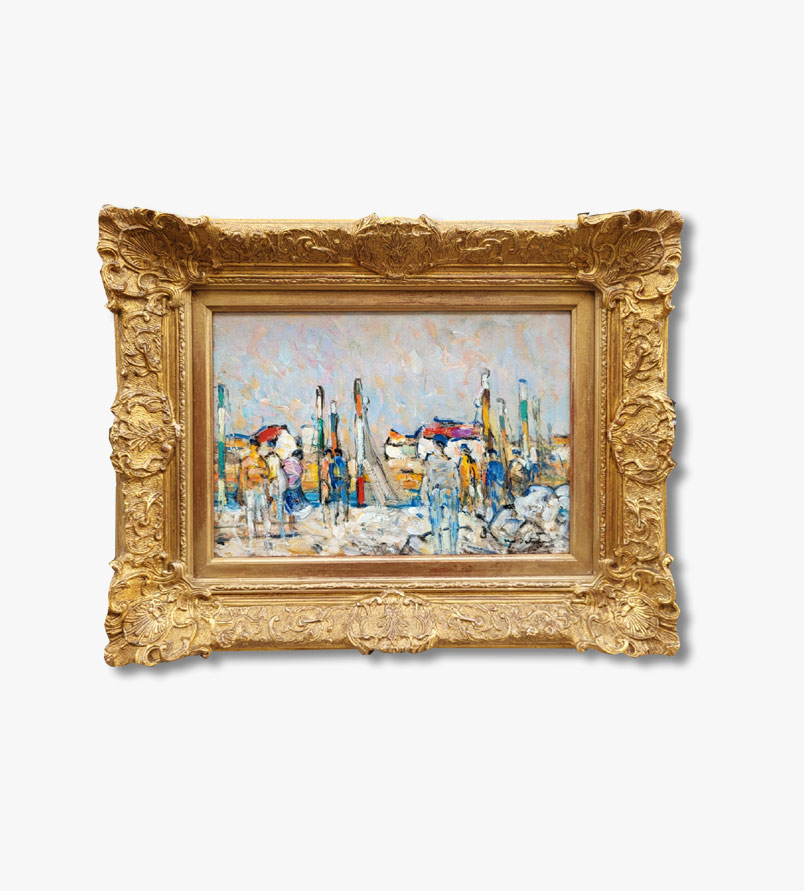
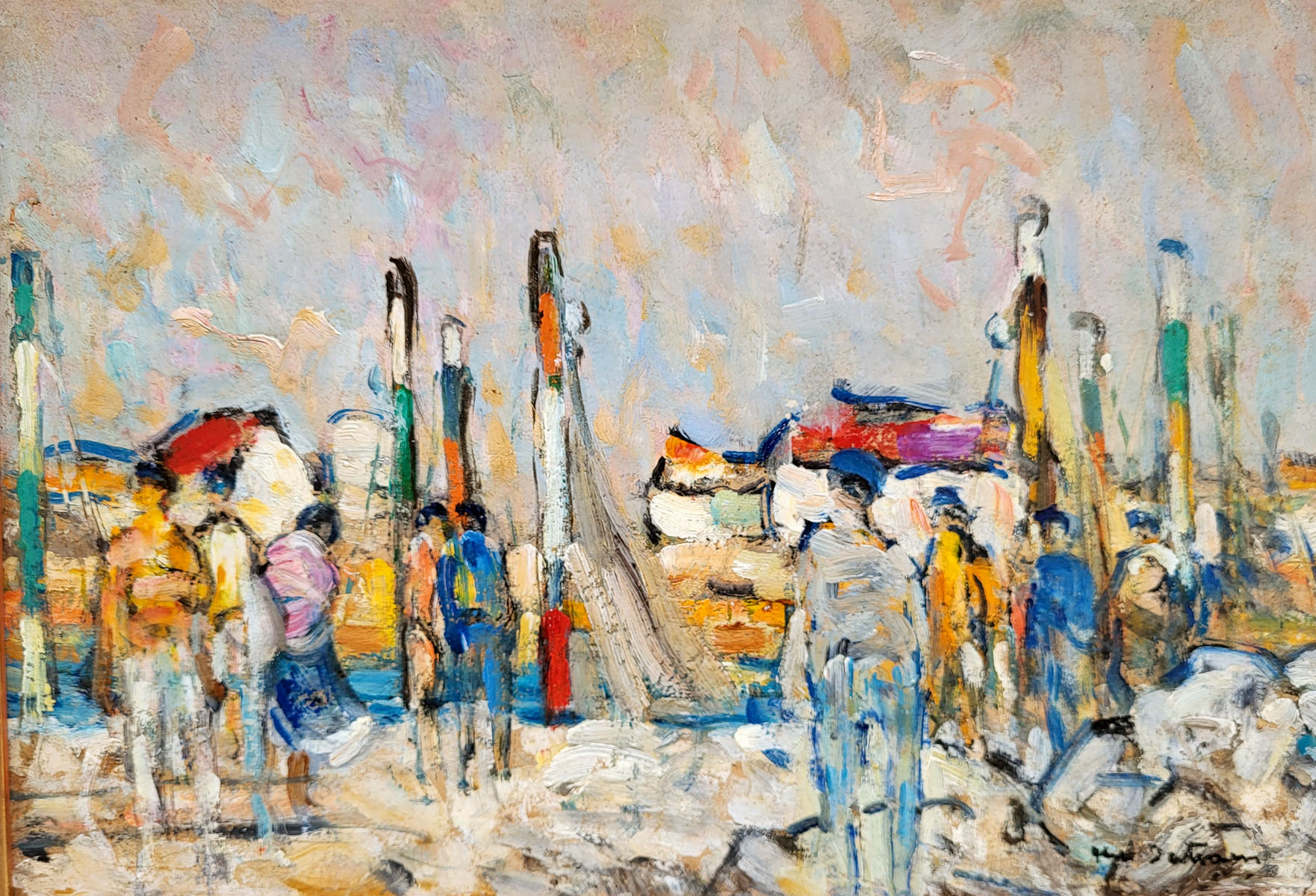
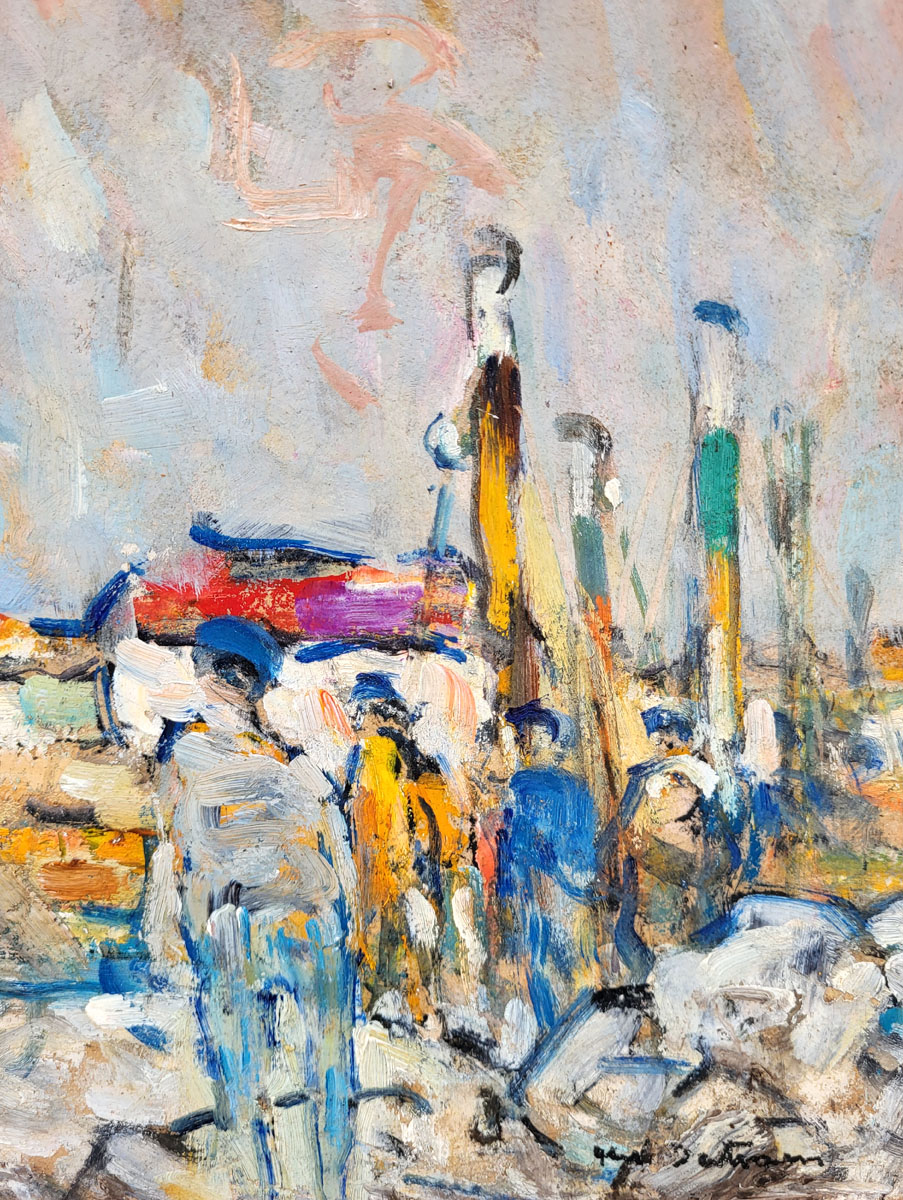
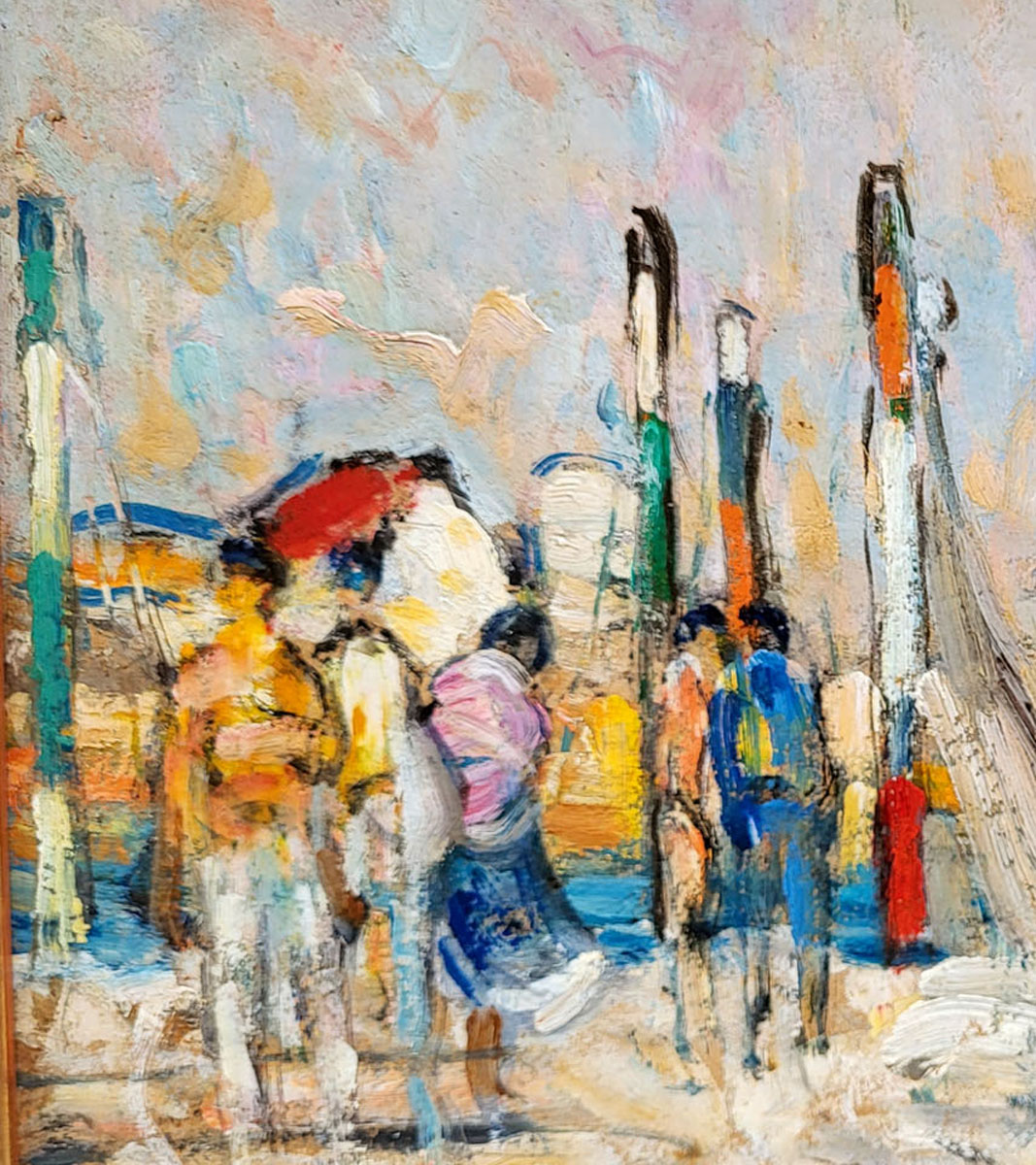
Oil on wood, Fishing Village by Abel Bertram
Prix sur demande / prices on request
Abem Bertram 1871–1954
French painter, he follows in the tradition of post-impressionism, while adopting his own style that oscillates between realism and modernity.
The son of a transporter, Abel Bertram began his artistic training in his hometown of Saint-Omer before moving to Lille, where he studied for three years at the School of Fine Arts, then at the École des Beaux-Arts in Paris, in Léon Bonnat's studio.
In 1898, after a successful career and numerous awards for his rather traditional works, he decided to leave Paris.
Further information
| Dimensions | 54 × 41 cm |
|---|
Abel returned to Saint-Omer and continued to paint and learn, notably under Antoine Guillemet (a landscape enthusiast).
He sent numerous paintings to salons in the provinces and in Paris, and in 1902 he was awarded a gold medal in Lille.
In 1909, the state commissioned him to create a decorative panel, which was in fact a triptych for the Prefecture of Châteauroux.
At the 1910 Salon, this last work earned him critical acclaim from the entire Parisian and provincial press and definitively ranked him among the most delicate painters of outdoor figures.
In 1911, he exhibited at the Georges Petit Gallery. The French government purchased"Le Batelier" for the Musée du Luxembourg and"Les Capucines"for the Musée de Cannes.
Other exhibitions in major galleries followed.
The major characteristic of his work lies in his subtle use of light and color. Unlike a rigid approach to realism, Bertram favors a more suggestive form of expression, playing with contours and shapes in order to capture the emotion of the moment rather than the precision of details. His characters, often sketched in blurred gestures, seem to be part of a larger environment, a sea of colors and light that envelops them.
Bertram deploys a vibrant palette of colors with a single stroke, capturing the energy that surrounds him. In some of his landscapes, human forms and natural elements are abstract yet recognizable. The characters are sketched in a fluid, almost ghostly manner, where bright colors blend together, representing the warm and noisy atmosphere of a popular gathering place.
Bertram learned from great masters such as de Guillemet, Louis Valtat, and Valloton, and incorporated their teachings to develop his own artistic signature.